Best Armless Chairs in 2026: Everything to Know Before Your First Purchase
Disclosure: We may earn a commission when you buy through links on this page, at no extra cost to you. As an Amazon Associate I earn from qualifying purchases. Learn more

Learn how the best armless chairs differ by seat size, back support and materials, and use a simple checklist to pick one that fits your room well.
Buying a chair without arms sounds simple until you face seat heights, back shapes and base styles you have never had to think about. The best armless chairs fit your body, slide close to your table or desk and leave you room to move. This guide explains each term in plain English and shows how to use the comparison table below.
Think first about where the chair will live and how long you sit each day. A dining seat used for one hour needs a different cushion than a desk seat used all morning. The sections below match each need to the right size, material and frame.






Who Should Buy an Armless Chair?
An armless design suits people who value freedom to move and a smaller footprint more than a place to rest their elbows.
People Working in Small Rooms and Tight Desk Corners
You need a chair that tucks fully under the desk when the day ends, so the room feels clear again. Without arms in the way, the seat slides close to the work surface and your shoulders stay relaxed while you type. Measure the gap beside your desk before you order, because even a slim chair needs room to roll or turn.
Dining Hosts Who Seat Extra Guests Around One Table
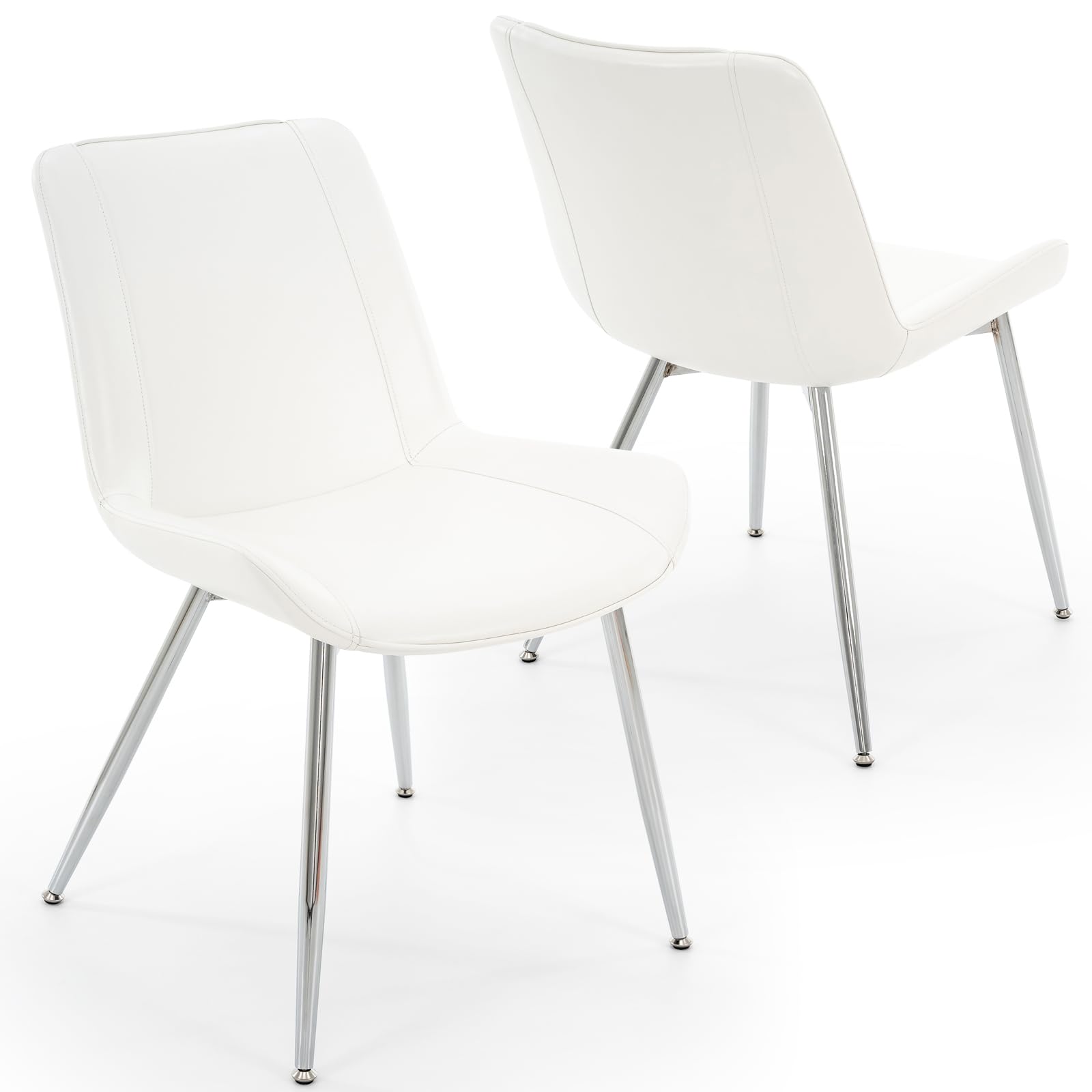
You need chairs that sit close together without arms knocking against each other or against the table edge. Armless dining chairs let guests enter and leave from either side, which helps when a table stands near a wall. A firm seat and an upright back suit meals better than a deep, soft seat, and washable covers help with weekly spills.
Musicians, Crafters and Anyone Who Moves While Seated
You need your elbows and forearms free while you play, stitch, draw or work at a bench. Arms on a chair can lift your shoulders or block a guitar, a violin bow or a wide craft project. A stable base matters more for you than a tall back, because you shift your weight often.
Armless Chairs 101: The Basics for New Buyers
An armless chair is simply a chair built without armrests, sold as a dining chair, a side chair, an accent chair or a desk chair. When you shop for the best armless chairs for your own room, the useful question is whether your task needs elbow support or elbow freedom. Meals, crafts and close desk work favor freedom, while long reading sessions often favor support.
The main parts are the same on every model. The seat holds your weight, the back supports your spine, and the legs or wheeled base carry the load to the floor. Some desk styles add a lift lever for height changes, while dining styles use fixed legs.
Key Features to Compare
Compare these five factors in order, because fit comes before fabric and style.
Seat Height, Seat Depth and Desk Clearance
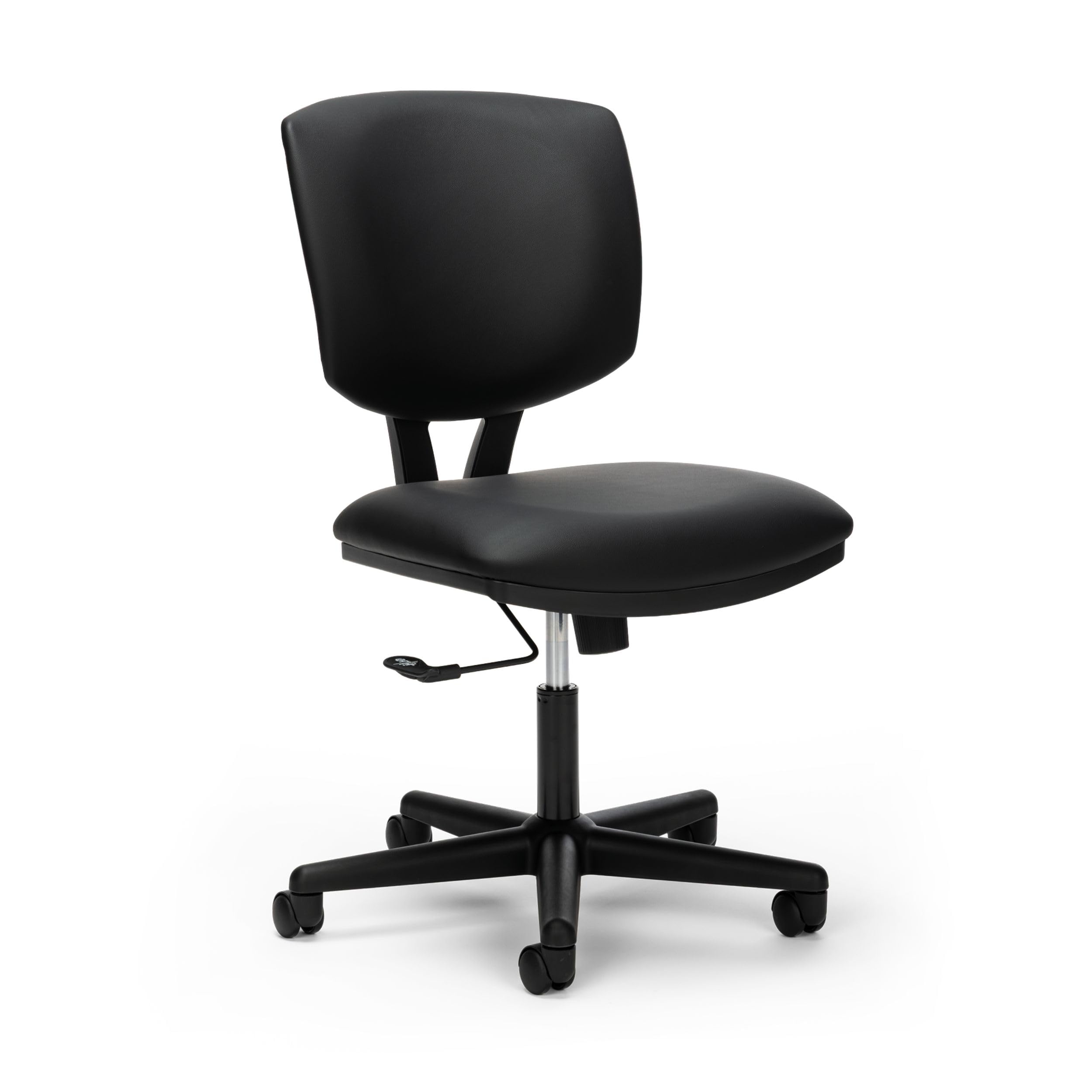
Seat height is the distance from the floor to the top of the seat, and most adult chairs fall between about 17 and 20 inches. Your feet should rest flat with your knees near a right angle, and the front edge should not press into the back of your thighs. Seat depth of about 16 to 18 inches suits most adults. At a desk or table, leave about 10 to 12 inches between the seat and the underside of the top, so your thighs move freely.
Back Shape and Lower Back Support
With no arms to lean on, the back of the chair does most of the work of keeping you upright and comfortable. A gentle curve that meets your lower back helps more than a tall, flat board, and padding should feel firm, because very soft backs let you slump. If you feel persistent back, neck or leg pain while seated, stop guessing at chair shapes and talk with your clinician about your personal needs before you buy.
Seat Cushion and Upholstery Materials
High density foam holds its shape longer than thin, soft foam, so the seat still feels even after months of daily use. Fabric covers breathe well and grip clothing, which helps you stay put. Faux leather wipes clean after spills and suits dining rooms, but it can feel warm in a sunny room. A mesh back lets air pass on warm days, though mesh seats are rare outside desk styles. Choose the cover for your real mess and climate.
Frame, Base and Weight Capacity
Frames come in solid wood, steel, molded plastic and plywood shells, and each one trades weight, price and strength differently. Check the stated weight capacity, often about 250 to 300 pounds for adult chairs, and leave a margin for the way you sit and shift. Four leg bases feel steady on dining floors, while a five point wheeled base rolls on office floors but needs a mat on thick carpet.
Room Fit, Style and Floor Protection
Measure the full width and depth of the chair, then picture two or four of them around your table with people seated and chairs pushed back. Most diners need about 24 inches of width per person at the table, plus clear floor behind. Match leg finish and cover color to the largest item in the room, usually the table or desk. Add felt pads under fixed legs to protect wood floors, and choose smooth casters made for hard floors if a desk chair will roll on boards.
Getting Started: Setup and First Use of an Armless Chair
Unpack the chair on a clean floor and lay out every bolt and part before you start, because a missing washer found early saves a second round of work. Follow the printed order of steps, leave bolts loose until the frame sits square, then tighten each one in turn. If your chair is a desk style with a lift, adjust the seat until your feet rest flat.
Sit in the finished chair for ten minutes at your real table or desk before you throw away the box. Check that your thighs clear the underside and that you can stand without the chair tipping. Recheck every bolt after the first week, because new joints settle under load.
If a desk is your main use, see our guide to the best armless desk chairs for models built around work surfaces. For broader desk seating with arms, see our guide to the best office task chairs, and for judging build quality across chair types, see our guide to the best quality chairs.
Rookie Mistakes to Avoid
- Buying by color alone leaves you with a seat height that strains your knees at every meal.
- Skipping the space under your table means the chair arrives and cannot slide in where you planned.
- Choosing the softest cushion you can find leads to a seat that bottoms out within months.
- Ignoring the stated weight capacity risks cracked joints and a chair that rocks.
- Placing bare wood legs on a hard floor without pads scratches the boards with every shift.
Care and Maintenance for Armless Chairs
Vacuum fabric seats weekly with a soft brush tool, working along seams and under the front edge where crumbs collect. Blot spills at once with a clean cloth, because rubbing pushes liquid deeper into foam and fibers. Faux leather needs only a damp cloth and mild soap, then a dry wipe. Keep upholstered chairs out of long direct sun, since steady light fades covers.
Once a month, turn the chair over and check leg joints, screws and glide pads, tightening anything loose. Replace worn felt pads before bare wood or metal touches the floor. A chair with a deep wobble, a split leg or a bent base should leave daily use, because those faults grow under load.
Frequently Asked Questions
Is an expensive armless chair worth the extra cost?
An expensive armless chair is worth the cost only when the extra money buys a stronger frame, denser foam or a replaceable cover you will actually use. Price alone proves nothing, since simple wood dining chairs can outlast costly padded ones. A chair used daily for five years can justify more spending than a spare seat used monthly.
What features matter most for long hours in an armless chair?
For long hours, the seat cushion and the back curve matter most, followed by a seat height that keeps your feet flat. Plan a short standing break each hour, because no chair shape removes the strain of staying in one position all day. A small cushion behind your lower back can help on a flat backed chair, but it should not push you toward the front edge.
How do I choose the right size armless chair for my body and desk?
Start with your lower leg length: sit on a step or a stack of books until your feet rest flat and your knees bend comfortably, then measure that height. That number is your target seat height, within about one inch. Next, measure the underside of your desk and subtract the seat height to confirm thigh room. If two people of very different heights will share the chair, a desk style with a lift solves the mismatch best.
How long should a good armless chair last with daily use?
A good armless chair used daily should last about five to ten years before the cushion or joints need real attention. Solid wood and steel frames often reach the long end of that range, while light plastic shells age sooner. Rotating dining chairs every few months spreads wear evenly across a set.
Can an armless chair work at both a dining table and a desk?
Yes, one armless chair can serve both places if the seat height suits both surfaces. Dining tables and desks both stand near 28 to 30 inches high, so a seat near 18 inches often works at each one. The catch is comfort: a firm dining seat may feel hard during a full work morning.
Wrapping Up
Start with seat height and thigh clearance, then judge the back curve and cushion, and only then compare covers and colors. Use the product table above to check sizes and capacities against your measurements at home.
Chosen with those checks in mind, the best armless chairs give you freedom to move, a smaller footprint and a seat that fits your table or desk from the first day.