
Best Aquarium Thermostat: A Clear Buying Guide for 2026
Disclosure: We may earn a commission when you buy through links on this page, at no extra cost to you. As an Amazon Associate I earn from qualifying purchases. Learn more

A calm buying guide to the best aquarium thermostat, covering controller types, sensor placement, safety cutoffs, alarms, and what to spend.
Tropical fish cannot shrug off a cold night or a heater that sticks on. A few degrees of drift can stress them quietly for weeks, and a failed heater with no safety net can cook a tank in hours. That is why choosing the best aquarium thermostat matters more than most new owners expect.
This guide explains the main controller types, the specs that actually protect your fish, and what each price tier buys you. Start with the comparison table below, then read on to match a controller to your tank size and heater.


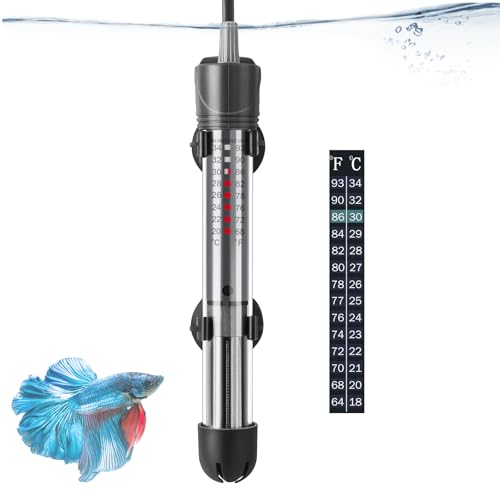
Price Tiers at a Glance
Budget Tier
Budget controllers, usually under $30, give you a single sensor, a simple dial or basic digital display, and one outlet for your heater. That is enough for a small freshwater tank in a room with stable temperature. The trade off is accuracy: expect readings that can drift about a degree, and no alarm when something goes wrong. For a hardy community tank, this tier is a sensible first step up from trusting the heater dial alone.
Mid Range Tier
Mid range controllers, about $30 to $70, add a clearer digital display, finer adjustment steps, and often a high and low temperature alarm. Many include a second safety cutoff that kills power if the water passes a limit you set, which guards against the most dangerous heater failure. This is the tier most home aquarists should aim for, because the extra protection is exactly what you want while you sleep or travel.
Premium Tier
Premium controllers, about $70 to $150 and up, add dual sensors, WiFi alerts to your phone, data logging, and sometimes control of both a heater and a cooling fan or chiller. They suit reef tanks and expensive livestock where an early phone alert can save hundreds of dollars of animals. You are paying for warning time and redundancy, not for warmer water, so buy this tier when the value inside the tank justifies it.
How to Choose an Aquarium Thermostat: Buying Guide
Tank Size and Heater Wattage
Every controller has a maximum wattage it can switch safely, so add up your heater watts and stay well under the controller limit. A single 200 watt heater on a controller rated for 1000 watts leaves a comfortable safety margin and runs cooler. Large tanks often use two smaller heaters on one controller, which also means one failed heater cannot chill or overheat the tank as fast.
Sensor Accuracy and Calibration
Accuracy is the spec that decides whether your fish live at the temperature you think they do. Look for accuracy within about one degree, and prefer controllers that let you calibrate the sensor against a trusted thermometer. Whatever you buy, keep a simple glass or digital thermometer in the tank as an independent check, because two readings that agree are worth far more than one fancy display you never verify.
Temperature Range and Control Steps
Most tropical tanks sit between about 74 and 82 degrees Fahrenheit, so confirm the controller covers your target with room to spare on both sides. Adjustment steps of half a degree or smaller make fine tuning easier. Also check the difference between the on and off points, called the differential: a narrow differential holds temperature steady, while a very wide one lets the tank swing before the heater reacts.
Display, Controls, and Alarms
A clear display you can read at a glance beats a tiny dial you guess at. Audible alarms for high and low temperature are genuinely useful in the same room, and app alerts matter when you are away. Avoid controllers that need a confusing button sequence for a simple change; if adjusting the target temperature feels like a puzzle, you will avoid checking it, and settings nobody checks are how small problems grow.
Safety Features
The most valuable safety feature is an independent overheat cutoff that removes power even if the main control fails. Look for recognized electrical safety certification, a grounded plug, and a sensor cable long enough to route with a drip loop so water cannot run down the cord into the outlet. Keep the controller itself outside the cabinet splash zone, and plug the whole setup into a ground fault protected outlet whenever possible.
Energy Efficiency and Operating Cost
The controller itself uses very little power, usually a few watts for the display and electronics. The real running cost is your heater, and a thermostat that holds temperature accurately avoids the waste of overshooting and cooling cycles. Tight control will not transform your electric bill, but a heater stuck on by a failed built in thermostat wastes energy and endangers fish at the same time, which is the expensive outcome this device prevents.
Smart Controls and Sensors
WiFi models send alerts, log temperature history, and let you check the tank from work or vacation. A falling temperature trend in the log often reveals a dying heater days before the water turns cold. If smart climate control appeals to you at home as well, our guides to the best rated wifi thermostat and the best intelligent thermostat cover the household versions of the same ideas, though aquarium controllers remain their own category with waterproof sensors and heater rated outlets.
Types of Aquarium Thermostats
Built In Heater Thermostats
Most aquarium heaters include a built in thermostat that switches the heating element at a set point. They are convenient and cost nothing extra, but the sensor sits inside the warm heater body, so readings can lag behind real tank temperature. Many keepers use one as the first line of control and add an external controller as the safety layer above it.
External Plug In Controllers
An external controller sits between the wall outlet and your heater, with its own sensor probe in the water. Your heater plugs in, you set the target on the controller, and the controller decides when power flows. This is the most popular upgrade because it works with almost any heater, adds an unbiased sensor, and gives you a second, independent shutoff if the heater thermostat fails.
Smart WiFi Models
Smart models add an app, alerts, and logging to the external controller idea. They cost more and depend on your home network, so keep the basic protections working even if the WiFi drops. Choose one when you travel often, keep delicate livestock, or simply want the peace of mind of seeing today temperature graph before you leave the house.
Setup and Care Tips
- Set the heater slightly above the controller target. Let the controller do the switching, with the heater own thermostat as a backup a degree or two higher.
- Place the sensor away from the heater. A sensor in the warm plume beside the heater reads high and shuts off early, leaving the far end of the tank cold.
- Use a drip loop on every cord. A low hanging loop keeps tank water from traveling along the cable into the outlet.
- Verify with a second thermometer monthly. Sensors drift slowly, and a quick comparison catches it before your fish feel it.
- Clean the probe gently during water changes. Algae and mineral film insulate the sensor and slow its response.
Aquarium Thermostats: Your Questions Answered
Where should you place an aquarium thermostat sensor?
Place the sensor in open water with gentle flow, several inches from the heater and away from filter outlets. Mid depth works well because surface water runs warm and the bottom can run cool. In long tanks, the middle of the tank gives the most honest average, and suction cups or a probe holder keep it from drifting against the glass.
Is an aquarium thermostat expensive to run all day?
No, the controller itself draws only a few watts, far less than your light or filter. Your heater dominates the electricity cost, and it only draws power when the controller calls for heat. A well sealed room and a tank lid reduce heater run time far more than any controller setting, so cover the tank if heating costs concern you.
How often should you replace an aquarium thermostat?
Replace it when readings drift despite calibration, when the display or buttons become unreliable, or after about three to five years of service as cheap insurance. Probes are the usual weak point, and some models let you replace the sensor alone. Any controller that has been splashed inside or dropped in the tank should be retired at once.
What size heater and thermostat do you need for your tank?
A common guide is about 3 to 5 watts of heater per gallon, adjusted for how cold the room gets. Your controller must be rated above the total heater wattage, ideally with generous headroom. For tanks over about 75 gallons, two heaters on one controller spread heat more evenly and add a layer of failure tolerance.
Do aquarium thermostats really work?
Yes, an external controller genuinely improves safety because it adds a second, independent decision maker between your heater and the wall power. It cannot fix a heater that has already failed open, but its cutoff stops the power in exactly that scenario. The honest limit is that it protects against temperature faults, not leaks or power cuts, so treat it as one layer of a sensible setup.
Wrapping Up
Choose a controller rated well above your heater wattage, with a calibratable sensor and an independent overheat cutoff, and verify it against a second thermometer. Compare your finalists in the product table above, and you will find the best aquarium thermostat is simply the one that quietly keeps its promises every night while you are not watching.


