Best Antique Railroad Pocket Watches in 2026: Which Type Is Right for You?
Disclosure: We may earn a commission when you buy through links on this page, at no extra cost to you. As an Amazon Associate I earn from qualifying purchases. Learn more

Best antique railroad pocket watches compared by type, ideal user and price range, with tips on originality, servicing and carry fit.
Antique railroad pocket watches confuse new collectors because the category mixes true railroad grade timepieces, ordinary antique pocket watches, and modern watches styled to look the part. Prices vary just as widely, from under $100 for a worn standard watch to well over $1,000 for a fine railroad grade example. This guide compares the types clearly, so you can tell what makes the best antique railroad pocket watches worth their price and which type fits your goals, whether that is collecting, carrying, or giving a gift with real history.
Read the detail sections before you buy, because with antiques the condition of one specific watch matters more than the type name on its dial. A careful check of the movement, case, and dial will save you from the most common and most costly beginner errors.
Types of Antique Railroad Pocket Watches Compared
Three types cover what you will meet for sale. True railroad grade watches, the collectible core of the category, commonly sell around $300 to $1,500 depending on maker, jewel count, and condition. Standard antique pocket watches of the same era, built for general use rather than railroad service, often sell around $75 to $300. Modern railroad style watches with quartz movements sell around $40 to $150 and offer the look without the history. The sections below explain how each type works and who should choose it.
Original Railroad Grade Mechanical Watches
A railroad grade watch was built to meet strict railroad rules: high jewel counts, commonly 17 to 23 jewels, adjustment to temperature and positions, a lever setting mechanism so the time could not be changed by an accidental pull of the crown, and accuracy held to about 30 seconds per week. These watches are mechanical, wound by hand, and many still run well after a century. The advantages are history, craftsmanship, and lasting collector demand. The drawbacks are price, the cost of servicing, and the care they demand, since they have no water or shock protection by modern standards. Choose this type if authenticity is the point of the purchase.
Standard Antique Pocket Watches
Standard antique watches share the era and the look but were made for everyday buyers, so they usually have fewer jewels, simpler adjustment, and stem setting instead of lever setting. Many are honest, attractive timepieces, and some were carried by railroad workers in roles the strict rules did not cover. Prices are far lower, which makes this type a friendly entry point for a first antique. The trade off is collector value: a standard watch rarely appreciates, and sellers sometimes describe one as railroad grade when it is not. If you like this route, compare examples against our broader guide to the best antique pocket watches so you learn the case styles and dial types of the period.
Modern Quartz Railroad Style Watches
Modern quartz watches copy the railroad look, with bold Arabic numerals, a clean white dial, and a pocket watch case, but run on a battery powered movement that needs no winding and keeps near perfect time. They suit daily carrying, costumes, gifts, and anyone who wants the style without servicing costs or worry about a fragile antique. What they lack is everything that makes the antiques special: hand finishing, mechanical movement, and historical value. Prices are low and predictable, and if the battery dies the fix is cheap. Choose this type for use, and the antique types for meaning.
Original Railroad Grade vs Standard Antique: Which Should You Choose?
Compare the two antique types on five points. Accuracy standards: railroad grade movements were adjusted and inspected to a formal standard, while standard movements were built to a price. Setting method: railroad grade watches use a lever you expose by unscrewing the front bezel and pulling a small lever, a signature feature worth checking in person, while standard watches set by the crown. Dial: railroad dials favor large readable numerals and often a double sunk design, while standard dials vary with fashion. Cost of ownership: both need periodic servicing by a watchmaker familiar with antiques, but railroad grade parts and expertise cost more. Value over time: fine railroad examples from respected makers hold demand, as the history in our guide to the best railroad watches shows, while standard watches are buys for enjoyment rather than value. If your budget is around $300 or less and you want to carry the watch daily, a good standard antique or a modern style watch is the honest choice. If the history is the point, save for a verified railroad grade example.
How to Choose the Right Antique Railroad Pocket Watch
Originality, Service History, and Matching Parts
Originality drives both value and trust. The movement serial number, case markings, dial, and hands should belong together, and a replaced dial or a case much newer than the movement lowers what a watch is worth. Ask the seller when the watch was last serviced and whether it runs and keeps reasonable time, since a full service on an antique can cost around $150 to $350 and should be part of your budget math. Antiques have no smart features, apps, or tracking of any kind, and that is part of their appeal: the only record is the watch itself and whatever paperwork the seller can show.
Brand Reputation, Warranty, and Value
Maker reputation matters because it predicts parts availability, watchmaker familiarity, and resale demand. Established American railroad era makers with large production runs are easier to service and research by serial number than obscure names. When buying from a dealer, ask about a return window and any warranty on running condition, because private sales rarely offer either. Buy the best condition you can afford rather than a famous name in poor shape: a clean, original, running watch from a mid tier maker is a better purchase than a worn top name with a damaged dial. Our overview of the best antique watches explains how condition grades affect price across the wider antique market.
Case Size and Carry Fit
Pocket watches are sized in watch sizes rather than millimeters, and the two sizes you will meet most are 16 size and 18 size. An 18 size case feels large and bold in the hand and suits waistcoat wear and display, while a 16 size case, typical of later railroad watches, carries more comfortably in a modern trouser pocket. Check case thickness and weight too, since a heavy watch needs a proper chain or leather strap and a dedicated pocket to avoid scratches. Shoppers buying a gift may also like the carry notes in our guide to the best pocket watches for men, which covers chains and pocket fit in more detail.
Movement Type and Maintenance
For antiques, movement type means mechanical first: hand wound movements in railroad and standard watches, judged by jewel count, adjustment, and setting method. Automatic self winding movements belong to wristwatches and are not part of the antique pocket watch world, and solar and smart movements are modern wristwatch ideas as well. Quartz appears only in the modern style watches described earlier. The practical question is maintenance: a mechanical antique needs winding daily if carried, gentle handling, and a service every five to seven years of regular use, while a quartz style watch needs only a battery change every year or two.
Legibility and Style
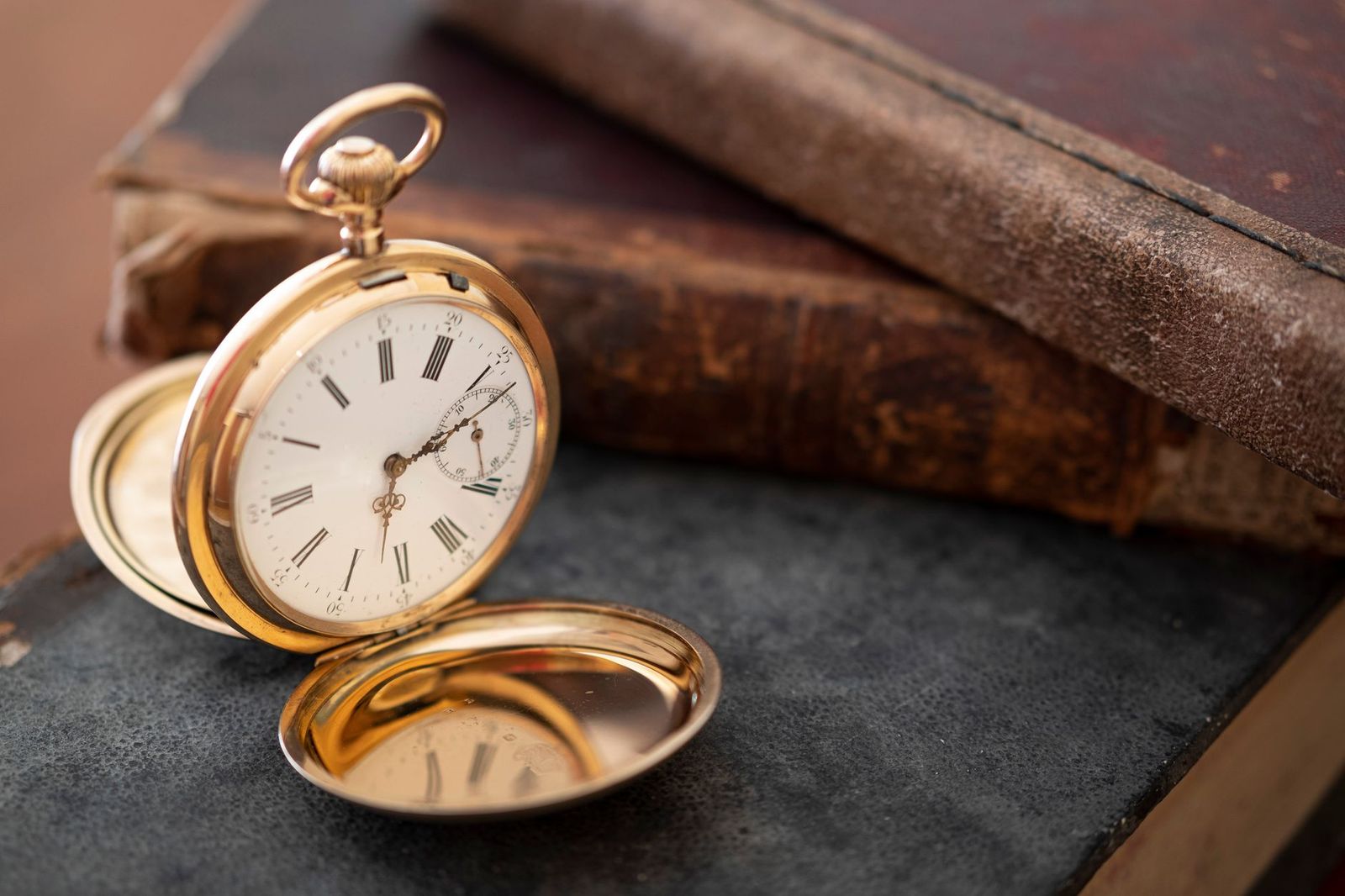
Railroad watches were designed to be read at a glance in poor light, so expect large Arabic numerals, thick hands, and strong contrast on a white dial. That clarity is a genuine pleasure in use and a quick authenticity clue, since fancy numerals, colored dials, and decorative hands usually signal a standard or novelty watch instead. Case style matters too: most railroad examples are open face, with no cover, while hunter cases with a spring lid suit display and gentler carry. Choose the style that matches how you will store and show the watch, and compare dial layouts with the examples in our general guide to the best pocket watches if you are still undecided.
Care and Maintenance Tips
Have a mechanical antique serviced by a qualified watchmaker every five to seven years if you wind and carry it, and sooner if it starts losing time or the winding feels gritty. Keep the watch away from magnets, which can disturb the balance spring and ruin accuracy until a watchmaker corrects it. Never expose an antique to water: it has no seals worth trusting, so rain, hand washing splashes, and humid storage all count as real risks. Wind gently at the same time each day, stop at clear resistance, and store the watch in a soft pouch in a dry drawer, ideally with its chain arranged so metal does not rub the case.
FAQs
How water resistant is an antique railroad pocket watch?
Assume it has no water resistance at all. Antique cases were made to resist dust and pocket lint, not water, and a century of wear has not improved their seals. Even the best railroad pocket watches of their era were expected to stay dry on the job. Keep yours away from sinks, rain, and steam, and if a watch does get wet, do not wind it: let it dry in open air and take it to a watchmaker promptly, because trapped moisture rusts steel parts quietly.
Lever set or stem set: which is better for a railroad watch?
For a true railroad grade watch, lever set is the correct and more collectible choice, because railroads required it so the time could never shift by accident. Stem set watches are simpler to use and fine for a standard antique you plan to carry casually. The setting method is also a quick honesty check on a listing: a watch described as railroad grade that sets by pulling the crown deserves a much closer look at the movement before you pay a railroad grade price.
How often does an antique pocket watch need servicing?
A carried mechanical watch needs a service about every five to seven years, covering cleaning, fresh oil, and timing checks. A watch kept in a drawer for display can wait longer, but old oil still dries out, so wind it gently a few turns every month or two to keep parts from sitting in one position. Budget the service cost into the purchase from the start: a fairly priced watch plus a service often beats a costly watch that needs the same work anyway.
Should I buy an original antique or a modern railroad style watch?
Buy an original antique if history, mechanical craft, and collecting are what draw you, and you accept servicing costs and careful handling. Buy a modern style watch if you want the railroad look for daily carry, work, or a gift at around $40 to $150 with quartz accuracy and a cheap battery. Neither choice is wrong, but paying antique prices for a modern watch, or expecting an antique to shrug off daily knocks like a modern one, are the two mistakes to avoid.
What case size fits my pocket and style?
Choose 16 size for the most comfortable modern carry, since it sits flatter in a trouser or waistcoat pocket and matches most later railroad grade production. Choose 18 size if you want the earlier, bolder feel and plan to display the watch or wear it with a heavy chain. Try holding similar sizes before buying online if you can, because weight surprises people: a large cased watch in a metal chain is a presence, and comfort decides whether you will actually carry it.
The Bottom Line
Decide first whether you want history or the look. For history, buy a verified railroad grade movement with original parts, a known service state, and a dial you can read at a glance, and budget for a service. For the look, a modern style watch or a sound standard antique gives you most of the pleasure for far less money. Check any watch against those rules, keep the watch dry and serviced, and your pick among the best antique railroad pocket watches will be one you enjoy for years.