
The Best Aluminum Cookware Sets for 2026
Disclosure: We may earn a commission when you buy through links on this page, at no extra cost to you. As an Amazon Associate I earn from qualifying purchases. Learn more

Aluminum has been a kitchen staple for decades because it heats up fast and spreads that heat evenly across the pan. The catch is that raw aluminum reacts with acidic foods and scratches easily, which is exactly why most modern sets treat or coat it before it ever reaches a stovetop. Understanding those treatments is the real key to choosing the best aluminum cookware sets for how you actually cook.
Here is what separates a set that performs well for years from one that warps or flakes within a single season.






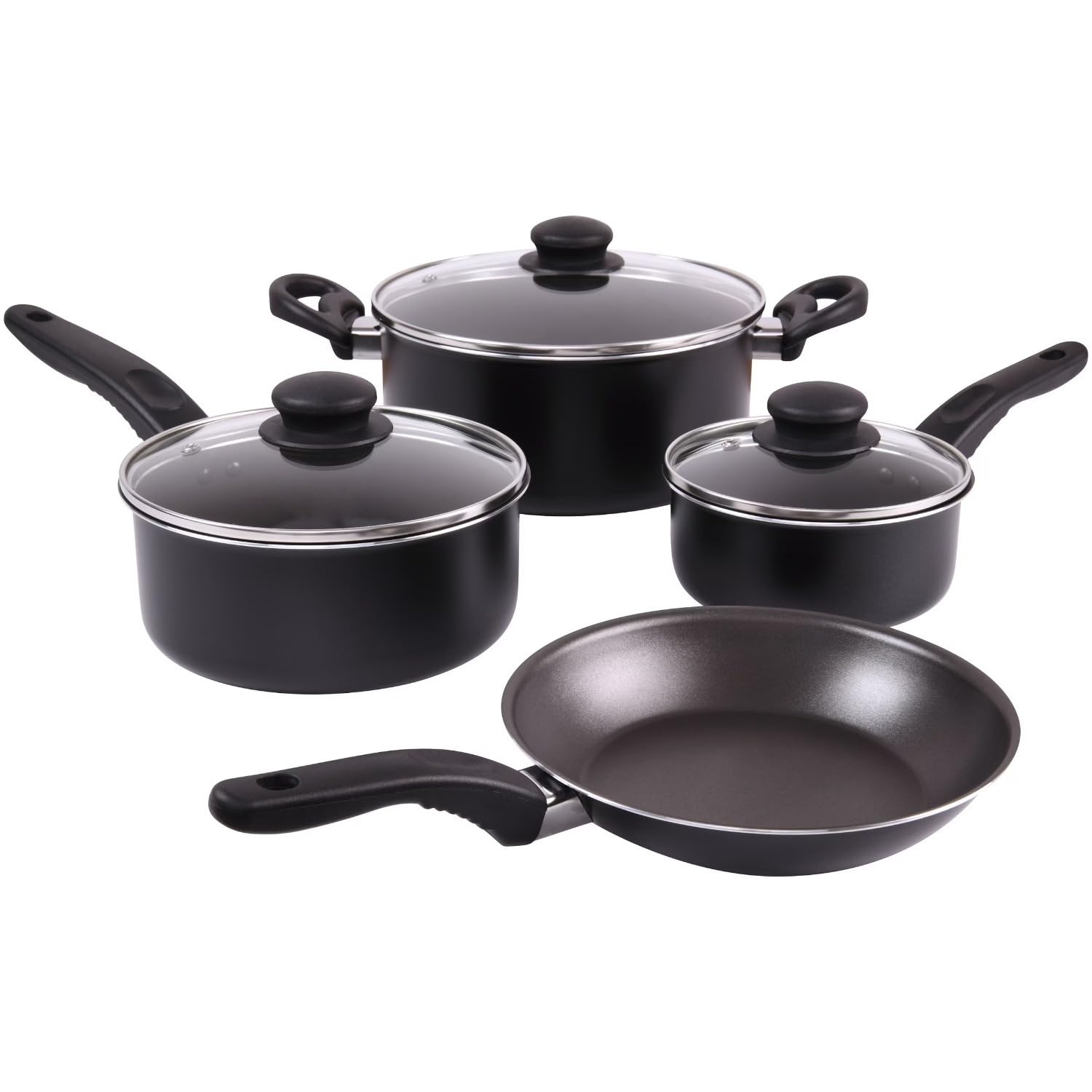
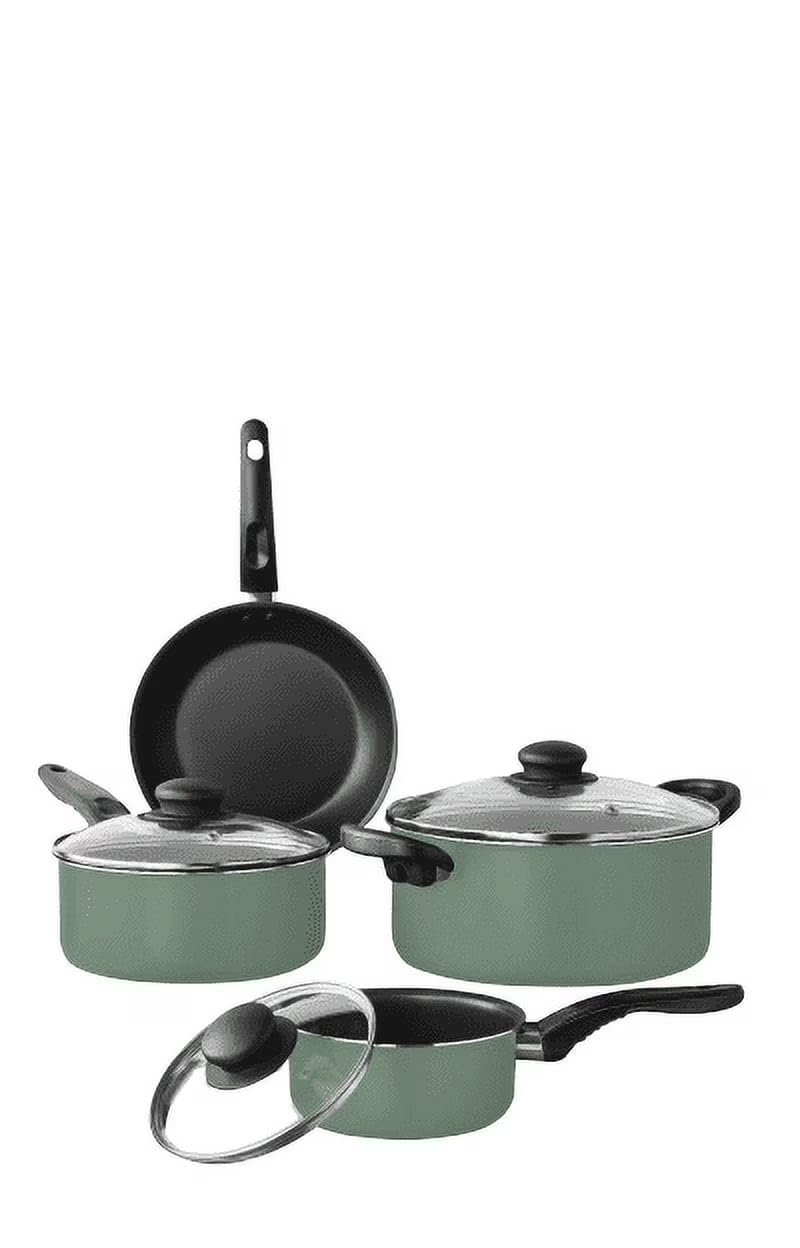
Anodized vs Standard Aluminum
Hard-anodized aluminum goes through an electrochemical process that hardens the surface and seals the metal, making it significantly more scratch-resistant and durable than standard, uncoated aluminum. This process also prevents the aluminum from reacting with acidic ingredients like tomatoes or citrus, which raw aluminum cannot fully avoid.
Standard aluminum cookware costs less and heats just as quickly, but it typically needs a separate nonstick or enamel coating to protect both the food and the pan itself. Anodized cookware tends to be the more durable long-term choice, while standard aluminum sets can still be a reasonable budget option if paired with a well-applied protective coating.
Nonstick Coatings and Food Safety
Most aluminum cookware, anodized or not, includes some form of nonstick coating layered on top of the metal. Traditional nonstick coatings offer excellent food release and easy cleanup, while ceramic-based nonstick coatings have become popular as a PTFE-free alternative for buyers who prefer to avoid that specific chemical family.
The anodizing process itself seals the aluminum so it does not leach into food, which addresses a common concern about cooking directly on bare aluminum. Reputable brands now manufacture their coatings without PFOA, so checking for that distinction is worth doing regardless of which coating type you choose.
Induction Compatibility
This is one of the most overlooked details when shopping for aluminum cookware. Aluminum on its own is not magnetic, which means it will not work on an induction cooktop unless the pan includes a magnetic stainless steel base layered into its construction. If your kitchen uses or might eventually switch to induction, confirm the base material specifically rather than assuming any aluminum set will work.
Gas and traditional electric cooktops do not have this limitation, so induction compatibility only matters for households with, or planning to get, an induction range.
Piece Count and What You Actually Need
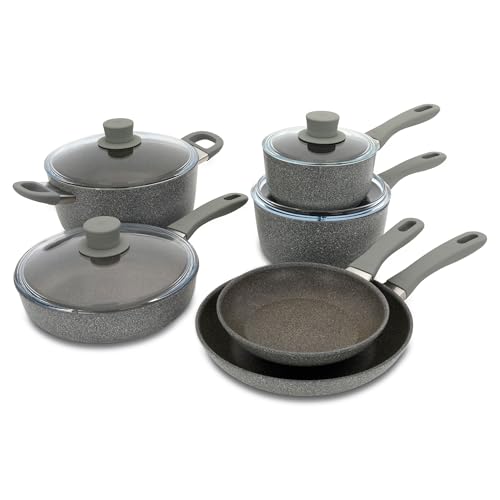
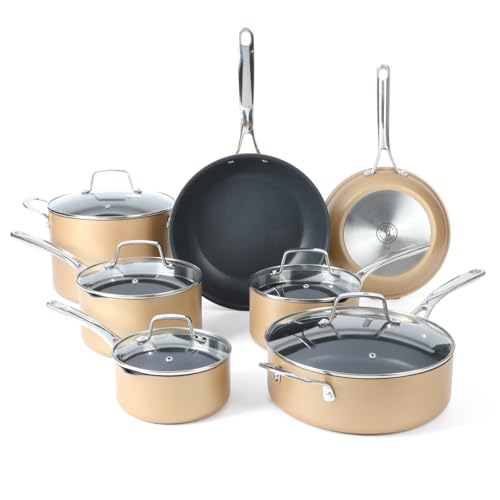
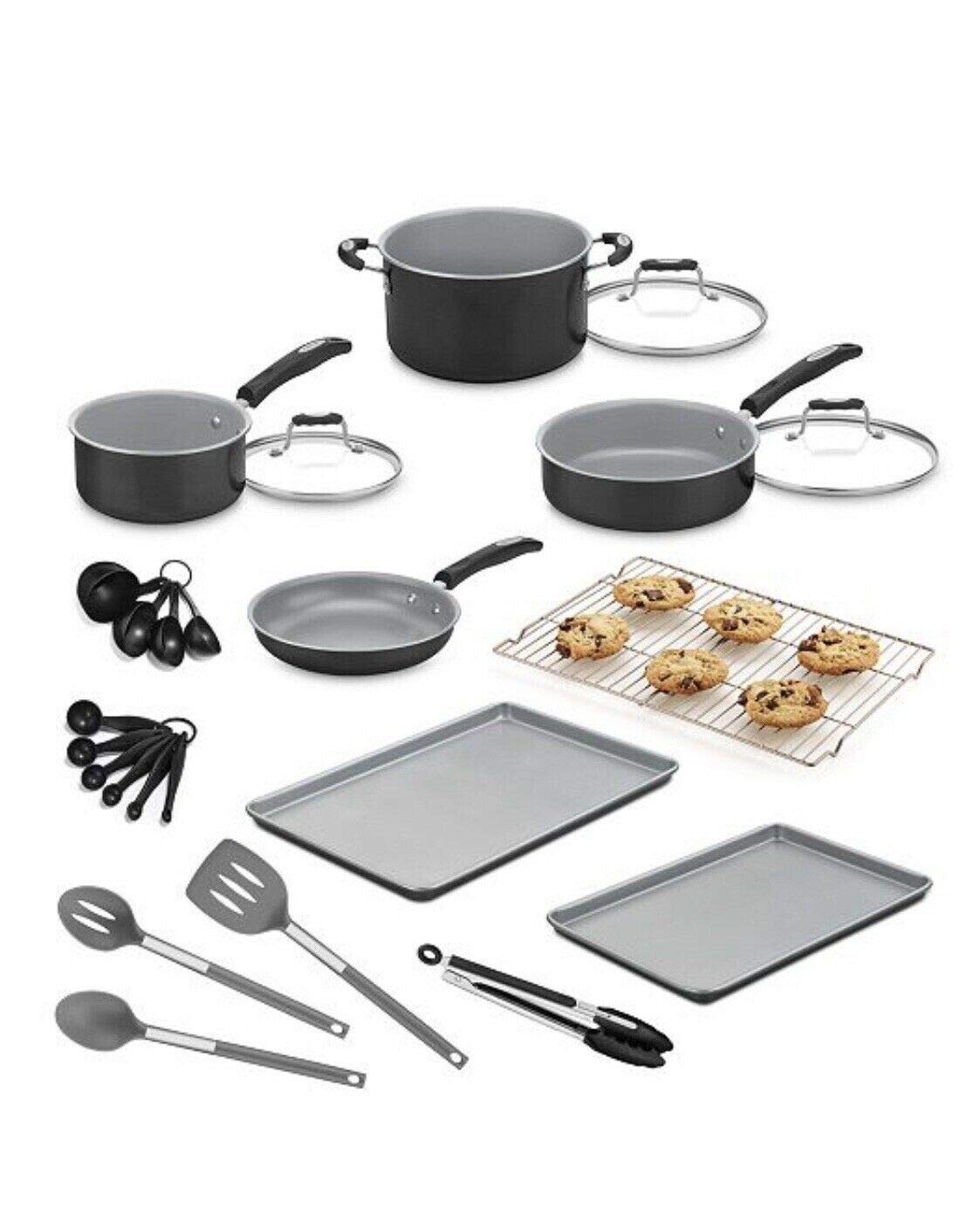
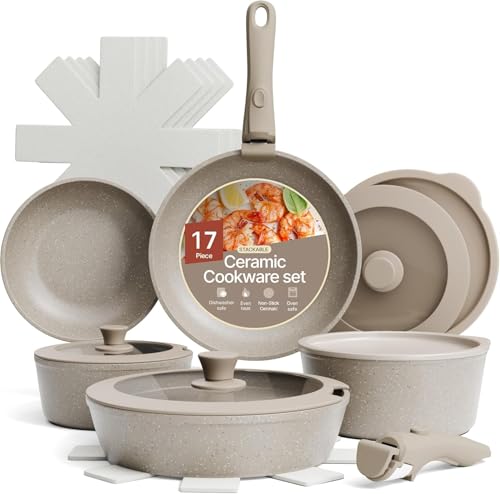
Larger sets look like better value on paper, but they often include duplicate sizes or specialty pieces that end up sitting unused in a cabinet. A smaller set built around the sizes you actually cook with most, typically a large skillet, a mid-size saucepan, and a stockpot, tends to deliver more real-world value than a ten or twelve piece set padded out with rarely used pans.
Think about how you actually cook before buying. Someone who cooks mostly single portions needs a very different set than a household regularly cooking for a family, and matching the set to that reality avoids paying for pans that never leave the cabinet.
Handle Design and Everyday Comfort
Aluminum's light weight is one of its biggest practical advantages over heavier materials like cast iron, but handle design still affects daily comfort significantly. Riveted stainless steel handles tend to stay cooler on the stovetop and hold up better over time than handles that are simply welded or bonded to the pan body.
Oven-safe handles matter if you regularly move a pan from stovetop to oven, and this detail is worth double checking, since not every aluminum set is rated for the same maximum oven temperature.
Care and Cleaning
Anodized aluminum generally holds up better to repeated washing than standard aluminum, but hand washing is still strongly recommended over the dishwasher for most sets, coated or not, since harsh detergents and prolonged heat exposure can gradually degrade the nonstick surface over time. Avoid metal utensils on any nonstick or ceramic coating, since scratches shorten the coating's effective lifespan considerably.
For anyone building out a full kitchen alongside a new cookware set, pairing it with a reliable stainless steel utensil set and a properly ventilated range hood rounds out a setup that protects both the cookware and the kitchen itself.
How Aluminum Compares to Other Cookware Materials
Aluminum heats up and cools down faster than cast iron or stainless steel, which gives cooks more precise, responsive control over temperature changes during a recipe. That responsiveness comes at the cost of heat retention, since aluminum loses heat quickly once removed from the burner, unlike cast iron which stays hot for a long stretch afterward.
Weight is another meaningful difference. A full aluminum set is noticeably lighter than an equivalent cast iron collection, which matters for anyone who finds heavier cookware tiring to lift and maneuver during regular cooking. Stainless steel sits in between the two, offering more heat retention than aluminum but with a heavier feel and a steeper learning curve for avoiding sticking without enough fat or oil in the pan.
Frequently Asked Questions
Is anodized aluminum cookware safe for everyday cooking?
Yes. The anodizing process seals the aluminum surface, preventing it from reacting with food or leaching into meals, which makes it a safe and durable choice for daily use.
Can aluminum cookware go in the dishwasher?
Some sets are labeled dishwasher safe, but hand washing is generally recommended to preserve the nonstick coating and prevent premature wear over repeated cycles.
Does aluminum cookware work on induction cooktops?
Only if the pan includes a magnetic base layer, since plain aluminum is not magnetic and will not heat on an induction surface without one.
Is ceramic or traditional nonstick better for aluminum cookware?
Both work well. Ceramic coatings appeal to buyers avoiding PTFE-based coatings, while traditional nonstick often provides slightly better long-term food release performance.
How long should a good aluminum cookware set last?
A well-maintained anodized set with proper care can reasonably last many years, while the nonstick coating itself typically needs eventual replacement sooner than the cookware body.
Final Thoughts
The right aluminum cookware set depends on your cooktop, your coating preference, and how many pieces you genuinely use in a typical week. Prioritize anodized construction and confirmed induction compatibility if relevant, and the rest comes down to matching piece count to how you actually cook.
Related reading: best 10 piece cookware sets.


