Best Alternatives to Baby Walkers
Disclosure: We may earn a commission when you buy through links on this page, at no extra cost to you. As an Amazon Associate I earn from qualifying purchases. Learn more
Are baby walkers safe for development? Are walkers safe for babies' legs? If these are some of the questions you are currently battling to find answers to, then you must be having doubts about whether or not to get a baby walker for your child. The good thing is that if your instincts are telling you otherwise, there are several alternatives to baby walkers that can help put your mind at rest.

Are baby walkers safe for babies?
Over the years, doctors, pediatricians, and other baby development professionals have found that traditional wheeled baby walkers are not safe, largely because of severe injuries caused when babies fall while using them.
Several cases of severe injuries have been reported as a result of a baby falling down the stairs while on a walker or being tipped over by something on the floor. According to a report by the American Academy of Pediatrics, there have been over 200,000 cases of infant walker-related injuries in the US alone since 1990, the majority involving children injured on the head or neck after falling down stairs in a walker.
In the recent past, baby walker related injuries have been on a decline, which can be attributed to the implementation of federal mandatory safety standards and parents looking into other alternatives.
In this article, we review some of these alternatives, along with the pros and cons of each, so you can make an informed purchase decision.
Which Are the Safest Alternatives to Baby Walkers?
Without further ado, let's look at these alternatives.
Stationary Activity Centers
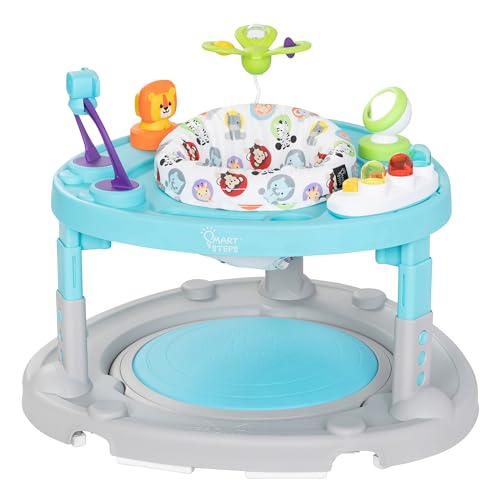
Stationary activity centers are similar to baby walkers except for the fact that they are stationary. They do not have wheels, so they make a safe activity center for the baby to stand as he or she plays with the toys.
Most activity centers come with a seat and a base level. The base level tends to be flexible to allow the baby to bounce a bit while sitting or standing, which helps exercise their leg muscles, and can often be adjusted to different heights to suit your baby's needs. Overall, a standing activity center is a great alternative that lets you take a break from holding your baby while they're kept in a safe place.
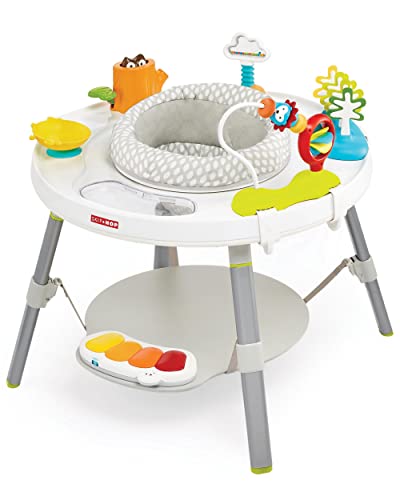
Skip Hop Baby Activity Center
Key features:
- 3-stage design grows with your baby from sit to stand
- Removable, height-adjustable toy bar
- Interactive lights, sounds, and textures to keep baby engaged
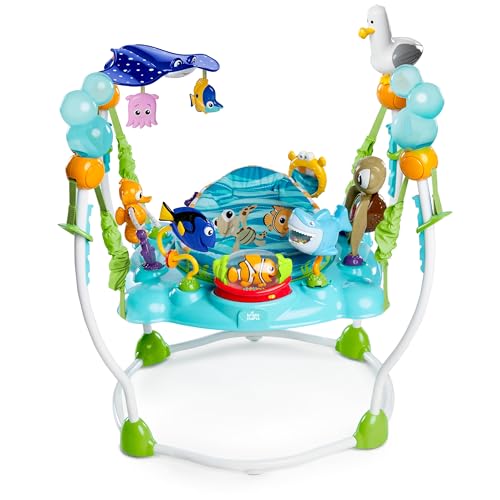
Bright Starts Disney Baby Finding Nemo Sea of Activities Center
Key features:
- 360-degree rotating seat so baby can reach every toy
- Adjustable seat height for growing babies
- Finding Nemo theming with lights and sounds
Baby Jumpers
Baby jumpers, bouncers, and exersaucers play a significant role in a baby's development, especially for babies learning to walk, since they let the baby bounce off the ground or a base level using their toes, stimulating their leg muscles. Like stationary activity centers, jumpers and exersaucers do not have wheels, so they're a safe alternative to walkers since your baby can't wheel accidentally into a dangerous area of the house.
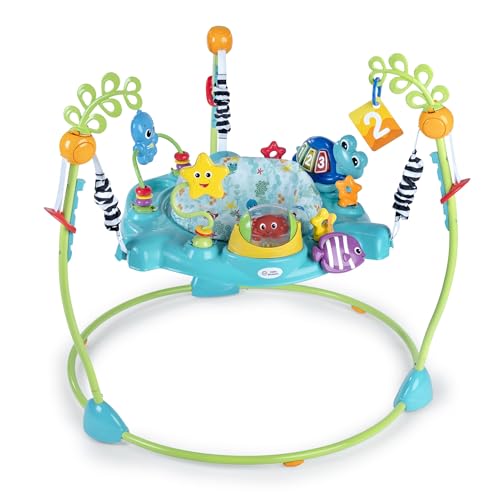
Baby Einstein Ocean Explorers Curiosity Cove Activity Jumper
Key features:
- 360-degree spinning, bouncing seat
- Ocean-themed toys and lights for sensory play
- Adjustable height settings
Bright Starts Bounce Bounce Baby 2-in-1 Activity Jumper & Table
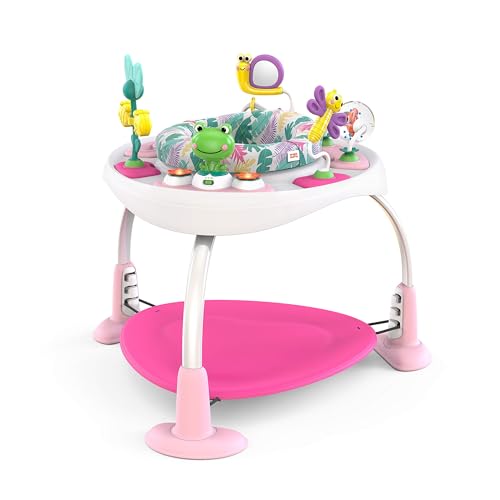
Key features:
- Converts from a jumper into a flat activity table as baby grows
- Removable toy bar with lights and sounds
- Compact footprint compared to full-size activity centers
Sit-Stand Walkers / Push Toys
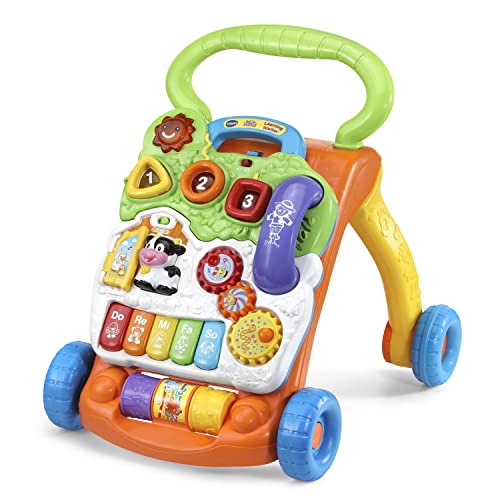
Sit-stand walkers or push toys don't require your baby to sit in a seat or an enclosed area like activity centers and jumpers. A baby can choose to stand while pushing the toy, or sit and engage with activities built into the toy itself. This type of walker works best for children who are already fairly stable on their feet and practicing how to walk.
Smart Steps Bounce N' Glide 3-in-1 Activity Center Walker
Key features:
- 3-in-1 design transitions from activity center to push walker
- Locking wheels for stability when stationary
- Jungle-themed activity panel
VTech Sit-to-Stand Learning Walker
Key features:
- One of the most popular push walkers on the market, with an enormous review base
- Removable activity panel doubles as a standalone toy
- Adjustable resistance wheels to control rolling speed as baby gets steadier
Playpen / Playyard
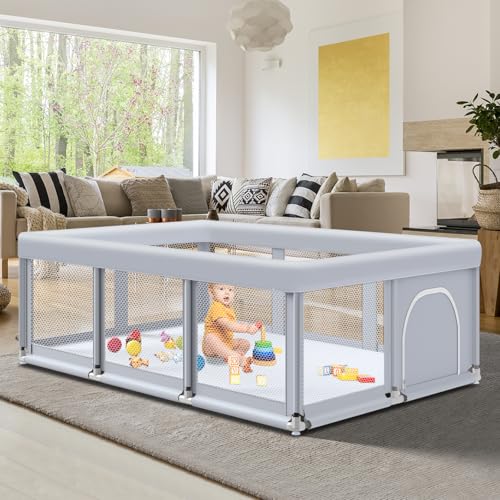
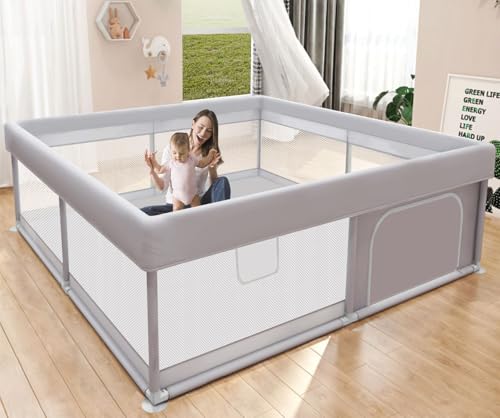
Another option is to place your baby in a playpen or play yard. This is arguably the safest option, since the baby is enclosed in a safe area and you control exactly what items or toys they can play with. The baby can also choose to stand, sit, or lie down when they get tired, freeing you up for other chores or a bit of much-needed downtime.
That said, some professionals have raised concerns about confining a baby to a playpen for long periods, arguing it can make it harder for a child to explore their surroundings and find new activities to engage in. It's generally recommended that you not let your child spend too much time in a playpen at once, even though short stretches while you attend to other chores shouldn't have any detrimental effect as long as your baby stays engaged with activities inside it.
Fshibila Large Baby Playpen (74" x 50")
Key features:
- Large 74" x 50" footprint gives baby plenty of room to move
- Breathable mesh sides for visibility and airflow
- Foldable for storage and travel
Hiaksedt Baby Playpen (50" x 50")
Key features:
- More compact 50" x 50" footprint, better for smaller rooms
- Padded mat included
- Easy to fold flat for travel or storage
Floortime or Natural Walking
If you are completely against the use of infant walkers or any of the alternatives reviewed above, you can consider natural walking or floor time.
The good thing about letting your baby move around on the floor, especially barefoot, is that it allows them to feel the ground under their feet, which helps develop the strong muscles that support walking. While shoes protect delicate feet from injury, allowing the soles of the feet to touch the floor matters too, since sensory information from the feet drives babies to start learning to walk.
Conclusion
A few years ago, baby walkers were considered a must-have baby item. That has since changed, and parents have largely switched to other alternatives due to the associated injury risks. These options still keep the baby contained, occupied, and engaged, but in a safer way than traditional wheeled infant walkers. With these alternatives, you get to step away for a few minutes and take care of other things without having to hold your baby the entire time.
Resources: The Effect of Baby Walker on Child Development, Baby Walker Use and Child Development, Myths & Truths About Baby Walkers