Best Airplay Speakers for Apple TV: Buying Guide for 2026
Disclosure: We may earn a commission when you buy through links on this page, at no extra cost to you. As an Amazon Associate I earn from qualifying purchases. Learn more

Compare the best airplay speakers for apple tv with a clear buying guide on AirPlay 2, latency, stereo pairing, sound formats and room fit for daily viewing.
Your TV speakers probably make dialogue sound thin and action scenes feel flat, and adding an Apple TV box does not fix that on its own. Choosing the best airplay speakers for apple tv means finding speakers that connect cleanly, keep sound in sync with the picture, and fill your room without constant fiddling.
This guide walks you through the features that actually matter, the main speaker types, and the price tiers worth considering. Use the comparison table below to see how the main options differ, then read on for the details behind each spec.



Price Tiers at a Glance
Instead of chasing a single winner, think in tiers. Each tier below describes what you generally get for the money, who it suits, and the trade off you accept, so you can match the tier to your room and habits.
The Balanced Tier
The balanced tier, usually about $250 to $450, suits most living rooms. You generally get AirPlay 2, reliable WiFi streaming, clear dialogue modes, and enough bass for movies without a separate subwoofer. Soundbars in this tier often add HDMI eARC, which keeps volume control on your Apple TV remote. The main limit is scale. Very large rooms may still feel underfilled during loud action scenes, and stereo separation is narrower than a true two speaker setup.
The Value Tier
Value options, often under $250, work well for bedrooms, small apartments, and second TVs. A compact soundbar or a single powered speaker can lift dialogue clarity a long way above built in TV sound for modest money. Expect fewer inputs, no separate subwoofer, and bass that stays polite rather than deep. Setup is usually the simplest of any tier, which matters if the TV is in a guest room or a rental where you cannot run cables or mount anything on the wall.
The Upgrade Tier
Upgrade setups, often about $500 to $1,000 or more, add a wireless subwoofer, wider stereo imaging, or a matched pair of speakers you can place apart for real left and right separation. This tier suits open plan rooms and people who watch a lot of film content with demanding soundtracks. You also tend to get better room calibration tools and sturdier cabinets. The trade off is footprint and price, plus more setup steps before the system sounds its best.
How to Choose the Best Airplay Speakers for Apple TV
The sections below break the decision into the specs and features that change your daily experience. Work through them in order and you will narrow the field quickly, even before you look at the best airplay speakers for apple tv options in the product table above.
Features That Matter for Apple TV
Apple TV sends audio over your home network or through HDMI, so your speaker needs to handle both paths well. AirPlay 2 support is the headline feature because it lets Apple TV stream audio wirelessly and lets you group speakers in other rooms. Just as important is lip sync. Look for automatic delay correction or a manual audio delay setting, because even a small mismatch between voices and mouths becomes distracting within minutes of watching.
AirPlay 2 and Multi Room Support
AirPlay 2 is the current standard and the one to insist on. It supports multi room grouping, better buffering on busy networks, and stereo pairing on compatible speakers. Older AirPlay versions can drop out when your router is under load. Place speakers within a strong WiFi signal of your router, and prefer a wired Ethernet option on soundbars if your router sits near the TV, since a stable connection prevents the pauses that ruin a film night.
Sound Formats and Dialogue Clarity
Apple TV outputs Dolby Atmos and Dolby Digital from most streaming apps, so a speaker that can decode those formats will place effects more convincingly. If your budget only stretches to stereo, that is fine for news, sports, and most drama. What matters more for daily viewing is a dedicated dialogue or voice mode that lifts speech above music and effects. Think about this against your habits. If you often lower the volume at night, a night mode that compresses loud peaks is worth real money.
Latency and Lip Sync
Wireless audio always adds a small delay, and good systems hide it by delaying the picture slightly or by processing audio fast. AirPlay 2 handles this well when both devices sit on the same network band. Problems start when the speaker is on a congested 2.4 GHz network while the Apple TV uses 5 GHz. Keep both on the same band, keep firmware current, and use the audio calibration tool in Apple TV settings, which uses your phone microphone to measure and correct delay automatically.
Speaker Size and Room Fit
Match speaker size to room size rather than to screen size. A compact soundbar suits rooms up to about 150 square feet, while open plan spaces benefit from a longer bar or separate speakers with a subwoofer. Measure your TV stand before you buy. A bar wider than the stand looks awkward and can block the TV remote sensor if it sits too tall. For separate speakers, plan shelf or stand space on both sides of the screen so the stereo image lines up with the picture.
Power and Bass Response
Wattage numbers are easy to inflate, so treat them as a rough guide only. A more useful sign is driver size and whether a subwoofer is included. Small drivers move less air, which limits deep bass no matter what the box claims. If you watch action films, a wireless subwoofer you can place near a wall or corner adds weight that a bar alone cannot match. Apartment viewers should look for adjustable bass levels so late night viewing does not carry through the walls to your neighbors.
Connectivity and Ports
HDMI eARC is the best wired path because it carries full quality audio from the TV and lets one remote control volume and power. Optical input is a solid backup for older TVs. Bluetooth is handy for music from a phone but adds more delay than AirPlay, so keep it as a secondary option. If you also plan to compare wired setups, see our guide to the best speakers for apple tv for options that skip wireless streaming entirely.
Types of Airplay Speakers
Soundbars
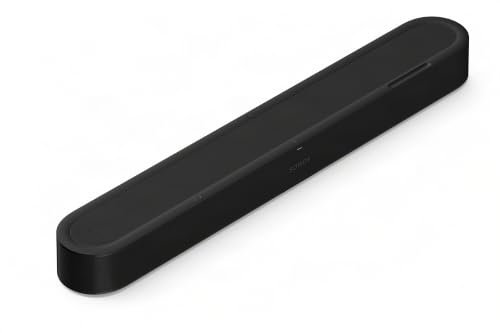
Soundbars are the simplest upgrade and the most popular choice for Apple TV. One unit sits under the screen, connects by HDMI or AirPlay, and improves dialogue right away. They suit viewers who want better sound without stands, speaker wire, or a receiver. The limit is stereo width, since all the drivers sit close together, though virtual surround processing can widen the effect somewhat.
Stereo Speaker Pairs
A matched pair of powered speakers gives you genuine stereo separation, which makes music scenes and wide film shots feel bigger. You place one speaker on each side of the TV and pair them in the Home app or the maker app. This route suits people who listen to as much music as television. If that wider music focus appeals to you, our guide to the best speakers for apple airplay covers pairs built mainly for listening rooms.
Single Room Speakers
A single smart speaker or powered speaker works for kitchens, bedrooms, and small dens where a bar will not fit. Two identical units can often pair for stereo later, which gives you an upgrade path. Sound is smaller and bass is limited, but for news, podcasts, and casual viewing the clarity gain over TV speakers is still obvious. Viewers building toward a full 4K setup can also read our guide to the best speakers for apple tv 4k for pairings that match high resolution screens.
Care and Maintenance Tips
- Update firmware regularly. Speaker makers fix AirPlay bugs and sync issues through updates, so check the companion app every few months and install what it offers.
- Keep vents and drivers clear. Dust on a soundbar grille dulls high frequencies over time. A soft dry cloth once a month keeps things clean without chemicals.
- Give powered speakers airflow. Built in amplifiers run warm, so avoid stacking other gear directly on top of a powered speaker or pushing a bar flush into a closed cabinet.
- Use quality HDMI cables. For eARC at full quality, a certified high speed cable prevents dropouts that look like speaker faults but are really cable faults.
- Recheck network placement. If dropouts start after you move furniture or change routers, run the Apple TV audio calibration again and confirm the speaker still has a strong signal.
Airplay Speakers: Your Questions Answered
What features matter most in airplay speakers for apple tv?
AirPlay 2 support, low latency, and a clear dialogue mode matter most. AirPlay 2 gives you stable streaming and stereo pairing, while good delay handling keeps voices matched to the picture. After that, check HDMI eARC for wired backup and a remote learning feature so your existing remote can control volume without juggling two remotes on the couch.
Does the TV refresh rate affect AirPlay speaker sound?
The refresh rate itself does not change sound quality, but higher frame rate content leaves less room for sloppy sync. Fast motion scenes make lip sync errors easier to spot because mouths and gestures move quickly. If your TV supports 120 Hz gaming, use a wired eARC connection for consoles, since wireless delay is more noticeable in games than in films.
Soundbar or stereo pair: which is better for Apple TV?
A stereo pair sounds wider and better for music, while a soundbar is simpler and usually better for dialogue at the same price. Choose the pair if you have space on both sides of the TV and listen to music often. Choose the bar if you want one box, one cable, and a remote that just works for everyone in the house.
Is 4K content a reason to upgrade my speakers?
Not by itself, but 4K films often carry better audio tracks, including Atmos mixes that older speakers cannot decode. If you upgraded your screen and streaming plan, your speakers may now be the weak link. A speaker that decodes the formats your apps send will reveal detail in those tracks that basic stereo downmixing leaves behind.
How long do AirPlay speakers last?
Good powered speakers commonly last seven to ten years because the drivers and amplifiers are simple, proven parts. The bigger risk is software. A maker that stops updating firmware can leave AirPlay features behind as Apple updates its system. Buying from brands with a track record of long software support protects you more than any single spec does.
What size speaker should I get for my room?
For rooms under about 150 square feet, a compact bar or single speaker is enough. Mid sized rooms do well with a full width bar or a stereo pair, and large open spaces need a subwoofer to fill the low end. If you are also choosing the screen itself, our guide to the best tvs for apple airplay explains which TVs pair cleanly with wireless audio.
The Bottom Line
Start with AirPlay 2 support and honest lip sync handling, then match speaker size and bass to your room, and only then compare extra features. Soundbars win on simplicity, stereo pairs win on width and music, and a subwoofer earns its place in large rooms. Check the product table above, shortlist the best airplay speakers for apple tv for your space, and enjoy dialogue you no longer have to strain to hear.