
Best Air Angle Grinder in 2026: Which Type Is Right for You?
Disclosure: We may earn a commission when you buy through links on this page, at no extra cost to you. As an Amazon Associate I earn from qualifying purchases. Learn more
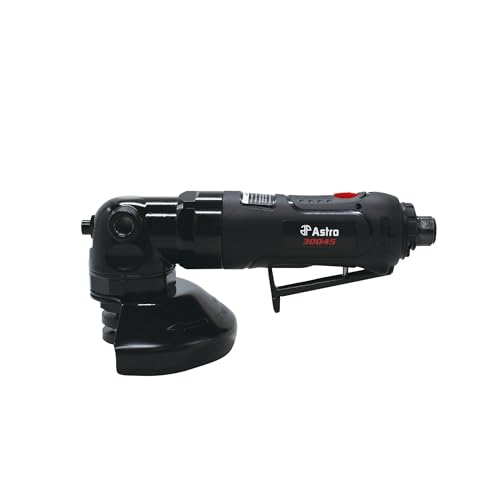
The best air angle grinder matches your compressor and your jobs. Compare types, disc sizes, and air needs before you buy.
Choosing a best air angle grinder can feel confusing because air tools look similar but differ in disc size, air use, and handling. This guide compares the main air powered types in clear terms, so you can match a tool to cutting, grinding, and surface work in a workshop or garage. The comparison table below sets out each type, its best use, and its typical price level, which makes the detailed sections easier to follow.
An air angle grinder runs on compressed air rather than a battery or a wall outlet. That design keeps the tool light and compact, but it also means your compressor and hose matter as much as the grinder itself. Read the air supply section before you buy, because a tool your compressor cannot feed well will feel weak.
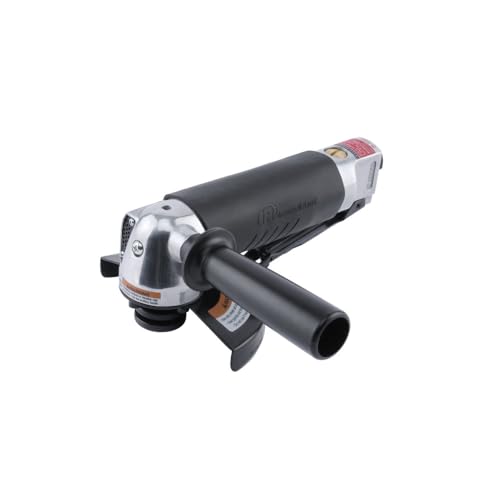


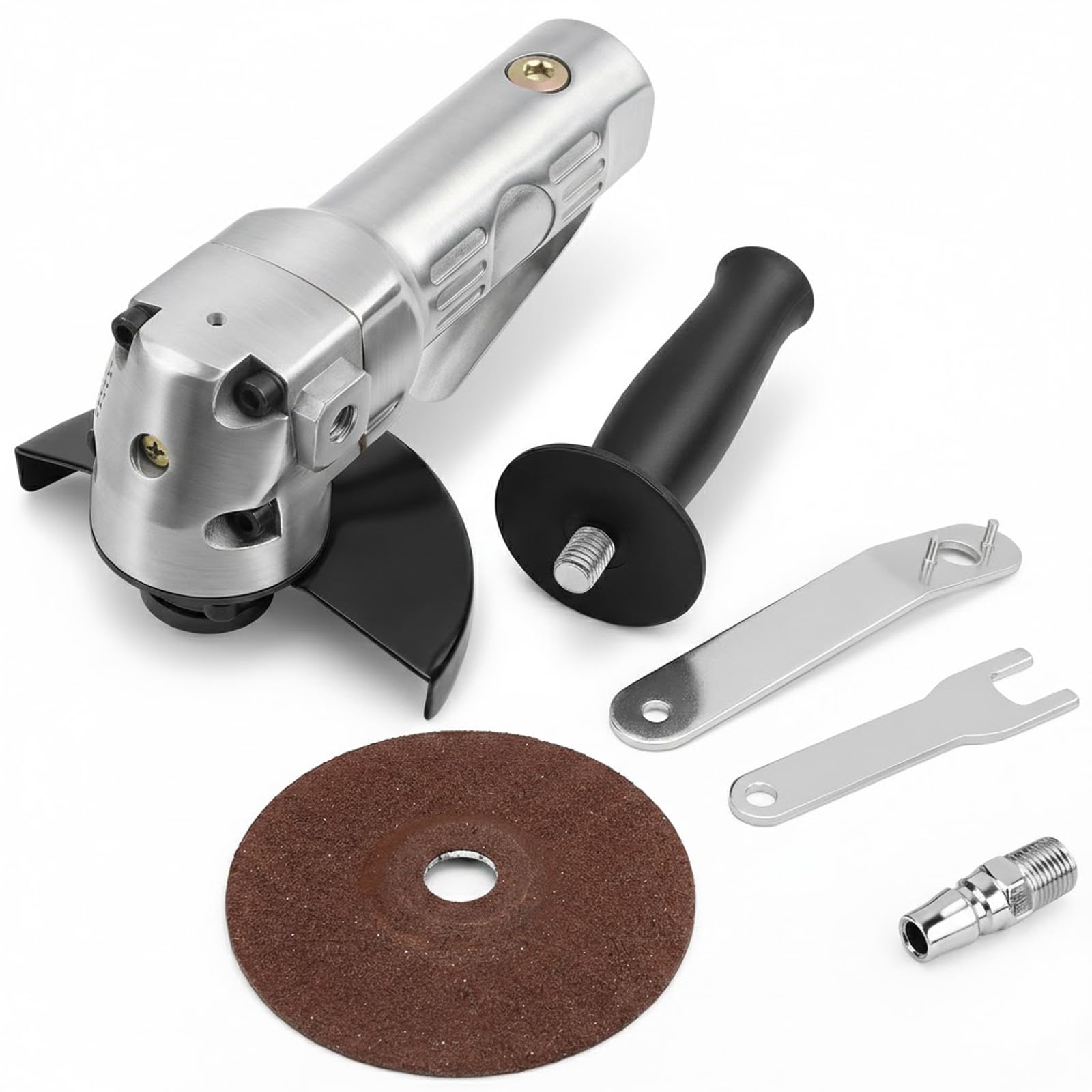
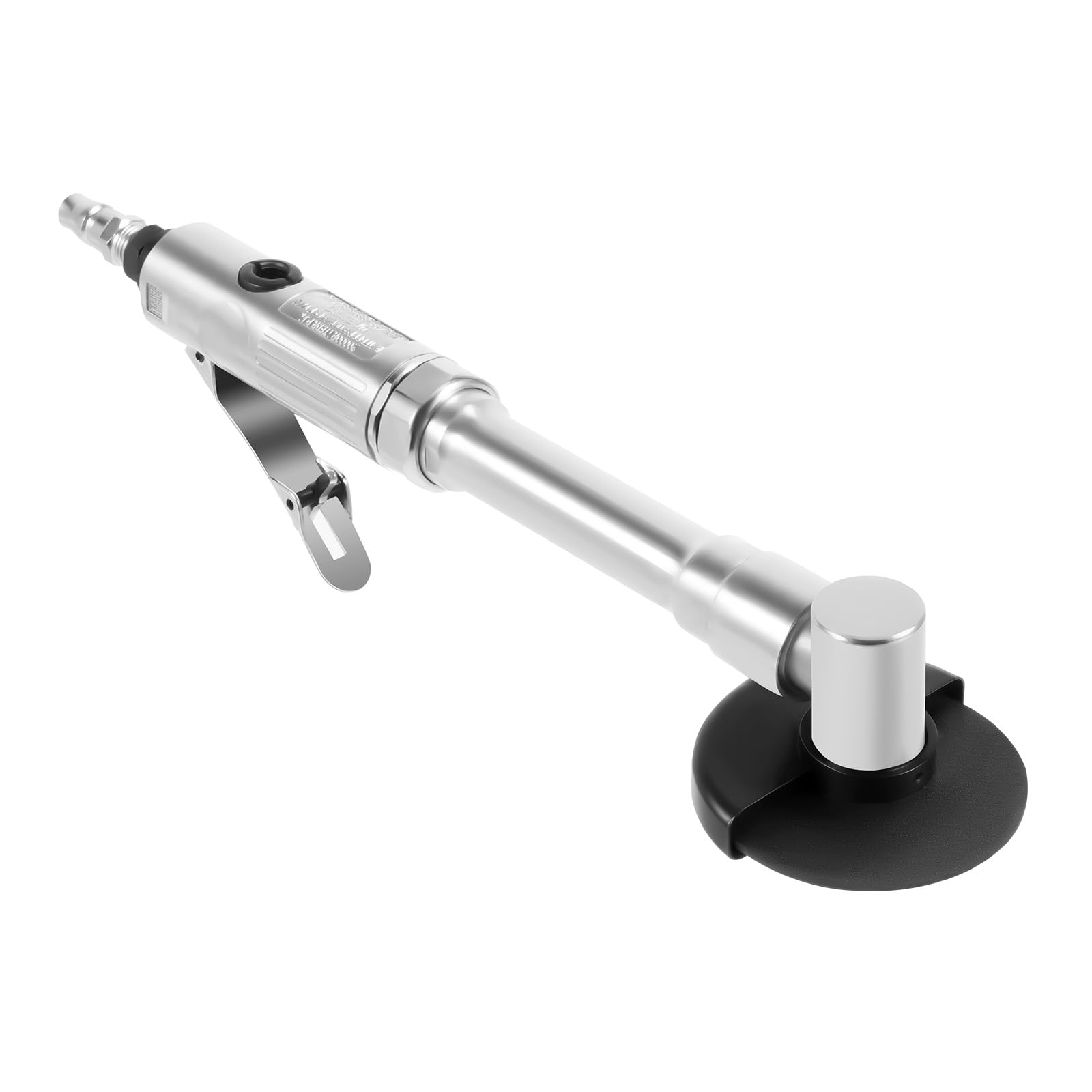
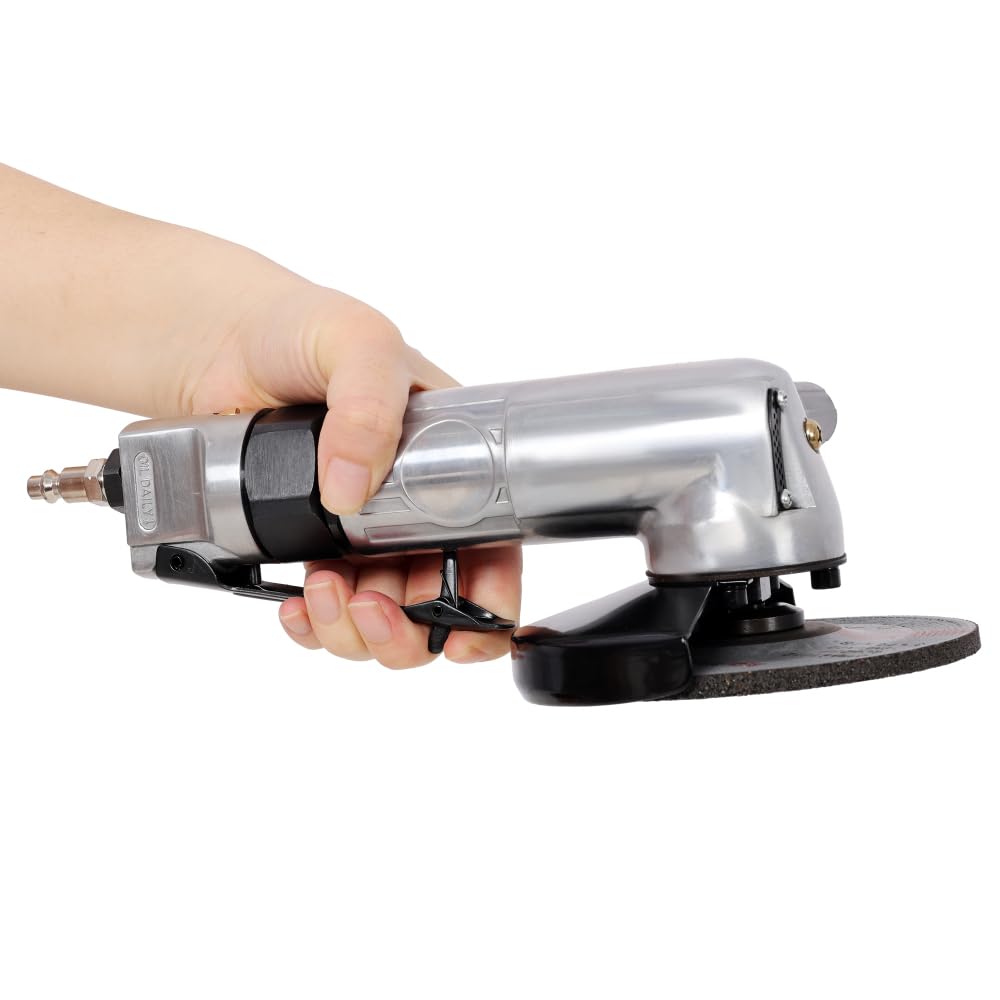
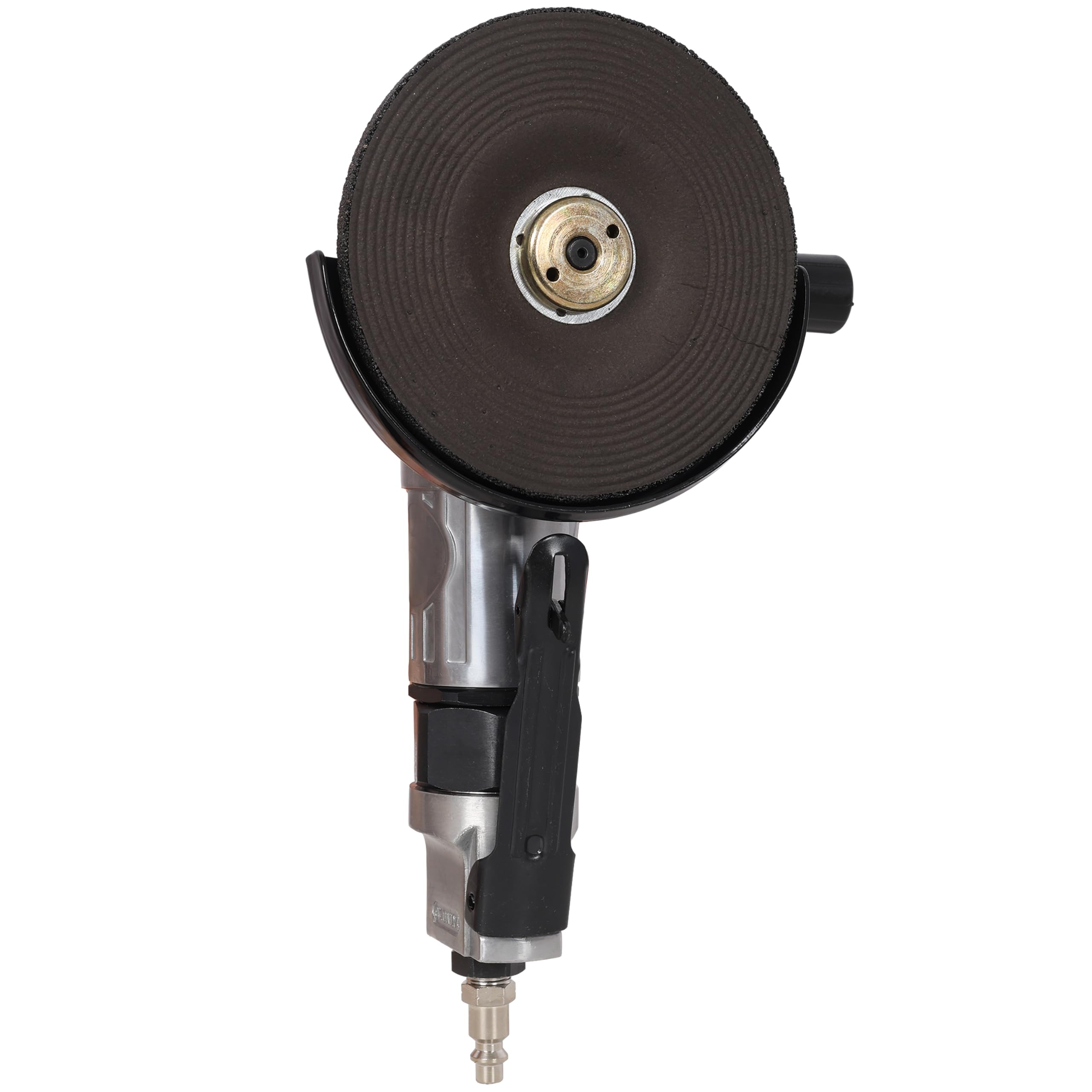
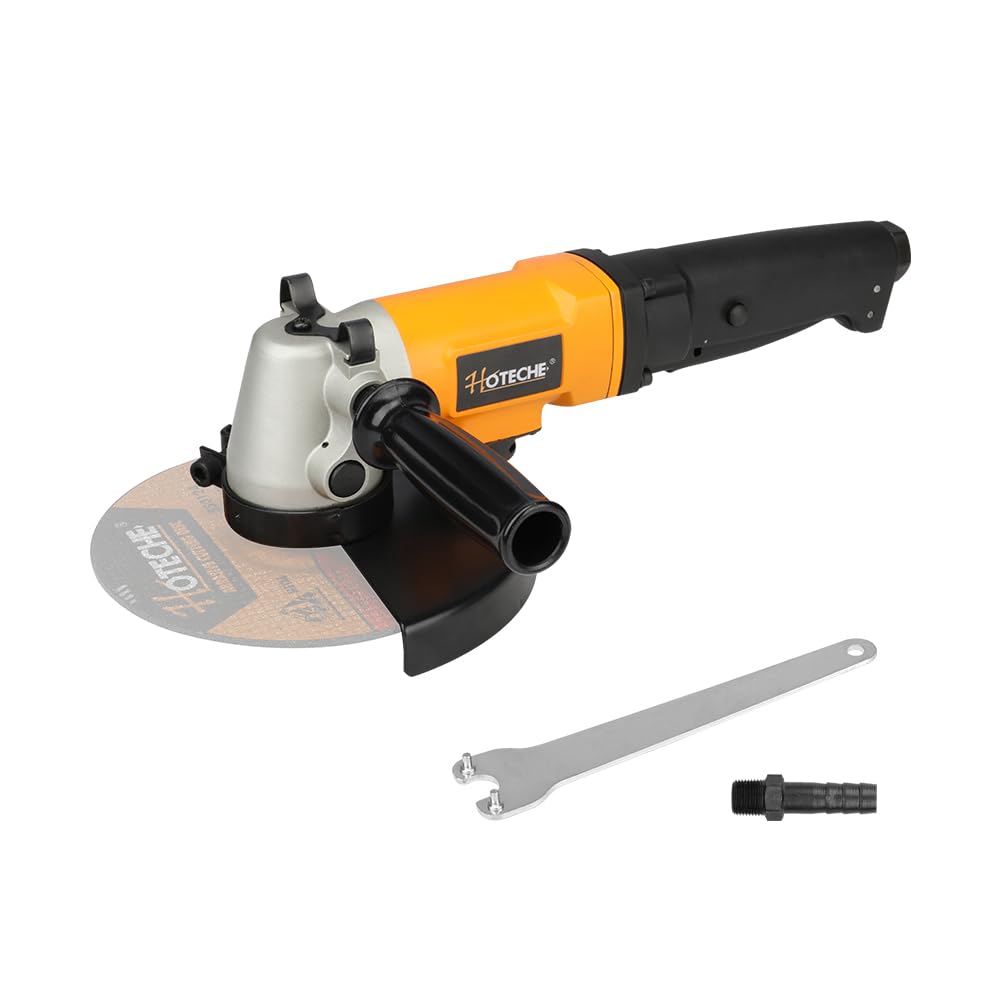
Types of Air Angle Grinders Compared
The sections below explain what each type feels like in use. Focus on disc size and air demand first, then on grip and access.
| Type | Best For | Pros | Cons | Typical Price |
|---|---|---|---|---|
| Small air angle grinder | Detail work and tight spaces | Light, easy to control | Limited cut depth | About $40 to $90 |
| Mid size air angle grinder | General cutting and grinding | Balanced power and size | Needs a capable compressor | About $70 to $150 |
| Heavy duty air angle grinder | Thick metal and long jobs | Strong, durable | Heavier, higher air use | About $120 to $250 |
| Low profile air grinder | Close quarters and finishing | Good access, smooth control | Not for heavy cuts | About $50 to $120 |
Small Air Angle Grinders
Small air angle grinders usually take a 2 inch or 3 inch disc and suit detail work, weld cleanup, and work in tight corners. Their light body makes them easy to hold with one hand, and their lower air use means a smaller compressor can often keep up. The trade off is cut depth, since a small disc cannot cut through thick stock in one pass.
Mid Size Air Angle Grinders
Mid size models usually take a 4 inch or 4.5 inch disc and cover the widest range of home workshop jobs. They can cut sheet metal, grind welds, remove rust, and shape edges without feeling too heavy. Air demand is higher than on a small tool, so check your compressor output before you buy.
Heavy Duty Air Angle Grinders
Heavy duty air grinders are built for thick metal, long grinding sessions, and demanding shop work. They use larger discs and stronger motors, which gives faster removal and less stalling under load. The cost is weight, vibration, and air use, so they need a larger compressor and a steady flow hose.
Low Profile and Detail Air Grinders
Low profile air grinders have a slim head that reaches into corners, inside frames, and around brackets where a standard head will not fit. They are useful for finishing, deburring, and small cut off work in confined areas. Power is lower than on a mid size tool, so they are not right for thick cuts.
Small Versus Mid Size: Which Should You Choose?
Compare small and mid size tools on disc size, air demand, weight, control, and job range. A small tool wins on control and access, while a mid size tool wins on job range and disc choice. Air demand is a key divider, since a mid size tool may need more flow to hold speed. If you do mostly detail work, start small, and if you cut and grind often, a mid size tool is usually better.
How to Choose the Best Air Angle Grinder
Use the factors below as a checklist, and give the most weight to air supply and disc size. A tool that matches your compressor and your common jobs will serve you far better than a stronger tool that your setup cannot support.
Warranty and Maker Support
Maker support matters for a tool with moving parts and wear items. Look for a clear warranty period, commonly 1 to 3 years, and check what it covers for motors, gears, and seals. Also check whether discs, guards, and spare parts are easy to find.
Capacity and Working Range
Capacity means disc diameter, cut depth, and the kind of work the tool can handle without stalling. A larger disc cuts deeper but needs more air and a firmer grip. For a related look at disc options, see our guide to the best angle grinder wheels. Check the maximum disc size marked on the tool, and never fit a larger disc than the guard allows.
Weight, Ergonomics, and Vibration
Weight and grip shape affect control more than many buyers expect. A slim body, a textured grip, and a side handle can help you hold a steady line during longer cuts. Vibration grows with disc size and load, so take breaks and let the tool do the work rather than pressing hard. A tool that feels front heavy will be harder to guide.
Air Supply and Power
Air supply is the factor that most often surprises first time buyers. Check the tool air use in cubic feet per minute at a stated pressure, then compare it with your compressor output at the same pressure. A hose that is too long or too narrow can also reduce flow, so use the hose size the maker recommends. For a broader comparison, see our guide to the best angle grinders.
Accessories Included
Accessories affect both cost and readiness. A useful kit may include a guard, a side handle, a wrench for disc changes, and a starter set of discs. Check whether the guard adjusts easily and locks firmly. Do not judge a kit by disc count alone, since a few discs suited to your work are worth more.
How to Make Your Air Angle Grinder Last Longer
Wear eye and hearing protection every time you grind or cut, and keep the guard fitted and adjusted for the job. Let the tool do the work and do not force it, since forcing increases heat, wear, and the risk of a disc breaking. Replace a cracked, chipped, or worn disc at once. Oil the air inlet as the maker directs, and keep the tool away from children and pets.
Frequently Asked Questions
What compressor size do I need for an air angle grinder?
You need a compressor that can meet the grinder air use at its working pressure, with some margin for continuous use. Check the tool rating in cubic feet per minute, then compare it with the compressor rating at the same pressure, not at a higher pressure. A larger tank helps with short bursts, but it does not replace steady output for long grinding. Also check hose size, since a narrow hose can starve the tool.
What disc size should I choose for home projects?
A 4 inch or 4.5 inch disc suits most home projects, since it balances cut depth, control, and disc choice. Smaller discs suit detail work and tight spaces, while larger discs suit thick stock and faster removal. Always fit only the disc size and type the tool guard and rating allow. A useful extra check is disc availability in your area, since a size with few local options can slow a project when you need a replacement.
Is an air angle grinder safer than other grinder types?
No grinder type is inherently safe, and safety depends on guard use, disc choice, and work habits. Air grinders are light and have no electric cord, but they still spin a disc at high speed and can throw sparks and debris. Always wear eye and hearing protection, keep the guard in place, and clamp the work firmly before you start. Also inspect each disc for cracks before fitting it, even if it is new.
Can I use discs made for electric grinders on an air grinder?
You can use a disc on an air grinder only when its size, bore, speed rating, and type match the air tool. Check the maximum speed marked on the disc and compare it with the tool free speed, and never use a disc rated below the tool speed. Also confirm the disc suits the material and the job, such as cutting, grinding, or flap finishing. Keep discs for different materials separate to avoid a wrong fit.
How often should I maintain an air angle grinder?
Inspect the tool before each use, and do a fuller service at the interval the maker recommends, often after a set number of hours. Before each use, check the guard, disc, trigger, and hose fittings for damage or looseness. Add air tool oil as directed, and clean dust from vents and moving parts after grinding. Log heavy use days to spot changes in vibration or speed.
Our Verdict
Match disc size to your common jobs, then confirm that your compressor and hose can feed the tool steadily. A mid size air grinder suits most home workshops, while a small tool suits detail work and a heavy duty tool suits thick stock and long sessions. Give weight to guard quality, grip comfort, and disc availability, and do not buy on power alone. With the right air supply and careful habits, the best air angle grinder for your shop will be a durable and versatile tool, and the product table can help you compare the options before you buy.


