Best Aggressive Rock Climbing Shoes in 2026: Which Type Is Right for You?
Disclosure: We may earn a commission when you buy through links on this page, at no extra cost to you. As an Amazon Associate I earn from qualifying purchases. Learn more

The best aggressive rock climbing shoes compared by type: pros and cons, who each suits and typical price ranges.
Walk into any climbing shop and the wall of downturned, brightly colored shoes can feel like a test you did not study for. The confusion is normal, because the best aggressive rock climbing shoes are not one shoe at all, but a family of designs tuned for steep walls, small footholds, and precise movement. This guide compares the main types honestly, with their strengths, limits, and typical prices.
The comparison table below shows current options side by side. Read the type breakdown first, then use the table to match a type to your feet and your climbing.




Types of Aggressive Rock Climbing Shoes Compared
All aggressive shoes share a downturned toe and a tight, performance fit, but they split into three useful groups. In text form, the summary runs like this: all around aggressive shoes suit most climbers and cost about $120 to $180, full performance models target hard steep climbing at about $170 to $220, and youth models serve young climbers at about $60 to $110. The sections below explain each group properly.
Intermediate and All Around Options
All around aggressive shoes use a moderate downturn and a medium stiff sole, which puts them halfway between a flat beginner shoe and a full performance model. They edge well on vertical walls, stay tolerable on longer routes, and still pull onto small holds on gentle overhangs. The pros are versatility and comfort relative to the category: many climbers can wear them for a full gym session. The cons are real but mild: on very steep ground they lack the last bit of toe power, and strong climbers may overpower the softer heel. Choose this type if you climb a mix of vertical and overhanging routes and want one pair to do almost everything.
Advanced and Performance Options
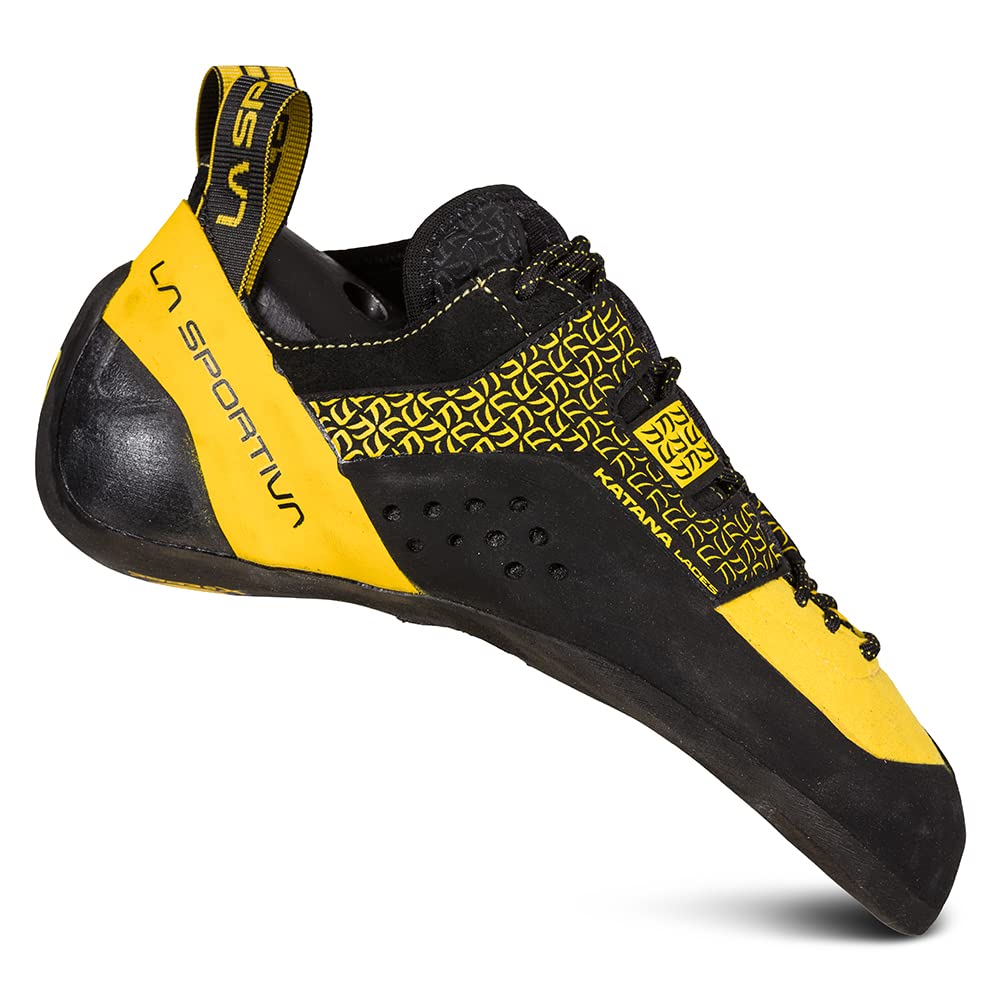
Performance models push every dial further: a strong downturn, an asymmetric shape that drives power over the big toe, soft and sensitive rubber, and tensioned heels that lock onto heel hooks. On steep sport routes and hard boulder problems, that design lets you pull with your feet instead of only standing on them, which saves forearm strength. The costs are comfort and durability. Most climbers size these for short attempts and slip them off between tries, and soft rubber wears faster, especially under sloppy footwork. Expect about $170 to $220. Choose this type when your projects are steep, your footwork is already precise, and your current shoes are the thing holding you back.
Kids and Youth Options
Youth aggressive shoes borrow the downturned shape of adult models but soften nearly everything else: gentler tension, more forgiving fits, and often adjustable heel straps that let the shoe grow a little with the foot. That restraint is deliberate, because young feet are still developing and should never be crammed into a painful performance fit. The pros are real technique benefits for keen young climbers on gym teams, with better edging and confidence on small holds. The cons are that children outgrow them quickly, so resale and hand me down value matter. Expect about $60 to $110, and prioritize comfort and a happy climber over any marginal performance gain.
Intermediate and All Around Options vs Advanced and Performance Options: Which Should You Choose?
Compare the two adult types on five points. Downturn: moderate in all around shoes, strong in performance shoes, and stronger downturn helps most on steep ground. Sole stiffness: medium stiff soles support edging and longer routes, while softer performance soles flex and grip on volumes and smears. Comfort: all around shoes can stay on for a session, performance shoes usually cannot. Rubber wear: softer performance rubber grips more and wears faster, so it punishes imprecise footwork. Price: performance models cost more to buy and more per year to resole or replace. The conclusion is simple: most climbers get more progress from the all around type, and the performance type earns its keep only when steep projects dominate your climbing. Beginners weighing their very first pair should also read our guide to the best shoes for rock climbing beginners before spending at this level.
How to Choose the Right Aggressive Rock Climbing Shoe
Size, Weight, and Fit
Fit decides everything in this category. An aggressive shoe should hold your toes curled and in contact with the front of the shoe, with no dead space, yet remain bearable for the length of a route or a boulder attempt. Hot spots on the knuckles of your toes or a numb big toe mean the shape is wrong, not that you should simply endure it. Try shoes late in the day when feet are slightly swollen, and test both feet, since most people have one foot larger than the other. Brand size charts differ, so use your street shoe size only as a starting guess and judge by feel on a wall, ideally standing on small edges in the shop.
Indoor vs Outdoor Use
Gym climbing rewards sensitivity: thin soles and soft rubber help you feel plastic holds and trust smears on volumes, and our guide to the best indoor rock climbing shoes goes deeper on gym specific choices. Outdoor rock adds sharper edges, longer routes, and abrasive surfaces, where a touch more stiffness protects your feet and the rubber lasts longer. Temperature matters too, because rubber grips best when cool and clean, and leather uppers stretch more on hot days. If you climb both, an all around model with medium stiffness is the honest compromise, while dedicated gym and crag pairs are a luxury for later.
Materials and Construction
Uppers come in leather, synthetic materials, or a blend. Leather molds to your foot and can stretch up to a full size, which forgives a snug first fit, while synthetics stretch very little and hold their aggressive shape longer. Closures shape fit as well: laces give the most adjustment across the whole foot, hook and loop straps are fast between attempts, and slipper styles offer clean sensitivity with the least adjustability. Underfoot, look at how the midsole and tension rand channel power to the toe. Seams and linings decide comfort against bare skin, since most climbers wear these shoes without socks.
Performance Characteristics
Four qualities define how an aggressive shoe climbs. Edging is the ability to stand on small edges, driven by sole stiffness and a precise toe. Smearing is the opposite skill, gripping flat surfaces, and it favors soft, flexible soles. Sensitivity is how much of the hold you can feel, which guides accurate placement. Heel and toe hooking depend on rubber coverage and heel tension: full rubber toe patches and a snug, tensioned heel stay put when you pull. No shoe maximizes all four, which is why the category splits into types. Match the mix to the angle of wall you climb most.
Skill Level and Intended Use
Be honest about where you are. A climber in the first year gains more from mileage in a comfortable all around shoe than from a painful performance model worn for two attempts an hour. Intermediate climbers on steepening gym terrain are the natural audience for moderate downturns. Advanced climbers working steep sport routes or competition style boulders can use every bit of a full performance design. Men shopping by fit should note that many models come in low volume and standard versions, and our guide to the best rock climbing shoes for men explains volume differences in detail.
Best Aggressive Rock Climbing Shoes for Specific Needs
Best Medium Aggressive Rock Climbing Shoes: Which Type Works Best
Many climbers searching for the best medium aggressive rock climbing shoes actually want the all around type described above, and the distinction matters. A medium aggressive shoe keeps a clear but moderate downturn, a medium stiff sole, and a fit you can wear for a full session. Judge it on three criteria: the downturn should bend your toes without forcing a hard curl, the sole should edge on small holds without folding, and the heel should stay secure on hooks without digging into your Achilles. This is the right answer for climbers moving up from flat beginner shoes or splitting time between the gym and the crag.
Setup and Care Tips
Before each session, inspect the toe rubber and edges: once you can see the rand wearing thin or a toe hole starting, it is resole time, and resoling early is far cheaper than replacing the shoe. Clean rubber with a damp cloth before climbing, because dust and gym grime quietly destroy grip. After outdoor use, brush off dirt, let the shoes air dry at room temperature, and never leave them in a hot car, which weakens glue and rubber. Store them out of direct sunlight with the closures fastened loosely. A sprinkle of foot powder or a day of rest between sessions keeps odor and moisture from breaking down linings.
Aggressive Rock Climbing Shoes: Your Questions Answered
Is a premium aggressive shoe worth buying for a beginner climber?
Usually not yet. A premium performance shoe rewards precise footwork that beginners are still building, and its tight fit often cuts sessions short, which slows learning more than the shoe helps. Start with a moderate all around model you can wear for an hour, climb a lot, and upgrade once steep routes become your regular terrain and your footwork stays quiet and accurate.
What size aggressive climbing shoe should I get?
Get the size that leaves your toes curled and touching the end with no air pockets, while keeping pain at a level you can tolerate for a full route. That often means your street size or one size down, but brands vary widely, so never buy by number alone. Remember that leather stretches noticeably and synthetics barely stretch, and always fit the larger foot first.
How long do aggressive climbing shoes last?
With regular gym use of two or three sessions a week, expect about four to eight months before the toe rubber needs a resole, with soft performance rubber at the short end. Precise footwork extends life a lot: dragging toes down the wall while placing them is the fastest wear pattern there is. Resole before you wear through the toe cap, and a good pair can take two or three resoles.
Does indoor vs outdoor use change which aggressive shoe I should buy?
Yes, it shifts the ideal balance. Indoors, softer and more sensitive shoes shine on volumes and smears, and you will wear them in short bursts, so a tighter fit is acceptable. Outdoors, longer routes and sharper rock favor a slightly stiffer shoe and a fit you can tolerate for a full pitch. Climbers who split their time evenly should choose the all around middle rather than optimizing for either extreme.
The Bottom Line
Choose the type by the angle of your climbing, fit by feel rather than by size number, and keep comfort high enough that you actually climb in them. Compare the types above against the product table above, and the best aggressive rock climbing shoes for you will be the pair that matches your walls, your feet, and your current level, not the most extreme shoe on the shelf.