Best Action Cameras 2026: A Complete Buying Guide
Disclosure: We may earn a commission when you buy through links on this page, at no extra cost to you. As an Amazon Associate I earn from qualifying purchases. Learn more

Best action cameras explained by sensor, stabilization, mounts, waterproofing and battery life, plus which price class fits your filming.
An action camera earns its place by surviving what your phone should not: spray on a boat, dust on a trail, a drop onto rock, and cold that drains ordinary batteries. The hard part of shopping is that the spec sheets all shout the same numbers, while the differences that matter, sensor size, stabilization quality, mount systems, and honest battery life, hide underneath. The best action cameras for you depend on whether you mostly shoot stills, long video, or both, and on how rough your filming gets. This guide explains each factor in plain terms, then sorts the classes by price. The product table gathers current options so you can match the classes to real listings as you read.
Action cameras are complete cameras in a tiny rugged body, usually with a fixed wide lens, electronic stabilization, and waterproofing built in or added through a housing. They are not small camcorders and not shrunken mirrorless cameras, and judging them by the wrong standard leads to the wrong purchase. Read the buying guide sections for the factors, the class sections for the money, and the safety section before your first ride or swim with a new camera. By the end you will know which class fits your filming and which headline specs you can safely ignore.
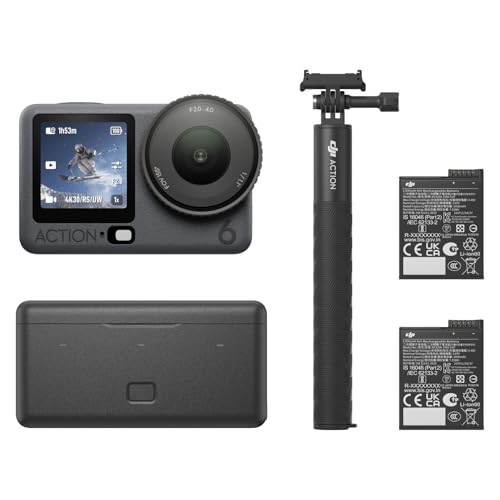


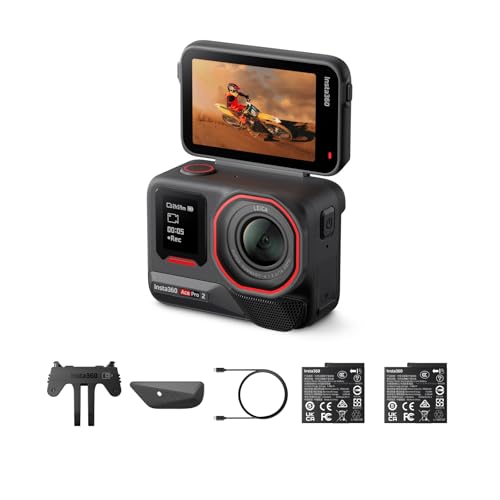
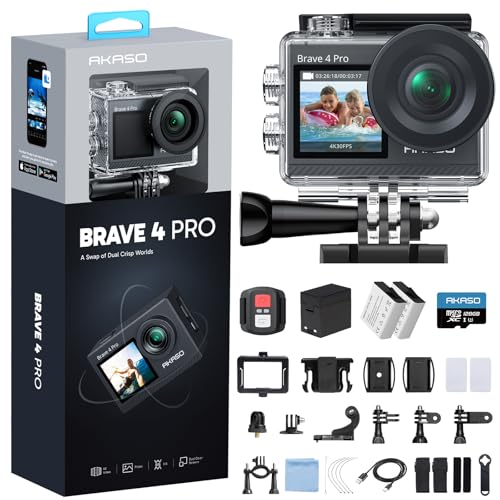

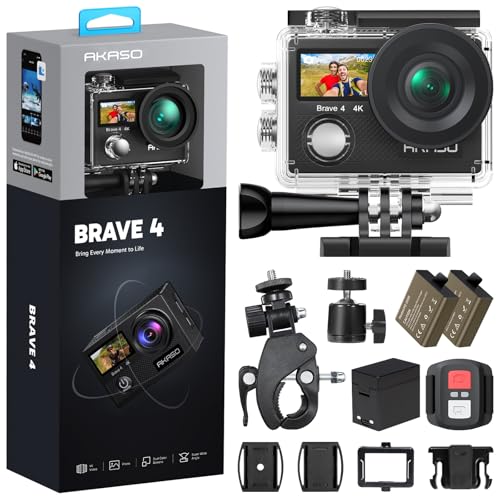

Best Action Cameras: The Main Classes and Who Each One Suits
Nearly every action camera on sale falls into one of three classes. The classes differ less in resolution, which is high everywhere now, than in sensor size, stabilization headroom, and how much abuse the body shrugs off. Match your filming pattern to a class first, and the model choice inside that class becomes much easier.
Flagship Class: Maximum Image Quality
Flagship action cameras run about $350 to $550, and this is where the largest sensors in the category live, including designs built around a one inch sensor. You get the highest frame rates at full resolution, the strongest stabilization, ten bit color for serious editing, and screens front and back. Low light footage holds together noticeably better here, and audio options expand to external microphone adapters on many models. This class suits creators who publish their footage, travelers filming once in a lifetime trips, and anyone whose previous camera disappointed them after dark. The honest costs are price, slightly larger bodies, and batteries that still drain fast at top settings.
Value Class: The Sensible Middle
Value class cameras run about $150 to $350, and they are built from last generation flagship technology and simplified current designs. Resolution and stabilization remain strong, while the sacrifices land in low light quality, screen brightness, and accessory polish. For daylight sports, family trips, and social sharing, most viewers cannot tell value footage from flagship footage. Shoppers who want the lowest sensible spend should start with our guide to best inexpensive action cameras, which covers the floor of this class in detail. Everyone else will find this middle class the best balance of price and ability, especially as a first camera.
Compact, 360 and Specialty Classes
Beyond the two main classes sit specialty designs worth knowing about. Cameras that record a full 360 degree view capture everything around you and let you choose the framing later in an app, which is liberating for solo filming and punishing in editing time and storage. Tiny wearable cameras clip to a cap or hang from a cord and shoot truly hands free footage, but many carry fixed batteries and modest waterproofing. Modular designs split into pieces that reconfigure for different mounts. Choose a specialty class only when its one big trick matches your main use, because each trades away some mainstream strength to get it.
How to Choose: A Buying Guide
Sensor Size and Image Quality
Sensor size drives image quality more than any other number on the box. Small sensors around 1/2.3 inch gather limited light, so their footage looks clean in sunshine and grainy at dusk. Larger sensors, up to the one inch class in flagships, hold detail and color as light falls and give stabilization more image to work with. Megapixels mislead in this category, because action cameras use most of their pixels for video frames and stabilization crops rather than for sharp stills. If still photographs matter as much as video, compare the dedicated options in our guide to best cameras for action photos before assuming one small camera does both jobs equally well.
Lens and Field of View
Action cameras use fixed wide lenses, and there is no optical zoom in this category. What changes between models is the field of view menu: a full wide setting that bends straight lines at the edges, a linear setting that corrects the bend with a crop, and narrower settings that crop further for a natural look. Digital zoom is simply a deeper crop, and it softens footage in direct proportion to how far you push it. For sports, the wide view is the point, since it keeps the subject framed when you cannot aim precisely. For family and travel filming, the linear setting usually looks best, so confirm any camera you like actually offers it.
Low Light Performance
Small sensors and wide lenses make low light the weak point of every action camera, whatever the marketing says. A larger sensor helps, and a wider maximum aperture helps, but neither turns night footage into daylight footage. Stabilization also struggles after dark, because the camera lengthens each frame exposure to gather light, and motion smears across those longer frames. Night modes that promise miracles are blending frames and smoothing detail away. Set expectations plainly: dawn, dusk, and lit streets film acceptably on flagship class cameras, while true darkness needs scene lighting or a different camera type. Buy for your daylight first and treat low light ability as a bonus.
Ease of Use for Your Skill Level
The best interface is the one that works with cold fingers, wet hands, or gloves. Touchscreens are quick in a living room and frustrating on a ski lift, so physical buttons, voice control, and a record button you can find by feel matter outdoors. A front screen helps anyone who films themselves, and quick capture modes that start recording from off with one press save the moments that matter. App transfer is the other half of daily use: wireless transfers of long clips are slow on every brand, so a camera that makes card removal easy saves real time. Beginners should favor strong automatic modes and simple menus over deep manual controls they will never open.
Video Capabilities
Resolution and frame rate headlines need translating. Recording at 4K and 60 frames per second is the current sweet spot for crisp footage with smooth motion, while higher frame rates exist mainly to feed slow motion playback. Log and flat color profiles reward editors who grade footage and punish anyone who shares files straight from the camera, so beginners should leave them off. Slow motion rates climb as resolution drops, which is the right trade for sports analysis and the wrong one for scenic filming. Readers who care about footage above everything else can go deeper with our guide to best action video cameras, which ranks the video factors in more detail. Also check the microphone input route before buying, because some cameras need a proprietary adapter that costs extra and sells out often.
Focus and Stabilization
Most action cameras are fixed focus designs: everything from about an arm length away to the horizon is sharp, and nothing in the settings changes that. This is a strength for sports, since the camera never hunts for focus mid action, and a limit for close up filming, where phones and larger cameras do better. Stabilization is electronic on most models, smoothing the frame by cropping its edges and shifting the image between frames. Understand what that smoothing can and cannot do. It removes vibration and small shakes beautifully, it levels the horizon on many flagships, and it cannot repair big bounces, running footfalls at dusk, or blur from slow shutter speeds in low light. Marketing reels are filmed in perfect light on smooth ground, so expect good results rather than floating camera magic in real terrain.
Durability and Weather Sealing
Ruggedness claims come in layers. Many current cameras are waterproof as sold, commonly to about 30 feet, with a protective housing extending that depth for diving. Those depth figures are maker ratings for clean water with seals in perfect condition, and they deserve the cautious reading given in the safety section below. Lens covers take the scratches that would ruin an exposed lens, so replaceable lens protectors are a genuinely valuable feature. Cold, heat, and dust each stress the camera differently: batteries fade in cold, bodies overheat in still hot air, and fine sand works into every seam. A camera that survives your actual environment beats a tougher rated camera whose seals you never maintain.
Action Cameras vs Other Options
Mirrorless Cameras
A mirrorless camera beats every action camera on image quality, lens choice, and low light ability, and loses on everything that defines action filming. It is heavier, fragile, expensive to insure against a crash, and awkward to mount on a helmet or chest. Choose the mirrorless route when the filming is the main event and someone can hold the camera properly. Choose an action camera when the camera must ride along, get wet, and survive being dropped, and accept the image quality gap as the price of that freedom. Many serious creators own both and reach for each in its own setting.
Smartphones
Your phone already shoots stabilized video that rivals midrange action cameras, and its screen and editing apps are better than any camera menu. The case against filming everything on a phone is risk and practicality. A crash that cracks a phone costs far more than a cracked lens protector, phone batteries serve two masters, and phones overheat in direct sun on a dashboard or handlebar mount. Phones also dislike water without a case that muffles audio and fogs. If your filming is gentle and occasional, the phone is honestly enough. If your filming is rough, wet, or mounted, a dedicated camera protects the device your life runs on.
Traditional Camcorders
Camcorders offer real optical zoom, long comfortable recording, and handling shaped for hours of handheld filming at events and sidelines. What they lack is everything rugged: they are not waterproof, not drop tolerant, and not mountable in the action ecosystem of adhesives, clamps, and straps. A camcorder suits the parent filming a season of games from the stands. It does not suit the player, the rider, or anyone filming in weather. The two categories barely compete, and choosing between them is really choosing where the camera will be while it records.
Action Cameras for Specific Needs
For Travel Filming
The best action cameras for travel are the ones that disappear into a small bag and still cover a whole trip: a swim, a market walk, a mountain descent, and a rainy city evening. Prioritize compact size, strong stabilization for walking footage, and a battery system you can charge from a power bank overnight. One camera with two batteries beats a bigger kit you leave at the hotel. Waterproofing without a housing matters here, because travel filming is spontaneous and nobody assembles a housing at a waterfall. Leave the bulky mounts at home and pack one mini tripod that doubles as a grip.
For Kids and Family Use
For kids, the right action camera is the one nobody cries over: inexpensive enough to lose, simple enough to run with two buttons, and protected by a housing that takes the drops children specialize in. Waterproofing matters more than resolution at this level, because pool and beach filming is where young filmmakers start. Set the camera up for your child, cap the recording settings at sensible values so cards last, and keep supervision normal: a child filming while cycling should be watching the path, never the screen. Follow the manufacturer's instructions and age guidance. Value class models from a season or two ago are the sweet spot for this job.
For Long Recording Sessions
Long recording sessions change the priorities completely. Heat becomes the first limit, since many action cameras stop recording when internal temperatures climb, especially at top resolutions in still air; shade, airflow, and a lower frame rate extend sessions more than any setting trick. Battery swapping beats battery size, so choose a model with a quick change door and budget for spares. Loop recording modes, which overwrite the oldest footage continuously, suit dashboard style and security style uses. Storage math matters too: high bitrate 4K footage fills cards quickly, so calculate your session length against card size before the day arrives, not during it.
Use It Safely: Mounts, Water and Your Attention
The most important safety rule in this category costs nothing: never hold or adjust a camera while riding, driving, skiing, or moving in any way that needs your hands and eyes. Mount the camera before you start, press record, and let it run until you stop. A missed clip is a small disappointment; a crash caused by a glance at a screen is not. If settings need changing, stop somewhere safe and change them there. Every experienced rider and driver who films follows this rule, and every horror story in this hobby starts with breaking it.
Mount placement shapes both footage and safety. Helmet mounts give a rider eye view and move with your head, while chest mounts give a steadier frame that shows bars, boards, or hands in shot. Understand the honest limit: any object fixed to a helmet changes what happens in an impact, and helmet makers and event organizers differ on whether attachments are acceptable, so follow the camera maker mounting guidance and check the rules of your sport and venue before relying on a helmet mount. Riders comparing setups can see mounting focused options in our guide to best motorcycle action cameras. Whatever the mount, tether the camera with a short leash so a failed adhesive pad costs a fright, not the camera.
Waterproof ratings are maker figures measured in clean water at stated depths with new seals, and real life erodes them. Sand and grit score the sealing surfaces, salt corrodes, and seals age and dry out. Rinse the camera in fresh water after salt or sand exposure, open nothing while it is wet, and inspect the door seals before every swim season. Battery figures deserve the same skepticism: quoted runtimes are best case results at moderate settings and mild temperatures. Cold weather, top resolutions, bright screens, and wireless connections each cut runtime hard, and losing a third to a half of the quoted figure in winter conditions is normal. Carry a spare battery kept warm in an inside pocket and treat the headline runtime as a ceiling, not a promise.
Care and Maintenance Tips
- Wipe the lens with a clean microfiber cloth, never a shirt or glove, because grit trapped in fabric scratches lens coatings and protectors.
- Carry at least one spare battery and a spare card, and rotate them so no single battery ages through every cycle alone.
- Rinse seals and doors with fresh water after salt, sand, or pool use, then let the camera dry fully before opening any door.
- Update the firmware when the maker releases it, since updates often improve stabilization, battery handling, and app connections.
- Store the camera in a dry padded case with the battery partly charged, and format cards in the camera itself rather than on a computer.
- Replace scratched lens protectors promptly, because a damaged protector flares in sunlight and softens every frame you shoot through it.
Action Cameras: Your Questions Answered
How much should I spend on my first action camera?
Plan a total budget, not a camera price. A sensible first setup pairs a value class camera at about $150 to $350 with a spare battery, a memory card, and one or two mounts, which adds roughly $60 to $120 more. However you phrase the search, best action cameras included, the logic stays the same: the camera is only part of the working kit. Spending the whole budget on a flagship body and then filming with one battery and no mounts produces worse results than a balanced value setup, and you can upgrade the body later while keeping the accessories.
Is a smartphone enough instead of an action camera?
For gentle filming, yes, and for mounted or wet filming, no. One point buyers overlook is resale and replacement math: a midrange action camera that survives three seasons of rough use costs less than one phone screen replacement after a single handlebar drop. Phones also tie your filming to the battery your navigation, messages, and emergency calls depend on. If your trips keep that battery precious, a dedicated camera pays for itself in peace of mind before image quality even enters the argument.
What specs matter most for beginners?
Stabilization quality, simple controls, and battery swapping matter most, in that order. Beginners film moving subjects in imperfect light, and stabilization rescues more of that footage than any resolution figure. One practical check before buying: confirm that the mount system you will actually use, a chest strap, a bike clamp, a helmet pad, is stocked for that brand and priced sanely, because an orphaned mount ecosystem quietly limits a camera for its whole life. Ignore megapixel counts and maximum frame rates you will never select, and spend the savings on the second battery.
Which action camera class handles low light best?
The flagship class handles low light best, because its larger sensors gather more light per frame. Even there, expect visible grain and softer detail once light drops, and expect stabilization to smooth less as exposures lengthen. A useful buying trick is to judge sample footage by the scenes you actually film: sunset rides and indoor parties, not the noon beach clips every brand leads with. If most of your filming happens after dark, that is a sign to consider a larger camera type for those scenes and keep the action camera for daylight duty.
How long do action camera batteries really last?
Real sessions usually deliver about 60 to 90 minutes per battery at common settings, well under the best case figures on the box. Screen brightness left at maximum and wireless left connected both drain quietly in the background, so dim the screen, use the quick capture mode, and turn wireless off between transfers. Cold is the harshest drain of all: a battery that films for ninety minutes in summer may manage half that on a freezing chairlift rotation. Warm spares carried against your body recover much of that loss, which is why experienced winter filmmakers rotate batteries like gloves.
Final Thoughts
Choose by sensor, stabilization, and mount system, and let resolution take care of itself, because every current class records sharp daylight footage. The best action cameras for your filming are the ones whose class matches your light, your motion, and your budget for the whole kit rather than the body alone. Set the camera up safely, mount it before you move, and keep its seals and batteries maintained, and it will return footage your phone never could. Compare the classes against real listings in the product table, and buy the balanced kit rather than the biggest headline.