
Best Acrylic Freestanding Tubs: Size, Shape and Install Guide
Disclosure: We may earn a commission when you buy through links on this page, at no extra cost to you. As an Amazon Associate I earn from qualifying purchases. Learn more

Size, shape, wall thickness, plumbing, and care explained to help you choose the best acrylic freestanding tubs.
A freestanding tub turns a bathroom into a showpiece, and acrylic is the material most buyers choose for it. It is light enough to move into place, warm to the touch, and available in many shapes at fair prices. The best acrylic freestanding tubs combine thick, well reinforced walls, a comfortable soaking shape, and a size that suits your room and your floor.
Use the product table below to compare lengths and shapes, then read on for the checks that matter: layout, floor support, plumbing, comfort, and care.




Why Choose Acrylic for a Freestanding Tub
Acrylic is a molded plastic sheet backed with fiberglass and resin. It holds heat better than stone resin or cast iron feels at first touch, and it is much lighter, so floors and stairs cope more easily. The surface is non porous, which makes it easy to clean, and small scratches can often be buffed out. Compared with cast iron it is cheaper to ship and install. Compared with stone resin it is less heavy but can feel slightly less solid underfoot, which is why wall thickness and reinforcement matter.
Check the Room Before You Choose
Size and Clearance
Measure the room, the door, and the path to the bathroom. A 59 to 67 inch tub suits most bathrooms, while 70 inches and above suits a large primary bath. Leave at least 4 to 6 inches around the tub for cleaning, and enough space in front for safe entry and exit.
Floor Support
A filled tub with a bather weighs several hundred pounds. Acrylic is lighter than other materials, but check that your floor structure can carry the load, especially on upper floors. If you are unsure, ask a contractor.
Plumbing and Drain Location
Freestanding tubs need a drain that lines up with the plumbing, or a plan to move it. Check whether the model has a center drain, an overflow, and which faucet style it needs. Floor mounted fillers are common, and wall mounted fillers need a wall in the right place.
Shapes of Acrylic Freestanding Tubs
Oval
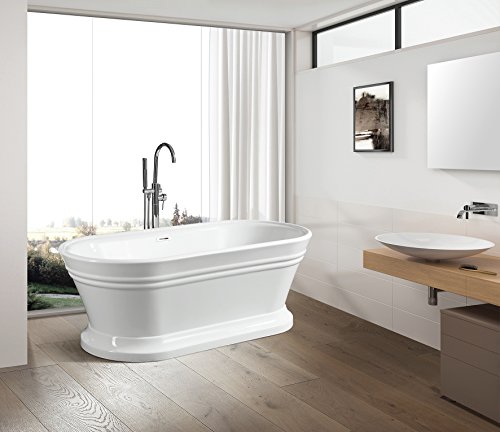
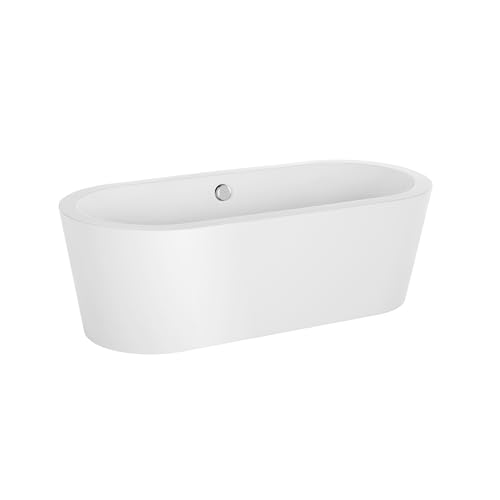
Oval tubs are the classic choice: soft lines, comfortable soaking, and a good fit for most bathrooms.
Rectangular and Modern
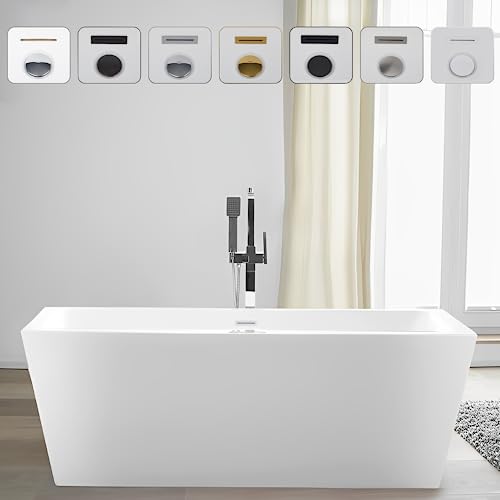
Rectangular tubs use wall space efficiently and suit modern bathrooms with clean lines. The inside shape may be less sloped, so check comfort.
Slipper
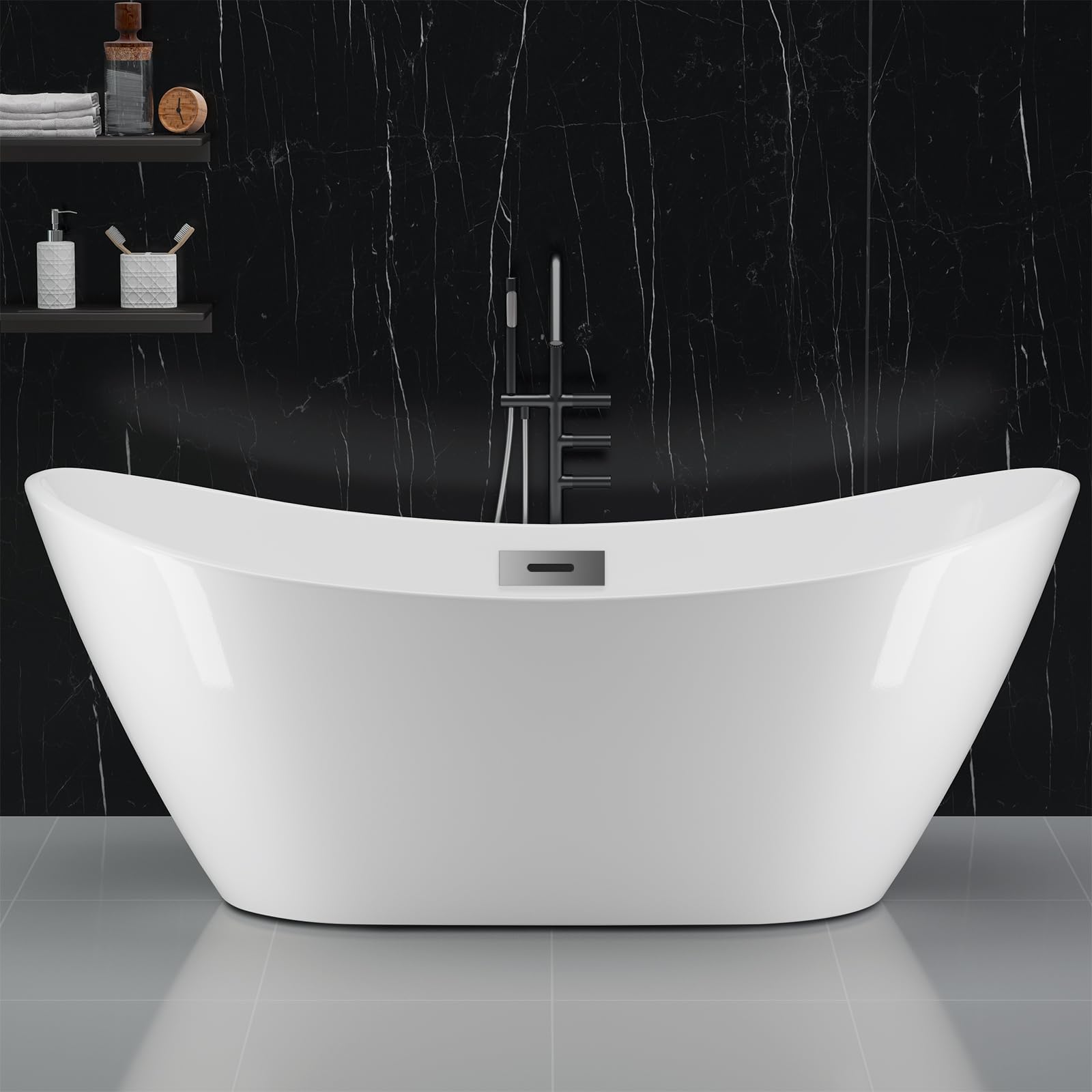
Slipper tubs have a raised back, or both ends raised, for a reclined soak. They suit relaxing but need more height and room.
Compact Tubs
Models of 51 to 55 inches fit small bathrooms and give a deeper soak than a standard tub. They suit shorter bathers and smaller rooms.
Features to Compare
Wall Thickness and Reinforcement
Thicker acrylic with a fiberglass backing resists flex and keeps water warm. A flimsy shell can feel unstable. Look for a weight and a thickness listed by the maker.
Soaking Depth and Back Slope
Depth and back slope decide comfort more than length. A gentle slope supports the back, and a deeper tub covers more of the body. Taller bathers should check internal length, not just outside length.
Finish and Cleaning
A glossy white finish is easy to wipe and looks fresh. Avoid abrasive cleaners, which dull the surface. Use a soft cloth and a mild cleaner made for acrylic.
Included Parts
Check whether the drain, overflow, and slotted pop up are included. Some tubs ship without them, or with a drain in a finish that must match your faucet.
Budget and What to Expect
Basic acrylic freestanding tubs start at about $600 to $800 for compact sizes, while 67 to 72 inch models with thicker walls and better finishes run from about $900 to $1,500. Among the best acrylic freestanding tubs, the higher priced ones usually offer thicker acrylic, smoother seams, and included drains. Remember to add the cost of a faucet, a drain kit if not included, and professional plumbing, which can match a large share of the tub price.
Delivery is also part of the cost. Large tubs arrive on a pallet and may need two people to carry. Check the delivery terms and inspect the tub for scratches or cracks before you sign.
Installation and Care
Place the tub on a level floor, adjust the feet if the model has them, and connect the drain before you fill the tub. Check connections for leaks after the first fill. Clean after each use, rinse away soap, and wipe dry to avoid film. Use a non slip mat and a grab bar for safety, and never leave children unattended near water. Keep the water temperature safe and comfortable.
Common Mistakes to Avoid
The most common mistake is buying a tub that is too large for the room or the doorway. Another is ignoring the drain location, which can force costly plumbing changes. A third is forgetting the faucet: a freestanding tub needs a floor mounted or wall mounted filler that matches. Finally, check the return policy, because large items are costly to send back.
Frequently Asked Questions
Is acrylic a good material for a freestanding tub?
Yes. It is light, warm to the touch, and easy to clean, and good models have thick walls and fiberglass reinforcement.
How long does an acrylic tub last?
A well made tub can last 15 to 20 years or more with gentle cleaning. Avoid harsh chemicals and sharp tools.
What size freestanding tub should I buy?
Most bathrooms suit 59 to 67 inches. Choose compact models for small rooms and 70 inches or more for large baths.
Do freestanding tubs need special plumbing?
They need a drain that matches the tub and a floor mounted or wall mounted faucet. A plumber can adjust the lines if needed.
Can I install a freestanding tub myself?
Placement is simple, but the drain and supply lines should be handled by a qualified plumber unless you are experienced.
Final Thoughts
Measure the room, check the floor, and match the drain and faucet before you buy. Use the product table above to compare the best acrylic freestanding tubs by length and style, and choose one with thick, reinforced walls. For a related guide, see the best acrylic freestanding bathtubs.


