Best Acrylic Freestanding Bathtubs: A Buying Guide for 2026
Disclosure: We may earn a commission when you buy through links on this page, at no extra cost to you. As an Amazon Associate I earn from qualifying purchases. Learn more

Compare the best acrylic freestanding bathtubs by material, size, floor load, and price, with setup and care tips for choosing the right tub.
A freestanding tub is the visual center of a bathroom remodel, yet the pretty silhouette is the easy part of the decision. What decides whether you love it for a decade is the shell thickness, the footprint, and whether your floor and plumbing suit a tub that stands away from the wall. The best acrylic freestanding bathtubs balance all three, and this guide shows you how to judge each one before you order.
We will walk through what each price band really buys and the specs that matter most. Use the comparison table below as you read to match each factor against the tubs you are considering.





What Each Price Band Buys You
Price bands in this category map closely to shell construction and finish quality rather than to looks. Two tubs can share the same outline in a photo and feel completely different in person, because one is a thin single shell and the other is a reinforced double wall build.
Budget Band: About $400 to $700
Budget tubs are usually thinner single wall shells with basic gloss finishes. They suit guest bathrooms and quick refreshes where the tub is used a few times a month. Expect simpler drain hardware and shorter warranties, and check the stated wall thickness carefully, because stiffness is the first thing this band gives up.
Mid Range Band: About $700 to $1,200
The mid range is where most buyers should shop, because shells gain reinforcement, finishes resist scratching better, and designs widen beyond a single oval shape. Drain hardware improves, leveling feet get sturdier, and warranties lengthen. For a main bathroom in daily use, this band offers the strongest mix of comfort, durability, and cost.
Premium Band: About $1,200 to $2,500
Premium tubs add thicker acrylic, seamless double wall construction, and sculpted interiors shaped for long soaks. You also pay for better heat retention and finishes that polish back to a shine after years of use. The jump is worth it for a primary suite you plan to keep, and harder to justify for a rarely used spare bath.
How to Choose the Best Acrylic Freestanding Bathtubs: Buying Guide
Build Quality and Materials
Material is the honest first split in this category, because acrylic is a light class of tub material set against heavy classes such as cast iron. An acrylic tub often weighs about 60 to 120 pounds empty, light enough for one installer to move, while a cast iron tub of similar size can weigh several times more. That weight gap leads straight to the second point: the floor load class governs the install class. A filled tub with a bather can place well over 500 pounds on a small footprint, so older floors may need reinforcement before any freestanding tub goes in.
Judge the shell itself by thickness and reinforcement. Better tubs use thicker acrylic sheets backed with fiberglass layers, which keeps the floor of the tub from flexing underfoot. A quality shell feels rigid and shows no ripples along the rim line. Shoppers comparing materials across the wider category can also review the best acrylic bathtubs in built in formats to see how construction differs by style.
Key Performance Specs
Size is the spec that governs everything else, so start with the tape measure. A length class of about 59 to 67 inches covers the common freestanding range, with compact designs near 55 inches and generous soakers reaching about 71 inches. Match the length to your tallest bather, because a tub that forces bent knees turns a long soak into a short one. Soaking depth of about 14 to 16 inches to the overflow keeps water over the shoulders without wasting gallons.
Capacity and rim design complete the picture. Most models in this class hold about 55 to 75 gallons, which affects both your water bill and how fast your water heater empties. A wide flat rim gives you somewhere to set a book or a cup, while a thin rim offers no perch. If two people will share the tub, look for a center drain and sloped ends at both sides.
Intended Use and Who It Is For
Be honest about how the tub will be used, because a showpiece bath and a family bathroom ask for different things. Deep soakers suit adults who bathe to unwind, while households bathing children daily may prefer a lower rim height for lifting little ones in and out. If the tub will double as a shower, remember that freestanding designs splash more than alcove designs. Buyers weighing formats can compare the full range of the best freestanding bathtubs against alcove styles before committing.
Ease of Use and Setup
Freestanding tubs simplify some parts of installation and complicate others. There is no frame to build and no tile flange to seal, but the drain position must land precisely where the floor plumbing sits, and many bathrooms need the drain moved. Adjustable leveling feet make setup far easier on uneven floors, so treat them as a near essential feature. Also plan the filler early, since a floor mounted filler needs its own supply lines roughed in.
Safety and Certifications
Slip safety deserves a section of its own, because a wet surface is a slip surface, and freestanding tubs have high walls to climb over. A textured floor class inside the tub governs how secure your footing feels at entry and exit, and it is worth more than any styling detail. Grab bars can be added beside the tub where wall structure allows. Look for listings that state compliance with recognized plumbing standards and a stated weight capacity for bathers.
Price vs Value
Value in this category is cost per year of service, not the ticket price alone. A mid range tub that serves fifteen years beats a bargain shell that crazes or flexes within five. Spend first on shell thickness and reinforcement, then on the filler and drain hardware, and last on styling. Budget for installation as its own line, since moving a drain or reinforcing a floor can add about $300 to $900 to the project.
Types of Acrylic Freestanding Bathtubs
Compact Options
Compact tubs run about 55 to 59 inches long and suit small bathrooms and ensuite additions. The best designs keep soaking depth generous even as the footprint shrinks, so the bath still feels like a soak rather than a sit. If space is your main constraint, compare these against the best acrylic freestanding tubs in shorter lengths.
Slipper and Oval Options
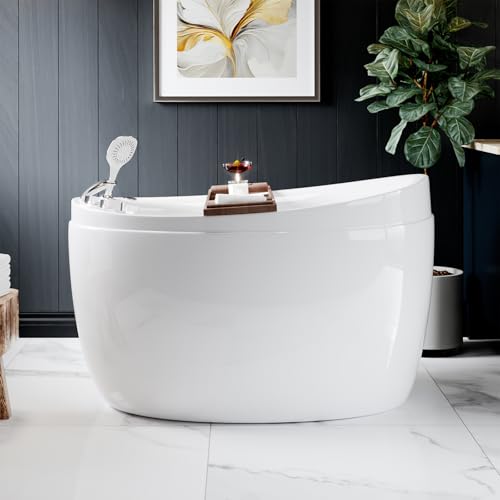
Slipper tubs raise one or both ends so your back rests at a reclined angle, which long soakers tend to love. Oval tubs keep a lower, even rim and read as calm, modern shapes that pair with almost any fixture finish. Single slipper designs favor solo bathing, while double ended ovals with a center drain serve couples more flexibly.
Alcove Alternatives Worth a Look
Some bathrooms simply suit a built in better, especially where the tub and shower combine in one wet zone. An alcove design seals against three walls, controls splash, and usually costs less to install. If your layout points that way, the best acrylic alcove bathtubs cover the same material in a format that may serve the room better.
Setup and Care Tips
- Read the manual before first use, and confirm the drain assembly order before the tub is set in place.
- Clean with a soft cloth and a cleaner made for acrylic, and see the best cleaners for acrylic bathtubs for options that will not dull the finish.
- Keep grit off the floor of the tub, since sand and bath salts ground underfoot are the main cause of fine scratches.
- Inspect the drain seal and leveling feet once a year, and tighten or reseal at the first sign of movement.
- Register the product for warranty coverage as soon as it is installed, and keep the receipt with your remodel records.
- Rinse and wipe the tub after soaks with bath oils, because oily residue dulls the gloss over time.
FAQs
What features matter most when buying an acrylic freestanding bathtub?
Shell thickness and reinforcement matter most, because they decide stiffness, heat retention, and how long the finish stays sound. After that, match the length and soaking depth to your tallest bather, and confirm the floor can carry the filled weight. Drain placement, filler style, and a textured floor for safe entry come next, and styling should be the last filter, never the first.
How much should I spend on an acrylic freestanding bathtub?
Most buyers do well in the mid range of about $700 to $1,200, where shells are reinforced and finishes hold up to daily use. Budget designs at about $400 to $700 suit guest baths, while premium tubs from about $1,200 to $2,500 reward a primary suite you plan to keep for years. Keep installation money separate in your budget, because plumbing changes often cost as much as the gap between bands.
Are expensive acrylic freestanding bathtubs worth it?
They are worth it when the extra money buys a thicker shell, seamless double wall construction, and a finish you can polish back after years of use. Those gains show up every time you bathe, in warmer water and a rim that still looks new. They are harder to justify in a spare bathroom or a home you expect to sell soon.
How long does an acrylic freestanding bathtub last?
A well made acrylic tub commonly serves about ten to fifteen years, and quality shells can go longer with gentle care. Lifespan depends mostly on shell thickness and whether the base was properly supported at install so it never flexes. Fine scratches can usually be buffed out. Thin bargain shells tend to show crazing and soft spots far sooner.
How do I maintain an acrylic freestanding bathtub?
Wash it weekly with a soft cloth, warm water, and a mild cleaner approved for acrylic, then rinse and dry to keep the gloss. Never use abrasive powders or scouring pads, because they cut the surface and invite stains. A light coat of automotive style paste wax, if the maker allows it, helps water bead and slows soap film. Fix small chips early with a repair kit so moisture never reaches the backing layers.
The Bottom Line
Choose the shell first, the size second, and the style last. A rigid reinforced tub in the 59 to 67 inch class, set on a floor that can carry it and fitted with a textured floor for safe entry, will satisfy far longer than a prettier shape built thin. Let those three checks decide your pick from the product table above, where the best acrylic freestanding bathtubs are compared side by side.