Best Absorbent Tea Towels for 2026: What Your Money Really Gets You at Every Price
Disclosure: We may earn a commission when you buy through links on this page, at no extra cost to you. As an Amazon Associate I earn from qualifying purchases. Learn more

Compare the best absorbent tea towels at every price point. Learn what you get at budget, midrange, and premium levels and where spending more pays off.
Tea towel prices vary a lot, and a higher price does not always mean a drier counter. The best absorbent tea towels soak up spills fast, dry dishes without leaving lint, and still feel good after many washes. This guide shows what your money buys at each level so you can use the comparison table below well.
Start with how you cook. A household that washes pans every night needs a different towel from a baker who mostly polishes glassware. Fiber, weight, weave, and size explain most of the price gap, and the sections below match each factor to a sensible budget.



Who Should Buy Which Absorbent Tea Towels?
Pick by the job you repeat most often. One towel rarely does every job well, so many homes keep two weights in rotation.
Busy Home Cooks Who Dry Pans and Counters Daily
You need a towel that holds a lot of water in one pass and keeps working through a full sink of dishes. Choose midweight cotton with looped terry on at least one side, in the larger size range covered below. A hanging loop helps the towel dry fully between meals. Midrange sets usually suit you best, since you will feel the extra thickness every day.
Bakers and Glassware Owners Who Need Low Lint
Your main problem is not volume but finish. A towel can feel thirsty yet leave fine fibers on glasses and dark baking trays. Choose a flat weave or a tight waffle weave in cotton or linen, since both release less lint than loose terry. Keep one towel only for glass and never use it on greasy pans, so oils do not transfer and cause streaks.
Small Kitchen Households With Little Storage
You need space saving picks that earn their drawer space. Choose a smaller set of versatile midweight towels rather than a large bundle of thin ones that you must swap mid task. Waffle weave towels fold flat, dry fast on a hook, and handle hands, dishes, and small spills in one design.
Key Features to Compare
Compare these factors in the same order each time you shop for best absorbent tea towels, so a low price cannot hide thin fabric or weak edges.
Fiber: Cotton, Linen, and Blends
Cotton is the most common fiber because its natural strands pull in water and feel soft from the first use. Long staple cotton, including Turkish cotton, tends to stay smoother and stronger after washing, which is one reason it costs more. Linen absorbs well, dries fast, and leaves very little lint, but it feels stiffer at first and costs more.
Microfiber blends soak up water quickly and cost less, yet they can push water around on glass and may hold cooking odors. An OEKO TEX label means the fabric was tested for harmful substances, a useful check for towels that touch dishes and food surfaces.
Weight and GSM for Tea Towels
GSM means grams per square meter, and it tells you how dense the fabric is before you touch it. Most tea towels fall between about 300 and 600 GSM. Towels near 300 GSM feel light and dry fast, but they wet through sooner on big jobs.
Towels near 500 to 600 GSM hold more water and feel cushioned, but they take longer to dry on a hook. For most kitchens, the middle of the range balances capacity and drying speed.
Weave: Terry, Waffle, and Flat Weave
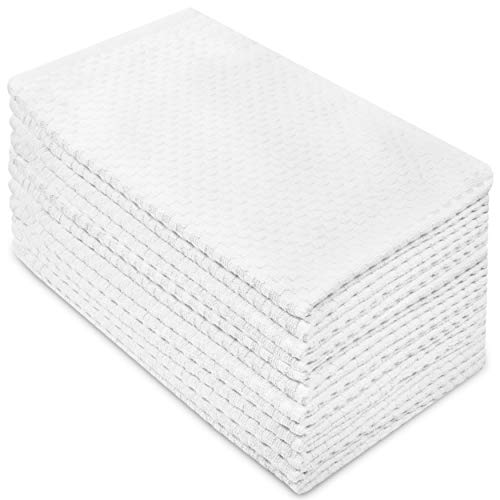
Weave shapes how the surface meets water. Terry loops add surface area and trap water well, so terry suits pans, counters, and spills. Waffle weave uses recessed squares that hold water while air moves through, which helps the towel dry faster between uses.
Flat weave towels, sometimes in a herringbone pattern, lie smooth against glass and leave the cleanest finish. Many good sets mix weaves, giving you one towel for volume and one for polishing.
Size and Coverage for Dishes and Hands
Most tea towels measure about 18 by 28 inches, which covers a dinner plate and wraps around a large pan handle with room to spare. Larger towels near 20 by 30 inches help when you drain produce or line a tray of washed glasses. Smaller towels near 16 by 24 inches suit hand drying and small spills. Check the stated size after washing if the listing gives it, since cotton can shrink a little at first.
Edges, Hanging Loops, and Shrinkage
Edges decide how long a towel keeps its shape. Look for tightly stitched hems on all four sides, since loose hems curl and fray once the towel is pulled over pan rims daily. A sewn hanging loop keeps the towel off a counter puddle, so it dries evenly instead of in a bunch. A towel that twists after washing signals uneven weaving that no care routine will correct.
Tea Towel Prices by Fiber Quality and Finish
Price tiers reflect fiber quality, density, and finish more than brand names. Use the ranges below as a guide for home kitchen sets.
Budget Tier: Simple Sets for Light Daily Drying
Budget sets cost about $10 to $18 for a multipack. You usually get thinner cotton or a cotton blend, lighter GSM, and simple hems. These towels handle hand drying and small spills well. They wet through faster on a full load of dishes, so you may use two towels where one midweight towel would do.
Midrange Tier: Thicker Cotton for Busy Family Kitchens
Midrange sets cost about $18 to $35 and are where most buyers get the best value. You usually get denser cotton, a choice of terry or waffle weave, stronger hems, and more consistent sizing. Absorbency feels clearly better than in budget sets because the fabric holds more water before it feels saturated. If you cook most nights, this tier lasts through frequent washing without the premium price of linen.
Premium Tier: Dense Weaves and Larger Sizes for Heavy Use
Premium sets cost about $35 to $60, often for fewer towels. Your money buys long staple cotton or linen, higher GSM, larger cuts, and careful finishing such as woven stripes that will not fade like printed designs. These towels suit cooks who dry heavy pans daily and want one towel to finish the job. Spending more pays off mainly in lifespan and feel.
If you are comparing fiber choices before you buy, see our guide to the best material for tea towels for how each fiber behaves over time.
Common Mistakes to Avoid
- Buying the thickest towel for glassware leaves lint and streaks on every polished surface.
- Judging absorbency in the store by softness alone leads to towels coated for feel that repel water at home.
- Choosing a large multipack of thin towels costs more over time because saturated towels get replaced mid task and wear out sooner.
- Ignoring the weave and buying only by GSM gives you a dense towel that still dries slowly and stays damp.
- Paying premium prices for decorative prints adds cost without adding absorbency, since print sits on the surface and can reduce it.
Care and Maintenance for Absorbent Tea Towels
Wash new towels before first use, since many leave the factory with surface finishes that block water. Wash them in warm water with a regular detergent, and skip fabric softener and dryer sheets, because their coating clings to fibers and lowers absorbency. If towels already feel slick, a rinse cycle with no detergent can help clear residue.
Dry towels fully after each use by hanging them spread out, not folded over a tap or left in a heap. Wash kitchen towels often, at least every few days with daily use, since damp fabric in a warm kitchen grows sour odors quickly. For the wider category, see our guide to the best tea towels for general kitchen use.
If you want a deeper comparison before choosing a set, see our guide to the best fabric for tea towels for how weave and fiber pairings change washing needs.
Absorbent Tea Towels: Your Questions Answered
What GSM is best for absorbent tea towels used on glassware?
For glassware, about 300 to 400 GSM in a flat or waffle weave usually gives the cleanest finish. Lower density fabric leaves less lint and glides over rims without dragging. Keep that towel separate from pan duty, and wash it without softener so the surface stays clear. If a glass towel starts to streak, the cause is usually residue or grease transfer, so a hot wash often restores it.
How do you keep absorbent tea towels fresh and free of sour odors?
You keep tea towels fresh by drying them fully between uses and washing them before odors set in. Spread the towel wide on a rail so air reaches both sides, since a folded towel stays wet in the middle for hours. Adding plain white vinegar to the rinse can help clear odor in towels that already smell sour. Towels used on raw meat juices should go straight into the wash.
How often should you replace absorbent tea towels in a home kitchen?
Replace tea towels when they stay slick or push water around even after a proper wash with no softener. For most homes that point arrives after about one to two years of heavy use, sooner for thin budget sets. Frayed hems, holes, and a sour smell that survives hot washing are also clear signs. Rotating three or four towels spreads the wear and helps the set last longer.
Are premium absorbent tea towels worth the higher price for everyday drying?
Premium tea towels are worth the price if you dry dishes daily and dislike swapping towels mid task. Their value shows up as fewer towels per load of dishes and a surface that stays low lint after many washes. Occasional cooks gain less, since a midrange set already covers light use well.
Final Thoughts
Match fiber and weave to your main job first, then choose a GSM and size that fit your sink and storage. Use the product table above to compare set price against towel count, so you judge cost per towel rather than cost per pack.
When you choose best absorbent tea towels by those points, you spend where it counts and skip the rest. A small set that suits your kitchen will serve you better than a large bundle bought on price alone.