Best Above Ground Lawn Sprinklers for 2026: Types Compared and How to Choose
Disclosure: We may earn a commission when you buy through links on this page, at no extra cost to you. As an Amazon Associate I earn from qualifying purchases. Learn more

Compare the best above ground lawn sprinklers by type, coverage, water pressure and price tier with a clear buying guide for a greener lawn.
Above ground sprinklers all promise a green lawn, yet they spread water in very different ways, and the wrong pattern wastes water on the driveway while the far corner stays dry. Oscillating, impact, rotary, and portable models each suit a different lawn shape and water pressure. This guide compares the best above ground lawn sprinklers by type, so you can match coverage to your yard before you spend anything.
You will learn how build quality changes lifespan, how to size coverage for your lawn, and how pressure at your outdoor tap shapes every result. Start with the comparison table below for a fast scan, then read the type sections that fit your yard.




Types of Above Ground Lawn Sprinklers Compared
Think of the range in four broad groups. Premium heavy duty models use mostly metal parts and cost about $40 to $90, standard models mix plastic and metal at roughly $15 to $40, water saving designs focus on control and cost about $20 to $60, and lightweight portable options cost around $15 to $50 and move wherever the hose reaches. For a wider view of the whole category, see our guide to the best lawn sprinklers alongside this comparison.
Premium and Heavy Duty Options
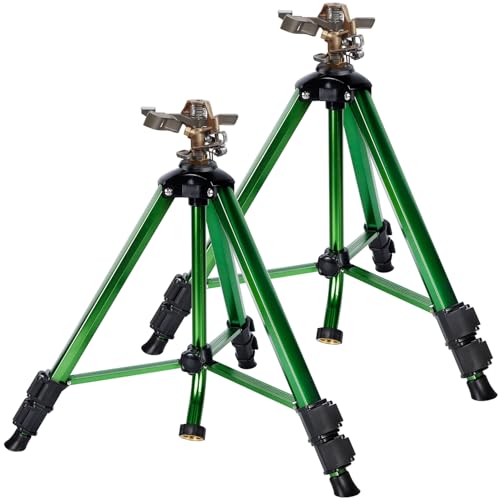
Heavy duty sprinklers use brass, zinc, or steel bodies, weighted bases, and sealed gear drives that shrug off bumps, sun, and seasons left outdoors. Metal oscillating models sweep a smooth rectangular curtain of water, while metal impact models throw a long stream in a circle and handle lower pressure well. Both types usually offer the widest pattern controls, from full coverage down to a narrow strip.
The costs are weight and price. A metal unit is heavy to carry between zones and costs two or three times a basic model. Choose this group if your lawn is a long term project, your water carries grit that wears plastic gears, or you are tired of replacing a cracked sprinkler every spring.
Standard Options
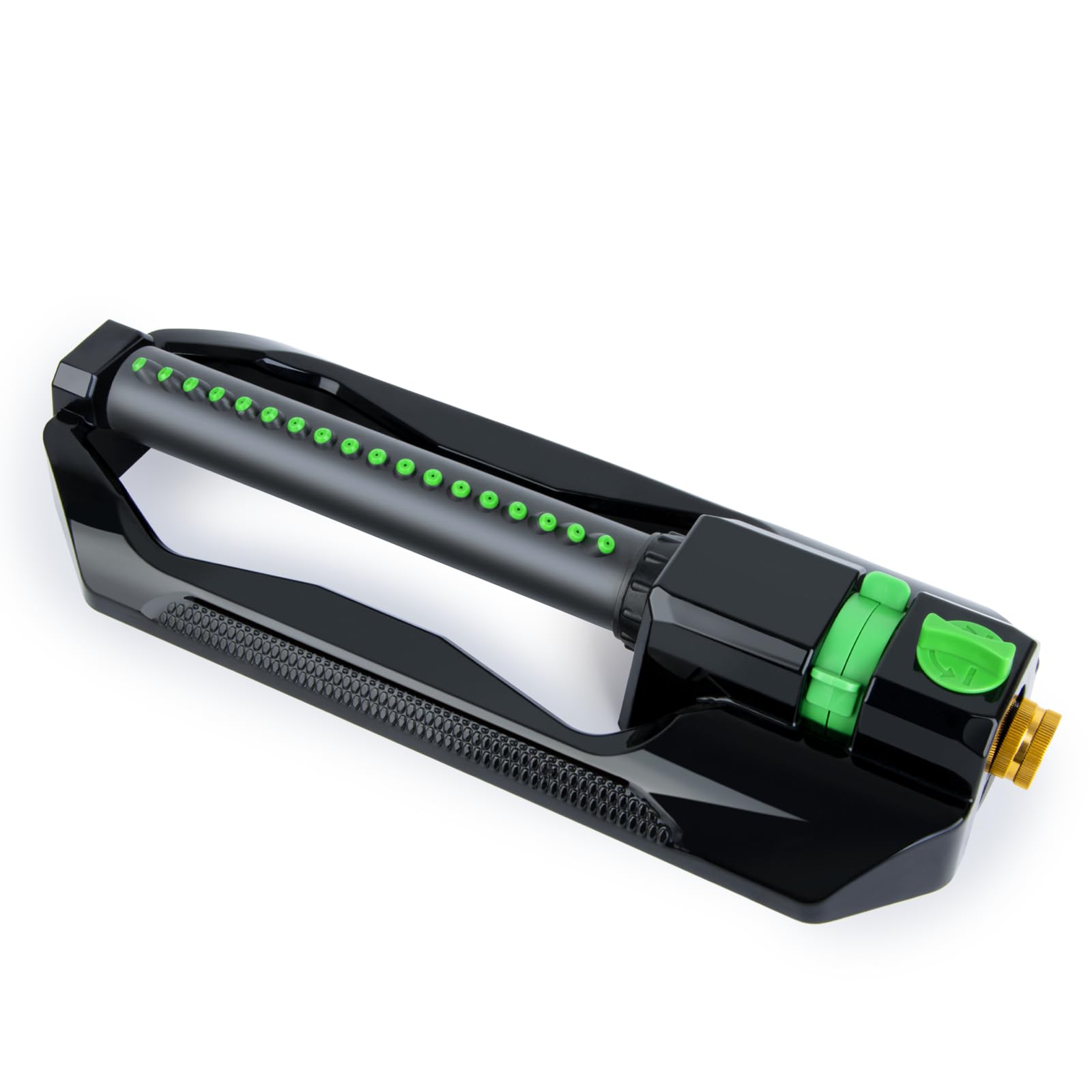
Standard sprinklers are the familiar plastic or light metal models sold everywhere: oscillating bars for rectangles, simple rotary heads for circles, and stationary rings for small patches. They are light, cheap to replace, and easy to set, with basic dials for range and pattern width. For a small or medium lawn watered a few times a week, they cover the job without fuss.
Their limits show up over time. Plastic nozzles clog and crack, gears wear so the bar stalls at one end, and light bases tip or creep across wet grass. Choose standard if you rent, your lawn is modest, or you want a spare unit for a side yard. Treat it as a consumable and the value makes sense.
Organic and Eco Friendly Options
Water saving designs help you put water on roots, not pavement. Look for adjustable flow, pattern stops that end the sweep at your lawn edge, and low angle nozzles that keep water under the wind. Soaker style and low spray options suit beds and borders beside the lawn, soaking slowly so soil absorbs water instead of letting it run off into the street.
These models reward a few minutes of setup. You may need to reposition them more often, and fine nozzles clog faster in hard water, so a filter washer at the tap helps. Choose this group if your area limits watering days, your water bill stings, or you garden organically and want mulch and soil, not foliage, to stay wet.
Lightweight and Expandable Options
Portable sprinklers trade raw coverage for freedom. Spike mounted rotary heads push into soft ground anywhere the hose reaches, sled base models slide across flat lawns, and traveling sprinklers follow a hose laid out as a track, watering a long path on their own. Multi head units on one base cover odd shapes that a single pattern never fits.
The trade off is stability and reach. Spikes loosen in dry hard soil, light bases flip if pressure surges, and each move costs you time. Choose this group for patch repairs, new seed, rental homes, or a yard split into small zones. If your lawn is large and open, our guide to the best lawn sprinklers for large lawns explains the bigger coverage options instead.
Premium and Heavy Duty Options vs Standard Options: Which Should You Choose?
Compare lifespan first: a metal heavy duty unit often serves five to ten seasons, while a plastic standard model may last one to three. Then compare control, because premium models usually adjust width, range, and direction independently, while standard dials often link those settings together. Weight cuts both ways: heavy bases stay put under pressure, light bodies are easier to move between zones.
Price per season settles the argument for most yards. A standard model replaced every two years can cost more over a decade than one metal unit, but only if you stay in the same home and keep watering the same lawn. Renters and small lawn owners should buy standard without guilt. Owners settling in should buy heavy duty once and store it well.
How to Choose the Right Above Ground Lawn Sprinkler
Performance Specs (Coverage, Throw, and Pressure)
Coverage figures on packaging assume strong household pressure, often near the top of the normal range, so expect less at your tap. Measure your pressure with a simple gauge if sprinklers always fall short, and pace out your lawn so you know whether you need a throw of about 20 feet or closer to 50. Oscillating models state coverage as a rectangle, while rotary and impact models state a diameter, so convert both to your actual lawn shape before comparing.
Even coverage matters more than maximum reach. A pattern that soaks the middle and starves the edges forces long run times that drown one zone to save another. Catch cup tests, using a few shallow cans across the lawn, show your real pattern in one session.
Value and Coverage per Dollar
Divide the price by the realistic coverage area, not the box claim, to compare value across types. A model at around $50 that truly covers about 3,000 square feet beats a model at around $25 that covers 1,200, once you count the extra moves and run time the smaller one needs. Moves cost water too, since each new position overlaps the last one and double waters a strip.
Also count the hose and timer you may need. A cheap sprinkler plus a new long hose can cost more than a better sprinkler on your current hose. Value means the full setup that waters your whole lawn, not the lowest sticker in the aisle.
Ease of Use and Storage
You will move this tool weekly, so setup friction decides whether you water on schedule. Look for dials you can read while bent over, settings that stay put when you drag the hose, and a base that sits flat on uneven grass. Quick test: if adjusting the pattern needs the instructions after the first week, the controls are too fiddly for a tool this simple.
Storage matters at season end. Drain the unit, coil the hose loosely, and keep both out of freezing sheds where trapped water cracks housings. Compact and folding designs help small garages, and if portability is your top need, compare the designs in our guide to the best portable lawn sprinklers before choosing.
Material and Build Quality
Materials predict lifespan better than brand claims. Brass hose threads resist cross threading and corrosion, metal gear housings survive grit in well water, and rubber nozzle strips stay flexible longer than hard plastic ones. Plastic is not always a flaw: it keeps weight and price down and never rusts, but thin walls and brittle fittings are warning signs at any price.
Pick the sprinkler up if you can. Even weight, smooth dial action, and a base that does not flex suggest care in the parts you cannot see. A warranty of two years or more signals the maker expects the gears and seals to last beyond a single season.
Match the Sprinkler to Your Garden Size and Layout
Rectangular lawns suit oscillating models, round or open areas suit impact and rotary heads, and narrow side yards suit models with a strip pattern. Beds, trees, and play equipment break any pattern into zones, so plan your hose route and count how many positions a full session needs. Fewer positions usually beat a cleverer head, because every move is a chance to skip watering altogether.
Slopes change the math as well. Water runs downhill, so sloping zones need shorter cycles repeated more often, whatever head you choose. If one sprinkler style covers most of your yard well, standardize on it; matching spare parts and familiar dials make the whole routine easier. For pattern details, see our guide to the best oscillating lawn sprinklers if rectangles dominate your yard.
Setup and Care Tips
Water early in the morning, when wind is low and less water evaporates before soaking in. Set the pattern on dry pavement first, so you can see the true edges and trim overspray before the lawn gets wet. Run the sprinkler in cycles on slopes or heavy soil: about 15 minutes on, a rest to absorb, then repeat.
Clean nozzle holes with a soft pin when streams go crooked, and check the filter washer at the hose connection each spring. Drain and store hoses and sprinklers before freezing weather, and refresh tired soil in beds beside the lawn with compost each season so the water you apply soaks in instead of pooling.
Above Ground Lawn Sprinklers: Your Questions Answered
How long should a sprinkler and its hose last?
A metal sprinkler often lasts five to ten seasons and a plastic one about one to three, while a good hose lasts roughly five to ten years. Sun, freezing water left inside, and grit in the supply shorten all of those spans. Draining gear before winter and storing it out of direct sun are the two habits that add the most years.
Is a water saving sprinkler worth it?
Yes, if your water is metered, your area limits watering, or much of your current spray lands on pavement. Pattern stops and adjustable flow can cut waste a lot because overspray is pure loss. The saving is smaller on a tiny lawn with cheap water. Judge it against your bill over one full season, not the purchase price alone.
How much coverage do I need for my lawn?
Measure each lawn zone and match the sprinkler pattern to the largest zone, then count positions for the rest. Most lawns need about 1 inch of water per week in summer, delivered in two or three deep sessions. A shallow catch can under the pattern tells you the run time: note how long it takes to collect half an inch, then double it per session.
What is the difference between an oscillating and an impact sprinkler?
An oscillating sprinkler sweeps a bar of small jets back and forth to cover a rectangle with gentle rain, suiting most suburban lawns. An impact sprinkler throws one strong stream in a circle with a clicking turn, reaching farther and coping with lower pressure, but watering less evenly near the base. Choose by lawn shape first: rectangles point to oscillating, open circles point to impact.
The Bottom Line
Choose by lawn shape, then by build, then by price per season. The right pattern with honest coverage numbers beats the longest throw claim, and a metal body only pays off if you will keep the lawn for years. Set the pattern once on dry ground, water in the morning, and store the gear dry before frost.
With those habits, the best above ground lawn sprinklers turn a weekly chore into a short routine that keeps grass deep rooted and water bills sane. Check the product table above against your lawn measurements, and pick the type whose pattern matches your largest zone.