Best 7 Cup Food Processors (2026): Styles and Buying Guide
Disclosure: We may earn a commission when you buy through links on this page, at no extra cost to you. As an Amazon Associate I earn from qualifying purchases. Learn more

A practical guide to the best 7 cup food processor: discs, motor power, storage and cleanup compared for one to four people.
Picture a weeknight when dinner needs chopped onions, sliced peppers, and shredded cheese, but your counter is already crowded and nobody wants to wash a huge bowl afterward. That middle ground is exactly where the best 7 cup food processor earns its place. It holds enough for most family meals without taking over the kitchen. This guide helps you choose by space, household size, and budget, and the comparison table below sums up the main types at a glance.
A 7 cup bowl suits one to four people for most daily tasks, from salsa and hummus to pie crust and coleslaw. The right choice depends less on power claims and more on bowl shape, disc options, storage, and how simple the parts are to wash.


Quick Answer: The Three Directions Worth Considering
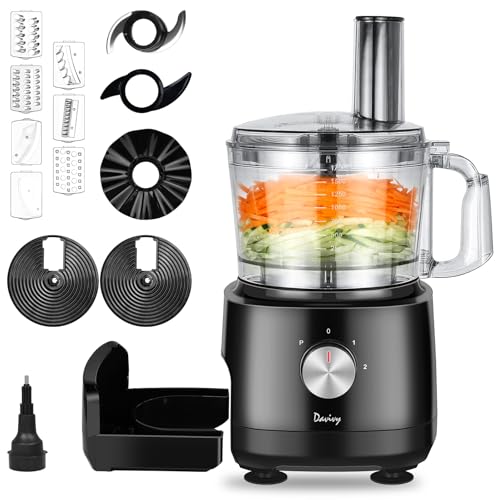
If you want one machine for daily cooking, look at a standard 7 cup model with a slicing disc, a shredding disc, and a dough blade in the box. If money is tight, a simpler model with one blade and one reversible disc covers chopping and shredding for far less. If you cook often, a sturdier model with a stronger motor costs more but handles dense dough and hard cheese with less strain.
Before You Buy: A Quick Checklist for Choosing a Food Processor
Capacity is only the starting point. The points below shape how the machine fits your home, your routine, and your total cost over time.
Size: Match It to Your Space and Your Household
Bowl sizes run from tiny 1 to 3 cup minis up through 7, 8, 9, 11, 12, and 13 cup bowls, and bigger is not always better. A bowl that is too large leaves small amounts of garlic sliding under the blade uncut. A bowl that is too small forces you to work in batches for soup or dough. For small daily jobs, our guide to the best mini food processor may fit you better. For daily family cooking, 7 cups is the balanced point.
Which Type Fits Your Routine
Compact models store easily and suit light chopping in small kitchens. Cordless models free you from an outlet but need charging and give shorter run time. Professional and commercial models bring stronger motors and larger feed tubes for heavy use. Manual models cost little and need no power, but they tire your arm on hard foods. If you are weighing a chopper against a full machine, read food processor vs chopper before you decide.
Features Worth Paying For, and Ones to Skip
A reversible slicing and shredding disc earns its cost because it covers salads, slaw, and cheese in one part. A dough blade helps if you bake weekly, and a grater disc handles firm vegetables well. A dicing kit sounds appealing, but it adds parts to store and wash, and many cooks use it only a few times a year. A spiralizer is similar, fun yet easy to skip. Spend first on discs you will reach for each week, not on attachments that live in a drawer.
Wattage, Power, and Energy Use
Most 7 cup models draw about 250 to 600 watts, and that range handles chopping, slicing, and light dough well. Wattage alone does not tell you how a machine copes with hard cheese or thick hummus, since blade design and bowl shape matter just as much. Short bursts mean energy use stays low. Look for a motor that can pulse without bogging down rather than chasing the highest number on the box.
Safety Features and Certifications
A sound model will not run unless the bowl and lid lock into place, and that interlock is the feature to confirm first. A wide, stable base keeps the unit steady during pulsing. Check the listing for a UL or ETL mark, which shows the electrical design passed independent safety checks. Keep fingers out of the feed tube while the blade turns, and use the food pusher in the box for every slicing job.
Counter Space and Dimensions
Measure before you buy, because a 7 cup machine still needs room to live. Most stand about 14 to 16 inches tall, which can clash with upper cabinets when the lid and pusher sit in place. Check the footprint too, since a wide base plus a disc storage case can claim more counter than the bowl suggests. If you store it in a cabinet, confirm the height with the lid fitted.
Realistic Budget Ranges
Under about $50, expect a basic machine with one blade and one disc, suited to chopping and simple shredding. From about $50 to $100, you gain stronger motors, better lids, and a dough blade on many models. From about $100 to $150, build quality improves, feed tubes widen, and extra discs appear. From about $150 to $200, you pay for quieter running and sturdier parts. Above about $200 to $300, most gains serve heavy daily users, so casual cooks rarely need to spend that far.
Types Compared: Three Styles of 7 Cup Food Processor
Instead of chasing a single model name, compare the three styles below. The differences come down to parts included, motor strength, and how long the machine is built to serve.
The All Purpose Style for Most Homes
This style pairs a mid range motor with an S blade, a dough blade, and a reversible disc for slicing and shredding. It handles the widest span of daily work, from pesto and salsa to pie crust and sliced potatoes, without asking you to buy extras later. The trade off is storage, since the extra parts need a drawer or case. For a household that cooks four or more nights a week, this style covers nearly every task in one purchase.
The Simple Style for Tight Budgets
This style keeps the part count low, usually one blade and one reversible disc, with a motor at the lower end of the range. It chops onions, makes breadcrumbs, and shreds cheese for tacos or salads without trouble. It struggles more with stiff dough and thick dip, where you may need to stop and scrape more often. The gain is a lower price and faster cleanup, since fewer parts go into the sink.
The Sturdy Style for Long Term Value
This style uses a heavier base, a stronger motor, and thicker discs, and it often adds a wider feed tube that accepts a whole potato with less trimming. It suits bakers who mix dough weekly and cooks who shred hard cheese in volume. Expect to pay about $150 to $250 and to give it a permanent counter spot, since the weight makes daily lifting a chore. In return you get steadier running and parts that are easier to replace years later.
How to Evaluate Any 7 Cup Model
Judge each model on the same points so your choice rests on facts rather than packaging. Check working capacity, discs in the box, feed tube width, lid locking, parts to wash, noise, safety marks, and warranty length. Use maker specifications and patterns in verified buyer reviews as your sources.
Is a 7 Cup Food Processor the Right Size for You?
For one to four people, a 7 cup bowl handles a batch of hummus, a pie crust, or vegetables for a family soup in a single run. That covers most weeknight cooking without the washing burden of a large bowl. If you regularly cook for six or more or make double batches of dough, step up and compare the options in our guide to the best food processor in larger sizes.
If most of your jobs are a single onion or a handful of nuts, a 7 cup bowl is more than you need and the blade may miss small amounts. In that case our roundup of the best small food processor covers bowls that chop tiny portions cleanly. Size the bowl to your most common batch, not your biggest holiday meal.
Common Mistakes to Avoid
- Buying by bowl size alone. A 7 cup rating describes the bowl, but liquid capacity is lower, so soups and sauces need headroom or they leak at the lid.
- Ignoring the feed tube width. A narrow tube means more trimming of potatoes and cheese before slicing, which quietly erases the time you hoped to save.
- Paying for attachments you will not use. Extra kits raise the price and the washing load, and they add nothing if your cooking never calls for them.
- Skipping the replacement parts check. Bowls and lids do crack over years of use, and a model with no spare parts available becomes a full replacement cost later.
- Forgetting cabinet height. A machine that only fits with its lid removed will annoy you daily, so measure the storage spot before ordering.
Cost of Ownership and Care
Running costs stay small, since short bursts use little electricity, and the real money goes to replacement parts over the years. A spare bowl, lid, or disc can cost a fair share of the original price, so treat those parts with care. Wash blades by hand to keep edges keen, and let all parts dry fully before storage. Store discs in a case or wrapped, both to protect the edges and your fingers.
Cut hard foods into even chunks so the motor works evenly, pulse instead of running long bursts on thick mixes, and never force the lid if food blocks it. If you are new to the tool, our guide on how to use a food processor walks through safe loading and pulsing. For washing steps and dishwasher guidance, see how to clean a food processor after sticky or oily jobs.
FAQ
What size food processor do I need for a family of four?
A 7 cup bowl fits a family of four for most meals, covering a full batch of slaw, dough for one pie, and dips for a gathering. You may still work in two batches for very large soups or double dough recipes. If your family often eats with guests, consider whether a 9 or 11 cup bowl would cut that batch work enough to justify the extra storage space.
Can a 7 cup food processor knead bread dough?
Yes, within limits. Most 7 cup models with a dough blade handle about 2 to 3 cups of flour at a time, which suits a single small loaf or a pizza base. Wetter doughs are easier on the motor than stiff mixes. Add liquid slowly through the feed tube while pulsing, and stop once the dough forms a ball, since long running warms the dough and strains the motor.
How long does a 7 cup food processor last?
A well cared for home model often serves about 5 to 10 years, with the motor usually outlasting the plastic bowl and lid. Life shortens when the machine is overloaded often or parts go through harsh dishwasher cycles again and again. Checking spare part availability early, while the model is still current, makes a cracked bowl a small fix instead of the end of the machine.
Is a 7 cup food processor worth it if I own a blender?
For many cooks, yes, because the two tools do different work. A blender needs liquid to move food toward its blades, so it shines with soups and smoothies. A food processor works on dry and firm foods, slicing, shredding, and mixing dough that a blender cannot handle. If your cooking leans toward salads, slaws, and crusts, the processor fills a gap the blender leaves open.
How do you clean a 7 cup food processor after oily foods?
Rinse the bowl and blade right after use so oils do not set, then wash in warm water with dish soap and a soft brush around the blade hub. A paste of baking soda helps lift lingering smells from the plastic. Take care around blade edges, which stay sharp, and dry the center shaft area fully, since water trapped there can leave a musty smell by the next use.
Final Thoughts
The right choice is the one that fits your counter, your household, and the meals you actually cook each week. Weigh bowl size against storage, discs against your routine, and price against how often you will reach for the machine. When you settle on the best 7 cup food processor for your home, it should save time every week without adding clutter. Use the product table above to compare the styles side by side.