Best 6x8 Greenhouses (2026): Buying Guide and Sizing
Disclosure: We may earn a commission when you buy through links on this page, at no extra cost to you. As an Amazon Associate I earn from qualifying purchases. Learn more

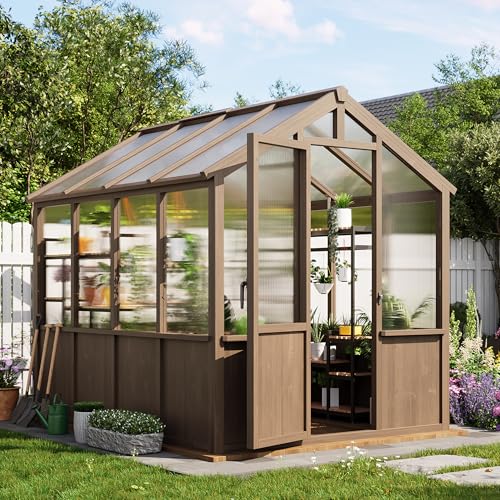
Choosing the best 6x8 greenhouse? A 6x8 greenhouse gives backyard growers 48 square feet to start seeds early.
A 6x8 footprint sounds simple until you start comparing frames, panels, doors, and vents. One kit feels roomy and sturdy, while another with the same footprint wastes space or struggles in wind. This guide helps you find the best 6x8 greenhouse for your yard, your climate, and the way you actually grow.
Rather than naming individual models, we compare the main types side by side on build materials and weather resistance, size and capacity, and assembly. Use the comparison table below to see how the types differ, then work through the criteria that matter most before you order. If you are still weighing whether any greenhouse suits your garden at all, our guide to the best greenhouse options covers the broader size range.


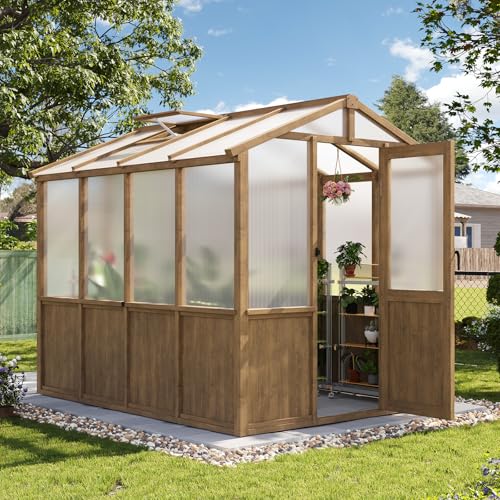
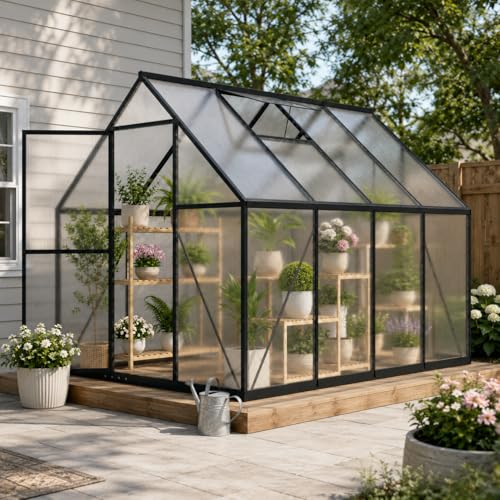
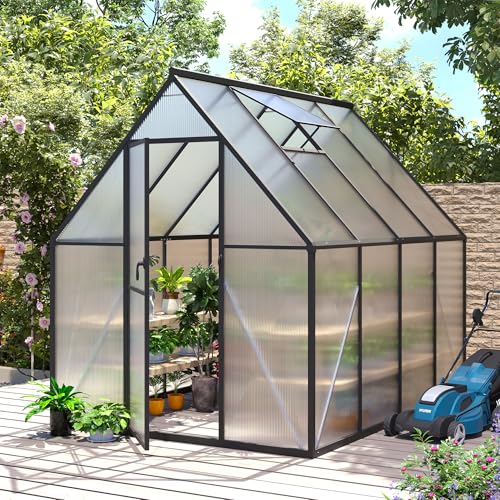
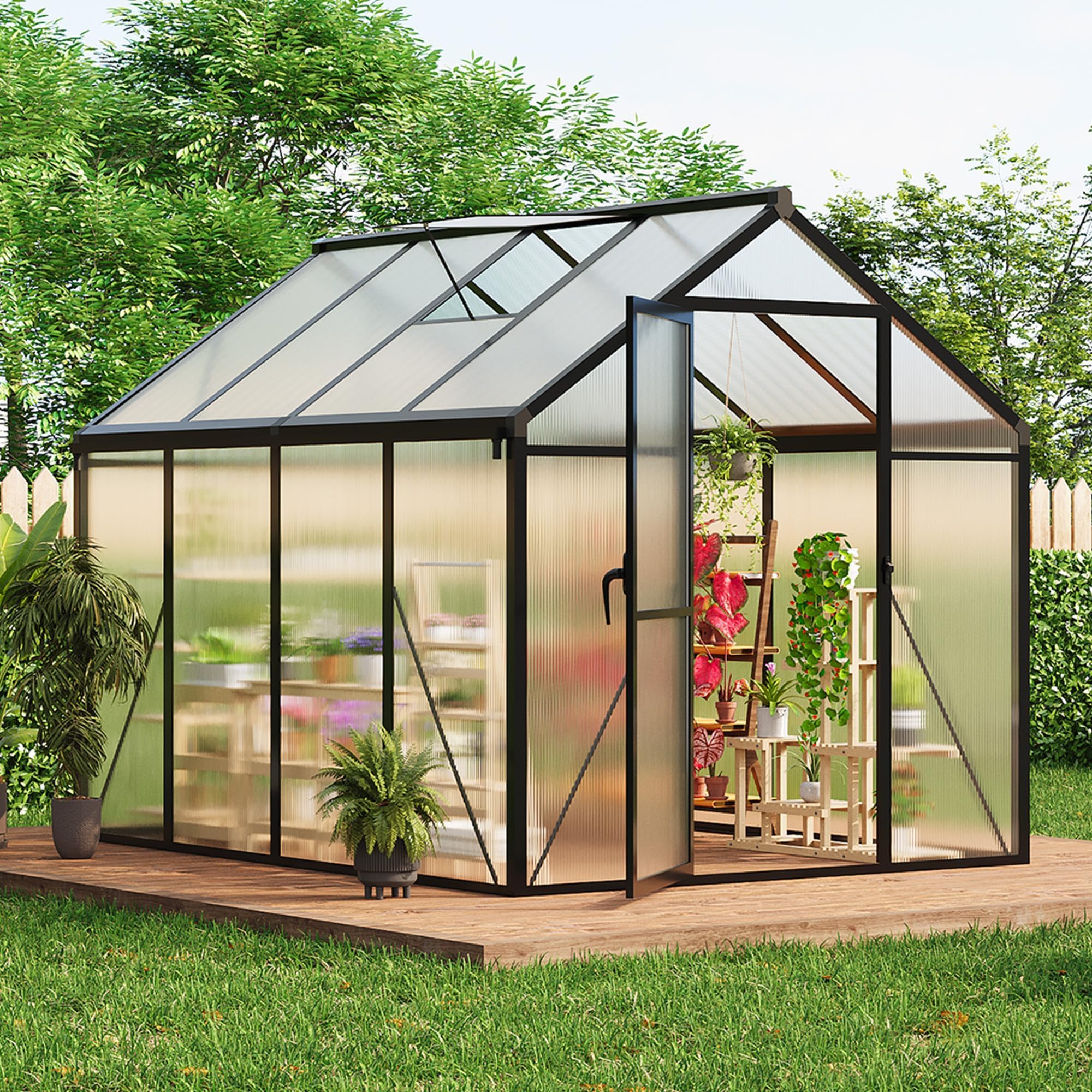
The Main 6x8 Types at a Glance
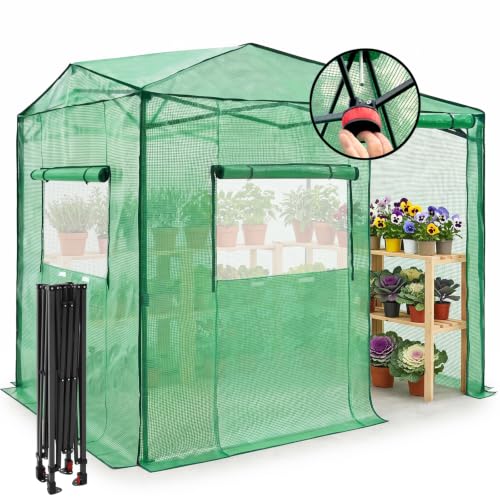
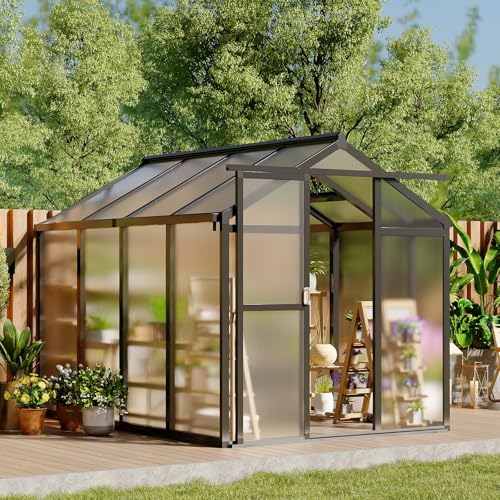
Most 6x8 kits fall into three broad types, and the type you choose shapes almost everything else. Polycarbonate panel kits on aluminum frames are the most common choice for backyard growers. Fabric covered tunnel and walk in styles cost less and go up fast, but their covers age sooner. Glass panel kits on aluminum or wood frames look classic and admit clear light, yet they weigh more and cost more.
- Polycarbonate panel kits: light panels that resist impact well, diffuse sunlight, and insulate better than single glass.
- Fabric tunnel kits: a steel frame with a fitted cover, quick to assemble and easy to move, best for season extension on a budget.
- Glass panel kits: crisp light and a traditional look, with heavier panels that need a strong frame and a level base.
Think of this split as your first filter. Once you know which type fits your climate and budget, the feature comparisons below get much easier.
How to Evaluate a 6x8 Greenhouse
Judge every kit against the same five criteria so you are comparing like with like. Start with build materials and weather resistance, since a frame or panel that fails in a storm ends the season at once. Next check size and capacity in real terms, meaning bench space, shelf room, and headroom, not just the footprint. Then weigh assembly effort, durability over several seasons, and the warranty terms for the frame, the panels, and the cover.
Manufacturer specifications and verified buyer feedback about missing parts, bent frames, and panel fit are the most useful sources here. Treat any claim about lifespan with care, because site conditions and anchoring change outcomes more than brand promises do.
How to Choose the Right Greenhouse
Size and form factor
A 6x8 greenhouse gives you 48 square feet of floor space, with the 8 foot side usually forming the front wall and the door. That layout suits two runs of staging along the long walls with a central path about 2 feet wide. Ridge height matters as much as floor area, since a taller ridge lets you stand upright, hang baskets, and grow climbing crops. Compare this size honestly with neighbors in the range. A mini or small lean to suits a patio corner, an 8x10 or 10x12 suits serious propagation, and a portable tunnel suits renters who may move.
Type and glazing
Glazing decides light, insulation, and safety. Polycarbonate twin wall panels scatter light so leaves scorch less, and they hold heat better on cold nights than single pane glass. Solid polycarbonate sheets sit between the two, clearer than twin wall but less insulating. Glass gives the clearest view and does not yellow, but it can break and it loses heat fast after sunset. If you are torn between the two main glazing families, read our comparison of polycarbonate vs glass greenhouse designs before deciding. Frame material counts too. Aluminum resists rust and stays light, wood looks warm but needs treatment, and galvanized steel adds strength for fabric kits.
Features worth paying for
Some extras earn their cost every week you grow. A roof vent is close to essential, since hot air collects at the ridge and seedlings suffer quickly on a sunny spring day. An automatic vent opener adds convenience by reacting to temperature without power. A wide door with a low threshold makes moving trays and compost bags easier, and louver vents low on a wall improve air flow when paired with the roof vent. Shelves and staging built for the frame fit better than freestanding units squeezed in later. Guttering that feeds a water butt is a smaller win, handy in dry spells but easy to add afterward.
Weather resistant materials
Weather resistance is a system, not a single rating. Look at panel thickness, frame bracing, roof pitch for shedding snow, and any stated wind or snow load figures, then judge them against your own exposure. A sheltered suburban yard and an open coastal plot place very different demands on the same kit. UV stabilized panels and covers last longer before turning brittle or cloudy. If winters are your main worry, our guide to the best greenhouse for winter use goes deeper on insulation and heating. Sealed panel edges also matter, because open twin wall channels invite algae and insects inside the sheet.
Size for your space
Measure the site, not just the kit. Leave room to walk around the outside for cleaning panels, opening vents, and reaching the door with full trays. Check how shadows from fences, trees, and the house move across the plot through the day, since a 6x8 placed in shade loses much of its purpose. Confirm the ground can be made level, and think about water and power access before the base goes down. In many areas a small kit on a temporary base needs no permit, but rules vary, so check local requirements for structures near boundaries.
Assembly and anchoring
Assembly ranges from an afternoon for a fabric tunnel to a full weekend for a panel kit with hundreds of clips and bolts. Read the instructions before buying if you can, and note whether the kit needs a separate base plinth, since many do and it is rarely included. Build on a level, firm foundation such as slabs, sleepers, or a concrete pad, because a twisted frame makes doors stick and panels pop out. Anchor the finished structure to that base and, for fabric kits, to the ground as well. An unanchored greenhouse can lift and tumble in strong wind, damaging both the kit and your garden.
Care and off season storage
Routine care keeps light levels high and pests low. Wash panels with mild soapy water and a soft cloth, clear gutters and vents, and oil door hinges and vent mechanisms once a season. Remove fallen leaves and algae from the roof before winter, and store fabric covers dry and out of sunlight once the season ends so the material does not crack. Our step by step guide on how to winterize a greenhouse covers the full cold season routine, from draining water lines to checking seals. Panel kits stay up all year, so a quick frame and anchor check each autumn is time well spent.
How much should you spend?
Budget bands map roughly to type and build quality. Fabric tunnel kits often fall around $200 to $400, giving you fast cover for seedlings and salad crops with modest lifespan. Mainstream polycarbonate kits commonly run about $400 to $1,000, adding sturdier frames, better vents, and longer warranties. Glass kits and heavier framed polycarbonate models can reach about $1,000 to $2,500, buying thicker materials and a more permanent feel. Spend first on frame strength, anchoring, and ventilation, since those decide whether the greenhouse survives and grows well. Decorative extras can always wait.
Is a 6x8 Greenhouse the Right Size for You?
For many backyard growers, the best 6x8 greenhouse hits a practical middle. It holds staging for seed trays in spring, several tomato or pepper plants in summer, and overwintering pots in autumn, without swallowing the whole garden. One person can assemble, heat, and clean it without the effort a large structure demands. A simple electric heater can hold a 48 square foot space above freezing far more cheaply than a space twice the size.
It may feel small if you want to propagate for a large plot, grow many tall crops at once, or sit and work inside in comfort. In that case, stepping up one size now costs less than replacing a cramped kit later. It may be more than you need if you only raise a few trays of seedlings, when a cold frame or mini greenhouse does the job. If you are still deciding whether the investment pays off at all, our article asking is a greenhouse worth it weighs the costs against longer seasons and better crop protection.
FAQs
What size greenhouse do I need for a family vegetable garden?
Start from the crops you plan to grow at the same time, not from the space you happen to have. A 6x8 suits a household raising spring seedlings plus a handful of summer fruiting plants. If you also want cucumbers, melons, and overwintering herbs together, list each crop with its bench or floor area and add a path. That quick tally usually shows whether 6x8 is enough or one size up is wiser.
How long does a 6x8 greenhouse last?
Lifespan depends mostly on type and exposure. Fabric covers often need replacing after a few seasons, while their steel frames last longer if kept rust free. Polycarbonate panels commonly serve around a decade before clarity drops, and aluminum frames can outlast the panels. Glass lasts longest of all when it escapes impact damage. Anchoring, cleaning, and prompt repair of small damage extend the life of every type.
How do you clean a 6x8 greenhouse?
Pick a mild, cloudy day so cleaning solution does not dry on warm panels and leave marks. Remove plants, sweep out debris, then wash inside surfaces with mild soapy water, paying attention to corners where pests shelter. Disinfect staging and trays before they go back in, and rinse everything with clean water. Cleaning at the end of the main season, before overwintering plants move in, gives the biggest benefit for plant health.
Does a 6x8 greenhouse need a base?
Most panel kits do need a base or plinth, even when the listing makes it sound optional. The base squares and levels the frame, lifts it clear of wet soil, and gives you something solid to anchor into. Without one, frames rack out of shape, doors drag, and wind finds gaps to work at. Fabric tunnels are the main exception, since many pin straight to the ground, though a level site still helps them sit evenly.
What can you grow in a 6x8 greenhouse?
The space suits a rotation through the year. Spring is for seed starting and hardening off young plants. Summer favors tomatoes, peppers, chilies, cucumbers, and basil, which enjoy the warmth under cover. Autumn extends salad leaves and herbs, and winter shelters citrus in pots, dormant perennials, and cuttings. Staggering crops this way, rather than filling every shelf at once, keeps a small greenhouse productive in every month. For panel options built for that pattern, see our guide to the best polycarbonate greenhouse range.
How do you stop a 6x8 greenhouse from overheating?
Vent early in the day, before heat builds, since a closed greenhouse can climb far above outside temperature by midmorning. Open the roof vent and door together to create a path for hot air to escape. Shade cloth over the roof helps during heat waves, and standing pots on damp gravel adds a little cooling as water evaporates. Watering in the morning also steadies conditions for the day ahead.
Final Thoughts
Choosing well comes down to matching type, glazing, and ventilation to your site and the way you grow. Polycarbonate suits most backyards, fabric suits tight budgets and short seasons, and glass suits gardeners who value clarity and permanence. Check the product table above against the criteria in this guide, measure your site honestly, and plan the base and anchoring before the kit arrives. Do that, and the best 6x8 greenhouse for your garden becomes a clear, confident choice rather than a gamble.