Best 6x7 Cameras in 2026: Which Type Is Right for You?
Disclosure: We may earn a commission when you buy through links on this page, at no extra cost to you. As an Amazon Associate I earn from qualifying purchases. Learn more
Types, shutters, lenses and costs explained to help you choose the best 6x7 cameras for studio, landscape and travel work on 120 film.
Choosing a 6x7 film camera can feel confusing at first, because the shared format hides three very different kinds of camera. The best 6x7 cameras all make the same large negative, yet they differ in focusing, handling, weight and cost. This guide compares the types side by side, so you can match a camera to the work you actually do.
Start with how you shoot. A studio session rewards a tripod and careful framing, while travel rewards a camera you can carry all day. If you are still weighing film against other routes into serious work, see our guide to the best cameras for photography before you commit to a system.
Who Should Buy a 6x7 Camera?
Your subject and your pace should decide the system, not the size of the negative alone. Each group below needs the same large frame for a different reason, and each reason points to a different type.
Landscape Photographers Who Print Large
You shoot from a tripod, wait for light and print big enough that fine detail must survive enlargement. The 6x7 negative holds smooth tones and sharp detail at large print sizes, so a modular SLR with a waist level finder suits your slow pace. Weight matters less to you than a rigid tripod mount and a bright focusing screen.
Studio Portrait Photographers
You work with lights, a set backdrop and a sitter who can hold a pose between frames. A modular SLR suits you because many of its lenses sync flash at every speed and its backs swap without unloading the camera. Choose a prism finder if you prefer eye level framing while you direct the sitter.
Slow Travel and Documentary Photographers
You walk, watch and make a small number of considered frames each day. A rangefinder model is quieter and lighter, and its bright frame lines let you see space around your subject before you shoot. If you are new to film, see our guide to the best starter cameras for habits that still help, such as finishing one roll before you judge your results.
Types of 6x7 Cameras Compared
All three types expose the same frame size, so the real choice is how you focus, carry and compose. The best 6x7 cameras for studio work are rarely the easiest to travel with, and that trade shapes every section below. Readers who want the wider format family view can also see our guide to the best 6x7 medium format cameras.
Modular SLR 6x7 Cameras
These cameras view through the lens, so what you see is what the film records, with no parallax error at close distances. Bodies accept swapping backs, finders and focusing screens, and many add bellows built into the body for close focus work without extra tubes. The cost of that flexibility is size, weight and a loud mirror, so most owners work from a tripod.
Rangefinder 6x7 Cameras With Interchangeable Lenses
These cameras focus through a separate window and show bright frame lines inside the finder. They have no mirror, so they are quieter and easier to hold steady at slow speeds, and most weigh far less than an SLR kit. Close framing is less exact because the finder sits apart from the lens, and the lens choice is usually narrower.
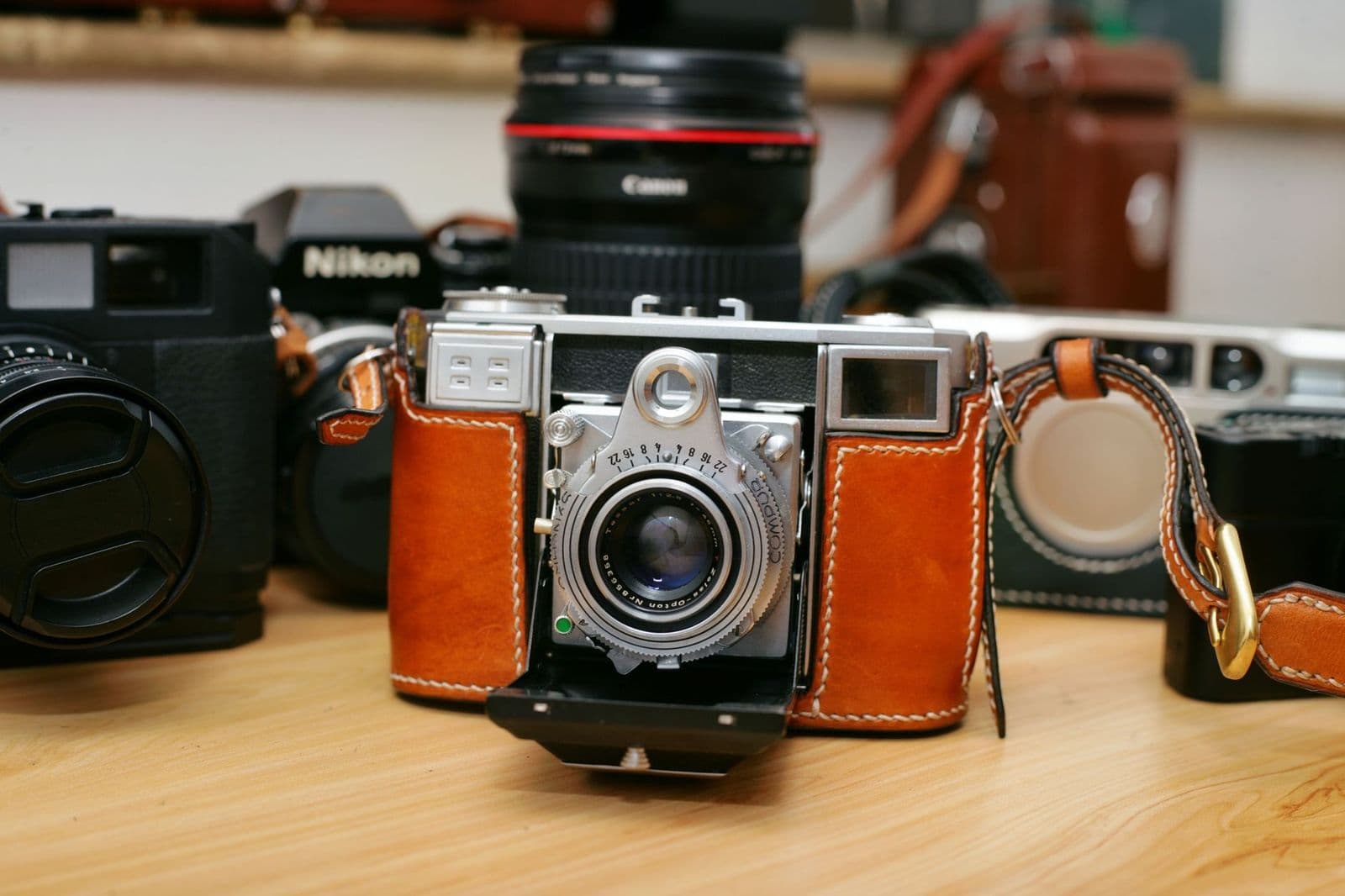
Fixed Lens Folding 6x7 Cameras
These rangefinders carry one lens that folds into the body or sits in a slim fixed mount, which makes them the easiest 6x7 option to pack. You give up lens choice and close focus range, and you accept older shutters that need careful checking. In return you get the full negative in a camera that fits a small bag.
Key Features to Compare
Judge any 6x7 body against the five factors below before you look at price. A clean example with a sound shutter beats a rare feature on a tired body every time.
Shutter Type and Flash Sync Speed
A leaf shutter sits inside the lens and opens fully at every speed, so flash can sync across the whole range, often up to 1/500 second. That freedom matters in a studio and when you balance flash with daylight outdoors. A focal plane shutter sits in the body and travels across the frame, so flash sync is limited to one slower speed, often around 1/30 to 1/60 second. Choose leaf shutters for lit portraits, and accept focal plane limits if a wider aperture lens matters more to you.
Lenses and Focal Length Choice
On the 6x7 format, a lens of about 90 to 105 mm acts as the standard view, roughly matching a 50 mm lens on small format film. Wide options near 55 to 65 mm suit interiors and broad landscapes, while lenses of 150 to 180 mm compress space for portraits and distant detail. Check that the glass is clean and the aperture blades move freely, because lens faults print on every frame. Buy the standard lens first and add a second focal length only when your framing proves the need.
Film Backs, Roll Film and Frames per Roll
A 6x7 camera uses 120 roll film and gives you 10 frames on each roll, so every press of the shutter carries a real cost in film and processing. Some systems accept interchangeable backs, which let you change film type part way through a shoot without unloading the camera. Other bodies load film directly and stay simpler and lighter. Confirm the frame spacing on a trial roll before you trust any used body with paid work.
Metering and Finder Options
Some prism finders meter through the lens and read the scene for you, while waist level finders often leave metering to a hand meter or a phone app. A hand meter slows you down but reads flash and mixed light with care that suits studio work. A metered prism adds weight yet speeds outdoor shooting where light changes fast. Pick the finder you will actually compose with, because a screen you enjoy leads to more careful focus.
Weight, Handling and Tripod Support
A loaded modular SLR kit can weigh about 5 to 8 pounds before you add a second lens, while a rangefinder kit often weighs about half as much. Mirror movement on large SLR bodies can shake the camera at slow speeds, so a solid tripod and a cable release protect sharpness. Carry the full kit on a short walk before buying if you can, because weight decides how often the camera leaves home.
Common Mistakes to Avoid
Each of these errors costs film, money or sharp frames, and each one is easy to prevent before you shoot.
- Buying a 6x7 camera on looks alone can leave you with slow shutter speeds that ruin exposure on every roll.
- Skipping a trial roll hides frame spacing faults and light leaks until an important shoot is already lost.
- Holding a heavy SLR body at slow speeds invites mirror shake and soft negatives that no printing can rescue.
- Loading 120 film in bright sun risks fogged edges on the first frames of the roll.
- Choosing a lens set before a body leaves you paying for glass that fits a system you may never enjoy using.
Care and Maintenance of 6x7 Cameras
Store the body in a dry padded bag with the lens capped, and keep film in a cool place away from heat. Wipe the lens with a clean lens cloth rather than clothing, because grit held in fabric can mark the coating. Work the shutter at each speed a few times each month, since long rest can leave slow speeds sticky on older mechanisms.
Check foam light seals around the back each year and replace them when they turn soft or crumbly, because failed seals print pale streaks across the film. Have a technician time the shutter and inspect the bellows when speeds drift or focus feels uneven.
Frequently Asked Questions
What does the name 6x7 mean on a 6x7 camera?
The name 6x7 means each frame measures about 6 by 7 centimeters, with an actual image area near 56 by 67 mm. That area is roughly four times the size of a 35 mm frame, which is why enlargements stay calm and detailed. The short roll length is the price of that frame size.
What specs matter most for a first 6x7 camera purchase?
Shutter accuracy matters most, followed by clean glass and even frame spacing across a full roll. A plain body with correct speeds will teach you more than a loaded body with hidden faults. Set aside part of your budget for a first service and fresh light seals, because a serviced body protects every roll you shoot after the purchase.
Which 6x7 camera type handles low light best?
A rangefinder 6x7 camera handles low light best for handheld work, because it has no mirror to shake the frame and its finder stays bright in dim rooms. Pair it with film rated at ISO 400 or ISO 800 so your shutter speeds stay safe. Resting your elbows on a table adds more steadiness than any grip accessory.
How much should you spend on a first 6x7 camera?
Plan about $400 to $900 for a sound SLR body with a standard lens, and more for a rangefinder model in clean condition. Add the running cost to that figure before you buy, because one roll plus processing often costs about $25 to $40. Shooting one roll a month keeps the habit affordable while you learn the format.
Can a smartphone replace a 6x7 film camera?
No, a smartphone cannot replace a 6x7 film camera if the large negative is the point of your work. A phone wins on speed, sharing and shooting in near darkness, yet it cannot give you a physical negative to print from years later. If that speed matters more than the negative, see our guide to the best digital cameras for a modern route.
Final Thoughts
Match the system to your pace first, then judge shutter, lenses and backs in that order. Slow tripod work rewards the modular SLR, while walking work rewards the rangefinder and its smaller bag. Compare weight, finder type and price, and choose among the best 6x7 cameras only after those checks are done.