
Best 650b Mountain Bike: Types Compared and How to Choose for 2026
Disclosure: We may earn a commission when you buy through links on this page, at no extra cost to you. As an Amazon Associate I earn from qualifying purchases. Learn more

Compare hardtail, full suspension, and electric types to choose the best 650b mountain bike for your trails, fitness, and budget with this clear guide.
The 650b wheel size, also called 27.5 inch, sits between nimble smaller wheels and fast rolling 29 inch wheels, and that middle ground suits a huge range of riders. What confuses shoppers is the variety built around those wheels: light hardtails, plush full suspension trail bikes, and electric models with motors and batteries. This guide compares each type plainly so you can find the best 650b mountain bike for your trails and your budget.
Start with the type comparison, then work through the component sections that decide how a bike climbs, descends, and holds up over seasons of riding. The comparison table below lists current options, and the sections after it explain the trade offs behind the prices so you can judge any model, listed or not.

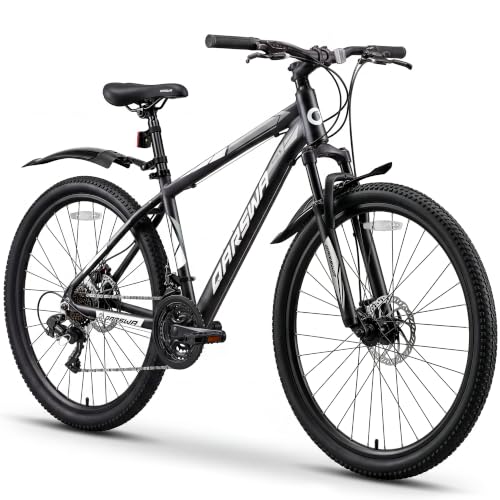


Types of 650b Mountain Bikes Compared
Three broad types cover nearly every 650b bike on sale. Hardtails, with front suspension only, are the simplest and lightest, and they typically cost around $500 to $1500. Full suspension bikes add a rear shock for control and comfort on rough trails, usually around $1500 to $4000 and up. Electric models add a motor and battery to either layout, commonly around $2000 to $5000, trading weight and price for climbing help.
Full Suspension Mountain Bikes
A full suspension bike uses a shock at the rear wheel as well as a fork up front, so both wheels follow rough ground and keep traction while you stay seated through rock gardens and roots. The payoff is control and comfort on descents and long rough rides. The costs are real: more money, more weight, and pivots and shocks that need periodic service. Choose this type if your trails are steep, rocky, or full of drops, or if your back prefers a softer ride.
Electric Mountain Bikes
An electric mountain bike adds a motor that assists your pedaling and a battery that typically stores about 400 to 750 Wh. Assistance makes steep climbs manageable, extends your range, and lets mixed ability groups ride together. The trade offs are weight, often 45 to 55 lb, higher prices, and charging habits to manage. Trail access rules vary by place and motor class, so confirm local rules before buying. Fit matters as much as power, and our guide to the best bike for mountain biking covers sizing basics that apply here too.
Commuter E Bikes
Some 650b models blur toward commuting, with mounts for racks and fenders, smoother tires, and upright geometry for traffic. They handle light trails and gravel happily but give up the aggressive tread and suspension travel that rough singletrack demands. If your week is mostly pavement and paths with an occasional dirt shortcut, this type saves money and adds daily usefulness. Riders who later chase harder trails often add a second, trail focused bike rather than forcing one bike to do everything.
Full Suspension Mountain Bikes vs Electric Mountain Bikes: Which Should You Choose?
Compare them on four points. Fitness: a regular full suspension bike builds fitness faster, while an electric model lets you ride farther and more often, which can balance out. Budget: electric assistance roughly doubles the price at similar component quality. Maintenance: motors and batteries add dealer level service items, while a regular bike needs only standard drivetrain and suspension care. Weight: lifting an electric bike onto a car rack or up apartment stairs is a genuine daily chore. Pick electric help if hills or time limits keep you off the trails, and pick the regular bike if simplicity and light weight matter most.
How to Choose the Right 650b Mountain Bike
Drivetrain and Gearing
Most modern trail bikes use a single front chainring with a wide range cassette, called a 1x setup, which shifts simply and drops chains rarely. Wider ranges, such as a smallest cog of 10 teeth and a largest near 50, give both climbing and descending gears. Entry groupsets shift fine but weigh more and wear faster than midrange ones. Whatever the brand names on the parts, smooth shifting under load and cheap replacement chains and cassettes matter more than top tier labels.
Bike Type and Riding Style
Match the bike to the trails you will actually ride most. Cross country bikes are light and efficient for smooth, fast trails and long climbs. Trail bikes balance climbing and descending and suit most riders best. Enduro bikes carry more suspension travel for steep, rough descents but feel sluggish on flat paths. Be honest about your local terrain, because an overbuilt bike pedals poorly on easy trails, and an underbuilt one feels sketchy when the trail turns steep and loose.
Frame Material and Geometry
Aluminum frames dominate for good reason: strong, affordable, and light enough for most riders. Carbon saves weight and can smooth vibration, but costs far more and needs care after crashes. Steel is rare here, prized by a few for its smooth feel. Geometry shapes handling: a slacker head angle, around 64 to 67 degrees on trail bikes, feels stable downhill, while longer reach figures suit taller riders and high speed confidence.
Suspension (Hardtail vs Full Suspension) and Travel
Travel is how far the suspension can move, measured in millimeters. Around 100 to 120 mm suits cross country riding, 130 to 150 mm covers most trail use, and 160 mm and up targets enduro terrain. A hardtail with a good fork is faster on smooth climbs and teaches clean line choice, because your legs do the rear suspension work. Full suspension forgives mistakes and preserves energy on rough descents, at the cost of money, weight, and service.
Motor, Battery, and Range (for E Bikes)
Mid drive motors, mounted at the pedals, balance weight centrally and use the bike gears, so they climb best and feel natural. Hub motors cost less and suit gentler terrain. Battery size in watt hours predicts range: about 500 Wh typically gives 25 to 50 miles depending on terrain, rider weight, and assist level. Buy from brands with dealer support and safety certified batteries, and check the class rules where you ride, since classes govern where electric bikes are allowed.
Choosing 650b Mountain Bikes for Your Situation
Why 650b Wheels Suit So Many Riders
The reason 650b suits so many riders comes down to three traits. First, the wheels accelerate quickly and change direction with less effort than 29 inch wheels, which flatters tight and twisty trails. Second, the slightly smaller wheel leaves room for generous tire volume and suspension travel in compact frames, helping shorter riders. Third, handling feels playful, encouraging manuals, hops, and quick corrections. If your trails are tight and your riding is more playful than outright fast, 650b is the natural pick, and pairing it with the right rubber matters, as our guide to the best 650b mountain bike tires explains.
How to Make Your 650b Mountain Bike Last Longer
Check tire pressure before every ride, since low pressure causes rim damage and pinch flats while high pressure kills grip. Clean and lube the chain every 100 to 200 miles, more often in mud, and wipe excess lube so it does not collect grit. Store the bike dry, and for electric models keep the battery partly charged indoors during winter. Book a professional tune up yearly to catch worn bearings, pads, and cables. Riders comparing broader categories can also browse our take on the best all mountain mountain bike and the best mtb mountain bike for how travel and geometry shift across styles.
Frequently Asked Questions
What e bike class is legal where I live?
Rules vary by state, park, and trail system, so check your local land manager before you ride. In much of the United States, Class 1 bikes, which assist only while you pedal and stop helping at 20 mph, get the widest trail access. Some areas treat all electric bikes as motor vehicles. Signs at trailheads usually state the policy, and rangers can confirm it.
Hardtail or full suspension for beginners?
A hardtail is the better first bike for most beginners on smooth to moderate trails, because it costs less, weighs less, and teaches good technique. Full suspension helps sooner if your local trails are rocky or steep, where comfort builds confidence. Budget honestly: a quality hardtail beats a cheap full suspension bike with poor parts. You can upgrade later once you know your riding style.
How much should I spend on my first bike?
Around $800 to $1500 buys a hardtail with a reliable drivetrain, hydraulic brakes, and an air fork that will not hold you back. Below that range, heavy forks and weak brakes limit progress quickly. Set aside money for a helmet, a pump, and basic tools as well. Buying slightly above entry level usually costs less over two years than replacing a bargain bike.
How far can an e bike go on one charge?
Most electric mountain bikes travel about 25 to 50 miles per charge on trails. Low assist levels, smooth terrain, and a lighter rider stretch range, while steep climbs and high assist drain the battery fast. Bigger batteries add miles but also weight. Carry the charger on cabin trips, and plan rides with a reserve so you never pedal a heavy dead bike home uphill.
What size bike do I need?
Start with the maker size chart using your height, then confirm standover clearance and reach on a short ride. Reach shapes how the bike feels more than seat tube length on modern geometry. Between sizes, smaller frames feel playful and larger frames feel stable. A short parking lot ride reveals more than any chart, especially for hand comfort and climbing position.
Final Thoughts
Pick the type first, hardtail for value and simplicity, full suspension for rough terrain, electric for climbing help, then judge drivetrain, geometry, and fit in that order. The product table above gathers current options in one place for a quick comparison. Matched to your trails, the best 650b mountain bike disappears under you on the ride, leaving just the trail, your lines, and the quiet satisfaction of clearing a climb that beat you last season.


