
Best 5x7 Coaxial Speakers: Types Compared and How to Choose for 2026
Disclosure: We may earn a commission when you buy through links on this page, at no extra cost to you. As an Amazon Associate I earn from qualifying purchases. Learn more

The best 5x7 coaxial speakers compared by type: two way, three way, marine and shallow mount, with pros, cons and prices.
Every 5x7 coaxial speaker looks similar in photos, an oval woofer with a small tweeter in the middle, yet the types sound and age very differently. This guide compares the best 5x7 coaxial speakers by type, so you can see what each design does well, where it gives something up, and what it usually costs. No single type wins for every car, because your doors, your stereo power, and your climate all change the answer.
Work through the type comparison first, then use the comparison table below to match those types against real listings. A short checklist at the end turns the comparison into a confident purchase.


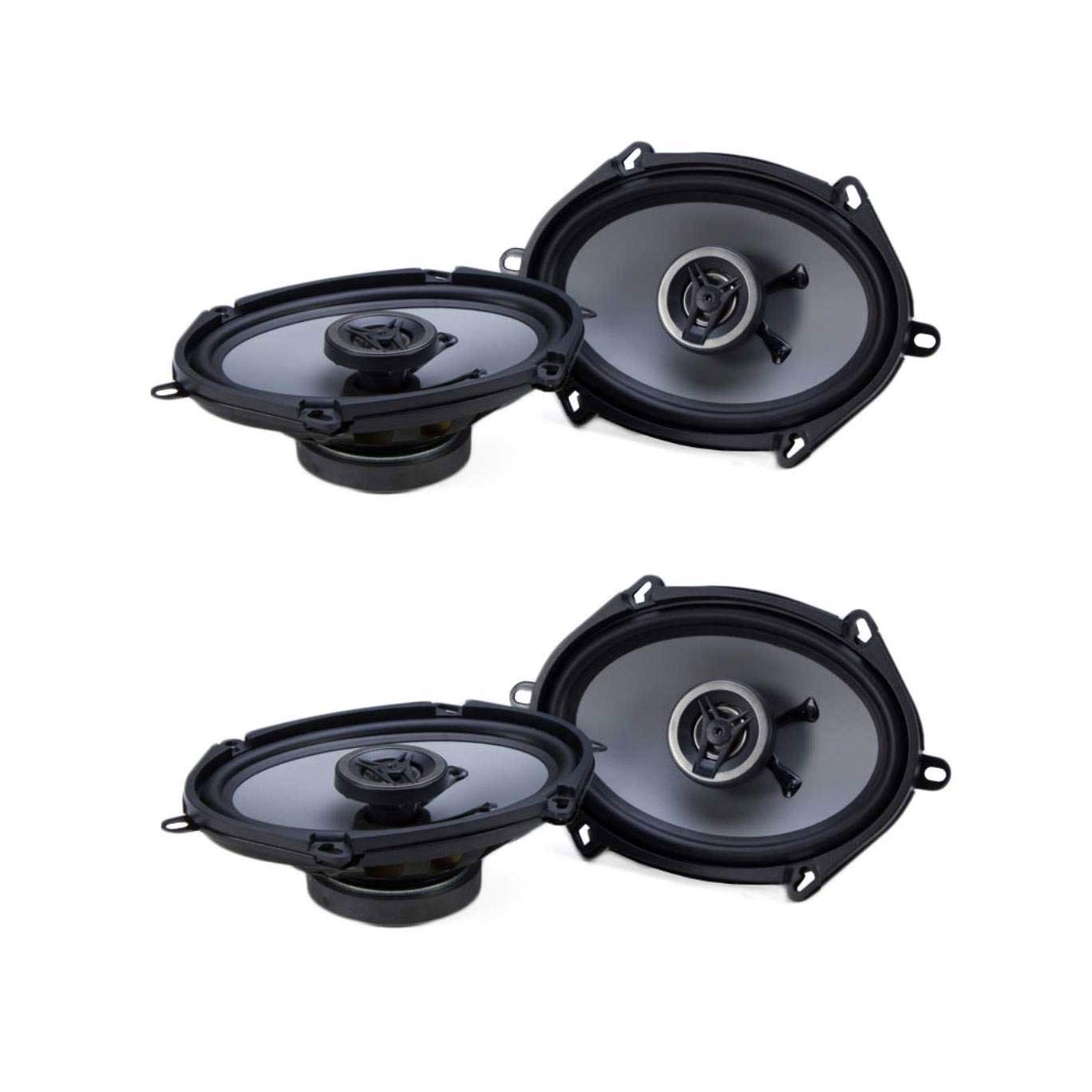

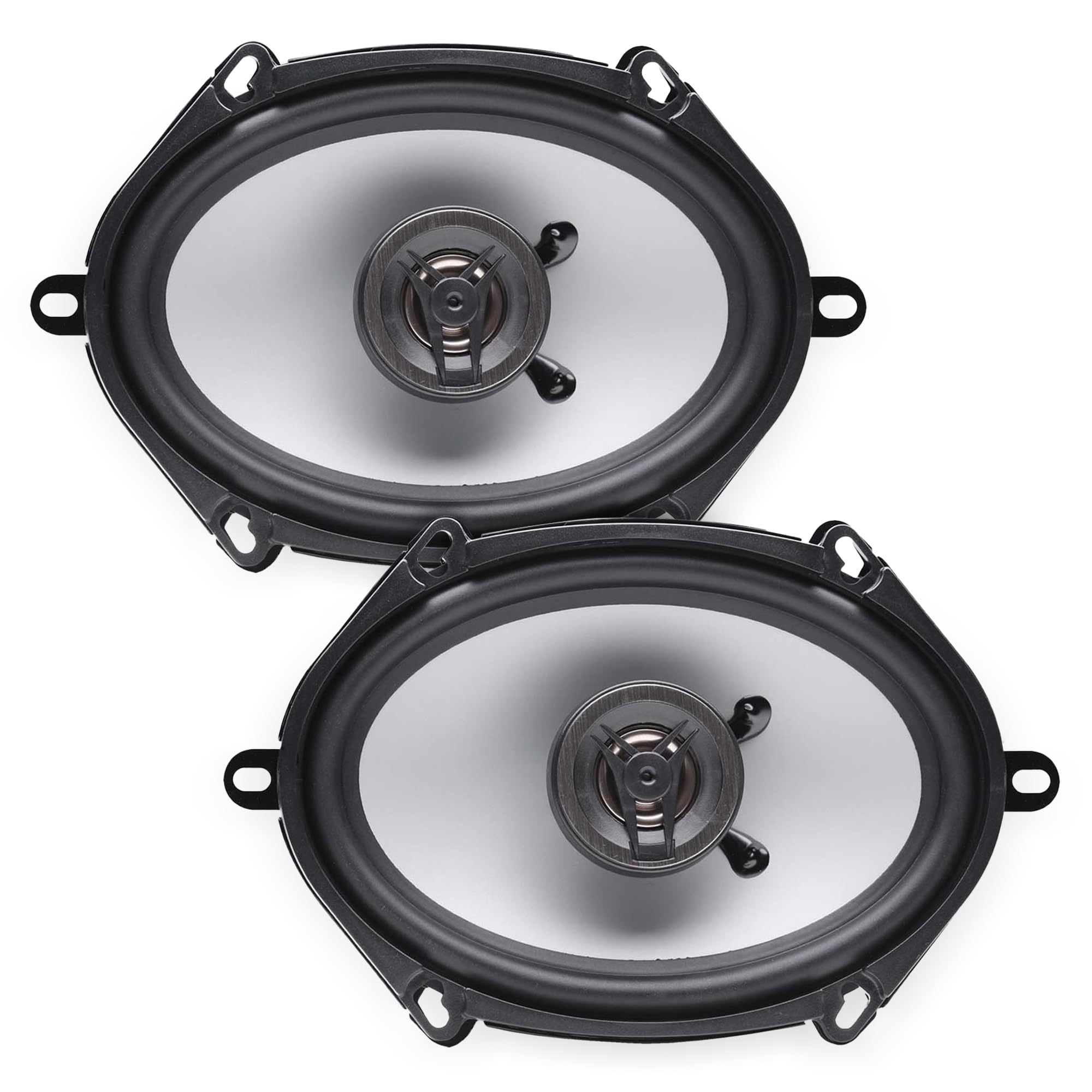


Types of 5x7 Coaxial Speakers Compared
Coaxial simply means the tweeter shares the same axis as the woofer, mounted on a post or bridge in the center of the cone. That single point design keeps the install simple and the sound coherent at a low price. The types below differ in how many drivers they stack into that space, how they handle weather, and how much depth they need behind the panel. As a rough price map, basic two way sets run about $40 to $80, stronger three way sets about $80 to $150, marine rated sets about $90 to $180, and shallow mount sets about $60 to $120.
Two Way Coaxial Models
A two way design pairs one woofer with one tweeter, and a simple crossover sends low notes to the woofer and high notes to the tweeter. This is the most common type and usually the best value, because fewer parts in the sound path often means cleaner midrange. Two way sets suit factory stereos well, since their power needs are modest and their sensitivity is often high. The limitation is sparkle at the very top, where a single small tweeter can sound plain next to larger multi way designs. If you mostly listen to radio, podcasts, and everyday streaming, a good two way set covers your needs without overspending.
Three Way and Multi Way Models
Three way sets add a midrange driver alongside the woofer and tweeter, and four way sets add a small super tweeter as well. The extra drivers split the work, so vocals can sound clearer and cymbals more detailed, especially at higher volumes. The trade off is complexity, because the added drivers and crossovers sit in front of the woofer cone and can block some of its output. Cheap multi way sets sometimes sound busy rather than better, so this type rewards buying from a line with honest RMS ratings. Listeners who play detailed music loudly, or who run an amplifier, get the most from this type, as our guide to the best sounding 5x7 speakers explains in more depth.
Marine and Rugged Models
Marine rated coaxial speakers are built for boats, convertibles, and vehicles that live outdoors, with sealed cones, coated baskets, and stainless or plastic hardware that resists rust. Many carry an IP rating for water resistance, and their surrounds and spiders are treated to survive ultraviolet light and humidity. In a normal closed car they still work well, though you may pay a premium for protection you never use. Their sound tuning often favors brightness, which cuts through wind and road noise in open vehicles. If your doors leak water, as many older doors do, a marine set is cheap insurance even in a regular car or truck.
Shallow Mount Models
Shallow mount sets use compact magnets and slim baskets to fit doors where the window glass travels close behind the speaker. They solve a real problem in many trucks and compact cars, where a standard speaker magnet would strike the glass. To save depth, designers shrink the magnet, which can reduce efficiency and bass output slightly compared with a full size set at the same price. Modern neodymium magnets narrow that gap, since they are strong for their size. If your vehicle fit guide flags depth as tight, choose this type from the start rather than discovering the problem with the door panel already off.
Two Way vs Three Way: Which Should You Choose?
Compare the two mainstream types on five points. On clarity, a good three way set separates vocals from instruments a little better at high volume. On simplicity, two way wins, with fewer parts to fail and an easier crossover. On power, two way sets usually play louder per watt from a factory stereo, while three way sets shine when an amplifier feeds them clean power. On price, two way gives more sound per dollar at budget levels. On space, both fit the same openings, though multi way tweeters can sit taller and touch some grilles. Choose two way for a factory stereo daily driver, and three way if you love detailed music, listen loud, or plan an amplifier, a comparison also reflected in our wider look at the best coaxial speakers.
How to Choose the Right 5x7 Coaxial Speaker
Fit and Mounting Depth
Confirm the bolt pattern, mounting depth, and tweeter height for your exact vehicle before anything else, because a perfect sounding speaker that hits the window is worthless. Many 5x7 openings also accept 6x8 speakers, which slightly increases your choices. Measure the distance from the mounting surface to the glass with the window fully down, and compare it with the speaker depth plus a small safety margin. If your car needs adapters or spacers, add their thickness to your math.
Power Handling and Sensitivity
Match RMS power handling to your source. A factory stereo sends roughly 10 to 20 watts RMS per channel, so a speaker rated for 30 to 60 watts RMS with sensitivity near 90 decibels will play cleanly and loudly. An aftermarket stereo sends about 20 to 25 watts RMS, and a separate amplifier can send 50 watts or more, which suits lower sensitivity, higher handling sets. Sensitivity matters most for bass fullness at low volume, so do not trade it away for a giant peak watt figure.
Sound Quality and Tuning
Tweeter material shapes the top end. Silk and soft dome tweeters sound smooth and forgiving, while metal and ceramic domes sound brighter and more detailed but can feel harsh on poor recordings. The woofer frequency response tells you how low the speaker reaches, and a figure near 50Hz suggests fuller bass than one near 80Hz. If your stereo has an equalizer, a neutral speaker gives you room to adjust, while a bright speaker may need its treble trimmed. Readers comparing general fit across vehicles may also find the best 5x7 car speakers overview helpful before narrowing to coaxial types.
Materials and Build Quality
Look for a polypropylene or similarly stiff cone, a rubber surround, and a basket that does not flex when you press its rim. Rubber outlasts foam in hot door cavities, and a rigid basket keeps the voice coil aligned so the speaker plays cleanly for years. Check that the terminals feel solid and accept your harness adapters. Small build details like tinsel leads woven into the spider reduce the chance of a lead snapping at high excursion, a failure that silences a speaker completely.
Care and Maintenance Tips
Keep the speakers clean by wiping dust from the cone and grille with a soft, dry cloth, and never spray cleaner directly onto the cone. Check door drain holes once a year so water does not pool where the speaker sits, and reseat any loose mounting screws, because a rattling speaker is often just a loose speaker. If bass on one side weakens, inspect the wiring connector for corrosion before assuming the speaker has failed. Listeners who want stronger low end in the same opening should review the best 5x7 speakers for bass before replacing a healthy set.
5x7 Coaxial Speakers: Your Questions Answered
Do 5x7 coaxial speakers need an amplifier?
No, most coaxial sets are designed to run well on stereo power alone, especially high sensitivity two way models. An amplifier adds headroom, so the speakers play loudly with less distortion and firmer bass, but it is an upgrade, not a requirement. If you add one later, choose RMS output that sits inside the speaker rated range.
Is a three way 5x7 coaxial speaker always better than a two way?
No, driver count alone does not guarantee better sound. A well built two way set often has cleaner midrange than a cheap three way set, because its crossover is simpler and nothing blocks the woofer. Three way designs pull ahead when the drivers and crossover are quality parts and you listen at higher volumes.
What IP rating do 5x7 coaxial speakers need for outdoor or marine use?
For boats and open vehicles, look for at least IPX5, which resists water jets from any direction, along with ultraviolet resistant cones and corrosion proof hardware. In a normal car, an IP rating is optional, but sealed leads and coated baskets still help in doors that channel rain past the window seal. Always confirm the rating covers the whole speaker, not just the cone.
Do coaxial speakers sound worse than component speakers?
Coaxial speakers give up some sound staging because the tweeter sits low in the door instead of near ear level. For most listeners the difference is modest, and coaxial sets cost less and install in a fraction of the time. Our side by side notes on the best car coaxial speakers explain when the component upgrade is worth the extra work.
How long do 5x7 coaxial speakers last?
Expect about 5 to 10 years from a decent set. Rubber surrounds, modest volume habits, and dry door cavities stretch that lifespan, while foam surrounds in hot climates may fail in 3 to 5 years. A speaker that starts buzzing on bass notes is usually showing surround or lead damage and is near the end of its service.
Our Verdict
Pick the type by your constraints first: shallow mount for tight doors, marine for wet or open vehicles, two way for factory stereo value, and three way for amplified detail. Then confirm RMS match, sensitivity, and tweeter height before you order. Check your finalists against the product table above, and the best 5x7 coaxial speakers for your car will be the type that fits your doors, suits your power, and matches how you actually listen every day.


