Best 5 Burner Gas Cooktop: Buying Guide (2026)
Disclosure: We may earn a commission when you buy through links on this page, at no extra cost to you. As an Amazon Associate I earn from qualifying purchases. Learn more

30 inch, 36 inch or center griddle layouts: how to match a 5 burner gas cooktop to your cutout, pans and installation budget.
Sunday lunch at home can mean a stockpot in the middle, eggs at the front, and sauce staying warm at the back, all at once. If your current four burners force you to cook in shifts, the best 5 burner gas cooktop for your home is the one that fits your counter, your household size, and the way you actually cook each week. This guide skips showroom talk and focuses on space, daily ease, and ownership cost.
Below, you will find a checklist for size, layout, fuel, and installation, plus a comparison of the three layout styles most homes choose between. Start with the comparison table below, then use the sections that match your kitchen.



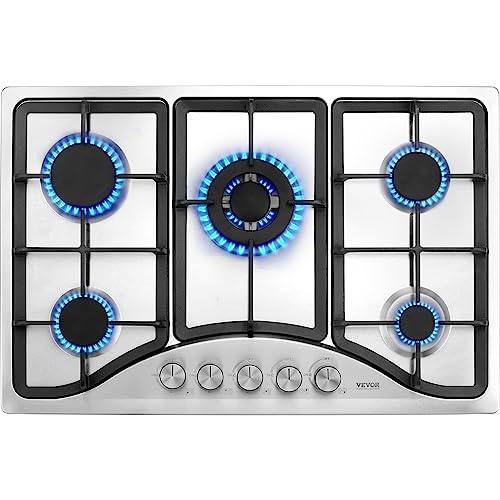
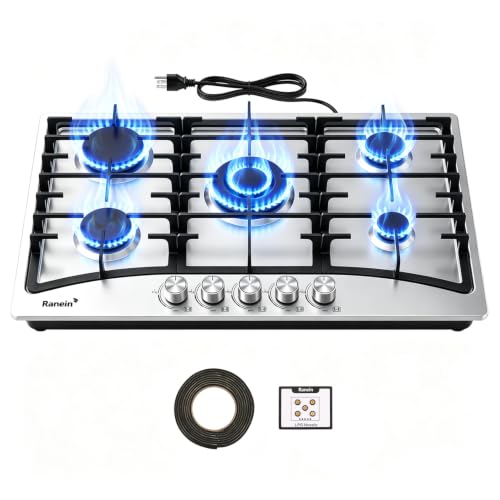


Quick Answer: Three Layout Styles at a Glance
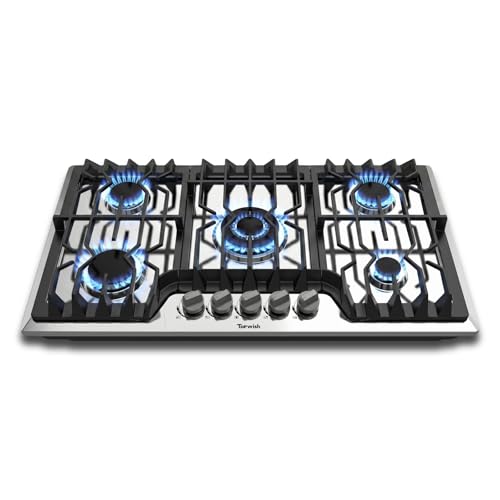
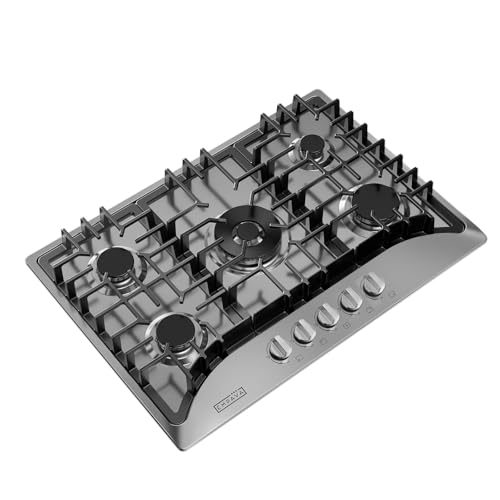
Most five burner models fall into three layout styles. A compact 30 inch layout puts a center burner inside a standard cutout and suits smaller households. A wide 36 inch layout spreads the burners out, so large pans stop crowding each other. A style with a long oval center burner adds room for a griddle or a big roasting pan. If you are still weighing four burners against five, our broader guide to the best gas cooktop gives you the wider picture first.
Before You Buy: A Quick Checklist for Choosing a Gas Cooktop
Size: Match It to Your Space
Five burner cooktops are sold mainly in 30 inch and 36 inch widths, and width decides how much pan room you really gain. A 30 inch model fits the cutout left by most standard ranges and keeps some counter on each side in a small kitchen. A 36 inch model needs a wider cabinet and more counter run, but your skillets can sit side by side without overlapping. Start by comparing the best 30 inch gas cooktop layouts if your cabinets are fixed and you cannot widen the opening.
Which Type Fits Your Routine
Nearly all five burner models are built in units that drop into the counter, rather than slide in ranges with an oven below. Fuel is natural gas in most homes, while some models ship with a conversion kit for propane. Sealed burners sit in a smooth pan that catches spills, which makes daily wiping far simpler than open burner designs. If you need a taller, more powerful unit with front knobs, read our gas cooktop vs rangetop comparison before you commit.
Features Worth Paying For and Ones to Skip
Continuous grates are worth paying for, because you can slide a heavy pot from one burner to another without lifting it. A true simmer burner matters if you hold sauces, soups, or melted butter at a low heat for a long time without scorching. A wok ring helps a round bottom wok sit steady over high heat. A fitted griddle earns its cost only if you cook pancakes or grilled sandwiches for a group most weeks. Skip smart controls if you mostly cook simple weeknight meals, since they do not change how the food cooks.
Measurements and Compatibility With Your Setup
Measure the cutout width and depth in your counter, not just the width of your old cooktop, because makers define those numbers differently. Check the space below the counter as well, since the regulator and gas line need room and drawers can block them. Confirm that your gas supply, shutoff valve position, and electrical outlet for the igniter match the manual. Leave the clearance the maker lists above the burners, and plan ventilation that moves steam and heat out of the room.
Certifications and Safety Listings
Look for a listing mark from CSA, ETL, or UL on the rating plate, and for design certification to the ANSI standard that covers household gas cooking appliances. Those marks show the unit was checked for gas safety, ignition, and surface temperatures. WaterSense labels do not apply to a gas cooktop, so ignore them here. Know the warning signs of a gas problem: a rotten egg smell, a hissing sound near the line, or a flame that burns mostly yellow. Leave the house and call your gas utility if you smell gas strongly.
Doing It Yourself Versus Professional Installation and Cost
Swapping a cooktop into an existing cutout with the gas line already in place is a short job for a licensed installer, while a new gas line, a moved shutoff, or electrical work adds time and permits in many areas. Most towns require a licensed plumber or gas fitter for the gas connection, and doing that part yourself can void coverage and break local code. Before you budget only for the cooktop itself, read our breakdown of gas cooktop installation cost so permits, parts, and labor are part of your plan from the start.
Realistic Budget Ranges
Basic five burner models often cost about $400 to $800 and cover everyday cooking well. Models at about $800 to $1,500 usually add stronger grates, a more powerful center burner, and better simmer control. Premium and professional style models can run about $1,500 to $3,000 or more. Under about $400, choices are thin, and you may give up sealed burners or sturdy grates to reach that price.
Three Layout Styles Compared: How to Choose
Instead of chasing a single winner, match the layout style to your home. The three styles below cover most kitchens, and each one trades space, power, and price in a different way.
Compact 30 Inch Layouts for Smaller Homes
This style suits apartments, condos, and smaller family kitchens where the cutout is already set at 30 inches. The center burner usually handles a stockpot or a large skillet while the four corner burners take sides and sauces. Pan room is the trade off, since two very large pans can still crowd each other. Choose this style if you cook for two to four people, want a simple swap, and would rather keep your remaining counter space than gain width you rarely use.
Wide 36 Inch Layouts for Busy Family Kitchens
A 36 inch layout is the natural step up for households that cook several dishes at once on most days. Burners sit farther apart, so a 12 inch skillet and a wide Dutch oven can share the top without touching. To picture the extra room in your own cabinet run, compare the best 36 inch gas cooktop layouts against your measurements before ordering. The trade off is cost and space, since this style needs a wider cabinet, a bigger cutout, and often a wider hood above it.
Center Griddle Layouts for Weekend Group Cooking
Here the center burner is long and oval, shaped to heat a griddle or a roasting pan evenly from end to end. This style suits homes that host brunch or batch cook for the week in large pans. On ordinary weeknights you can still use the center as a normal large burner with the grate in place. Skip this style if you rarely cook flat top foods, because the oval burner adds little on a night of soup and pasta.
How to Evaluate a 5 Burner Gas Cooktop
Judge any model on five points, in this order: fit in your cutout, burner layout for your pans, grate stability, simmer control, and warranty terms for parts such as igniters and valves. Use maker specification sheets for output and dimensions, and read buyer reviews for patterns about ignition trouble or grate wobble. The same complaint repeated by many owners is a useful signal about daily ownership.
Is a 5 Burner Gas Cooktop the Right Size for You?
It is the right size if you often run out of burners, not simply if you like the look of a wide top. Families of four or more who cook a main dish plus two or three sides most nights will use the fifth burner weekly. Home cooks who host often will value the center burner when a holiday meal puts every pot in play at once. Smaller households that cook one pan meals may find a four burner top simpler to clean and cheaper to buy. Owners planning a near term move should also weigh installation cost, since a built in cooktop stays with the home.
Common Mistakes to Avoid
- Ordering by outside width alone, so the new unit does not match the cutout and the swap turns into counter work.
- Ignoring the space below the counter, so a deep drawer or stored pans block the regulator and gas line.
- Paying for a large center burner you rarely use, while your daily pans still crowd the front burners.
- Forgetting ventilation, so steam, grease, and heat build up in a kitchen with a weak or missing hood.
- Skipping the fuel check, so a natural gas only model arrives at a home that runs on propane.
Cost of Ownership and Care
Running costs stay modest, since a cooktop uses gas only while you cook, but ownership cost includes igniter or valve repairs over a long life. Daily care is simple: wipe the surface once it cools, lift the grates and caps off for washing, and keep burner ports clear so flames burn even and blue. Our step by step guide on how to clean a gas cooktop covers dried spills and grate soaking in detail. Call a qualified technician if ignition keeps failing or you smell gas when the cooktop is off.
Your Questions, Answered
Can a 5 burner gas cooktop run on propane?
Many models can, if the maker supplies or approves a conversion kit for that exact unit. Conversion means changing the orifice in each burner and adjusting the regulator, and a licensed installer should do the work and test for leaks afterward. Check the manual before you buy, because some models are natural gas only. A tank fed propane setup also needs a storage plan that meets local code.
How long does a 5 burner gas cooktop last?
A well kept gas cooktop often lasts about 15 to 20 years, since it has fewer complex parts than an oven or a refrigerator. Igniters and burner caps are the parts most likely to need attention, and both are usually replaceable. Lifespan drops when spills bake onto ports for months or when dropped grates crack the enamel surface. Clean burners and careful handling of grates most extend service life.
Is a 5 burner gas cooktop worth it over a 4 burner model?
It is worth it if your meals regularly need a fifth pot, such as a kettle during dinner or a sauce that must hold while everything else cooks. The extra burner costs more up front and gives you one more set of grates and caps to clean after each meal. If your largest regular meal uses three burners, the money is better spent on stronger grates or better simmer control in a four burner size. Count your busiest real meal, not a holiday best case, before deciding.
What size hood does a 5 burner gas cooktop need?
Match the hood width to the cooktop width, so a 36 inch cooktop pairs with a hood that is at least 36 inches wide. Capture also depends on mounting height and on how much steam your meals produce, and heavy frying sends up far more than gentle simmering. A hood that is too small leaves grease on cabinets even if its fan rating looks strong on paper. Check the manual for minimum clearance above the grates before mounting.
What is the best 5 burner gas cooktop for a small kitchen?
For a small kitchen, the strongest choice is usually a 30 inch layout with sealed burners and continuous grates, because it adds a center burner without taking more counter. Measure your largest pan as well, since a center burner placed too close to the back wall can make a tall stockpot awkward to lift. A glass surface can wipe clean fast in a tight space, while stainless steel hides small scuffs better over time. Pick the finish based on how you clean, not only on looks.
Final Thoughts
Start with your cutout, then your household size, then the layout style that matches your busiest meals. That order keeps you from paying for width or power you will not use, and it makes daily cooking and cleaning easier for years. When you compare the best 5 burner gas cooktop options for your home, use the product table above to check dimensions and burner layout side by side before you order.