Best 42 Inch Dog Crate: Buying Guide (2026)
Disclosure: We may earn a commission when you buy through links on this page, at no extra cost to you. As an Amazon Associate I earn from qualifying purchases. Learn more

For dogs of about 70 to 90 pounds: crate types, interior sizing, latches, dividers and cost for a 42 inch dog crate.
A crate that is too small leaves your dog cramped, and one that is too large can slow down house training. The 42 inch size sits in the sweet spot for most large breeds, giving a full grown dog room to stand, turn, and stretch out without wasting floor space in your home. If you are shopping for the best 42 inch dog crate, the comparison table below lines up the main types side by side so you can match one to your dog and your routine.
This guide walks through the crate types sold in this size, the features that separate a sturdy crate from a flimsy one, and the sizing checks to run before you order. If you are still comparing across sizes, our guide to the best dog crate covers the full range from puppy crates to the largest kennels.



Who Should Buy a 42 Inch Crate?
Owners of Large Adult Dogs
A 42 inch crate is built for dogs that weigh about 70 to 90 pounds, a group that includes Labrador Retrievers, Golden Retrievers, Boxers, and Standard Poodles. Dogs in this range need roughly 30 inches of interior height to stand without ducking their heads. If your dog is still growing, measure against the expected adult size rather than the puppy in front of you, because a crate bought for today can be outgrown in a few months.
Puppy Owners Who Want One Crate for Life
Buying the adult size now and shrinking the interior with a divider panel lets one crate cover the whole first year. Your puppy gets a snug space that supports house training, and you move the panel back as the dog grows instead of buying a second crate. This only works if the divider is included or sold for that exact model, so confirm before you order.
Households That Crate Daily
If the crate is part of your everyday routine for work hours, travel days, or overnight sleeping, build quality matters more than it does for occasional use. Daily latching, sliding trays, and repeated folding wear out light gauge wire and thin plastic latches. Households in this group should weight durability and door hardware heavily, even if it means paying more upfront.
Crate Types Compared at the 42 Inch Size
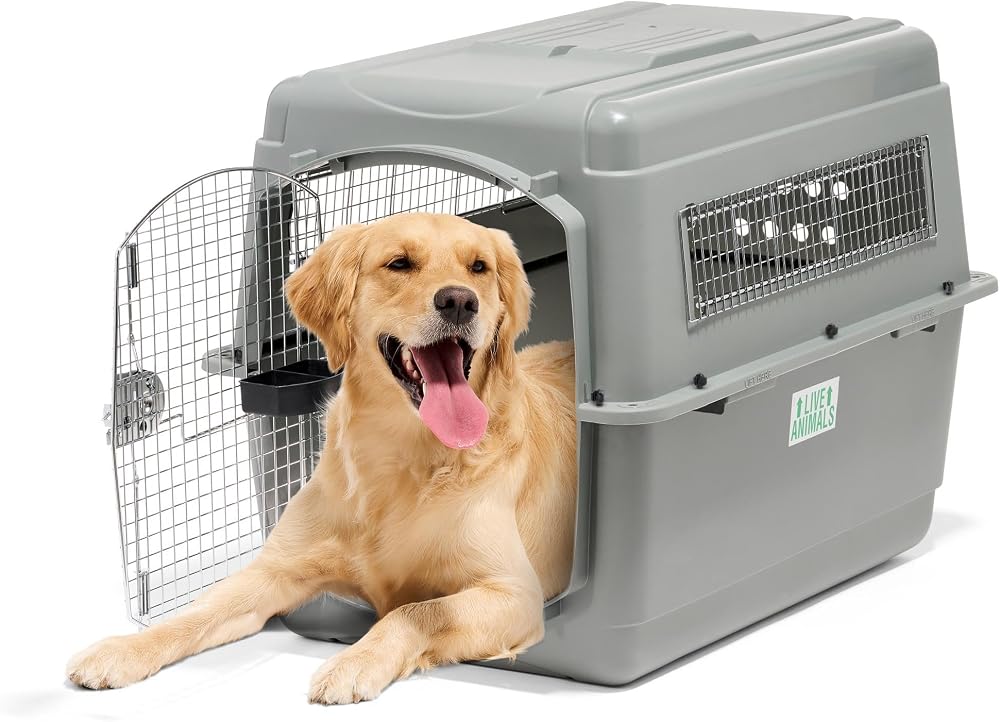
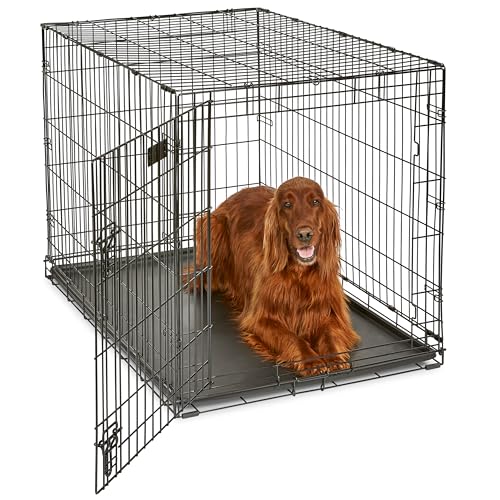
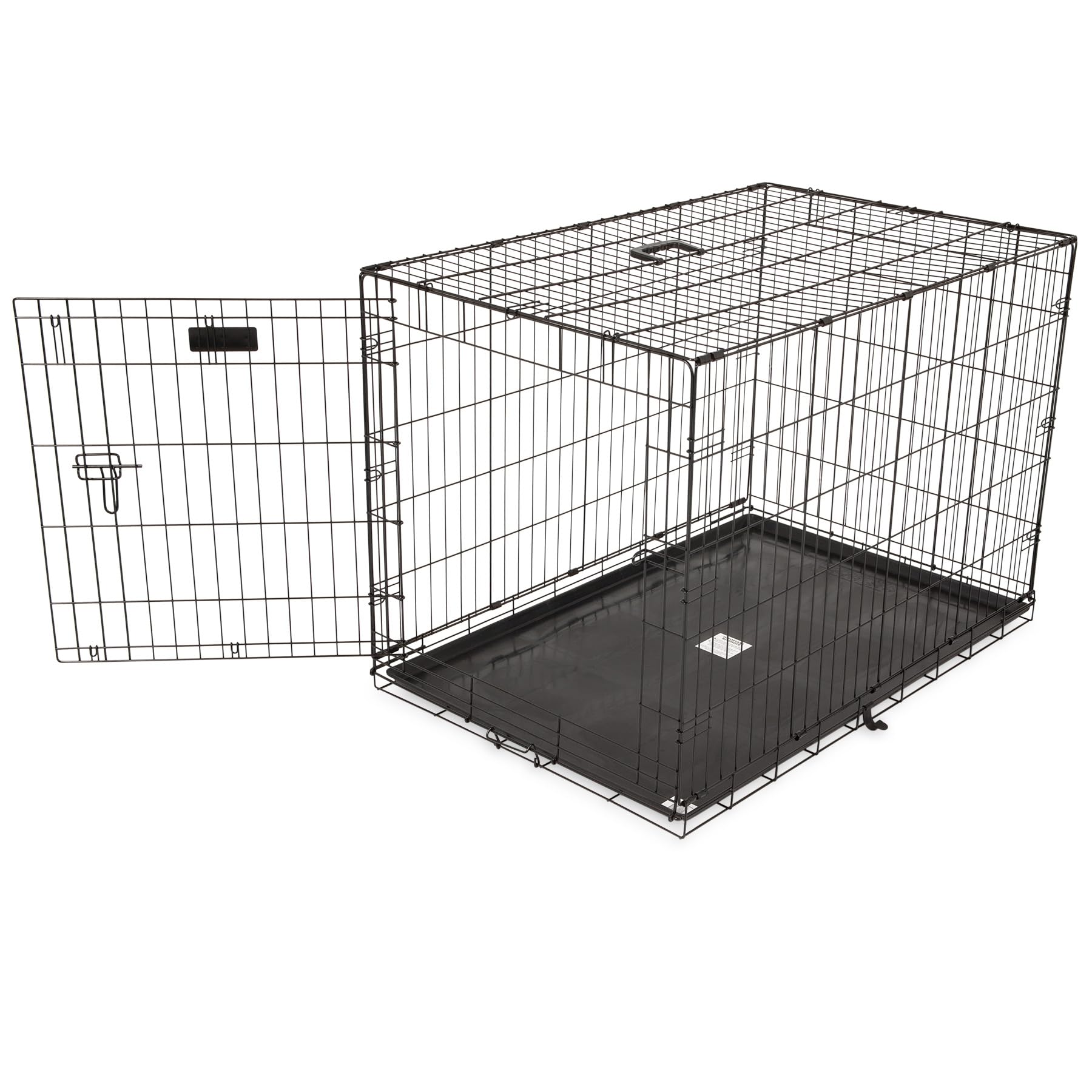
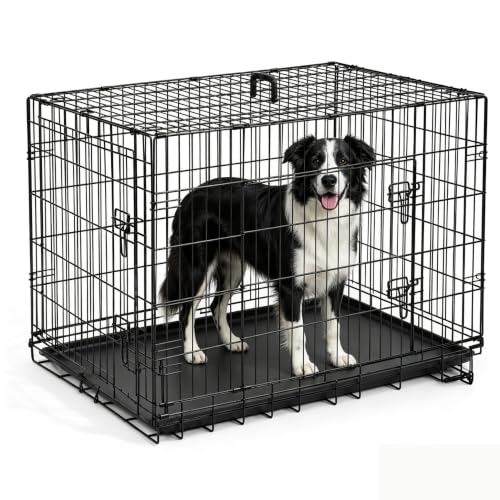
Four crate types dominate this size, and each suits a different dog and home. Wire crates are the most common choice because they fold flat, ventilate well, and often include a divider and a removable tray. Plastic kennels feel more enclosed and den like, which some dogs prefer, and their solid walls contain shedding and small messes better than open wire.
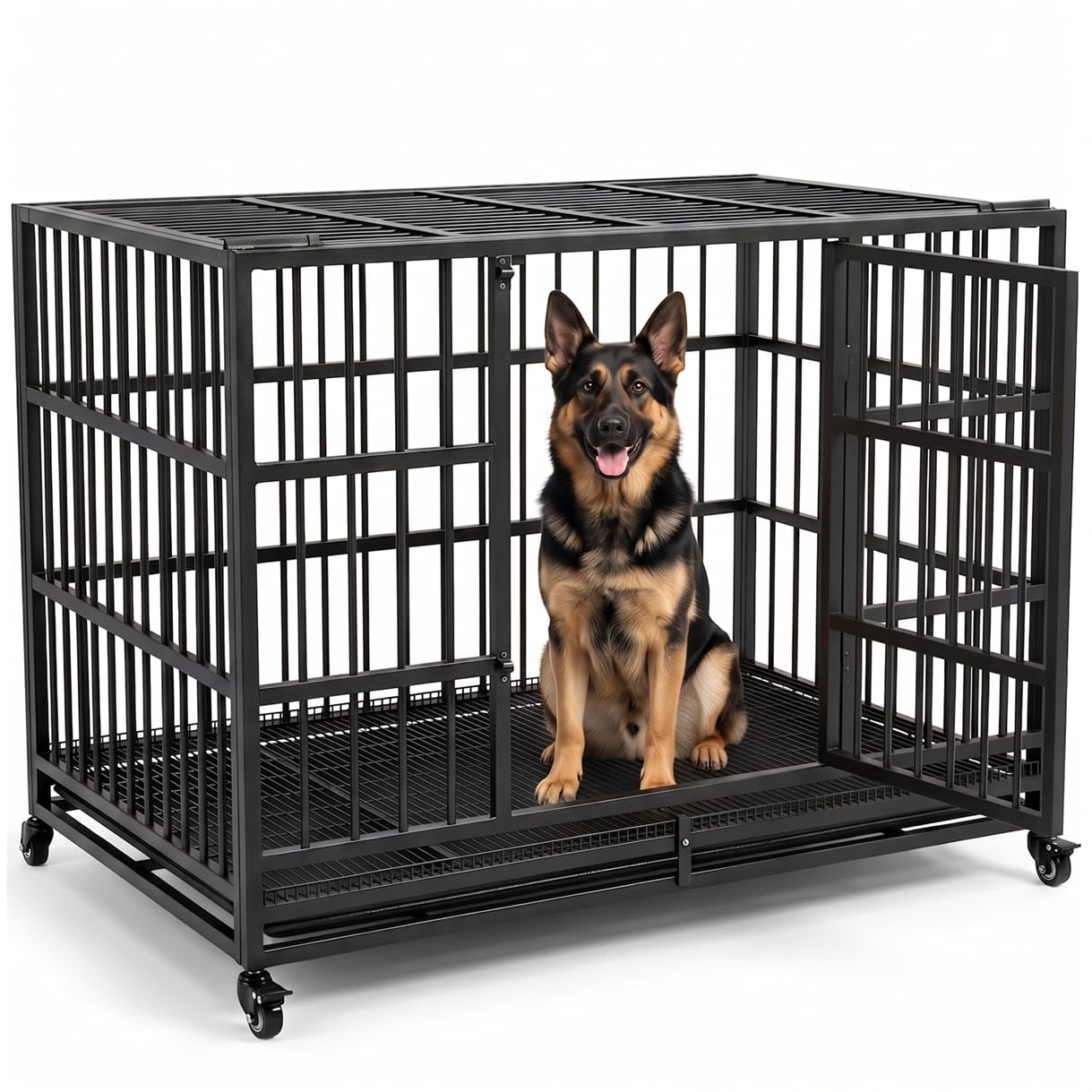
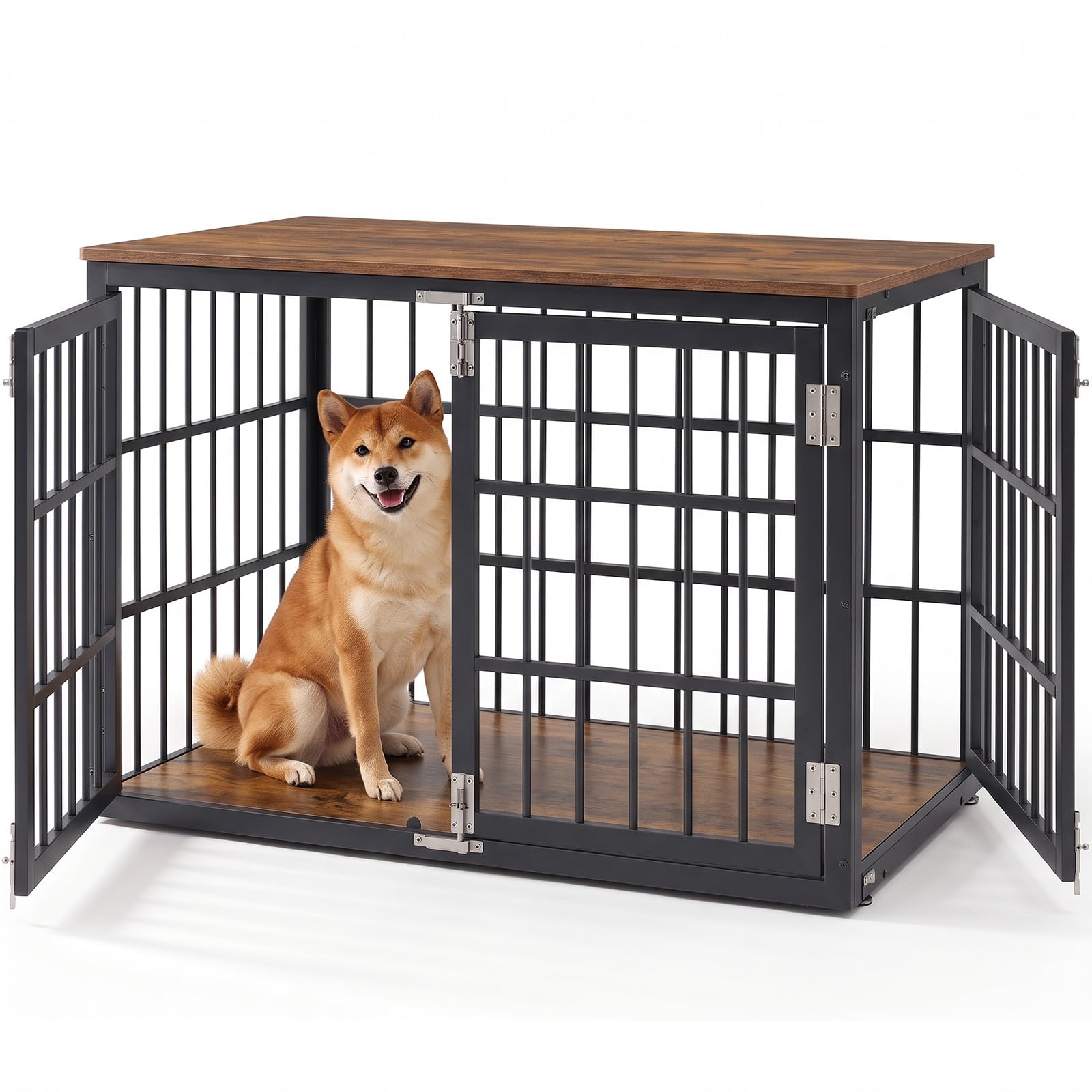
Furniture style crates double as side tables and blend into a living room, though they cost more and usually weigh more than wire. Heavy duty crates use thicker steel and reinforced latches for strong dogs that bend standard wire or pop simple door latches. Our breakdown of wire vs plastic dog crate designs goes deeper on the two most popular builds if you are torn between them.
Key Features to Compare
Interior Dimensions, Not Just the Label
Two crates can both carry a 42 inch label and still differ by an inch or more inside, because brands measure length on the outside and frame thickness eats into the living space. Check the interior length, width, and height on the listing, and compare them against your dog measured from nose to tail base while standing. Your dog needs to stand with head up, turn in a full circle, and lie flat on one side with legs extended. A tall, lean dog may need the height more than the length, so weigh all three numbers rather than shopping on length alone.
Build Quality and Chew Resistance
Wire gauge, weld quality, and frame rigidity decide how a crate holds up to a strong or determined dog. Thicker wire with close bar spacing resists bending and keeps paws from slipping between bars. On plastic models, look for solid wall thickness and metal hardware at the door rather than all plastic clips. If your dog has a history of chewing bars or trying doors, a standard crate of any type is the wrong tool, and a reinforced model built for escape prone dogs is worth the higher price.
Doors and Latch Design
Many 42 inch crates offer two doors, one on the long side and one on the end, which gives you flexibility in tight rooms and lets you place the crate against either wall. A side door also makes it easier to reach a sleeping dog or slide in a bed. Latches should need two motions to open, such as lifting and sliding, so a clever nose or paw cannot work them loose. Picture the latch action against your dog: a simple bolt that slides sideways is the easiest style for a persistent dog to defeat.
Divider Panel and Tray
A divider panel turns one large crate into a growing space for a puppy, and it is far cheaper to get it in the box than to buy a second crate later. The floor tray should slide out from the front without lifting the crate, and a raised lip around the edge keeps water spills and accidents from reaching your floor. Plastic trays can crack under the nails of a digging dog, so check whether replacement trays are sold for the model before you commit.
Folding and Storage
Most wire crates in this size fold down to a flat slab a few inches thick, which slides behind a couch or into a closet. That matters if the crate only comes out for guests, travel, or recovery after surgery. Plastic kennels split into two nesting halves but still take up more room. Consider the folded weight too, since a 42 inch wire crate often weighs 30 to 40 pounds and is awkward to carry through doorways on your own.
How to Choose the Right 42 Inch Crate
Sizing for Your Dog
Measure your dog standing: length from nose to the base of the tail, plus a few inches of clearance, and height from the floor to the top of the head or ears, whichever is higher. A 42 inch crate generally fits dogs up to about 36 inches long and 90 pounds. If your measurements land between sizes, our guide on what size dog crate do i need walks through the sizing math in detail.
Materials and Everyday Safety
Look for smooth, rounded wire ends and a coating that will not flake into chips a dog can swallow. Door gaps should be small enough that a collar cannot catch, and you should remove the collar during unsupervised crating to be safe. Ventilation matters in warm rooms: wire crates move the most air, while plastic models rely on side vents, so place any crate away from direct sun and heat vents. Never crate a dog wearing a muzzle, and stop using any crate that develops sharp bent wires or a cracked door frame.
How Much Should You Spend?
Basic wire crates in this size usually cost about $50 to $100 and cover most family dogs well. Spending about $100 to $250 typically buys thicker wire, better latches, and quieter doors. Furniture style and heavy duty models run about $250 to $500 or more, a premium that pays off only if you need the looks or the strength. Shoppers comparing bigger options can also see our roundup of the best large dog crate for sizes above this one.
Is a 42 Inch Dog Crate the Right Size for You?
For most dogs between about 70 and 90 pounds, yes. This is the standard large size, and it balances interior room against the footprint it takes in your home, which is roughly three and a half feet by two and a half feet. Step down to 36 inches if your adult dog weighs under 70 pounds, because extra empty space can invite a puppy to sleep at one end and soil the other. Step up to 48 inches for giant breeds or dogs over 90 pounds, especially tall ones whose ears brush the top of a 30 inch tall crate. If the crate will ride in a vehicle often, check the cargo area first, since many 42 inch models fit an SUV but not a sedan trunk; our guide to the best travel dog crate focuses on that use.
Common Mistakes to Avoid
- Buying by breed charts alone, because two dogs of the same breed can differ by several inches in length and height.
- Skipping the divider with a puppy, which leaves too much room and can set back house training.
- Using the crate as punishment, which teaches the dog to fear the space instead of resting in it.
- Leaving a young puppy crated longer than its bladder can hold, which guarantees accidents and stress.
- Placing the crate in a hot, sunny spot where an enclosed dog cannot move away from the heat.
- Ignoring a bent door or cracked tray, since small damage is where escapes and injuries start.
Care and Cleaning
Wash the tray weekly with warm soapy water, and rinse it fully so no residue is left where your dog lies. Wipe wire panels with a cloth dampened with a pet safe cleaner, paying attention to the corners where hair and dander collect. Bedding should be washed on the same schedule, and any bed that gets chewed open should be replaced before filling spills out. For a full routine, including odor removal after accidents, follow our steps on how to clean a dog crate. Every month or so, check latch springs, door hinges, and tray edges, and retire the crate if rust weakens the wire.
FAQ
What is the best 42 inch dog crate for a puppy that will grow into it?
Choose a wire model that includes a divider panel, since that single feature lets the crate grow with your puppy. Move the panel back a few inches at a time as the dog gains size, keeping the space snug but comfortable. A double door version also helps, because you can reposition the crate in the room later without blocking the only entrance.
Can a 42 inch crate fit two small dogs together?
It can hold two small dogs for short, supervised rest periods if both are calm and already bonded, but each dog should have its own crate for overnight sleeping and for any time you are out. Sharing removes the option to retreat, and even friendly dogs can argue over bedding or a chew. Separate crates also make feeding and house training far simpler to manage.
How long can an adult dog stay in a 42 inch crate?
Most healthy adult dogs can rest in a crate for about four to six hours during the day, with many managing an overnight stretch of sleep. Size does not extend that window, since the limit is comfort, water, and bathroom needs rather than floor space. Dogs new to crating should build up gradually, starting with short sessions paired with treats and calm exits.
Will a 42 inch crate fit in the back of a car?
A folded wire crate of this size fits flat in most SUV and hatchback cargo areas, but the assembled crate is too tall for many vehicles. Measure the cargo opening height, not just the floor, because the sloped rear window is usually the tight point. For frequent road trips, a plastic kennel rated for vehicle use is often easier to load and secure.
Do 42 inch crates come with a bed or cover included?
Some bundles include a simple fleece pad or a fabric cover, but most crates in this size are sold bare. Buying bedding separately lets you match the pad thickness to your dog and replace it without replacing the crate. A cover can help a light sensitive dog settle at night, though it reduces airflow, so use it only in cool rooms.
Final Thoughts
The right choice comes down to three checks: your dog fits the interior with room to turn, the build matches how hard your dog is on equipment, and the doors suit your room. Get those right and the best 42 inch dog crate for your home stops being a gamble. Use the product table above to compare the types side by side, and measure your dog one last time before you order.