Best 30 Inch 5 Burner Gas Cooktops: Types Compared and How to Choose for 2026
Disclosure: We may earn a commission when you buy through links on this page, at no extra cost to you. As an Amazon Associate I earn from qualifying purchases. Learn more

Compare the best 30 inch 5 burner gas cooktops by type, burner layout and price range to pick the right style for the way you cook.
Fitting five burners into a 30 inch frame sounds like a pure upgrade, yet layouts differ so much that one cooktop feels generous and another feels like a puzzle. The best 30 inch 5 burner gas cooktops balance burner power, pan space, and safe clearances inside that fixed width, and the balance point depends on how you actually cook. This guide compares the main types plainly, then covers the measurements and gas requirements that decide whether an installation goes smoothly.
Start with the product table below for the shape of the market, then read the type sections against your habits: weeknight pasta for two, weekend pancakes on a griddle, or three pans moving at once for a family dinner. Your most common meal matters more than the most elaborate one you cook twice a year.


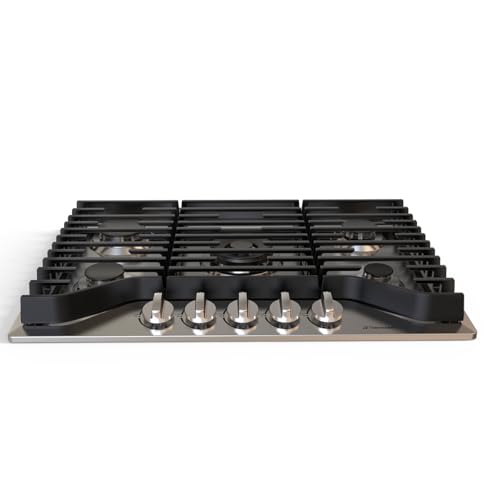
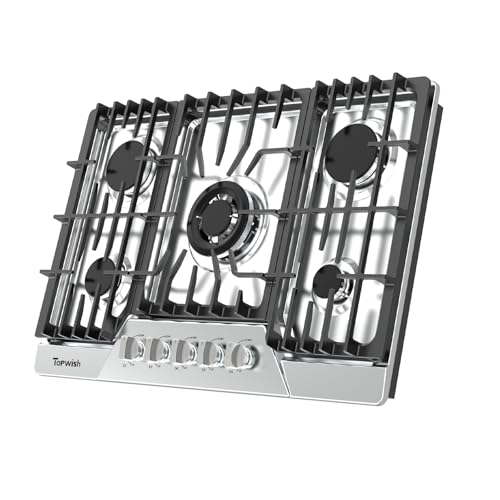
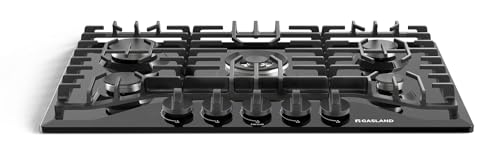
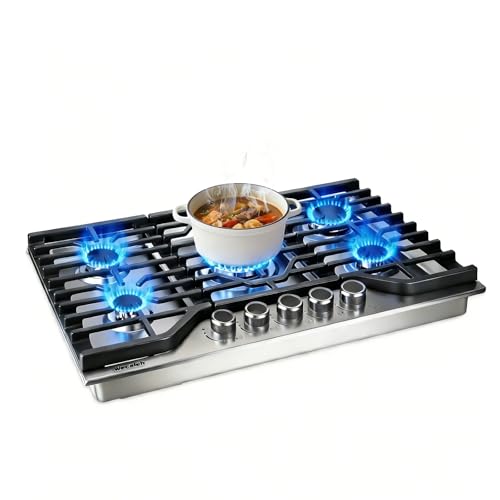
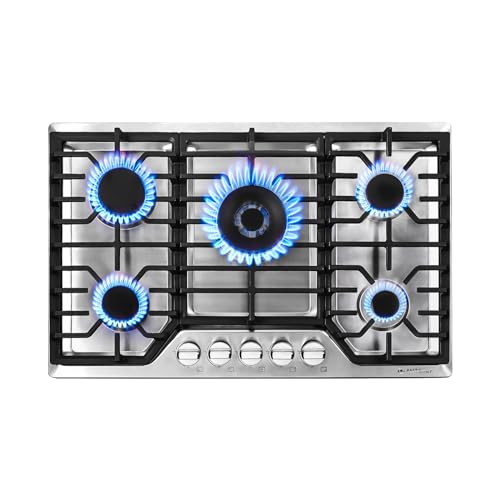

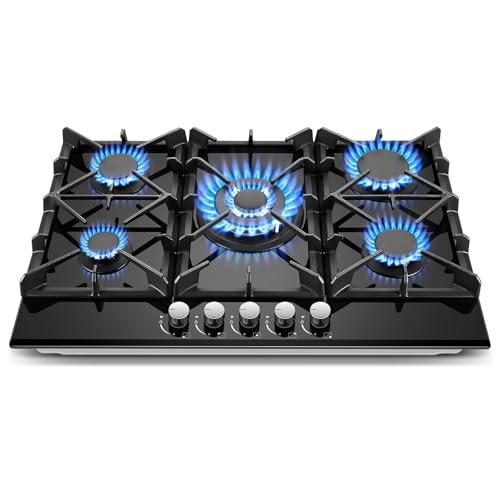

Types of 30 Inch 5 Burner Gas Cooktops Compared
All five burner gas cooktops share a width, but they split into clear types by burner layout and ambition. Rough price bands run from about $500 to $900 for basic models, about $900 to $1,500 for well equipped mid range designs, and $1,500 and up for pro style builds. Use the types below to place any listing you see.
Standard Sealed Burner Models
The mainstream choice uses sealed burners, which keep spills out of the cooktop interior and wipe clean with little drama. Layouts usually put a stronger burner at one front corner, smaller burners behind, and a medium oval or round burner in the center. These models suit most households because parts are common, controls are simple, and power covers daily cooking well. Their limit is peak heat. Serious wok cooking or very fast boiling is slower than on pro style burners, but weeknight cooking rarely exposes that gap.
Pro Style High Output Models
Pro style cooktops chase heat and sturdiness: a power burner that can reach roughly 18,000 to 20,000 BTU, heavy continuous grates, and metal knobs built for gloved or greasy hands. They reward cooks who sear often, use a wok, or boil large pots and resent waiting. The trades are price, weight, and cleaning effort, since big grates are awkward in a sink. Home cooks who mostly simmer sauces will pay for force they seldom use. Buy this type for your cooking style, not for the restaurant look alone.
Budget Basic Models
Budget models keep the five burner count but simplify everything else: lighter enamel surfaces, smaller power burners, and basic electric ignition. They make sense for rentals, first kitchens, and households that cook simply. Expect slower boils and grates that feel less planted under heavy pots. The key check at this level is grate stability and knob feel, because those touch every meal. A cheap cooktop with rock solid grates is a fine buy; one with wobbly grates is a daily irritation and a safety annoyance.
Center Griddle Models
These designs stretch the center burner into an oval shape meant to heat a griddle or a long pan evenly. If your weekends involve pancakes, grilled sandwiches, or a big batch of bacon, this layout earns its space every week. Some models include a fitted griddle plate, which saves storage and guesswork. The compromise is the center spot itself: a round pot there heats less evenly than on a normal burner. Shoppers who never use a griddle should prefer a strong round center burner instead, and our guide to the best gas cooktops 30 inch compares those layouts side by side.
Gas vs Induction: Which Should You Choose?
Many buyers cross shop gas against induction before settling, so here is the honest comparison. Heat control: gas gives instant visual feedback and works with every pan, while induction responds just as fast and keeps the surface cooler. Efficiency: induction sends more heat into the pan, gas loses more to the room. Cleaning: a flat induction surface wipes clean in seconds, while gas grates and burner caps take real effort. Installation: gas needs a gas line and good ventilation; induction needs suitable wiring and magnetic pans. Operating feel: many cooks simply love a visible flame and the ability to char a pepper directly on it.
If your kitchen already has a gas line and your cookware is mixed, gas is the easy path. If ventilation is poor and your pans are induction ready, our guide to the best induction cooktops 30 inch covers the alternative in full. Households replacing a whole suite can also compare formats in our guide to the best 30 inch cooktops.
How to Choose the Right 30 Inch 5 Burner Gas Cooktop
Burner Power and Layout
Look at the spread of burner sizes, not just the biggest number. A useful set pairs one power burner around 15,000 BTU or more for fast boils, mid sized burners for daily pans, and one true simmer burner that can drop to about 5,000 BTU or lower without flickering out. Then study the map. Five burners in 30 inches means tight spacing, so check that two large pans can sit on the strong burners at once. Bring your widest skillet measurements when you shop and compare them with the grate diagram in the manual.
Cooktop Surface and Grates
Stainless steel surfaces resist heat and look professional, but they show scratches and need a soft cloth to stay handsome. Black enamel hides stains better and suits busy family cooking. Tempered glass gas surfaces exist and clean easily, yet heavy cast iron demands respect on any glass top. Grates matter more than the surface: continuous cast iron grates let you slide a heavy pot between burners without lifting, which is safer and easier on your wrists. Check that grates sit flat and lift off in pieces light enough to wash comfortably.
Ignition, Controls, and Safety Features
Electric ignition is standard, and better models relight a burner automatically if a draft or a boil over kills the flame. That feature is worth seeking, because an unlit burner can release gas into the room. Knobs should turn smoothly with a clear push and turn action if children are in the home. Place controls where a sleeve cannot brush them while you reach across. Keep a working carbon monoxide alarm in the home, use the range hood every time you cook, and treat any rotten egg smell as a stop everything signal: leave, then call your gas utility from outside.
Installation, Electrical, and Gas Requirements
A gas cooktop needs a proper gas supply line with a shutoff valve, a standard outlet for the ignition, and clearances above and beside the unit that your manual spells out. Most models ship set for natural gas and include a conversion kit for liquid propane, but the conversion is a job for a licensed installer, not a weekend experiment. Ventilation is part of installation, not an accessory. A hood that vents outdoors protects your air and your cabinets, and several local codes require one. Budget for the installer and the hood when you compare prices, or the bargain cooktop stops being a bargain.
Size and Cutout Dimensions
Thirty inch cooktops are not all the same size. The top may measure about 30 inches wide while the cutout below is smaller, and depths vary enough to collide with drawers or a gas line. Measure your existing cutout in three places, check the depth from counter surface to anything stored below, and confirm the new unit footprint covers the old opening or plan a trim kit. Also confirm at least the manual stated clearance to the wall behind and to overhead cabinets. Ten careful minutes with a tape measure prevents the most common and most expensive mistake in this category.
Tips to Get the Most From Your 30 Inch 5 Burner Gas Cooktop
- Match pan size to burner size. A small pan on the power burner wastes heat and scorches handles, while a huge pot on a small burner cooks unevenly and slowly.
- Use the hood from the first minute. Ventilation removes moisture, grease, and combustion byproducts before they settle on cabinets and surfaces.
- Clean grates and burner caps monthly. Blocked burner ports cause yellow flames and uneven rings of heat, and a soft brush usually clears them.
- Wipe spills after the surface cools. Sugary spills bake into enamel if they sit through the next meal, and cool metal is safer for your hands and cloth.
- Check flame color now and then. A steady blue flame with small yellow tips is normal; lazy orange flames suggest it is time for cleaning or a service call.
Frequently Asked Questions
Is induction better than gas?
Neither is simply better; they win on different points. Induction is faster to boil, easier to clean, and safer around kids because the surface stays cooler. Gas offers a visible flame, works with every pan, and keeps cooking during a power outage if the ignition can be lit by match where the maker allows it. Your ventilation, cookware, and cooking habits should decide. Many cooks who switch miss the flame less than expected, while wok fans rarely switch at all.
Is a fifth burner really worth it on a 30 inch cooktop?
Yes, when it matches a real habit like a griddle or a regular third pan, and no when it only crowds the other four. The center burner is usually medium powered, so think of it as a helper for sauces, warming, and long pans rather than a second power burner. A practical test: look at your last ten dinners and count how often three or more pans ran at once. If the answer is twice or more each week, the fifth burner will earn its space.
Do I need a special vent hood for a 5 burner gas cooktop?
You need effective ventilation, and an outdoor venting hood is the strongest form of it. Size the hood to at least the width of the cooktop and choose a capture design that extends over the front burners, where most steam and grease rise. A detail many buyers miss: makeup air rules in some areas apply to very powerful hoods, so ask your installer before choosing the strongest model. Recirculating hoods reduce odors somewhat but do not remove moisture or combustion gases.
How long does a 30 inch 5 burner gas cooktop last?
A good gas cooktop lasts about fifteen years or more, because the core technology is simple and repairable. Igniters and knobs are the usual wear items, and both are replaceable without changing the whole unit. One longevity habit matters most: keep burner ports clean and dry after washing. Water left in a burner head causes weak flames and corrosion that slowly ruins performance. If flames stay uneven after cleaning, a service visit is cheaper than living with a burner you avoid.
What cutout size does a 30 inch 5 burner gas cooktop need?
There is no universal cutout, which surprises many shoppers. Two cooktops sold as 30 inch models can differ by an inch or more in the opening they require, and depth needs vary too. Always download the installation manual for the exact model you want and measure against its diagram, not against the headline width. If your counter is stone, treat this step as mandatory, because enlarging a stone cutout costs far more than any price gap between models. Our guide to the best gas cooktops 36 inch shows how dimensions grow if you remodel wider.
The Bottom Line
Choose by layout first, burner spread second, and grate quality third, and confirm the cutout and gas line before any money moves. Ventilation and a careful installation protect the investment for years. With those boxes checked, the best 30 inch 5 burner gas cooktops give you flexible, responsive cooking every night. Revisit the product table above to compare burner layouts and prices with your tape measurements in hand.