Best 12 Inch Electric Skillet (2026): What to Look For
Disclosure: We may earn a commission when you buy through links on this page, at no extra cost to you. As an Amazon Associate I earn from qualifying purchases. Learn more

How to pick the best 12 inch electric skillet: the features that matter, who each style suits and what to avoid.
A crowded stove on a busy weeknight is often what sends people looking for extra cooking space. A 12 inch electric skillet sits on the counter, holds a full family meal, and frees a burner for sides. Finding the best 12 inch electric skillet for your home comes down to counter space, how many people you cook for, and how much cleaning you will accept. The comparison table below lines up the main options so you can match a type to your routine.
If you are weighing this size against the wider category, our guide to the best electric skillet covers the full range of sizes and shapes. This article stays focused on the 12 inch format.

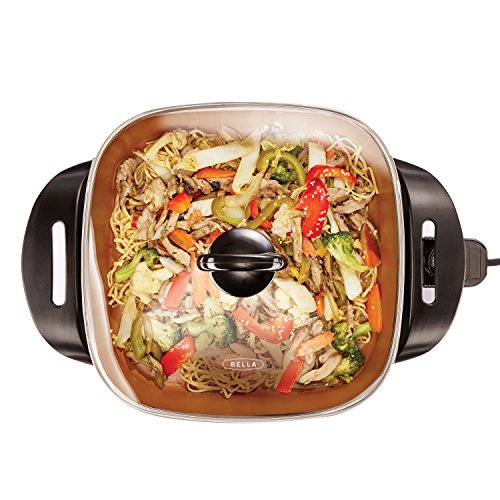


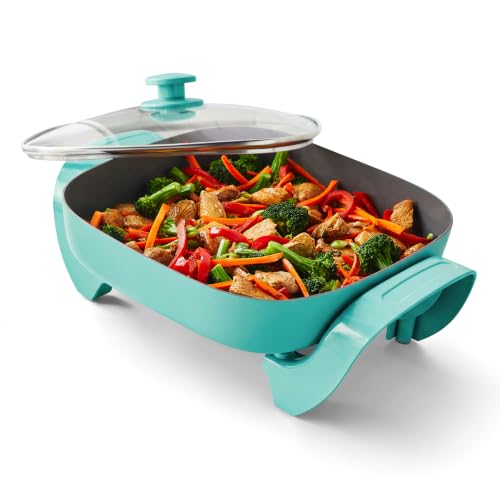
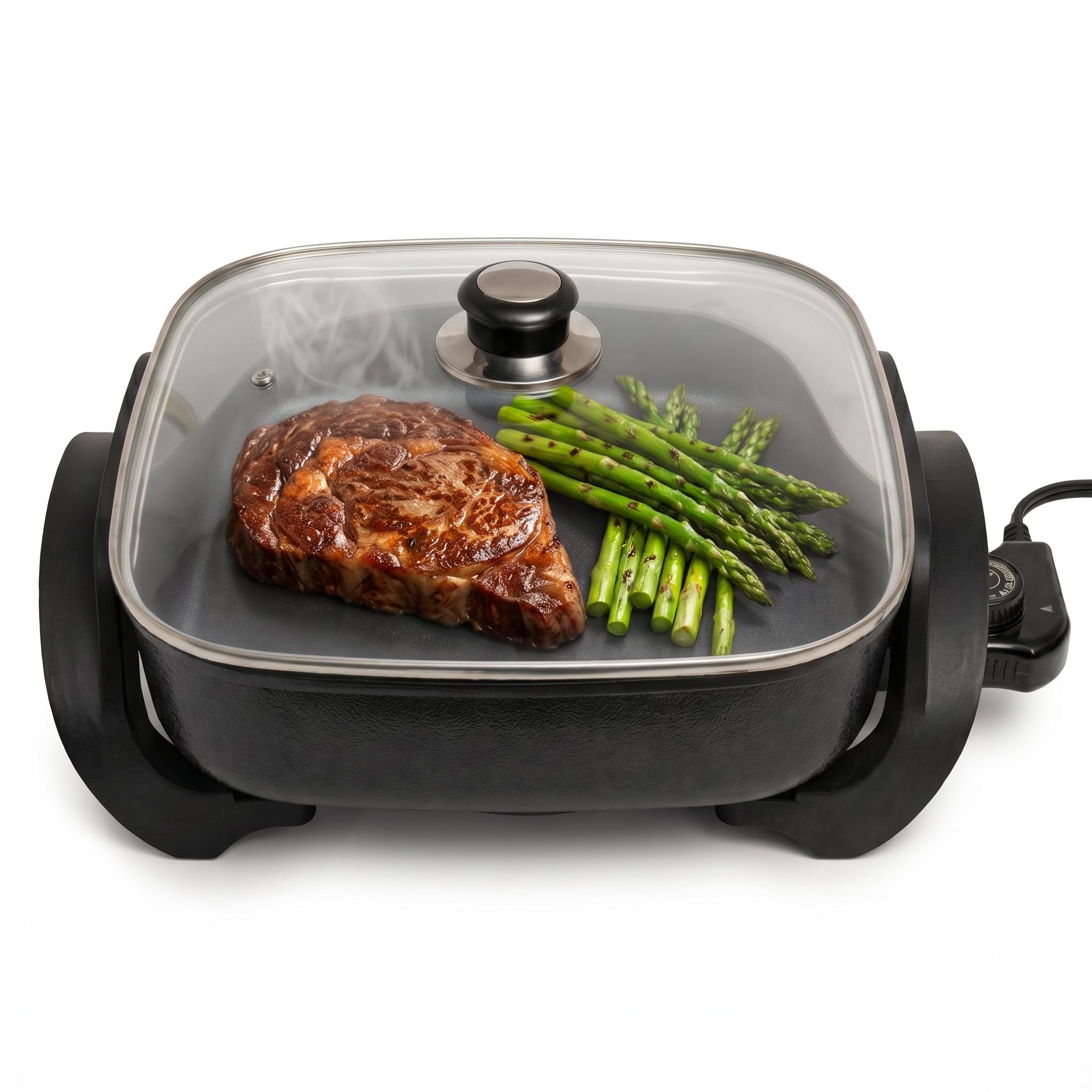


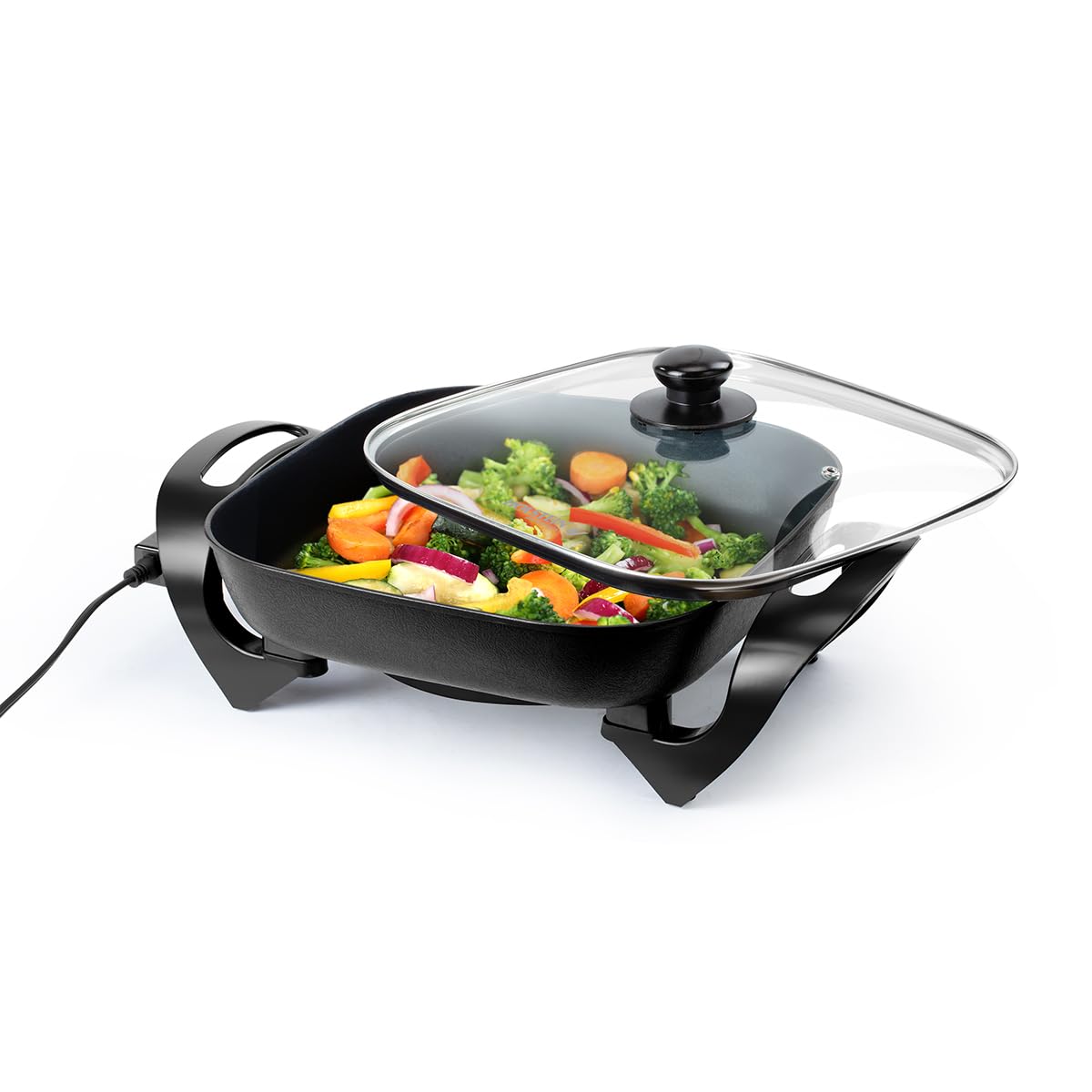

Quick Answer: How the Main Types Compare
Most 12 inch models fall into three groups. Nonstick versions heat fast, release food with little effort, and suit eggs, pancakes, and grilled sandwiches. Stainless and ceramic versions handle browning well and avoid the coating wear that limits nonstick life. Deeper versions with high sides hold sauces, braises, and fried chicken with less splatter. Your cooking habits should decide the group first, and price should come second.
Across all three groups, look for a detachable temperature probe, a glass lid, and a pan that separates from its probe for washing. Those traits affect daily use more than extra preset programs.
Before You Buy: A Quick Checklist for Choosing an Electric Skillet
The checklist below walks through the decisions in the order they matter. Size and fit come first, because a skillet that crowds your counter will sit in a cabinet. Surface, power, and safety follow, and budget comes last.
Size: Match It to Your Space
A 12 inch skillet gives you roughly the cooking area of a large stove burner, enough for four pork chops, a batch of pancakes, or a one pan dinner for three or four people. Sixteen inch models feed a crowd but demand much more counter and storage room. Square shapes fit sandwiches neatly, while deeper round pans hold more liquid. Measure your counter and cabinet before you order, including room for the lid and cord.
Which Type Fits Your Routine
Nonstick pans are the easiest starting point for eggs and delicate fish, but the coating wears over time and needs gentle utensils. If you prefer metal utensils and strong browning, read our guide to the best stainless steel electric skillet options, since that surface tolerates high heat and scrubbing far better. Ceramic coatings sit between the two, releasing food fairly well while avoiding traditional nonstick compounds. Cast iron electric models are rare and heavy, so most homes do better with a lighter surface.
Features Worth Paying For, and Ones to Skip
A glass lid earns its cost because you can check food without lifting it and losing heat and moisture. High sides matter if you simmer sauces or fry, since they contain splatter and add capacity. A removable pan that can go in the sink makes cleanup far simpler. You can safely skip preset cooking programs and bundled accessories you already own, since a clear dial with marked temperatures does the same job. Shoppers drawn to ceramic should also see the best ceramic electric skillet guide for surface care details.
Wattage, Power and Energy Use
Most models in this size draw about 1200 to 1500 watts, which is enough to sear meat and keep a steady simmer. Higher wattage brings the pan back to temperature faster after you add cold food, so a crowded pan browns instead of steaming. Lower wattage models can feel sluggish when the pan is full. Because the pan holds heat close to the food, you often use less energy than heating a large oven for a small meal.
Safety Features and Certifications
Look for a listing mark from UL or ETL on the product page or box, which shows the appliance passed independent safety review. A short detachable cord reduces the chance of pulling the pan off the counter if someone catches the cable. Stay cool handles and a stable base matter when you carry a full pan. If avoiding certain coating chemicals guides your choice, the best non toxic electric skillet guide explains the surface options in more depth.
Counter Space and Dimensions
The cooking surface is 12 inches, but the full footprint is larger once handles, the probe, and the cord are counted. Expect to give up a block of counter roughly 16 to 18 inches wide while cooking. Check cabinet height too, since a domed glass lid adds several inches in storage. Homes with tight counters should favor models with handles that sit close to the pan and lids that store flat or upside down inside the pan.
Realistic Budget Ranges
Basic nonstick models often cost under $50 and cover simple frying and reheating well. Spending about $50 to $100 usually buys a thicker pan, a sturdier probe, and a pan that can be immersed for washing. Above about $100 to $150 you are paying for heavier construction, better temperature accuracy, and longer warranty cover. Cooking results at the middle level are already strong for most homes.
Three Types Compared: Which Build Suits Your Home
Instead of ranking individual models, it helps to compare the three builds you will actually choose between. Each suits a different household pattern, and each has a clear trade off.
Lightweight Nonstick for Everyday Ease
This is the type most homes start with. Breakfast foods release cleanly, cleanup takes minutes, and the pan is light enough to move with one hand. It suits apartments, dorm rooms, and anyone who cooks eggs, pancakes, and stir fry dishes often. The trade off is coating life. With wooden or silicone utensils you protect the surface, but you should still expect to replace this type sooner than a metal pan.
Stainless and Ceramic for Browning and Longer Service
These builds suit cooks who sear meat often and want fond for pan sauces. Stainless gives the strongest browning and tolerates metal utensils, though eggs will stick without enough fat and preheating. Ceramic releases food better at first, but its slickness fades gradually with heavy use. Both cost more than basic nonstick, and both reward cooks who preheat the pan fully.
Deep Models With High Sides for One Pan Meals
A deep 12 inch skillet works almost like a countertop pot. The extra wall height holds braises, curries, and large batches of fried rice, and it keeps oil splatter on the walls instead of your counter. This type suits families who cook complete meals in one vessel. It stores less easily than a shallow pan, and it takes a little longer to heat.
What to Compare Between Skillets
Compare skillets on capacity, evenness of heating, ease of cleaning, control accuracy, safety listings and warranty terms as published by manufacturers. Buyer reviews are most useful for patterns that repeat, such as probes that loosen or lids that rattle, rather than single comments. These are criteria you can apply to any listing.
Is a 12 Inch Electric Skillet the Right Size for You?
For most households of two to four people, yes. It cooks four chicken breasts or a full batch of meatballs without crowding, yet it still fits on a standard counter and in a kitchen cabinet. A single person who mostly reheats leftovers may find an 8 or 10 inch pan easier to store. A household of five or more that cooks in bulk will likely feel squeezed and should look at 16 inch models instead.
Think about your largest regular meal rather than your biggest holiday meal. If the pan handles a normal Sunday breakfast without a second batch, the size is right. Our notes on how to use an electric skillet show the basic setup and preheating steps that make the first weeks easier.
Common Buying Mistakes to Avoid
- Judging by cooking diameter alone. The full footprint with handles and probe is what must fit your counter and cabinet, and many returns start with that surprise.
- Ignoring the probe design. A loose or vague temperature control makes browning uneven, and the probe is the part you will handle every single time you cook.
- Buying high sides you do not need. Deep pans store poorly in shallow cabinets, so extra capacity you rarely use becomes a daily storage problem.
- Overlooking replacement costs. A worn nonstick pan or a lost lid can cost much of the price of a new unit, so check parts availability before you buy.
- Skipping the safety listing. An unlisted appliance saves a little money but gives you no independent check on wiring and heat controls.
Cost of Ownership and Care
Running costs are modest. A skillet drawing about 1300 watts for half an hour usually uses less electricity than heating a full size oven. Your real costs over the years are replacement parts and, for nonstick models, eventual replacement of the whole pan when the coating fails. Keeping the probe dry and letting the pan cool before washing both extend service life.
Cleaning habits matter more than any special product. Wash the pan once it has cooled, keep water away from the probe socket, and dry the unit before storing it with the cord wrapped loosely. The full routine in our guide to how to clean an electric skillet covers stuck on residue and lid care in detail, so it is worth reading before your first deep clean.
Your Questions, Answered
What makes an electric skillet brand reliable over time?
Reliability usually shows in the parts you cannot see in photos. A thick pan base that resists warping, a probe that clicks firmly into place, and a warranty of at least one year all point to a maker that supports the product. Brands that sell replacement lids and probes separately also signal long term support. A famous name alone means little if spare parts are impossible to find.
How do you clean an electric skillet without damaging the probe socket?
Unplug the unit and remove the probe before any water touches the pan. Wash the pan and lid in warm soapy water, then wipe the socket area with a damp cloth rather than rinsing it under the tap. If food has baked onto the surface, soak the cooled pan for fifteen minutes instead of scrubbing hard. Dry the socket opening with a towel and leave the pan uncovered until all moisture is gone.
Is an electric skillet worth it if you already own a good stove?
It can be, for reasons beyond basic frying. The skillet holds a set temperature more steadily than many stove burners, which helps with pancakes and keeping food warm for serving. It also adds a cooking surface during holidays and works in rooms without a stove, such as a dorm. If your burners are free and you rarely cook for guests, the gain is smaller.
How long does an electric skillet last with regular use?
A stainless model can serve for many years because there is no coating to wear away, and the probe is usually the first part to fail. Nonstick versions often give good service for a few years before release performance drops. Storing the pan without heavy items stacked inside it helps any type reach the upper end of its life.
What size electric skillet do I need for a family of five?
A family of five will usually outgrow the 12 inch format for main dishes, since five portions of meat or pancakes need more room than the surface allows without crowding. Look at 16 inch rectangular models for regular family dinners. Keep a 12 inch round pan in mind only as a second unit for sides, eggs, or warming. Cooking in two uncrowded batches is the fallback if counter space rules out the larger size.
Final Thoughts
Match the surface to your cooking first, then check footprint, probe quality, and safety listing before you compare prices. Nonstick suits gentle everyday cooking, stainless and ceramic reward cooks who love browning, and deep models turn the pan into a one vessel meal station. When you settle on the best 12 inch electric skillet for your space and household size, use the product table above to confirm the details before you order.