
Best 10x42 Binoculars for the Money by Budget for 2026
Disclosure: We may earn a commission when you buy through links on this page, at no extra cost to you. As an Amazon Associate I earn from qualifying purchases. Learn more

See where the best 10x42 binoculars for the money hit peak value, which upgrades improve the view, and which extras you can skip.
Value in binoculars is not about finding the cheapest pair on the shelf. It is about paying for the upgrades that change what you see and skipping the ones that only change the spec sheet. Prices for this format run from under $75 to well past $1,000, and the jump in quality is steep at first, then flattens hard. This guide maps the best 10x42 binoculars for the money across three spending levels.
The product table gives the quick picture, and the sections after it explain the reasoning. If you already know your budget, skim straight to your level, then check the spending decisions section before ordering. A little knowledge here prevents the most common value mistake of all: paying twice by buying cheap, then buying again.
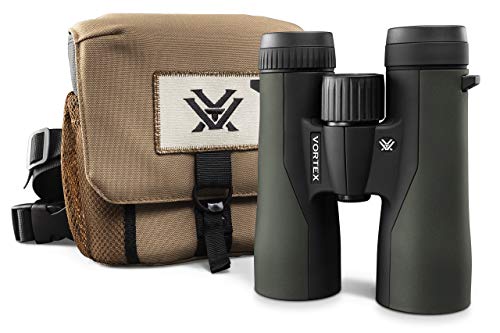


Where the Best 10x42 Binoculars for the Money Sit at Three Spending Levels
Think of the market as three shelves. Each shelf has a fair price for what it delivers, and the smart buy is the top of a shelf rather than the bottom of the next one up.
Around $100: The Honest Starting Point
At about $75 to $125 you get a real binocular rather than a toy, with coated optics, a roof prism design, and enough brightness for daytime use. This shelf suits occasional users, gifts for new hobbyists, and anyone who wants a loaner pair for guests. The view through the center is respectable, though edges soften and colors lose some snap in backlight. Treat this shelf as a starting point with clear limits.
Around $200 to $350: The Value Peak
This is the shelf where most buyers should stop. Fully multi coated glass, ED elements in many models, phase coated prisms, and proper waterproofing all show up here, and the combined effect is a view that satisfies for years. Focus wheels get smoother, eye relief grows friendlier for glasses wearers, and warranties lengthen. For a broader look at how this format compares across uses, our guide to the best binoculars 10x42 walks through the size class.
Around $500 and Up: Paying for the Final Few Percent
Above about $500, you are funding refinement: flatter fields, closer focus, lighter magnesium bodies, and mechanics built for decades of daily handling. The image gain over the value peak is modest, often most visible at dawn or when a bird sits at the very edge of the view. Dedicated users who rely on their optics every week can justify it. Casual users will rarely feel the difference they paid for, which is exactly why this shelf is poor value for them.
What Improves as the Price Climbs
Knowing which component each price jump upgrades helps you judge whether a given pair is priced fairly or padded with decoration.
Prism and Coating Upgrades
Roof prism binoculars need phase coating to keep contrast high, and that coating is one of the first things budget models leave out. Add it, plus fully multi coated lenses, and the image gains punch that magnification alone cannot give. ED glass then reduces the purple and green fringing around bright edges. Each of these steps costs real money in manufacturing, which is why the value peak sits where all three finally come together in one pair.
Eye Relief, Field of View, and Focus Feel
Eye relief around 17 mm or more lets glasses wearers see the whole view without black edges, and it appears more often as prices rise. Field of view widens from roughly 290 feet at 1,000 yards on cheap pairs to about 340 feet or beyond on good ones, making moving subjects easier to follow. Focus wheels also improve in travel and smoothness. These handling gains sound minor on paper, yet they decide how the pair feels after an hour of use.
Weather Sealing and Durability Over Time
A sealed, nitrogen filled pair shrugs off rain and resists internal fog when temperatures swing, and that protection is close to standard from the middle shelf upward. Rubber armor, metal focus parts, and sturdier hinge builds also cluster at higher prices. Durability is a value feature in disguise: a $250 pair that serves ten years costs less per season than a $90 pair replaced three times. Whatever you buy, never look at the sun through binoculars, and follow the manufacturer's instructions for safe use.
Spending Decisions: What Deserves Your Money
Image Quality Comes From Glass, Not Gadgets
Binoculars have no sensor and no megapixels, so image quality is purely a glass and coating story. Marketing that borrows camera language, like huge digital sounding magnification numbers, signals a pair to avoid. Put your money into coated optics and ED glass instead. A plain looking pair with honest glass will out resolve a feature stuffed pair in every light, for every subject you point it at.
Controls and Comfort You Will Actually Use
The features worth funding are the ones your hands touch daily: a grippy focus wheel that turns with one finger, a diopter dial that stays where you set it, and twist up eyecups that hold their position. Smooth, simple mechanics beat novelty here. If you also glass open country for game, the handling points in our guide to the best 10x42 binoculars for hunting overlap closely with what value buyers should want. Comfort is not a luxury in optics, it is what makes you reach for the pair at all.
What Comes in the Box Versus Buying Later
Some pairs include a chest harness, a solid case, and tethered lens covers, while others ship with a thin strap and a soft pouch. Add about $30 to $60 to complete a bare bones package, and factor that into the true price before calling one pair cheaper than another. Objective lens covers that stay attached are worth real money in the field, since loose caps get lost on the first trip. Compare the full kit, not just the binocular, when two prices look close.
Realistic Expectations at the Low End
Under about $75, compromises stop being subtle: dim views, narrow fields, stiff focus, and alignment that can drift after one knock. Such pairs still beat having nothing for a single trip or a stadium seat. Just do not expect them to survive years of regular use or show fine detail in shade. If your budget is firm, the hunting focused advice in our guide to the best hunting binoculars for the money covers the same entry shelf. Spending a little more once almost always beats spending a little twice.
Extras That Rarely Pay Off
Built in compasses, novelty night modes, and phone adapters bundled with budget pairs seldom earn their cost. A compass you cannot read precisely helps nobody, and cheap adapters wobble too much for steady photos. Rangefinding is the one extra with real value for hunters, but it belongs in a dedicated format, which our guide to the best rangefinder binoculars for the money treats separately. For a general purpose 10x42, keep the feature list short and the glass budget long.
The Full Cost of Owning a Pair
The purchase price is only the first line of the ledger. A comfortable harness runs about $25 to $50, a hard case for checked luggage about $30 to $60, and replacement eyecups or a lost lens cover a few dollars each when the maker stocks parts. Warranty terms vary from one year to lifetime coverage, and that difference has real cash value on a product built to be carried outdoors. Count these ownership costs and the value peak usually wins by an even wider margin.
Frequently Asked Questions
What does 10x42 mean on a pair of binoculars?
It means the binocular magnifies the view ten times and carries front lenses 42 millimeters across. Those two numbers also set the exit pupil at 4.2 millimeters when you divide the second by the first, which predicts how bright the image looks in low light. The format balances reach, brightness, and a size most adults can hold steady. That balance is the main reason 10x42 became the default full size choice for general outdoor use.
How much should you spend on your first pair of 10x42 binoculars?
About $150 to $300 is the sensible first buy zone, since it lands you on the value peak with coated ED glass, waterproofing, and mechanics that will not fight you. Cheaper pairs often get replaced within a couple of seasons, erasing the savings. If the budget truly stops near $100, choose simple and well reviewed by other owners rather than feature heavy. Think of the purchase as cost per year of use, not cost on the day.
Is an 8x42 pair better value than a 10x42 pair?
For some users, yes. An 8x42 shows a wider field and a steadier image, and it costs about the same, so shaky hands or dense woodland viewing can make it the smarter spend. A 10x42 earns its price when your subjects sit far away, like waterfowl on a lake or hawks over a ridge. Neither is better in the abstract. Match the magnification to your typical distance and the value follows from using the pair more often.
Do expensive 10x42 binoculars show more detail than budget pairs?
They show somewhat more detail, mostly in hard conditions rather than easy ones. In bright midday light, a budget pair and a premium pair can look surprisingly close on a perched bird. The gap opens in backlight, in shade, and near the edges of the view, where better coatings and correction keep fine markings readable. Premium glass also holds that detail at dawn and dusk, when cheaper optics go dull. Pay for it if your viewing happens in those moments.
Can a smartphone stand in for 10x42 binoculars on a budget?
Not for actual viewing. A phone camera crops and enlarges a small sensor image, so distant subjects break into pixels long before you can judge any detail. Battery drain and screen glare add further limits outdoors. A phone is excellent for notes, identification apps, and quick photos of close subjects, and it pairs well with binoculars rather than replacing them. If money forces a choice, even an entry level binocular outperforms a flagship phone for watching wildlife.
Wrapping Up: Where the Money Works Hardest
Value peaks where coated ED glass, phase coated prisms, and solid sealing meet, and that meeting point sits around $200 to $350 for most buyers. The product table above shows how the shelves compare, and the best 10x42 binoculars for the money is the pair at the top of your shelf rather than the cheapest seat on the next one. Buy the glass once, buy it well, and the cost per outing drops toward pennies.


