
Best 10x12 Gazebo (2026): Buying Guide
Disclosure: We may earn a commission when you buy through links on this page, at no extra cost to you. As an Amazon Associate I earn from qualifying purchases. Learn more
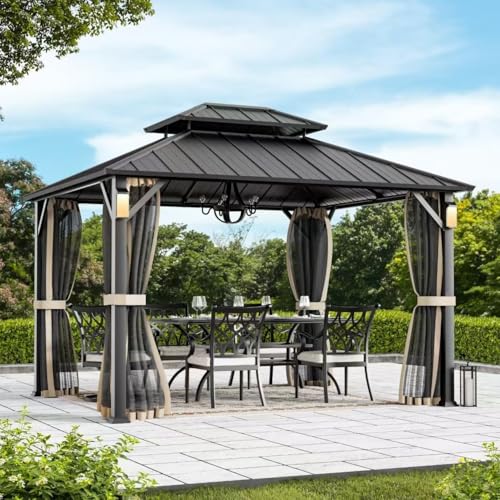
Which best 10x12 gazebo fits your home? Size, features, price ranges and common mistakes, explained plainly.
A 10x12 gazebo sounds simple until you compare roofs, frames, and anchoring, and realize that two models with the same footprint can behave very differently in wind and rain. The best 10x12 gazebo for your yard is the one whose roof type, frame material, and assembly demands match how you plan to use the space, not the one with the longest feature list.
This guide compares the three main types in this size by build materials and weather resistance, capacity, and assembly effort. Use the comparison table below to see the types side by side, then read on for the details a spec sheet alone will not tell you.
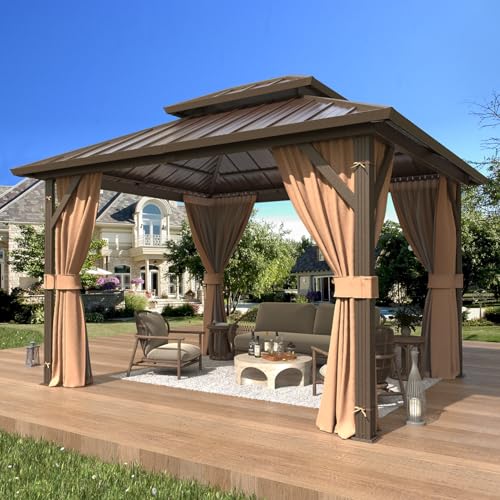
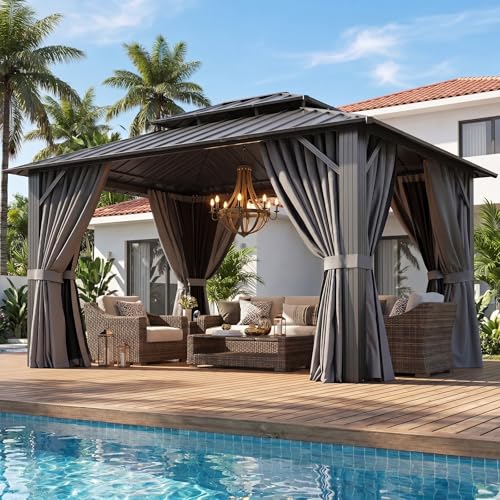
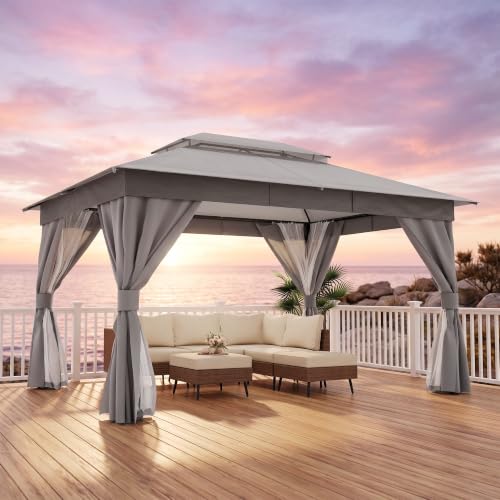

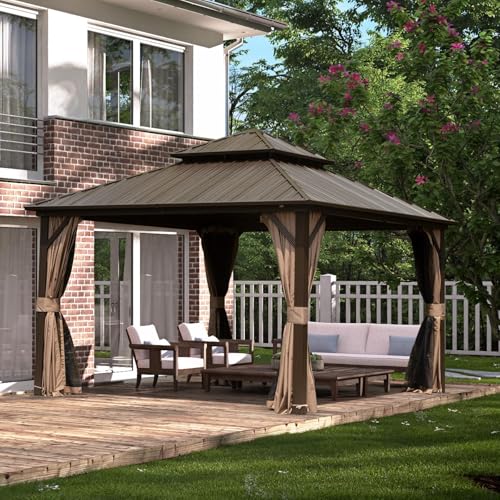
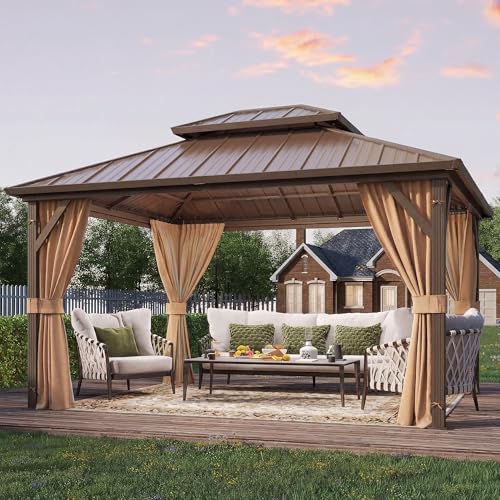
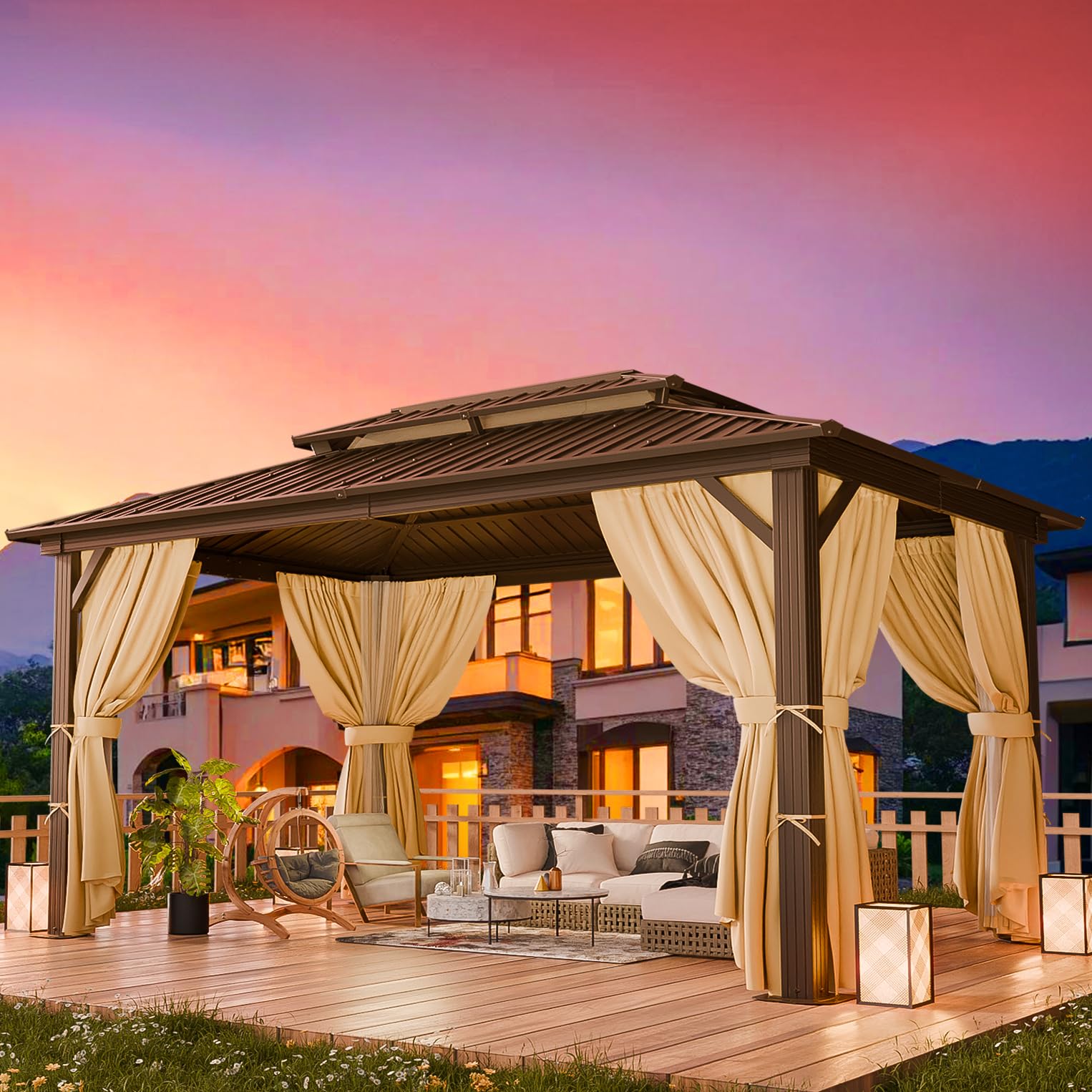
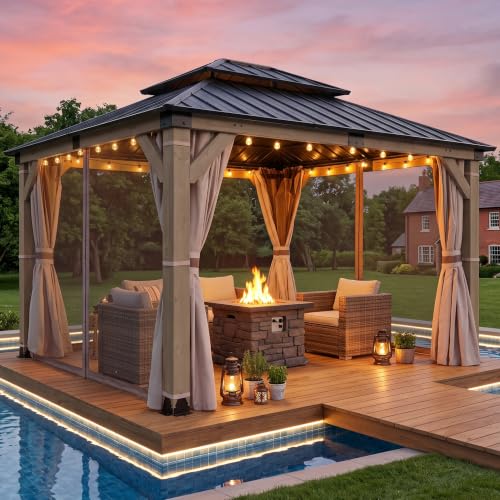
The Main 10x12 Types at a Glance
Hardtop models use metal or polycarbonate roof panels on a sturdy frame and stay up through most of the year. Soft top models use a fabric canopy on a lighter frame, cost less, and can be taken down for storage. Pop up models fold open in minutes with no tools, but they are event shelters rather than lasting structures. The real differences are roof durability, weight, setup time, and storm handling.
Three Types of 10x12 Gazebo Compared
Hardtop Models for Lasting Cover
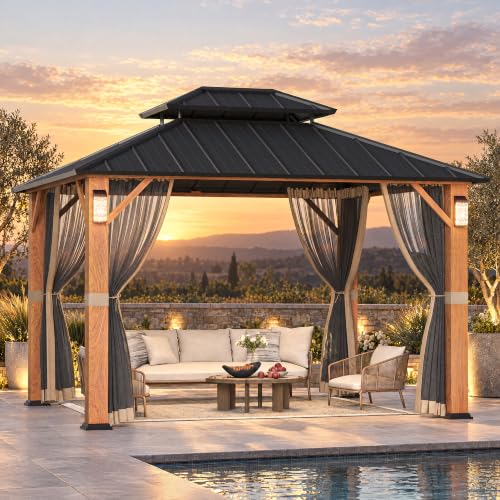
A hardtop 10x12 uses rigid roof panels, usually galvanized steel, aluminum, or polycarbonate, on a frame far heavier than a canopy frame. That weight is the point. The roof sheds rain without pooling, resists tearing in wind, and can carry a rated snow load in many designs, so the structure stays in place across seasons once properly anchored. The trade offs are price, shipping weight, and assembly time, which often runs to a full day with two or three adults. Choose this type if you want fixed cover over a dining set or hot tub and do not plan to move it.
Soft Top Models for Lower Cost and Lighter Weight
A soft top 10x12 pairs a steel or aluminum frame with a fabric canopy, usually polyester with a water resistant coating. It gives you the same shaded footprint for much less money, and two adults can carry and assemble it in a few hours. The canopy is the weak point. Sun weakens the fabric, standing water can stretch it after heavy rain, and most makers tell you to remove it before strong wind or snow. Expect to replace it every few seasons. Choose this type if your budget is tight, your climate is mild, or you only want shade for part of the year. Our comparison of hardtop vs soft top gazebo roofs explains how the two roof styles differ in upkeep.
Pop Up Models for Short Events
A pop up 10x12 has a folding scissor frame that opens in minutes, needs no tools, and packs into a bag you can carry in a car trunk. That speed makes it ideal for a weekend party, a market stall, or shade at a sports field. It is not a lasting structure. The frame joints flex in gusts, the fabric roof is thin, and there is no rated snow load, so take it down the same day when wind picks up or rain turns heavy. Weight bags or stakes help on calm days, but they do not make an event shelter permanent. Choose this type for portability, not season long cover.
How to Judge a 10x12 Gazebo
Five criteria separate a sound purchase from a regret. Start with build materials and weather resistance, since roof and frame decide how the gazebo survives your climate. Next check size and capacity against the furniture you own, not the number on the box. Then weigh assembly honestly, including tools, ladders, and helpers. Durability follows from joint design, coating quality, and whether spare parts exist. Finally, read the warranty closely, because a warranty covering the frame for years but the canopy for months tells you which part the maker expects to fail first.
How to Choose the Right Gazebo
Size and Form Factor
The 10x12 footprint gives you 120 square feet in a rectangle, and that shape matters more than the raw area. A rectangle fits a dining table along its long axis and suits most patios and decks, which are also rectangular. Smaller sizes such as 10x10 feel tight around a six person table, while larger sizes such as 12x14 or 12x20 need a bigger level pad and cost more to roof and anchor.
Type and Roof Style
Your roof choice should follow how long the gazebo stays up. A metal roof suits a structure that never comes down, polycarbonate panels admit soft light while blocking rain, and fabric suits seasonal shade. Before you commit to any roofed structure, read about gazebo vs pergola designs, since a pergola gives partial shade with an open roof and may suit a garden corner better. A heavy roof on a light frame is a poor match, so check that the posts and beams are rated for the panel weight above them.
Features Worth Paying For
Mosquito netting is the feature most owners rate as essential, because an open gazebo at dusk invites every insect in the yard. Privacy curtains add shade on the low sun side and shelter from light wind, and the best designs open netting and curtains independently on separate tracks. A double roof or vented top lets hot air escape and reduces lift in wind.
Weather Resistant Materials
Aluminum frames resist rust and stay light, but the metal is softer, so makers use thicker walls for strength. Steel is stronger and cheaper, yet it depends on its powder coating, and any chip left untreated can rust. Wood looks warm and feels solid, but needs sealing against moisture and insects. For roofs, galvanized steel panels handle impact and snow best, polycarbonate weighs less and resists cracking in cold, and fabric canopies need a coating that sheds water and slows sun damage.
Size for Your Space
Measure your pad or lawn area and then add clearance. You need room to walk around the posts during assembly, space for roof overhang beyond the post line, and a level surface, since a frame forced to fit a slope will rack and its roof panels may not align. If your outdoor room is a paved seating area, our guide to the best gazebo for backyard layouts covers how placement affects shade through the day.
Assembly and Anchoring
Plan on two adults at minimum, a ladder, a drill, and the better part of a day for a hardtop build. Sort the hardware first, keep bolts finger tight until the frame is square, and tighten in sequence once the roof frame sits level. Anchoring is not optional. Bolt the frame to a concrete pad or deck where the maker allows it, or use ground stakes and auger anchors on soil, because a 10x12 roof acts like a sail in a storm gust. The step by step walkthrough at how to assemble a gazebo shows the usual build order if you want to preview the job before ordering.
Care and Off Season Storage
Rinse the roof and frame with a hose a few times a season to clear pollen and grit before it stains. Tighten frame bolts once a year, touch up coating chips on steel, and reseal wood as the maker directs. Remove a fabric canopy before winter and store it dry indoors, since damp storage grows mildew in one season. Hardtop owners in snow country should brush deep snow off the roof rather than letting the load build for weeks. For a full cold weather routine, follow the steps in how to winterize a gazebo before the first freeze.
How Much Should You Spend?
Pop up and simple soft top models sit at about $150 to $400 and suit events or a first season of shade. Sturdier soft top and entry hardtop designs run about $400 to $1000, adding thicker frames, double roofs, and netting. Most lasting hardtop models fall between about $1000 to $2000, with heavier posts, better coatings, and longer frame warranties. Above about $2000 to $3000 you pay for wood construction, heavier metal, and refined details rather than more shade. Spend first on frame and roof quality, because curtains can be added later, while a weak frame cannot be upgraded.
Is a 10x12 Gazebo the Right Size for You?
For most households, yes. A 10x12 covers a dining set for six to eight people with room to pull chairs back, or a lounge grouping of a sofa, two chairs, and a coffee table. Go smaller if your pad is under 10 feet in either direction, since the posts will crowd the corners. Go larger if you want dining and lounge zones under one roof, because a single 10x12 does both poorly at once. Check local permit and homeowner association rules before you buy, since a fixed hardtop counts as a structure in some areas.
FAQ
What is the best 10x12 gazebo?
The best choice depends on how long the structure stays up and what your winters look like, which is why this guide compares types rather than naming one winner. One detail buyers often miss is eave height. Check clearance at the roof edge, not just the peak, because low edges can feel cramped for taller guests and can block a door swing. Pick the type first, then compare eave height within that type.
What size gazebo do I need?
Start with your furniture, not with the catalog. Use tape or chalk to mark a 10 by 12 foot outline on your patio or lawn, place the table and chairs inside it, and sit down. If elbows, chair backs, or a grill crowd the lines, you need the next size up. This ground test also reveals slope and obstacles, such as a drain cover or a step, that a tape measure alone would never show you.
How long does a gazebo last?
A well anchored hardtop frame can serve for a decade or more, while a fabric canopy often needs replacement after two to four seasons of sun. One habit shortens every lifespan here. Leaving a soft top canopy mounted through winter storms lets snow stretch the fabric and bend the light roof ribs. Removing it in autumn and storing it dry is the easiest way to add seasons to a soft top model.
Is a gazebo worth it?
It is worth it if you will sit outside more once shade and insect screening exist. A simple test helps. Count how many evenings last summer your yard went unused because of sun, glare, or mosquitoes. If the honest answer is most of them, a gazebo solves a real problem and earns its cost within a couple of seasons. If you rarely eat or read outside, a large patio umbrella covers the odd afternoon for far less money and no assembly weekend.
How do you clean a gazebo?
Mix mild soap in warm water, wash the canopy or roof panels with a soft brush, and rinse with a garden hose on a gentle setting. Work from the top down so dirty water does not streak clean sections. Avoid a pressure washer, because a hard jet can strip the coating from polycarbonate panels and force water into frame joints. Let fabric dry fully before you store any part, since trapped moisture leaves mildew spots.
What is the most reliable gazebo brand?
No single brand leads on reliability, and model lines within one brand vary a lot in frame gauge and coating quality. A more useful test is parts support. Check that the maker sells replacement canopies, roof panels, and netting for that exact model, and read how owners rate the claims process. A gazebo whose wearable parts stay in stock stays useful for years, while a sturdier model with no spare canopy becomes scrap the first time the fabric tears.
Final Thoughts
A 10x12 footprint is the practical middle ground for most patios, big enough for dining or lounging and small enough for a typical pad. Match the roof type to your climate, anchor the frame properly, and budget for wearable parts. Compare the options in the product table above, and if you are still weighing sizes and styles, our overview of the best gazebo range puts this size in context. Chosen well, the best 10x12 gazebo turns an exposed slab into the room your household drifts to every fine evening.


