
Best 100 Ft LED Strip Lights (2026): Buying Guide
Disclosure: We may earn a commission when you buy through links on this page, at no extra cost to you. As an Amazon Associate I earn from qualifying purchases. Learn more

Which best 100 ft led strip lights fits your home? Size, features, price ranges and common mistakes, explained plainly.
A 100 ft run sounds simple until you measure the room and find corners, outlets and long walls that all fight the plan. The best 100 ft led strip lights for your space are the ones that stay bright from end to end, reach a power source without strain, and give you controls you will actually use. This guide compares strip types by brightness, color options, build and install effort so you can choose with confidence.
Start with the comparison table below, which lines up the main types side by side. Then read on for sizing help, the specs that matter on a long run, and the mistakes that cause dim ends and peeling corners. If you want a broader view of shorter kits first, see our guide to the best led strip lights before you commit to this length.


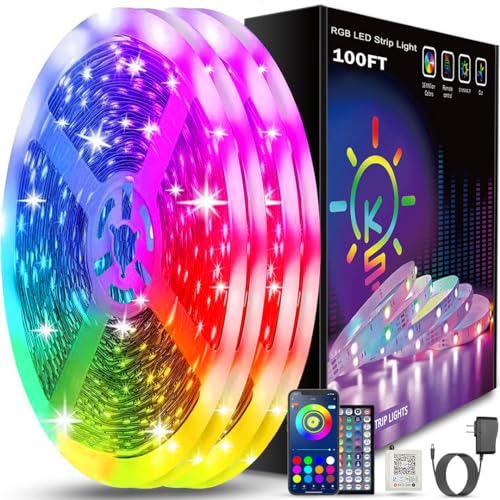
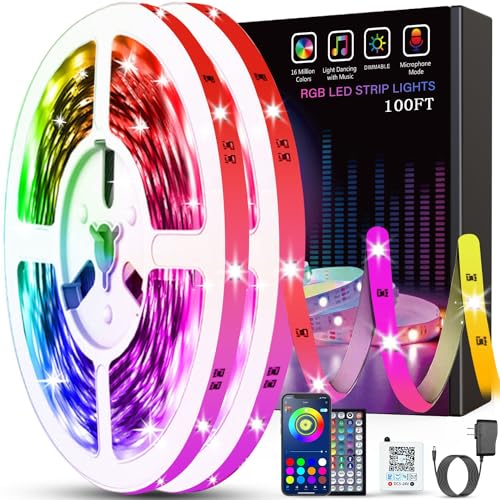



Strip Types at a Glance
Most 100 ft kits fall into three broad types, and the right one depends on the look you want more than on any single spec. A standard color changing strip shows one color across the whole run at a time. An addressable strip can show several colors at once in moving patterns. A white or COB strip focuses on smooth, even light for task and accent use rather than effects.
Price rises with control features, diode density and power supply quality. For a long run, the power supply and controller matter as much as the strip itself, because weak hardware shows up fast over 100 ft.
Three Strip Types Compared
Standard RGB Strips for Simple Color
Standard RGB strips mix red, green and blue diodes to produce a wide range of colors, but the full length always shows the same color at the same time. They are the most affordable way to cover a large room and the easiest to control with a basic remote. Whites tend to look slightly tinted because they are mixed from color diodes rather than made by a dedicated white diode. Choose this type for ambient glow behind furniture or around a media wall where a single mood color is enough.
Addressable RGBIC Strips for Multicolor Effects
Addressable strips, often sold as RGBIC, have control chips that let segments of the run show different colors at once. That opens up flowing rainbows, chasing patterns and scenes that shift along the wall, which standard RGB cannot do. They cost more and need a compatible controller. If you are unsure which format fits your plans, our explainer on rgb vs rgbic walks through the difference in plain terms.
White and COB Strips for Clean, Even Light
Single color white strips and COB strips serve a different job. COB designs pack diodes so closely that the light looks like one smooth line with no visible dots, which suits visible runs under cabinets or along shelves. White strips give you a true warm or cool tone for reading, cooking prep or hallway light. Choose this type when the strip itself will be seen and even output matters more than color shows.
What Decides Performance on a 100 ft Run
A few factors decide how a 100 ft run performs in a real room: stated brightness and whether it is quoted for the full length, color temperature range, diode density, voltage, controller quality, power supply rating and install hardware in the box. Buyer feedback about dim far ends, weak adhesive and failed controllers is worth reading, and clear spec sheets beat vague claims.
How to Choose the Right LED Strip Lights
The specs below decide whether a long run looks bright and even or patchy and dim. Work through them in order, starting with fit, because no control feature can fix a strip that is the wrong length or voltage for your space.
Size and Form Factor
Measure the full path before you order, including corners, dips under shelves and the drop down to the outlet, then add a small margin for routing. A 100 ft kit may arrive as one long reel or as two connected sections, so check how it is divided and where the joins fall in your layout. Strip width and thickness matter in channels and tight coves, where a wide strip may not sit flat. Confirm the marked cut points land near your end walls, because you can only trim at those printed marks.
Lumens and Color Temperature
Brightness claims need care on long strips. Some listings quote lumens for the whole kit, others per foot or per meter, and the two figures look nothing alike, so convert to a per foot basis before you compare. For accent glow, modest output is fine, while strips meant to light a work surface need far more. Color temperature sets the mood for white light: about 2700 to 3000 K feels warm, around 4000 K reads neutral, and 5000 to 6500 K looks crisp and cool.
Controls, Remotes and App Features
Every long kit ships with some way to run it, and the gap between options is wide. A handheld remote is simple and reliable for on, off, dimming and preset colors, but it needs line of sight to the receiver in many kits. App control over Bluetooth or WiFi adds timers, custom scenes and finer dimming from anywhere in the home. Voice control through a smart speaker is a nice extra. Think about who else uses the room, because guests and kids often manage better with a physical remote.
Dimmable Output and Color Modes
Dimming range matters more than peak brightness on a strip this long, since you will spend most hours well below full output. Look for smooth dimming that stays even at low levels without flicker you can see or a camera can catch. Check how low the strip goes for night use in bedrooms and hallways. Preset modes such as fade, flash and music sync add fun, but steady scenes get daily use in most homes.
Installation: Plug In Power and Placement
Almost all 100 ft kits are plug in rather than wired into house circuits, so an outlet near the start of the run is essential. Plan where the power supply and controller will sit so cords stay hidden and the receiver stays reachable. Dry fit the route with the strip unlit first, clean the surface so the backing grips, and add mounting clips on ceilings and corners where adhesive alone tends to let go over time.
How Much Should You Spend?
At about $20 to $40, expect basic RGB strips with a simple remote, modest brightness and a single power supply that may leave the far end dimmer. Spending about $40 to $70 usually buys higher diode density, a stronger supply and app control with timers. At about $70 to $120 and above, you find addressable effects, COB strips with smooth output, better controllers and sturdier backing. For a run you plan to keep for years, the middle tier often gives the best balance.
Is a 100 ft Strip the Right Size for You?
A 100 ft kit makes sense when one continuous look matters: a full room perimeter, a long hallway, a big basement or several connected shelves lit from one controller. It suits ceiling coves especially well, and readers planning that layout may also like our guide to the best led strip lights for ceiling for placement ideas. For a bedroom, one long run can circle the whole space, which is why our roundup of the best led strip lights for bedroom is worth a look if sleep friendly dimming is your priority.
It is more than you need for a single desk, one bookcase or the back of a TV, where a short kit costs less and avoids a bundle of spare strip you must hide or trim away. Outdoor runs are a separate decision: only choose a kit with a stated weather rating for patios and eaves, and compare dedicated options in our guide to the best outdoor led strip lights rather than stretching an indoor kit outside. Two shorter kits can also beat one long kit when two rooms need separate controls.
Common Mistakes to Avoid
- Skipping the tape measure and guessing the route, then coming up short at the last corner.
- Coiling the full strip on its reel and switching it on, which traps heat and can damage diodes.
- Sticking the strip to dusty or textured paint, so the backing fails within weeks.
- Cutting between the marked cut points, which leaves the trimmed section dark.
- Pushing one small power supply to feed the whole run plus extra extensions, which causes dim ends and shutdowns.
- Mounting the controller receiver inside a closed metal cabinet, which weakens remote and app signals.
Care and Cleaning for a Long Run
Dust dulls output slowly, so wipe the strip gently with a dry or slightly damp soft cloth every few months, with power off and the supply unplugged. Never soak the strip or spray cleaner straight onto it. Our step by step notes on how to clean led strip lights cover safe methods for sticky dust and kitchen grime. Check corners twice a year for lifting edges, press them back or add a clip, and inspect the supply cord for damage.
FAQ
What size LED strip lights do I need for a large living room?
Measure each wall the light will follow, add the drops to outlets and corners, then round up to the next kit size. Many living rooms with a full perimeter land between 50 and 100 ft, so the tape measure, not the room name, decides. A useful extra check is outlet position: a shorter kit that starts beside an outlet often installs cleaner than a longer kit that forces a visible cord run across a doorway.
How long do 100 ft LED strip lights usually last?
Most quality strips are rated for tens of thousands of hours, which works out to years of nightly use before output fades noticeably. Heat is the main factor that shortens that life, so strips run inside a ventilated channel or in open air tend to outlast strips sealed against insulation. The power supply often wears out before the diodes do, and a flicker that starts at the supply is a sign to replace that part rather than the whole run.
Can I cut a 100 ft LED strip to a shorter length?
Yes, you can trim most strips at the printed cut marks, usually spaced a few inches apart, and the removed part simply will not light unless you add connectors and power. One detail many buyers miss: cutting the strip can change how the remaining run draws power, so recheck brightness at the far end after the trim. Keep the spare section and its cut ends clean and dry if you hope to reuse it later with a connector kit and a second controller.
Why is the far end of my long LED strip dimmer than the start?
This is voltage drop: as current travels the thin traces on a long strip, voltage falls and the far diodes get less power. It shows first as dimmer light and, on white settings, a warmer tint near the end. Feeding power at both ends where the kit allows it, choosing a 24 volt kit for long runs, or splitting the route into two shorter runs from one central supply all reduce the effect. Cleaning dusty diodes will not fix it, because the cause is electrical, not surface dirt.
Are pricier 100 ft LED strip lights worth the extra cost?
They can be, but only when the premium buys things you will notice: higher diode density for smoother light, a stronger power supply, smoother low level dimming and a controller that holds your settings after an outage. Paying more for a longer list of flash modes rarely changes daily use. Compare warranty length too, since a maker that sells spare supplies is easier to live with for years.
Final Thoughts
The right choice comes down to three checks: measure the route, pick the strip type that matches the look you want, and make sure the power supply and controls suit this length. Do that, and the best 100 ft led strip lights for your home will look even, stay put and feel easy to live with. Before you order, glance back at the product table above to confirm the type, voltage and control style.


