Benriner vs OXO Mandoline: Which One Fits Your Home Better? (2026)
Disclosure: We may earn a commission when you buy through links on this page, at no extra cost to you. As an Amazon Associate I earn from qualifying purchases. Learn more

Benriner vs OXO Mandoline: see how they differ in everyday use, features and value, and which one makes more sense for your home and budget.
Sunday lunch is running late, the potatoes are still whole, and your knife work is giving you thick slices in one spot and thin slices in the next. That is the moment most home cooks start weighing benriner vs oxo mandoline options. Both promise fast and even slices, but they suit very different homes.
This guide compares them through the lens of daily life at home. You will look at storage space, how many people you cook for, how each one feels to use on a busy evening, and what each one costs you in upkeep over time. The comparison table below sums up the main contrasts before the detail.






Benriner vs OXO Mandoline at a Glance
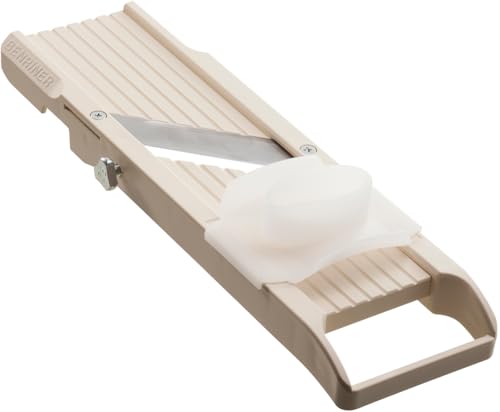
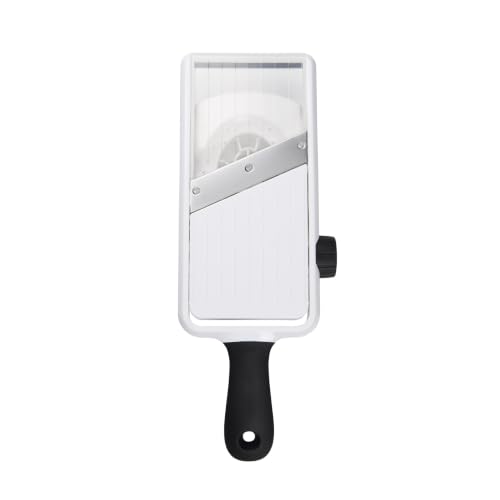
The short version is simple. The Benriner is a flat and compact slicer that lives in a drawer and rewards a confident hand. The OXO is a larger unit with legs, marked settings, and a bigger food holder, and it asks for more storage room in return for more guidance while you slice.
| Criterion | Benriner | OXO Mandoline | Edge |
| Storage | Flat body, fits in a drawer | Taller body, needs cabinet room | Benriner for small kitchens |
| Thickness setting | Dial under the blade, unmarked | Dial with marked settings and a viewing window on larger models | OXO for repeat settings |
| Food holder | Small guard, covers less of the food | Large holder, covers more of the food | OXO for cautious users |
| Extra cuts | Swap in separate blades on models that include them | Extra blades built in on larger models | Depends on the version |
| Cleaning | Few parts, fast to wash by hand | More parts, some suited to the dishwasher | Benriner for speed |
| Cost of ownership | Low purchase price, replacement blades cost extra | Higher purchase price, fewer add ons needed | Depends on use |
Neither column wins on every row, and that is the point. A slicer that thrills a confident cook in a roomy kitchen can frustrate a new cook in a tight one. Read the rows that match your home first, then check the detail below.
Meet the Contenders: Benriner and OXO Mandoline
Benriner Overview
The Benriner comes from Japan and has the shape of a flat board with a single very sharp straight blade set across the middle. You rest it over a bowl or hold it at an angle on a board, then slide the food along the surface and across the edge. There is no stand, no legs, and almost nothing to assemble before you start.
Thickness changes come from a dial on the underside that raises or lowers the platform in front of the blade. The body is light, the footprint is small, and wider versions exist for foods like cabbage heads and large onions. Cooks who prep often tend to love the direct feel and the thin slices it can produce.
OXO Mandoline Overview
OXO takes the opposite approach and builds more structure around the cut. Its larger mandoline models stand on folding legs over a board or bowl, with a runway that guides the food toward the blade at a fixed angle. A dial on the side selects the thickness, and on the bigger models a small window shows the setting you chose.
The food holder is large and spring loaded, and it grips the food while keeping your fingers well above the runway. Some versions store extra blades inside the body for julienne and wavy cuts. The trade off is size, since the unit needs real cabinet or shelf room and takes a little longer to set up and put away.
Head to Head: Where They Really Differ
Ease of Use
The Benriner asks more of your hands. You control the angle and the pressure, and slices come out best when your strokes stay smooth and even. That freedom feels natural after a week or two of practice, but your first sessions can produce mixed thickness until the motion clicks. The small guard also leaves more of each vegetable exposed, so many owners add a cut resistant glove for peace of mind.
The OXO guides more of the work for you. The legs hold the angle steady, the marked dial removes guesswork, and the large holder keeps a firm grip as the food gets smaller. For a cook who slices once a week and wants the same result each time, that guidance matters. Always use the holder on either slicer, and stop while a stub of food still remains.
Durability
A Benriner body is a simple molded piece with a stainless steel blade that you can remove, and that simplicity leaves very little to break. The blade edge is the wear point, and replacement blades are sold on their own, so a dull or nicked edge does not end the life of the tool. Treat the thin edge with care, though, since a knock against a pan in the sink can chip it.
The OXO spreads wear across more parts. Hinges, legs, dial parts, and the holder mechanism all move, and each moving part is one more thing that can loosen over years of use. In return, you rarely need to buy anything else for it. Households that slice daily should weigh blade replacement costs on one side against eventual wear on moving parts on the other.
Cleaning
Washing the Benriner takes a minute or two. The blade slides out, the flat body rinses clean, and there are no corners where food can hide. Most owners wash it by hand, dry it at once, and slide it back into a drawer. Because there are so few parts, nothing gets lost between washes, and the whole routine fits easily into a weeknight cleanup.
The OXO takes a bit more patience after a meal. Food can lodge around the blade housing and under the runway, and the holder has grooves that need a brush. Some parts can go in the dishwasher depending on the model, which helps, but you still need to take the unit apart and let each piece dry. If cleanup speed decides what gets used in your home, note the gap.
Design
Design here is really a question about your kitchen, not about looks. The Benriner is thin enough to share a drawer with sheet pans or rest upright in a narrow slot beside boards. In a small apartment kitchen, that matters every single day. It also travels well to a holiday home or a rental, since it packs flat and weighs very little.
The OXO earns its space by standing ready like a small appliance. In a larger kitchen with deep cabinets, storing it is easy, and the stable stance suits long prep sessions for a family of five or six. On a small counter, though, the legs and runway crowd the board area. Measure your storage spot before you buy either one, and be honest about how much room you truly have.
Value
Value depends on how the slicer fits your routine. A Benriner usually costs less up front, often about $30 to $75 depending on width and the blades included. If you slice often and cook for two to four people, that low entry price plus an occasional replacement blade is hard to beat. A drawer stored tool that you reach for daily quickly pays for itself.
An OXO mandoline usually costs more up front, with the standing Chef's Mandoline models at about $85 to $105 (handheld OXO versions cost about $20 to $45). That price buys the stand, the marked dial, the large holder, and blades stored in the body, so most owners buy nothing else. For a larger household that preps big batches on weekends, the time saved and the steady results can justify the higher price and the storage space it claims.
Price and Value Recap
Think about cost over three to five years rather than cost on the day you order. The Benriner path is a lower first payment plus small blade costs later. The OXO path is one higher payment with fewer extras, but more parts to keep track of. Either way, prices and availability can change, so check the product page before ordering and confirm which blades and holders come in the box.
Our Recommendation for Your Home
Pick Benriner If
Choose the Benriner if your kitchen is short on storage and you want a tool that disappears into a drawer. It suits cooks who slice most days, enjoy a hands on feel, and cook for a smaller household. If thin and even slices for salads, gratins, and pickles are your main goal, and you are willing to practice the motion for a week, this is your match.
Pick OXO Mandoline If
Choose the OXO if you want the slicer to guide your hands as much as possible. It suits families who prep in larger batches, cooks who value marked settings they can repeat, and anyone who feels nervous around a bare blade. If you have the cabinet room and you slice a few times a week rather than daily, the added structure will likely make you use it more, not less.
Not Sold on Either? One More Option
Some homes fall between these two styles, wanting more guidance than a flat slicer gives but less bulk than a standing unit needs. In that case, compare other styles in our guide to the best mandoline slicer, where handheld and compact standing designs sit side by side. One short look at that range usually settles whether a third style fits your counters and your cooking habits better.
Your Questions, Answered
Which mandoline lasts longer, Benriner or OXO?
Both can serve for years, and storage habits decide much of the outcome. Keep the Benriner blade covered and stored dry, and keep the OXO folded in a cabinet rather than loose in a drawer where its legs and dial take knocks. The earliest sign that any mandoline needs attention is uneven slices from a nicked edge, which on the Benriner means swapping the blade rather than replacing the whole tool.
Which is easier to clean, Benriner or OXO Mandoline?
The Benriner is easier to clean in daily use, and one extra habit helps both tools. Rinse either slicer right after slicing starchy or strongly colored foods like potatoes and beets, since dried residue takes scrubbing that brings your hands close to the edge. Use a brush and move it away from the blade, never toward it, then let every part dry fully before storage to protect the edge and the moving parts.
What is the main difference between Benriner and OXO Mandoline?
The main difference is how much of the work the tool controls for you. The Benriner leaves angle, pressure, and pace in your hands, while the OXO fixes the angle with legs and guides the food with a larger holder. A useful way to picture it is the first week in your kitchen. The Benriner gets faster as your skill grows, while the OXO feels steady from the first session but stays a little slower to set up.
Is Benriner better than OXO Mandoline?
Neither is better for every home, and the honest answer depends on who is cooking. The Benriner rewards practice and suits compact kitchens, while the OXO rewards cooks who want support and repeatable settings. If several people in your household will share the slicer, including a less confident cook, the guided design is often the safer household choice even when one experienced cook prefers the flat design.
The Bottom Line
Match the slicer to your space, your household size, and your confidence, and either design will earn its keep. The product table above pulls the key contrasts together for a final check. When you picture benriner vs oxo mandoline in your own kitchen, choose the one you will actually reach for on a tired Tuesday, since the best mandoline for your home is the one that gets used.