APEC ROES-50 Review: Honest Pros, Cons & Who It's For (2026)
Disclosure: We may earn a commission when you buy through links on this page, at no extra cost to you. As an Amazon Associate I earn from qualifying purchases. Learn more

Thinking about the APEC ROES-50? Our honest APEC ROES-50 review covers everyday pros and cons, who it suits, and smarter alternatives if it's not a fit.
The ROES-50 from APEC is one of the most established under sink reverse osmosis systems on the market, built around five stages of filtration, a pressurized storage tank, and a separate drinking water faucet. This apec roes-50 review looks at the system the way a homeowner lives with it: cabinet space, installation, upkeep costs, and which households it fits best.
If you are still comparing system types, start with our guide to the best under sink water filter options, then come back here for the details on this model. The key points sit side by side in the comparison table below.
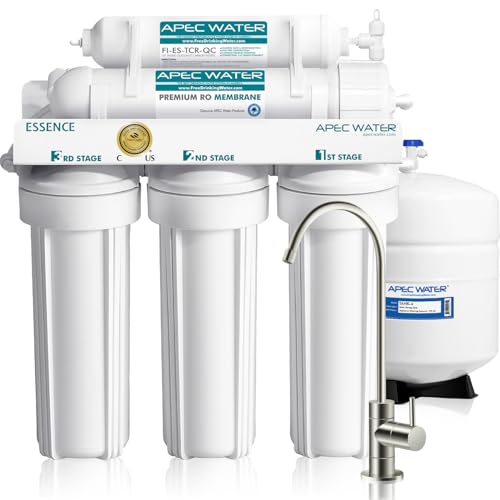
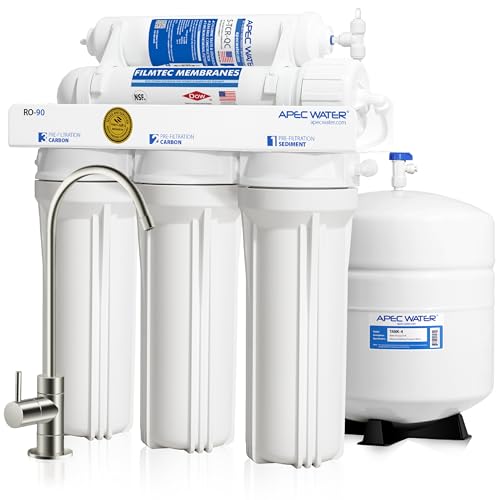

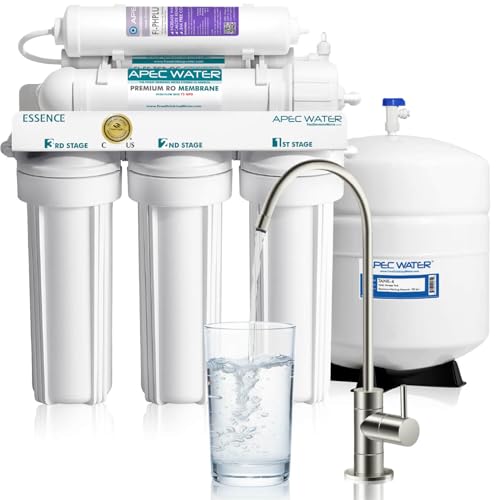
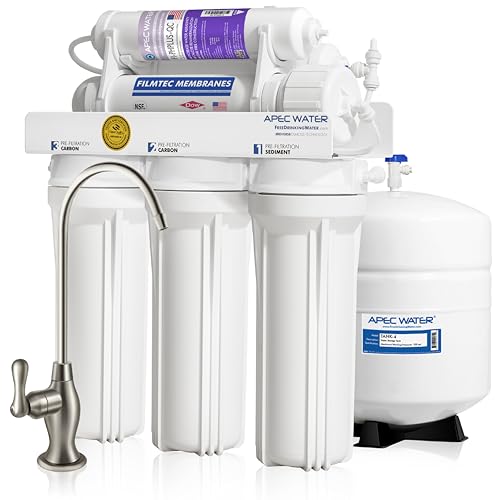
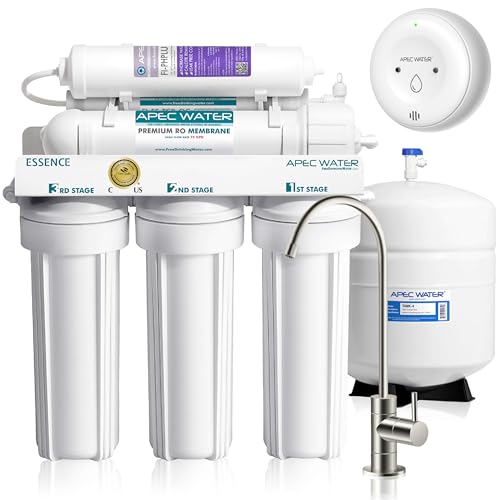


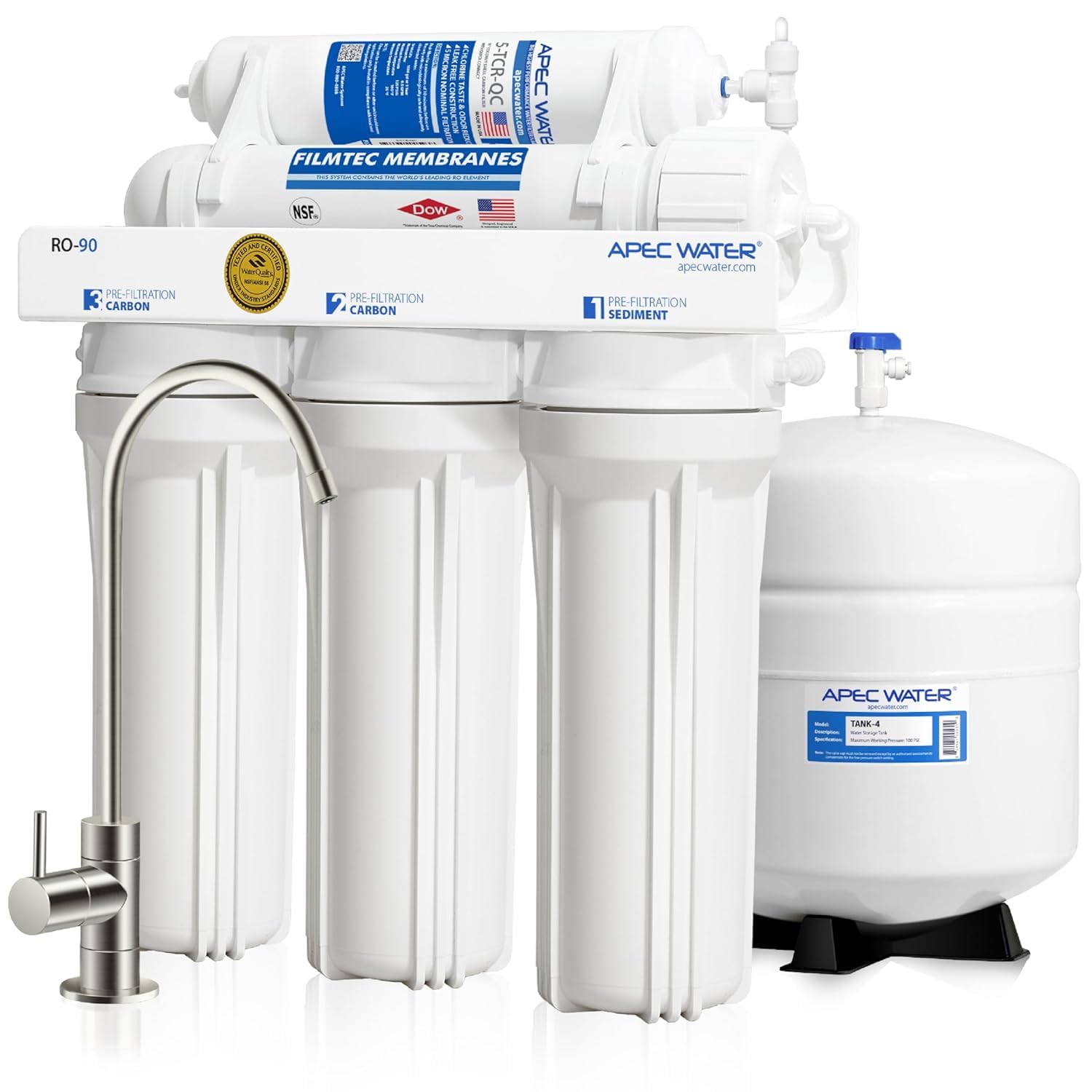
APEC ROES-50 at a Glance: Who It Suits
The short version is that this is a traditional tank based reverse osmosis system rather than a compact tankless design. That older layout is also its main strength, since it relies on proven parts and standard filter sizes. It suits households that drink and cook with a lot of filtered water and have cabinet room to spare.
- Best for: families who want a steady reserve of filtered water on tap, homes with standard water pressure, and buyers who prefer widely available replacement filters.
- Skip if: your under sink cabinet is already crowded, you rent and cannot drill a faucet hole, or your home has very low water pressure.
APEC ROES-50: Key Specs to Check
The headline figure is the output rating of about 50 gallons per day, which describes what the membrane can produce across a full day rather than what flows from the faucet in a minute. Faucet flow feels instant because the storage tank holds a reserve under pressure. The usable reserve is smaller than the tank size suggests, since part of the tank volume is an air bladder.
The system uses five stages: a sediment filter, two carbon block filters, the reverse osmosis membrane, and a final carbon polishing filter before the faucet. The unit needs space under the sink for the housing assembly plus the standing tank, a cold water feed connection, and a drain line connection for reject water.
Design and Build Quality
Nothing about the ROES-50 chases style points. The housings are plain molded plastic, the tank is coated metal, and the fittings are the standard push fit type used across the industry. That plainness works in your favor, because replacement parts and tubing are easy to source years later and most plumbers already know this layout well.
The parts that matter most for longevity are the membrane housing seals, the automatic shut off valve, and the tank bladder. A well kept tank holds pressure for years, while a neglected one slowly loses its charge and delivers weaker flow. The included faucet is a basic brushed nickel unit with an air gap design, which can gurgle softly when the tank refills.
How It Performs in Everyday Home Use
Installation and Compatibility
Most owners install this system in about two to four hours with basic tools. You mount the filter assembly inside the cabinet, set the tank beside it, tap the cold water line, add a fitting on the drain pipe, and drill a hole for the faucet if your sink has no spare opening. Stone counters need the right bit, and renters should get written permission first. Homes on well water should test for iron and sediment first, since heavy sediment shortens the life of the first stage filter.
Build Quality and Finish
Build quality on this class of system shows up in small details rather than looks. Housings should thread on smoothly, O rings should seat flat, and tubing cuts should be square so the push fit collars grip evenly. The faucet is the only part guests will ever see, and it wipes clean like any other kitchen fixture. Judge this system by leak free connections and steady pressure, not by appearance.
Features
The feature list is deliberately simple. There is no power cord, no app, and no digital display, because a tank system runs entirely on water pressure. An automatic shut off valve stops production when the tank is full, saving water compared with older designs that ran to the drain constantly. The trade off is the absence of filter life indicators, so you track changes on a calendar. For many households that is a fair exchange, since there is nothing electronic to fail.
Certifications
Certification is where you should slow down and verify rather than assume. APEC markets this system with WQA certification to NSF ANSI Standard 58, which covers claims about reducing total dissolved solids and certain contaminants. Before you buy, check the current listing and the certifying body database so the certification applies to this exact model and has not lapsed. A listing that only says filters use certified materials is not the same as a certified complete system.
Features You Will Actually Use
Day to day, the feature you notice most is the reserve tank. Morning coffee, a pot of pasta water, and several filled bottles can all draw on stored water without waiting for the membrane to produce more. The membrane refills the tank slowly in the background, so its slow production rate rarely matters unless several people empty the tank at once.
The separate faucet also earns its place. It keeps filtered water for drinking and cooking while the main tap handles washing up at full pressure, so you are not spending filter life on rinse water.
Living With It: Setup, Cleaning and Upkeep
After installation, you flush the system before drinking from it, following the maker directions, because new carbon filters release fine particles at first. After that, upkeep is mostly calendar based. Wipe the cabinet floor dry at every filter change and look for slow drips at the fittings, since a small leak caught early is a paper towel problem while a hidden one can damage the cabinet floor. Sanitizing the tank and lines is an occasional job, usually done at a membrane change.
The Main Pros and Cons to Weigh
On the plus side, the design is mature and widely understood, replacement filters are inexpensive and sold by many suppliers, and the tank delivers strong flow without electricity, even during a power outage.
On the minus side, the tank and housings claim a large share of a standard base cabinet, the system sends reject water to the drain in normal operation, and refilling after heavy use takes time. The air gap faucet can be mildly noisy, and the lack of any filter reminder means neglected maintenance quietly degrades taste long before anything breaks.
Is the APEC ROES-50 Right for Your Household?
For a family of three to five that drinks filtered water all day and cooks most meals at home, the reserve tank matches the demand pattern well. A single person or couple in a small apartment may find the cabinet footprint hard to justify if a compact countertop filter would cover their actual usage. Older homes with heavy sediment may need added pre filtration, while homes with clean municipal water let the standard stages last their full rated life. If a clinician has advised someone in your home to limit specific contaminants, confirm which reduction claims matter before choosing any filter.
How the APEC ROES-50 Compares
The main alternative style is the tankless reverse osmosis system, which filters on demand and frees up cabinet space but needs electricity and usually costs more up front. If that layout sounds better for your kitchen, read our waterdrop g3p600 review for a mid range example, and our waterdrop g3p800 review for a higher output version for larger households.
Against simpler under sink carbon filters, the ROES-50 removes far more dissolved material but adds the drain connection, the tank, and higher upkeep. Against other tank based five stage systems, differences come down to certification details, warranty terms, and the price of replacement filter sets.
Price, Deals and Warranty
This system usually sells for around $180, placing it in the budget tier for five stage reverse osmosis, though the final cost rises if you add a permeate pump, a fridge connection kit, or professional installation. Seasonal sales can trim the price, but check that a discounted listing is the complete system and not a parts bundle. APEC sells this line with a limited warranty, so confirm the exact terms before ordering.
Common Buying Mistakes to Avoid
- Skipping the cabinet measurement: measure height, depth, and the space the garbage disposal already takes before ordering, because the tank needs upright room.
- Ignoring water pressure: membranes need adequate feed pressure, and low pressure homes may need a booster pump.
- Forgetting the drain and faucet plan: the system needs both a drain connection and a faucet hole, and drilling stone counters is not a casual job.
- Budgeting only the purchase price: replacement filters are a yearly cost, so costly proprietary filters can erase a cheap price.
Cost of Ownership and Care
Running costs are predictable. The three pre and post filters are typically replaced about every 6 to 12 months as a set costing about $40 to $80, and the membrane lasts about 2 to 3 years on municipal water. There is no electricity cost, though the system does send a portion of feed water to the drain carrying away the rejected minerals.
To stretch service life, change filters on schedule even when the water still tastes fine, keep spare O rings on hand, and recheck every fitting a day after any filter change. Writing each change date on a label stuck to the tank turns guesswork into a quick glance.
Your Questions, Answered
How do you clean the APEC ROES-50?
You clean it by sanitizing the tank and lines rather than scrubbing parts. Shut off the feed water, drain the tank through the faucet, and follow the maker procedure for adding a sanitizing solution during a filter change, then flush a full tank of water to waste before drinking. Do this about once a year. Never use scented cleaners inside the housings, since residues can damage the membrane.
What is a cheaper alternative to the APEC ROES-50?
A two or three stage under sink carbon filter is the usual cheaper route, often under $100, and it improves taste and odor with a far simpler install. The compromise is scope: carbon stages do not reduce dissolved solids, fluoride, or sodium the way a membrane does. Choose the cheaper type only if your concern is chlorine taste, and check your local water report first so you know what you need to remove.
How long does the APEC ROES-50 last?
The system itself can stay in service for ten years or more, because nearly every wear part is replaceable: filters yearly, the membrane every few years, and eventually the tank or faucet. What ends the life of these units is usually neglect, such as a cracked housing left leaking, rather than age. Keep the cabinet dry and the core hardware should outlast several sets of filters.
What are common APEC ROES-50 problems?
Owners most often report slow flow, a tank that seems empty too soon, and small drips at fittings after a filter change. Slow flow usually points to exhausted pre filters or a tank that has lost air pressure, which you can check with a gauge when the tank is empty. Drips usually trace back to a pinched O ring or tubing not pushed fully home. Gurgling at the faucet during refills is normal for an air gap design.
Is the APEC ROES-50 worth it?
It is worth it when you want membrane level filtration, drink a lot of filtered water, and have the cabinet space and basic skills the install requires. The value case rests on low filter costs and a long service life rather than features. If you rarely use more than a pitcher of filtered water a day, a smaller filter gives you most of the benefit for less money and no drain connection.
Final Thoughts
Read as a whole, this apec roes-50 review points to a system that wins on simplicity, parts availability, and low running costs rather than on compact size or smart features. Compare its footprint and upkeep against the product table above, verify the certification on the current listing, and measure your cabinet before you order. If the tank fits your space, this established design remains an easy one to live with for years.