APEC RO-90 Review: Honest Pros, Cons & Who It's For (2026)
Disclosure: We may earn a commission when you buy through links on this page, at no extra cost to you. As an Amazon Associate I earn from qualifying purchases. Learn more
Thinking about the APEC RO-90? Our honest APEC RO-90 review covers everyday pros and cons, who it suits, and smarter alternatives if it's not a fit.
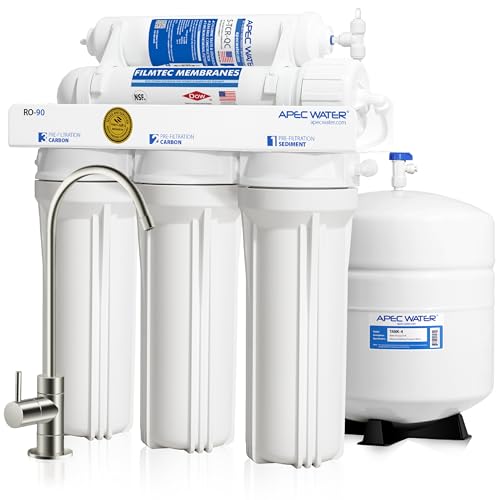
A traditional tank based reverse osmosis system is not glamorous, and that is exactly the appeal here. This apec ro-90 review looks at the RO-90 the way a homeowner actually lives with it, from cabinet space to filter changes. It is a five stage system from APEC rated at 90 gallons per day, built around a storage tank and a separate drinking water faucet.
Below, you will find the specs that matter, the strengths and drawbacks of this design, and the households it suits best. If you are still deciding between filtration styles, start with our guide to the best under sink water filter options, then check the comparison table below.



Quick Verdict
The RO-90 makes sense if you want proven, certified reverse osmosis filtration without a pump, electronics, or an app, and you have cabinet room for a tank. It is a poor match if your under sink space is already full or you rent and cannot drill a faucet hole. Replacement filters are widely available, which matters more than any headline spec.
- Best for: families who drink and cook with a lot of filtered water.
- Skip if: you need a compact tankless unit, or your well water has not been tested.
APEC RO-90: Key Specs
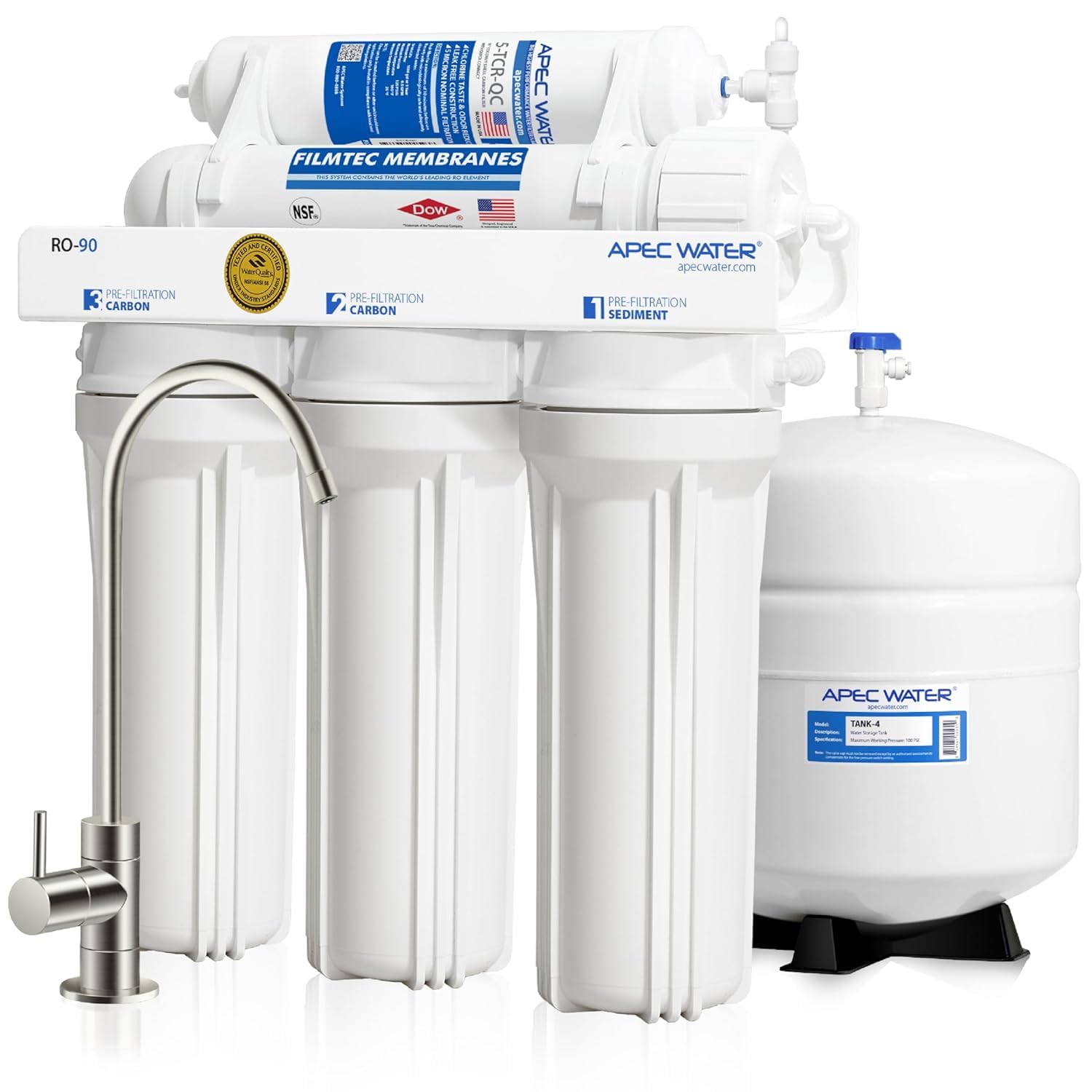
- Filtration: five stages: a sediment filter, two carbon blocks, a reverse osmosis membrane, and a coconut shell carbon final stage.
- Output: rated at up to 90 gallons per day under standard test conditions.
- Storage: a pressurized tank that sits beside the filter assembly, so measure cabinet height and floor space for both.
- Working pressure: maximum feed water pressure of 85 psi.
- Certification: WQA Gold Seal, certified to NSF/ANSI 58 and NSF/ANSI 372.
- Included: lead free faucet, color coded tubing, drain saddle, feed water adapter, and quick connect fittings.
First Impressions and Build
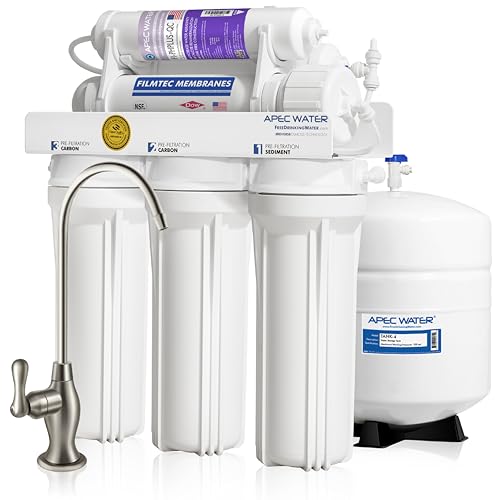
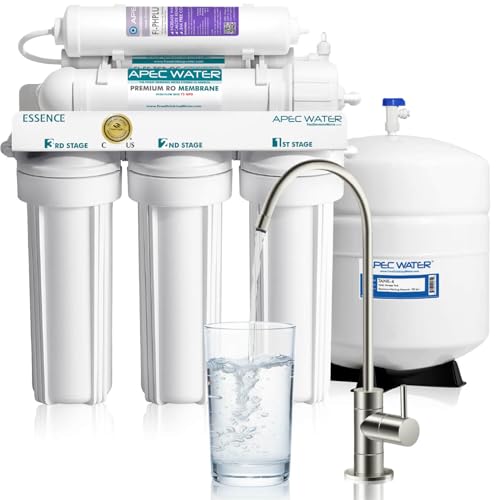
Out of the box, the RO-90 looks like classic plumbing hardware rather than a kitchen gadget. You get a row of three filter housings on a bracket, the membrane housing above them, a separate tank, and bundles of color coded tubing. Nothing about it is decorative, and it does not need to be, since every part lives behind a cabinet door.
What stands out is how serviceable it all is. The housings unscrew with the included wrench, the fittings push in and release by hand, and individual parts such as the tank valve can be replaced on their own. That modular layout is why systems of this style stay in service for years instead of being thrown out when one small part fails.
How It Performs in Everyday Home Use
Day to day, performance shows up in three simple ways: how the water tastes, how fast the tank recovers after you fill pots and bottles, and how steady the flow stays as the filters age. The 90 gallon per day rating is high for a tank system at this size, so recovery is where this model pulls ahead of slower designs.
Installation and Compatibility
Plan on about two to three hours for a first install. You connect a feed adapter to the cold water line, mount a drain saddle on the drain pipe, place the tank, and drill one hole for the dedicated faucet if your sink has no spare hole you can reuse. Renters should get written permission first, since both changes are permanent.
Build Quality and Finish
The housings and bracket feel dense and plainly finished, with no thin decorative covers to crack. The quick connect fittings are the widely used push in style, so a damaged fitting or length of tubing can be swapped with standard parts from any plumbing supplier.
Features
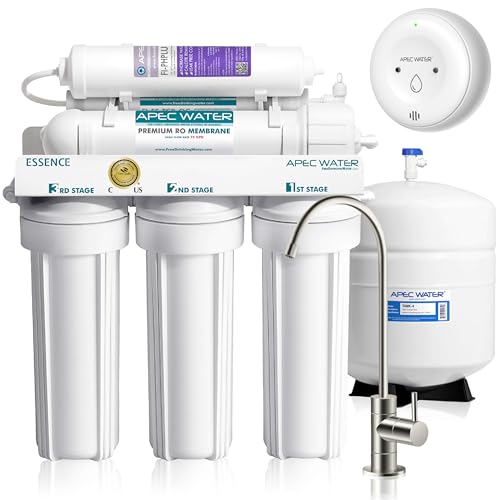
There is no booster pump, no filter life display, and no leak sensor, because this design runs entirely on your home water pressure. An automatic shutoff valve stops production once the tank is full. Every gallon of filtered water sends roughly two to three gallons to the drain during production, a normal ratio for a tank system without a permeate pump, and worth knowing before you buy.
Certifications
The RO-90 carries the WQA Gold Seal and is certified to NSF/ANSI 58, the standard that covers reverse osmosis reduction claims such as total dissolved solids, lead, and other listed contaminants. NSF/ANSI 372 covers lead content in the plumbing parts themselves. Certification matters because the claims were verified by an outside body against the full assembled system, not just the membrane on its own.
Features You Will Actually Use
The tank is the feature you will notice most. It holds filtered water ready at full faucet pressure, so filling a kettle or a stockpot does not slow to a trickle the way direct flow systems can. The high output membrane then refills it quickly, so a household that empties the tank at breakfast is rarely waiting by lunch.
The dedicated faucet quietly changes habits too. Because filtered water has its own tap, nobody wastes it on washing dishes. The final carbon stage sits after the tank, so drawn water gets a last polish that removes the flat storage taste tanks can add. None of this needs setup, charging, or a phone.
Living With It: Setup, Cleaning and Upkeep
Routine care is a calendar task rather than a chore. The three prefilters are typically changed every 6 to 12 months depending on your water, the final carbon stage about once a year, and the membrane every few years when output drops. A simple total dissolved solids meter, which costs little, tells you when the membrane is tiring: compare filtered water with your tap reading.
Once or twice a year, run the tank fully empty and check every fitting with a dry paper towel to spot slow drips early. Keep a spare set of prefilters in the cabinet, and write the install date on the bracket with a marker. That small habit removes most of the guesswork from owning the system.
What We Like and What We Don't About the APEC RO-90
- Like: certified reduction claims for the complete system, not just a single cartridge.
- Like: fast tank recovery for a passive system, with no electricity used at all.
- Like: standard size filters and fittings, so replacements stay easy to find and fairly priced.
- Don't like: the tank takes real cabinet space and rules out some compact kitchens.
- Don't like: no reminder system of any kind, so filter changes depend on your own calendar.
- Don't like: waste water during production is higher than on pumped tankless designs.
Is the APEC RO-90 Right for Your Household?
It fits a family of three to five that fills bottles, coffee makers, and cooking pots daily and has a base cabinet with room to spare. A single person will likely find the tank oversized, and a household on very low water pressure will need a version with a pump instead.
Think about your water source as well. On city water with a chlorine taste or lead concerns in older plumbing, reverse osmosis addresses both in one system. If your only complaint is chlorine taste, a simpler carbon filter may cover it for less money and no waste water.
How the APEC RO-90 Compares
The real comparison is between design families, not brand names. Tank systems like this one store water for instant flow and need no power, but they give up cabinet space. Tankless systems mount flatter, often waste less water, and show filter status on a display, but they cost more up front and depend on powered pumps.
If the tankless route sounds better for your kitchen, read our waterdrop g3p600 review for a mid size option and our waterdrop g3p800 review for a higher output one. Coming back to this apec ro-90 review afterward makes the tradeoff plain: simple, proven hardware with a tank, or a slimmer powered design with more parts to maintain.
Price, Deals and Warranty
Expect to pay about $200 to $300 for the complete kit, with the price moving during large sale events. That budget covers a standard install, though you may add a little for a hole saw bit or extra tubing. The system carries a limited warranty, so check the current terms before ordering.
Common Buying Mistakes to Avoid
- Measuring only the system head and forgetting the tank, which needs its own floor space beside it.
- Skipping a pressure check, then blaming the system for slow production that low pressure caused.
- Ignoring the drain connection and finding at install time that a garbage disposal leaves no good spot for the saddle.
- Budgeting only for the kit and not for the yearly filter sets it will need.
- Installing on untested well water, where iron or sediment can foul the prefilters and membrane early.
Cost of Ownership and Care
Ongoing cost is predictable. A yearly set of prefilters and the final carbon stage runs about $40 to $70, and a replacement membrane every few years adds about $40 to $60. There is no electricity cost, and the water cost from production waste is modest for most households.
Protect that investment with two habits. Change prefilters on time even when the water still tastes fine, because exhausted carbon lets chlorine reach the membrane and shorten its life. And if the system will sit unused through a long trip, shut off the feed valve and empty the tank before you leave, then flush a full tank on your return.
Your Questions, Answered
How do you clean the APEC RO-90?
You clean it during a filter change rather than as a separate job. Shut off the feed water, drain the tank, and wash the empty housings in warm water with a drop of mild dish soap, then rinse well before the new filters go in. Many owners also sanitize the tank yearly using the manual procedure while the filters are out.
What is a cheaper alternative to the APEC RO-90?
Slower tank systems rated around 50 gallons per day usually cost less and keep up fine for one or two people. A plain carbon filter costs less still and needs no drain connection, but it cannot reduce dissolved solids, fluoride, or nitrates the way a membrane can. Choose based on your water report, not the saving alone, because the cheapest system that misses your main contaminant is not a saving at all.
How long does the APEC RO-90 last?
The hardware is built to stay under your sink for a long time. The housings, bracket, and fittings can serve for ten years or more, and the tank is usually the first major part to age out, as its internal bladder slowly loses pressure. Because every wear part is replaceable on its own, the system rarely dies all at once. Its real lifespan depends on keeping up the filter schedule and fixing small drips early.
What are common APEC RO-90 problems?
Most complaints trace back to a few causes. Slow filling usually means tired prefilters or a tank that has lost air pressure, which you can check with a tire gauge against the value in the manual. Gurgling at the drain is normal during production but should stop when the tank is full; if it runs nonstop, the automatic shutoff valve is the first suspect. Small leaks usually start at a tubing end that was not pushed fully home, so reseating the tube fixes most of them.
Is the APEC RO-90 worth it?
It is worth it when your household will use the water daily and you value certified filtration over compact size. Compare one year of filter costs against what your family now spends on bottled water or pitcher cartridges, and the system usually comes out ahead while removing far more. It is harder to justify if you move often, since removal and reinstalling take real effort, or if taste is your only concern.
The Bottom Line
The RO-90 is old school reverse osmosis done properly: certified, serviceable, and sized for families who go through filtered water all day. It asks for cabinet space, a drain connection, and a yearly filter change, and in return it needs no power and no subscription. Look back at the product table above, weigh the tank against your cabinet, and if the fit works, this apec ro-90 review points to a system you can install once and rely on for years.