Best Tankless Water Heaters (2026 Buying Guide)
Disclosure: We may earn a commission when you buy through links on this page, at no extra cost to you. As an Amazon Associate I earn from qualifying purchases. Learn more
One of the most remarkable things about modern home technology is how far it's come, and that doesn't just mean phones and laptops. The term applies just as well to water heaters.
With so many choices, how do you pick the best tankless water heater for your home? This guide covers everything you need to know to buy the right one for you and your family.

What is a Tankless Water Heater?
A tankless water heater is one of the most efficient upgrades you can make to your home. Unlike a regular tank water heater, which keeps a large volume of water warm around the clock, a tankless unit heats water on demand instead.
Because of this, one age-old problem is solved: you can never run out of hot water. Everyone in the family can shower back to back without anyone waiting for the tank to reheat, since the water is hot instantly as it flows through the unit.
Best Tankless Water Heaters
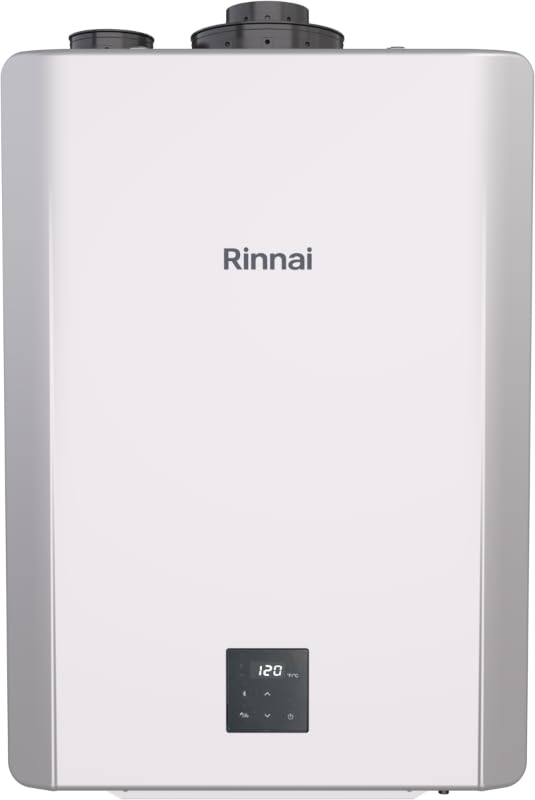
Top Pick: Rinnai RX199iN Condensing Smart Sense Tankless Water Heater
This whole-house Rinnai unit runs on natural gas or propane and uses condensing technology to squeeze extra efficiency out of every BTU. Its Smart Sense system continuously monitors performance, which helps it deliver consistent hot water even in larger households with multiple bathrooms running at once.
Key features:
- Runs on natural gas or propane
- Condensing design for higher efficiency
- Smart Sense monitoring for consistent performance
- Built for whole-house, multi-bathroom demand
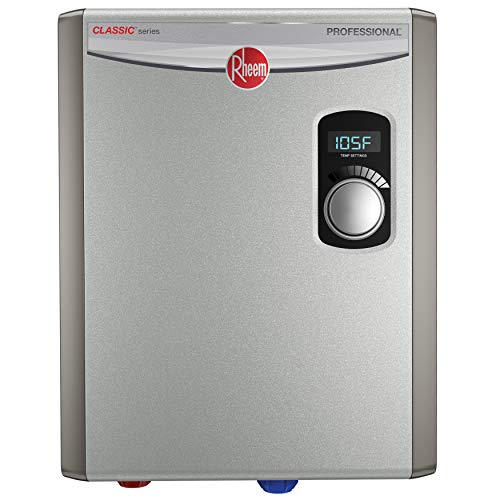
Best Electric Whole-House: Rheem 18kW 240V Tankless Electric Water Heater
If you don't have a gas line, this Rheem electric unit is one of the most trusted whole-house options around, with thousands of reviews backing up its reliability. It's compact enough to mount in a closet or utility room and doesn't require any venting the way a gas unit does.
Key features:
- 18kW electric heating element, no gas line needed
- No venting required, simpler installation than gas models
- Compact mounting footprint
- One of the most reviewed tankless heaters on Amazon
Best Outdoor/Portable: Rinnai V53DeP Propane Tankless Water Heater
Built for outdoor installation, this Rinnai propane unit is a great match for a cabin, workshop, or secondary residence where running a full indoor venting system isn't practical. It delivers up to 5.3 gallons per minute, enough for a single bathroom or a couple of fixtures at once.
Key features:
- Outdoor-rated installation, no indoor venting needed
- Runs on propane
- Up to 5.3 GPM output
- Well suited to cabins and secondary residences
Best Point-of-Use: Compact Under-Sink Electric Tankless Water Heater
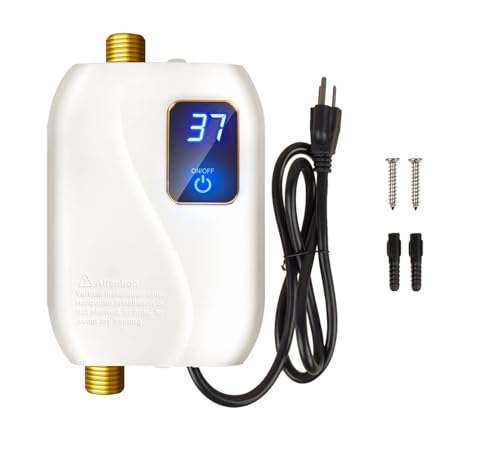
If you just need instant hot water at a single sink rather than for the whole house, this small 110V unit installs directly under the sink and turns on the moment you open the tap. It's an inexpensive way to add hot water to a bar sink, garage sink, or any fixture that's too far from your main water heater.
Key features:
- Plugs into standard 110V household outlet
- Installs directly under a single sink
- Compact and budget-friendly
- Ideal for single-fixture, on-demand use
Types of Tankless Water Heaters
Since tankless water heaters have become so popular, several different types now exist to match different needs, from whole-house gas units to small point-of-use electric models. What they share in common is strong durability and a high energy rating, meaning you likely won't need to replace one for a long time, and you'll save money along the way.
What is the Advantage of a Tankless Water Heater?
Because tankless units heat water on demand instead of storing and continually reheating it, they waste far less energy and water, which also helps cut your monthly bills. They typically cost more upfront than a tank water heater, but that's easily offset by long-term savings, and tankless units generally last significantly longer than a comparable tank model.
To summarize, the advantages of tankless water heaters include:
- High energy rating
- Lower long-term operating costs
- Longer lifespan than tank water heaters
- More eco-friendly
- Compact, space-saving installation
- Unlimited hot water supply
How to Choose a Tankless Water Heater: Features to Consider
The Fuel Source
Tankless water heaters run on either electricity or gas (natural gas or propane). Gas units are generally cheaper to run, but require a gas line and proper venting, while electric units are simpler to install but may need dedicated high-amperage wiring.
The Brand
Look for established, well-reviewed brands rather than the cheapest unlabeled option. Rinnai and Rheem, both featured above, are two of the most trusted names in the category.
The Use
Do you need hot water at just one faucet or shower, or across the whole house? A small point-of-use unit is plenty for a single fixture, while a whole-house family needs a higher-capacity gas or high-wattage electric unit that can handle multiple fixtures running at once.
Maximum Energy Efficiency
This number reflects how much energy a given unit saves compared to a standard tank heater. The higher it is, the more you'll save on your utility bills over time.
Final Verdict
Whichever type you choose, from a whole-house gas condensing unit to a small under-sink electric model, a tankless water heater is one of the more worthwhile upgrades you can make to a home, cutting both water waste and long-term energy costs while giving you hot water that never runs out.
Resources: