Best Outdoor Trash Can (2026 Buying Guide)
Disclosure: We may earn a commission when you buy through links on this page, at no extra cost to you. As an Amazon Associate I earn from qualifying purchases. Learn more
An outdoor trash can does one job, but a bad one fails at it in a handful of predictable ways: raccoons and squirrels pry the lid open, UV exposure cracks the plastic within a summer or two, or the wheels snap off after a few trips to the curb. The right one for your situation depends less on brand and more on what it's actually protecting against — wildlife, weather, or just keeping the side yard looking tidy.
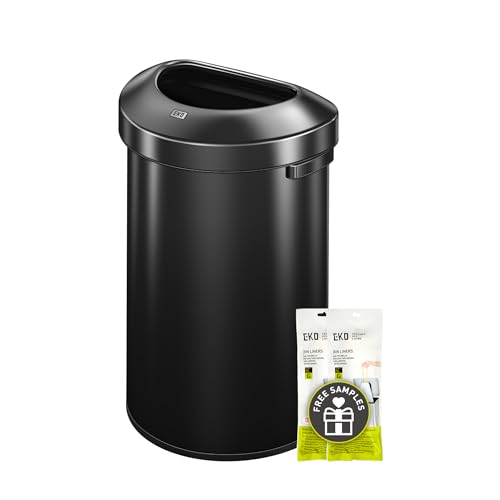
This guide covers the practical differences between styles — hideaway cabinets, commercial-grade round cans, wheeled curbside bins, and steel options — plus what specs actually predict durability instead of just capacity in gallons.


Capacity: Matching Gallons to Your Household
A single person or couple with weekly pickup usually does fine with a 20-30 gallon can. A family of four typically needs 32-38 gallons, and households that don't get weekly pickup, or that generate a lot of yard waste, often want 42+ gallons or a second can. Oversizing isn't free — larger cans get heavy and awkward to move when full, especially without wheels, so it's worth being realistic about actual weekly output rather than buying the biggest option available.
Wildlife Resistance: The Feature Most Buyers Underrate
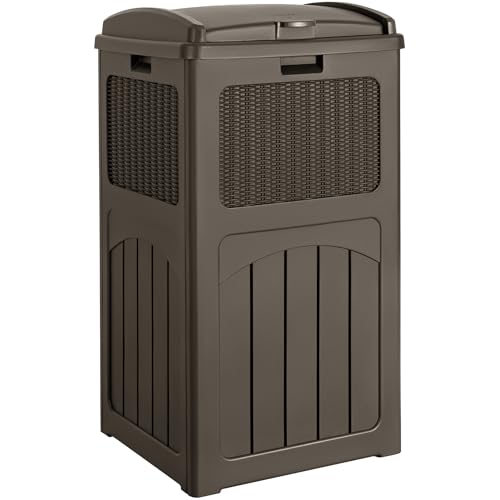
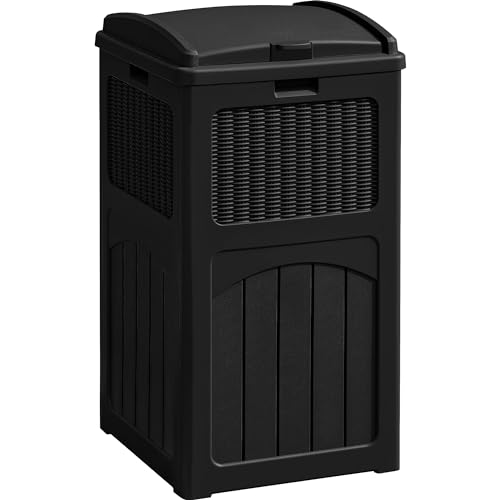
If raccoons, bears, or even persistent dogs are a problem in your area, look specifically for a locking or latching lid — a simple flip-top lid that just rests closed will get opened by anything with hands or a strong nose within days. Hideaway-style cabinets (a resin enclosure with a lid that fully conceals the can inside) solve this more completely than a lid alone, since there's no gap or seam for an animal to work at.

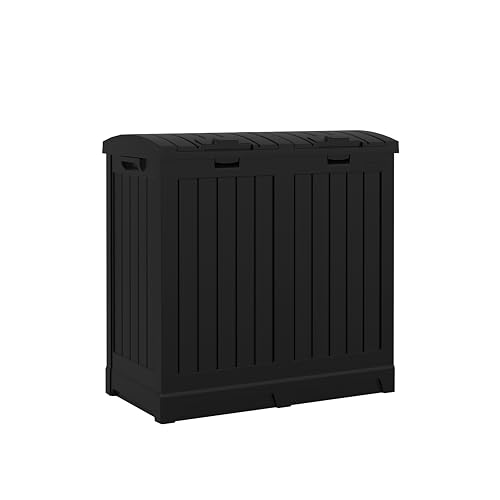
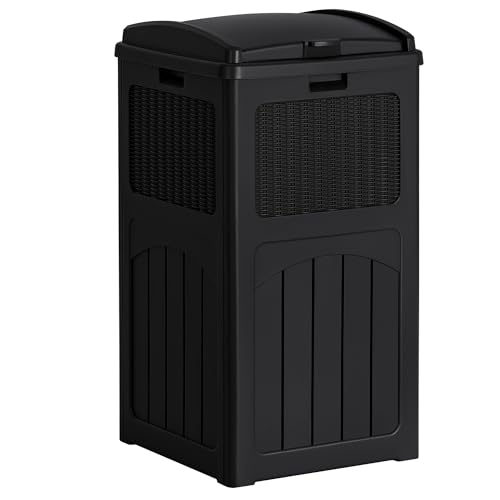
The Suncast 33 Gallon Hideaway is one of the most reviewed outdoor trash solutions on Amazon, and the design explains why: it's a full cabinet-style enclosure rather than just a can with a lid, so the trash bag itself is never visible or accessible from outside. It holds a standard 33-gallon bag and includes a secure latch, which handles the raccoon problem directly instead of relying on lid weight alone.
Material: Resin vs. Galvanized Steel vs. Commercial Plastic
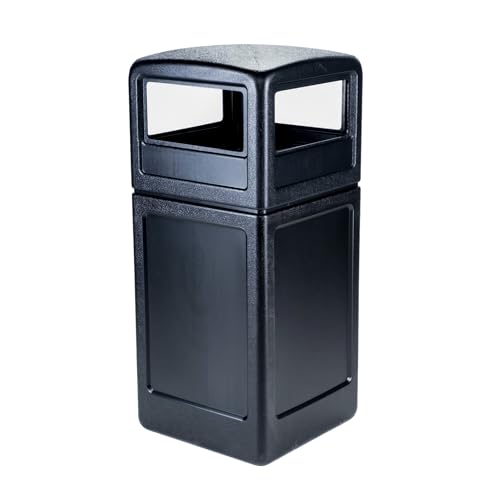
Resin (a UV-treated heavy plastic) is the most common material for hideaway-style cans — it won't rust, is relatively light to move, and modern UV-stabilized resin resists cracking and fading far better than older plastic cans did. Galvanized steel is heavier and more animal-resistant (raccoons and larger wildlife can chew through weaker plastics but not steel), and it holds up better against extreme heat, but it costs more and can dent. Commercial-grade structural foam plastic, used in cans like Rubbermaid's BRUTE line, splits the difference — thicker and more rigid than typical consumer resin, built to survive repeated dragging and impact from trucks and dumpsters in restaurant and municipal use, which is overkill for most homes but means it essentially won't wear out under residential use.

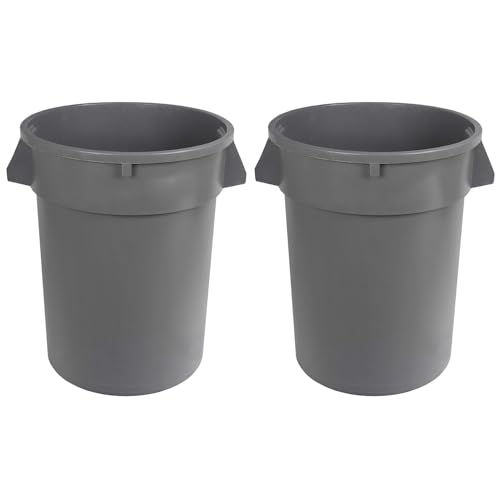
The Rubbermaid Commercial BRUTE 32-Gallon is the round, no-frills option that shows up in restaurant kitchens and municipal parks for a reason — it's built to commercial specifications, meaning the wall thickness and lid hinges are rated for far more abuse than a typical residential can sees. It doesn't hide the can from view the way a cabinet-style unit does, but for anyone who prioritizes it never cracking or splitting over how it looks, this is the category benchmark.
Wheels and Curbside Handling
If your can needs to travel to the curb weekly, wheels stop being optional once it's full — a 32-gallon can of trash can weigh 40-50+ lbs, and dragging that without wheels on gravel or grass gets old fast. Look specifically for a can rated for municipal/curbside use with a locking lid that stays closed while wheeled, and confirm the wheel size — larger wheels handle uneven driveways and grass strips noticeably better than small caster-style wheels.

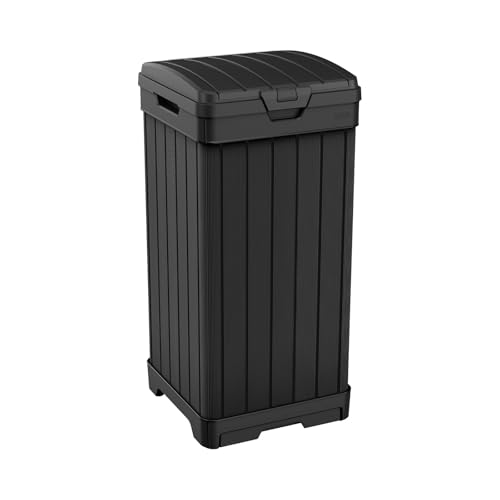
The Toter Residential Wheeled Can is purpose-built for exactly this — it's the style many municipal waste programs use or recommend, with a hinged, animal-resistant lid and large wheels designed for regular curb trips over years of use rather than occasional moves.
Cleaning and Maintenance
A quick hose-out with a mix of water and dish soap or diluted vinegar every few weeks prevents most of the grime and odor buildup that eventually attracts pests. For a deeper clean, a stiff brush plus a diluted bleach solution handles residue that a hose alone won't remove — just rinse thoroughly afterward and let the can dry fully before closing the lid, since trapped moisture is one of the more common causes of persistent odor. Checking hinges, latches, and wheel axles periodically for wear also catches small issues (a loosening latch, a wobbling wheel) before they turn into a can that no longer closes properly or won't roll.
Odor and Insect Control
A tight-sealing lid matters more for odor control than most people expect, especially in warm climates or if the can sits in direct sun. Cans marketed specifically for "kitchen" or "outdoor kitchen" use often include a lid gasket or tighter seal design than a basic yard-waste can. If odor is a persistent problem regardless of the can, a layer of baking soda in the bottom or an odor-absorbing insert helps more than switching cans again.
Placement and Sun Exposure
Even UV-stabilized resin degrades faster in constant direct sun than in shade — if you have a choice of spots, a partially shaded location on the side or back of the house will meaningfully extend a plastic can's lifespan over one sitting in full sun all day. Steel cans are far less affected by UV but can get noticeably hot to the touch in direct summer sun.
FAQs
Will a hideaway-style trash can really stop raccoons?
A properly latched hideaway cabinet stops the vast majority of raccoon break-ins, since there's no lid seam for them to pry at the way there is on a standard lidded can. Determined animals can occasionally still tip over a lightweight can, so weight or ground-anchoring matters too in areas with a serious wildlife problem.
How long should an outdoor trash can last?
A quality UV-stabilized resin can typically lasts 5-10 years with regular outdoor exposure; commercial-grade structural plastic (like BRUTE-style cans) often lasts well beyond a decade under residential use. Cheaper, non-UV-treated plastic can crack or fade within 1-2 summers in sunny climates.
Do I need a lid lock, or is a regular lid enough?
If wildlife (raccoons, bears, or even determined dogs) is a known issue in your area, a locking or latching lid is worth the extra cost — a lid that simply rests in place will get opened. In areas without wildlife pressure, a well-fitting standard lid is usually sufficient.
Is galvanized steel worth the extra cost over resin?
For most households, no — modern UV-resin cans hold up well and cost less. Steel is worth it specifically if you're dealing with larger wildlife that can chew or claw through plastic, or if you want a can that handles extreme heat without softening.
Conclusion
For most homes, a hideaway-style resin can with a secure latch covers the two biggest real-world problems — wildlife access and curb appeal — without the extra cost of steel. If your can needs to travel to the curb weekly, prioritize wheels and a hinged animal-resistant lid over a hideaway design. And if you want something that will genuinely never crack or split regardless of how it's treated, a commercial-grade can built to restaurant and municipal specs will outlast almost anything sold as purely residential.