
Best Outdoor Dog Houses: The Complete Buying Guide
Disclosure: We may earn a commission when you buy through links on this page, at no extra cost to you. As an Amazon Associate I earn from qualifying purchases. Learn more
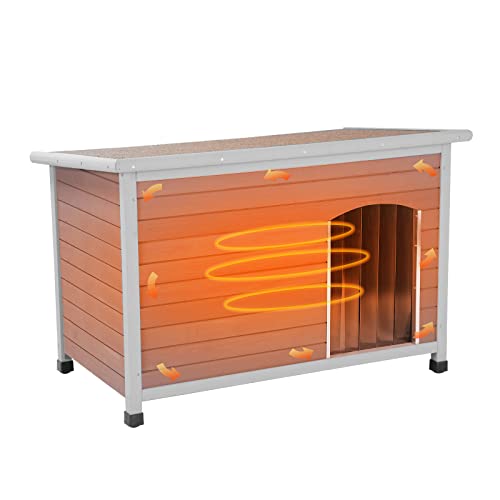
A practical guide to choosing the best outdoor dog houses, covering sizing, materials, insulation, drainage, and yard placement.
If your dog spends part of the day outside, a flimsy shelter isn't going to cut it once the weather turns. A good outdoor dog house needs to hold up to rain, wind, heat, and cold, all while giving your dog a space that actually feels safe to sleep in. Finding the best outdoor dog houses for your situation comes down to a handful of practical factors rather than looks. In this guide, you'll learn how to size a house correctly, which materials hold up outdoors, how insulation and airflow work together, and where to put the house in your yard so your dog actually wants to use it.




Getting the Size Right for Your Dog
Size is the single biggest factor people get wrong when shopping for the best outdoor dog houses. It's tempting to size up so your dog has "plenty of room," but a house that's too big works against your dog just as much as one that's too small.
Measure Your Dog Before You Measure the House
Start with your dog's shoulder height and body length while standing and stretched out lying down. As a rule of thumb, the roof of the house should sit roughly 25 to 50 percent taller than your dog's shoulder height, and the doorway should be about 75 percent of that same measurement. That gives your dog enough clearance to stand, turn around, and stretch out without wasted space around them.
Why Bigger Isn't Always Better
An oversized house sounds generous, but it's actually harder for your dog to keep warm. Dogs rely partly on their own body heat to warm the air inside a shelter, and a house that's too large never really warms up, especially in winter. A snug fit, not a spacious one, is what keeps your dog comfortable overnight.
Wood, Plastic, or Structural Foam: Picking a Material That Lasts Outdoors
Material affects durability, insulation, and how much upkeep the house will need over time. This is usually what separates the best outdoor dog houses from ones that fall apart after one rough season, so it's worth understanding the trade-offs before you buy.
Wood Dog Houses
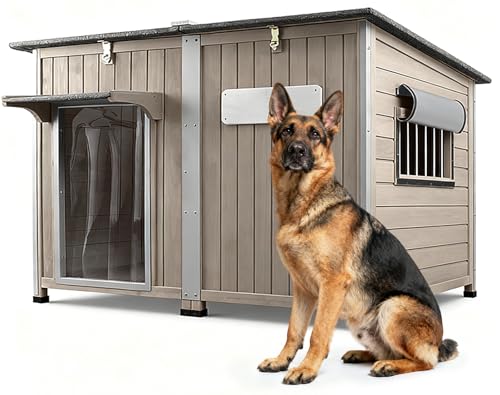
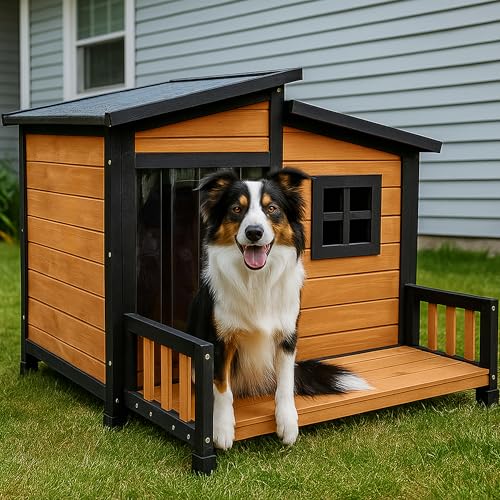
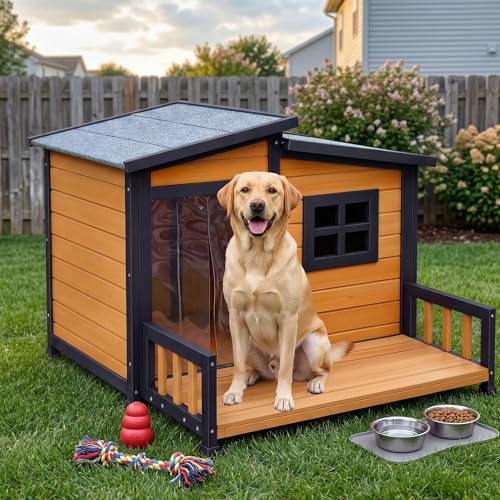
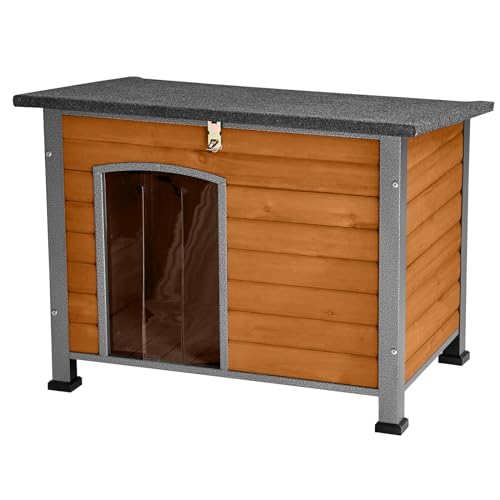
Wood insulates naturally better than plastic and tends to look more at home in a yard, but it needs occasional sealing or staining to resist rot, warping, and pests. If you go this route, look for pressure-treated or cedar construction, since cedar naturally resists moisture and insects better than untreated pine.
Plastic and Resin Dog Houses
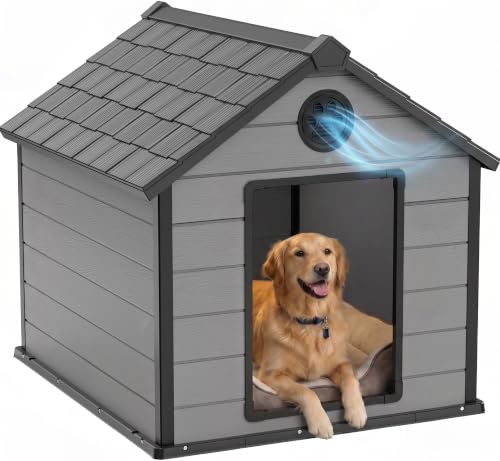
Molded plastic and resin houses are lightweight, weatherproof, and require almost no maintenance beyond an occasional hose-down. The trade-off is that plastic insulates poorly on its own, so in colder climates it usually needs an added liner or bedding to stay warm.
Structural Foam ("Igloo-Style") Dog Houses
Structural foam houses, often shaped like a dome or igloo, use a double-wall design with insulating foam sandwiched in between. They split the difference between wood and plastic, offering better temperature regulation than plain resin while staying nearly maintenance-free. If your dog is a heavy chewer, though, check the wall thickness carefully, since foam layers can be damaged by persistent gnawing. Owners who like this style but want an even more temperature-stable option sometimes compare it against dome-shaped dog igloos built specifically around that double-wall insulation approach.
Insulation and Airflow for Year-Round Comfort
A house that's warm in winter but stuffy in summer isn't doing its job. The best outdoor dog houses balance insulation and ventilation together instead of favoring one over the other.
Cold-Weather Insulation
Look for double-wall construction, foam-core panels, or a fitted liner that traps warm air near your dog's body. Straw bedding is a better insulator than blankets in freezing temperatures, since it doesn't hold moisture and traps air pockets close to the body. Whatever insulation method you choose, pair it with a wind-blocking entry, such as a heavy flap or an offset doorway, so cold drafts can't blow straight in.
Warm-Weather Ventilation
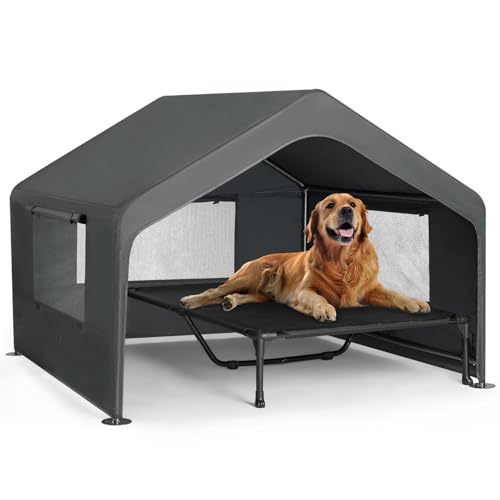
In hot climates, the same features that trap heat in winter can turn a dog house into an oven in summer. Adjustable vents or a removable roof panel let air circulate without letting rain in, and light-colored exteriors reflect more heat than dark ones. If your dog splits time between an outdoor house and coming inside through a pet door, keeping that transition easy matters too, which is one reason some owners pair an outdoor setup with an electronic dog door that lets their dog move between the yard and the house on their own schedule.
Floor, Roof, and Drainage Details That Prevent Problems
Water is the most common reason a dog house stops getting used. A few structural details make the difference between a house that stays dry and one that turns damp after the first storm.
Why an Elevated Floor Matters
A floor raised even a few inches off the ground keeps your dog off cold, damp soil and improves airflow underneath, which helps the house dry out faster after rain. Ground-level houses are more prone to flooding during heavy storms and tend to feel colder in winter since the floor has direct contact with frozen ground.
Roof Pitch and Water Runoff
A slanted or peaked roof sheds water and snow far more effectively than a flat one, which can pool water and eventually leak. Check that roof seams and the roof-to-wall joint are sealed, since that's the most common spot for leaks to start over time.
Choosing the Right Spot in the Yard
Placement is easy to overlook, but even the best outdoor dog houses go unused if they're set up somewhere your dog doesn't want to be. Position it in a spot with partial shade so it doesn't overheat in direct afternoon sun, and angle the entrance away from prevailing wind so gusts don't blow straight through the doorway. Placing the house against a fence or wall on one side adds extra wind protection and can make your dog feel more secure. It also helps to put the house somewhere your dog can still see part of the yard or the house, since dogs that feel isolated are less likely to settle into an outdoor shelter. If your yard already has a wireless dog fence boundary set up, placing the house well inside that boundary, rather than near the edge, keeps your dog from associating the shelter with the edge of their space.
Frequently Asked Questions
What size dog house do I need for my dog?
Measure your dog's shoulder height and add 25 to 50 percent for roof clearance. The doorway should be about 75 percent of your dog's shoulder height, enough to enter comfortably without an oversized opening that lets in drafts.
Is wood or plastic better for an outdoor dog house?
Wood insulates better naturally but needs periodic sealing to prevent rot. Plastic and resin need almost no maintenance but insulate poorly on their own. Structural foam designs offer a middle ground for both insulation and low upkeep.
How do I insulate a dog house for winter?
Use straw bedding rather than blankets, since straw resists moisture and traps warm air better. Add a wind-blocking door flap or offset entry, and consider a foam-lined interior if the house doesn't already have double-wall insulation.
Should a dog house be elevated off the ground?
Yes. An elevated floor keeps your dog off cold, wet ground and helps the house dry out faster after rain, which reduces the risk of mold and keeps the interior warmer in winter.
Where should I place a dog house in my yard?
Choose a spot with partial shade, facing away from prevailing wind, ideally against a fence or wall for added shelter. Avoid low spots in the yard where water tends to collect after rain.
How much ventilation does an outdoor dog house need?
Enough airflow to prevent heat buildup without creating a draft. Adjustable vents or a removable roof panel work well, especially in warmer climates where trapped heat is more of a concern than cold.
How often does a wood dog house need to be resealed?
Most wood houses need resealing or staining every one to two years, depending on climate exposure. Homes in wetter or sunnier regions typically need it closer to the one-year mark to prevent cracking and rot.
Making the Right Call for Your Dog
Keeping a dog outside part of the day isn't inherently a problem as long as the shelter is genuinely built for it. That means the right size, a material suited to your climate, real insulation and airflow, and a dry, well-placed spot in the yard. Weigh those fundamentals against your own climate and yard setup, and the best outdoor dog houses stop being a guessing game and start being a straightforward checklist. Get it right, and the house becomes a space your dog actually chooses to use, not just one it has to tolerate.