Best Immersion Blenders for 2026: Top Picks
Disclosure: We may earn a commission when you buy through links on this page, at no extra cost to you. As an Amazon Associate I earn from qualifying purchases. Learn more
Dragging a full-size blender out of the cabinet for a single pot of soup or a smoothie for one is more hassle than it's worth. An immersion blender solves that by going directly into the pot, bowl, or cup, cutting down on both cleanup and counter space.
Here's what actually separates a genuinely useful immersion blender from a weak one, followed by three standout picks and a full lineup of other strong options to compare.



What to Look for in an Immersion Blender
Motor power ranges widely in this category, from around 200 watts on entry-level models up to 1000 watts or more on heavy-duty versions. More wattage matters most if you plan to crush ice or blend tougher ingredients regularly, while 200 to 300 watts is plenty for soups, sauces, and smoothies.
Speed settings give you more control over texture than a single-speed model. A pulse or turbo function is especially useful for quick bursts of extra power without overblending delicate ingredients.
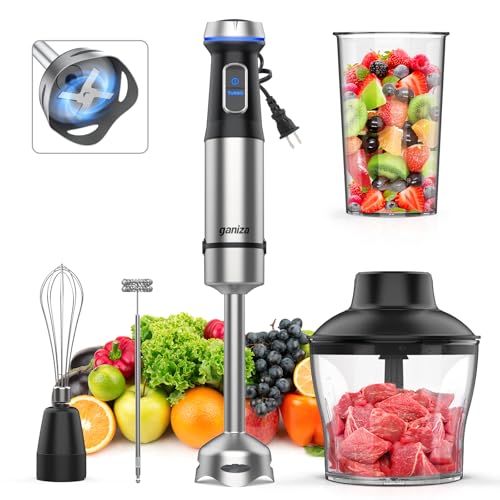
Attachments like a whisk, chopper cup, or measuring beaker turn a basic stick blender into a more versatile small-appliance replacement. If you already own a food processor, you may not need these, but they're a genuine convenience for anyone working in a small kitchen.
Shaft material and design affects both durability and how the blender fits into different pots. Stainless steel shafts hold up better over time than plastic, and a slim, tapered shaft makes it easier to blend directly in narrow containers like a mason jar or measuring cup.
Ease of cleaning is one of the biggest quality-of-life differences between models. Look for a detachable, dishwasher-safe blending shaft so you're not hand-washing around a motor housing every time.
Ergonomics matter more than people expect, since you're holding the blender the entire time you use it. A non-slip grip and reasonably light overall weight reduce fatigue during longer blending sessions like a big pot of soup.
Corded versus cordless is worth considering if portability matters to you. Corded models deliver steady, uninterrupted power for as long as you need it, while cordless versions offer more freedom of movement but typically run at lower wattage and need regular recharging, which can be frustrating mid-recipe if the battery runs low.
Cord length and storage are small details that make a real difference in daily use. A cord of at least five feet reaches most stovetops without stretching, and a compact design that stores upright in a drawer or utensil crock beats one that takes up awkward cabinet space.
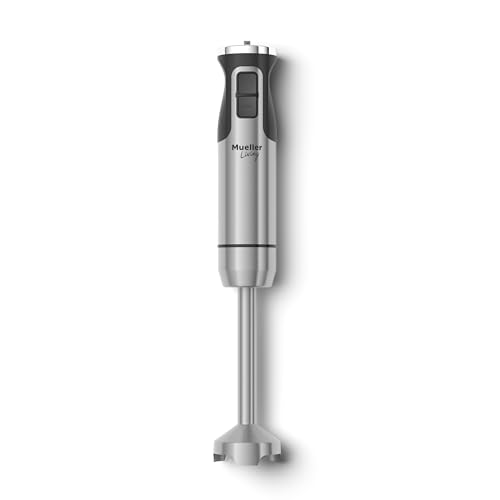
Best Overall: Mueller Immersion Blender
Few products in any kitchen category rack up review numbers like this one, and the reason is straightforward: it's a slim, genuinely powerful immersion blender that covers the basics extremely well without a premium price tag. The 8-speed dial plus a dedicated Turbo mode gives you real control from gentle mixing to heavy-duty blending.
- Speed settings: 8 speeds plus Turbo mode
- Shaft: Stainless steel, dishwasher-safe
- Best for: Everyday soups, smoothies, and sauces
Pros:
- Splash-reducing blade housing keeps counters cleaner
- Ergonomic, non-slip grip stays comfortable during longer blends
- Dishwasher-safe shaft makes cleanup genuinely simple
Cons:
- No attachments included beyond the blending shaft itself
- Motor housing isn't submersible, only the shaft
Best Premium: Vitamix 5-Speed Immersion Blender 3-Piece Bundle

This bundle pairs a 625-watt immersion blender with a whisk attachment and a storage case, at around $170. The five speed settings give finer control than a basic two-speed model, and the stainless-steel, four-pronged blade is built for tougher ingredients.
- Speed settings: Five speeds
- Attachments: Whisk attachment and storage case included
- Best for: Cooks who want a powerful blender with a whisk and tidy storage
Pros:
- 625-watt motor with five speed settings
- Whisk attachment can whip cream, eggs and batters
- Ergonomic one-handed design and a 5-foot cord
Cons:
- Costs significantly more than the Hamilton Beach 4-in-1 Electric Immersion Hand Blender, at around $35
- Whisk attachment and storage case add bulk if you don't plan to use them often
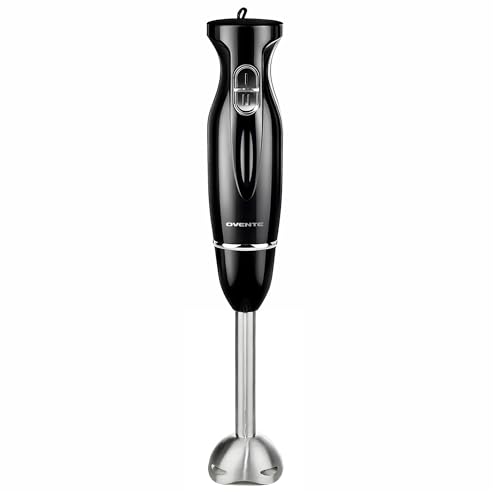
Best Budget: OVENTE Electric Corded Hand Blender
A 300-watt motor and two speeds might sound basic, but for everyday tasks like pureeing soup or blending a smoothie, this OVENTE model covers the essentials at a fraction of what premium brands charge. The fully detachable design means every part that touches food can go straight into the dishwasher.
- Motor: 300 watts, pulse-activated
- Speeds: 2 (Low to High)
- Best for: Budget-conscious buyers who mainly blend soups and smoothies
Pros:
- One of the most affordable options with a stainless steel shaft
- Fully detachable parts make cleanup straightforward
- Slim shaft fits most pots, bowls, and mixing cups
Cons:
- Only two speed settings compared to 8+ on premium models
- No attachments included
Immersion Blender vs. Countertop Blender: When Each Makes Sense
An immersion blender wins on convenience for anything you're already cooking in a pot, like soups, sauces, or gravies, since you can blend right where the food already is instead of transferring hot liquid into a separate pitcher. It's also far easier to clean and store, which matters if counter space or cabinet room is tight.
A countertop blender still has the edge for anything that needs to be fully smooth and uniform, like frozen drinks, nut butters, or large batches, since the enclosed blade and higher horsepower handle tougher ingredients more consistently than a handheld shaft.
Many home cooks end up using both: an immersion blender for quick, in-pot jobs and a countertop blender for anything that needs serious crushing power or a perfectly smooth finish.
Storage and cleanup also tip the scales toward an immersion blender for smaller kitchens. A countertop blender's pitcher and base take up permanent counter or cabinet space, while a stick blender breaks down into a couple of slim pieces that tuck into a drawer, which matters a lot in apartments or galley kitchens where every inch of storage counts.
Frequently Asked Questions
Is an immersion blender powerful enough to crush ice?
Most immersion blenders in the 200 to 400 watt range will struggle with ice and may damage the blade over time. If crushing ice regularly is a priority, look for a model rated specifically for it, usually 500 watts or higher with a reinforced blade.
Can I use an immersion blender directly in a hot pot on the stove?
Yes, most corded immersion blenders are designed for exactly this, as long as the motor housing itself stays above the liquid line. Always check the manufacturer's maximum submersion depth before blending directly in a hot pot.
How do I clean an immersion blender properly?
Most models have a detachable shaft that's dishwasher-safe, while the motor housing should only be wiped down with a damp cloth, never submerged. For a quick clean between uses, running the blender briefly in a cup of warm soapy water works well.
Conclusion
The Mueller Immersion Blender is the strongest all-around pick for most kitchens, offering real speed control and easy cleanup at a fair price. If you want a blender that comes with a whisk attachment and a storage case, the Vitamix bundle is worth the higher cost. And for anyone who just needs reliable performance on a tight budget, the OVENTE proves a good immersion blender doesn't have to be expensive to get the job done.