
Best Hangers for Sweaters: A Complete Buying Guide
Disclosure: We may earn a commission when you buy through links on this page, at no extra cost to you. As an Amazon Associate I earn from qualifying purchases. Learn more

Pull a favorite sweater off a regular hanger and you will often find two sharp bumps poking through the shoulders, or a neckline that has stretched a size wider than it should be. Standard hangers are built for shirts and jackets, where a narrow wire or thin plastic arm barely touches stiff woven fabric. Knitwear behaves differently. Wool, cotton, and cashmere knits stretch under their own weight, so the best hangers for sweaters need a wider, contoured shape, or a completely different hanging technique, to keep shoulders and necklines intact. This guide covers the hanger types actually built for knitwear, how to match width and curve to your sweaters, and when folding beats hanging altogether.


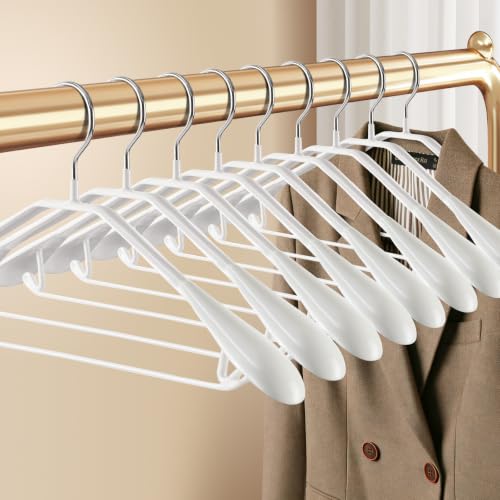
Types of Hangers Built for Sweaters
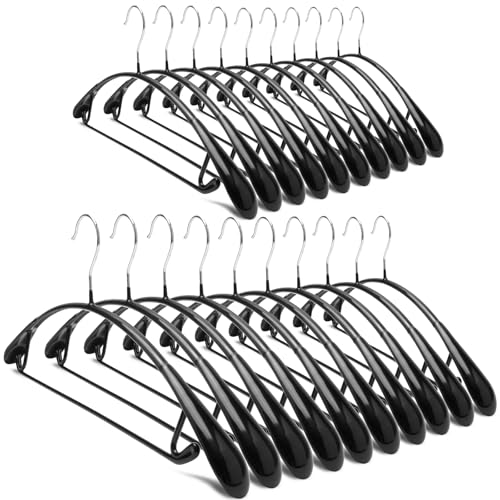
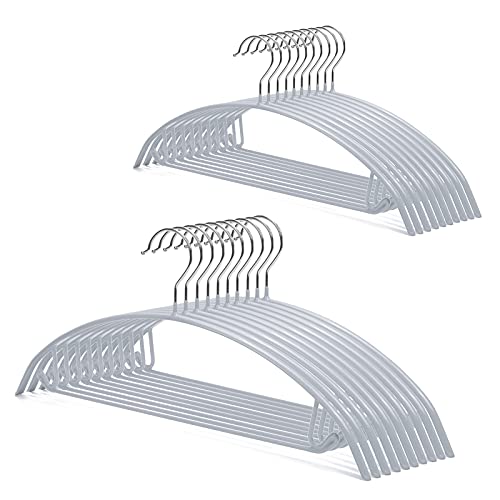
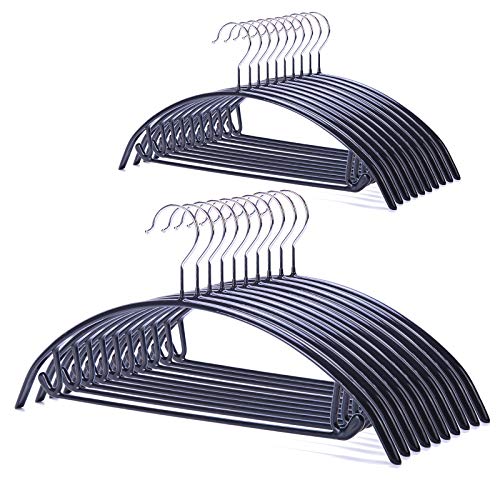
Not every hanger marketed for sweaters solves the same problem, and knowing what people mean when they search for the best hangers for sweaters helps narrow the field fast. Some are chosen for how gently they hold delicate knits, others for how much closet space they save.
Contoured Velvet and Flocked Hangers
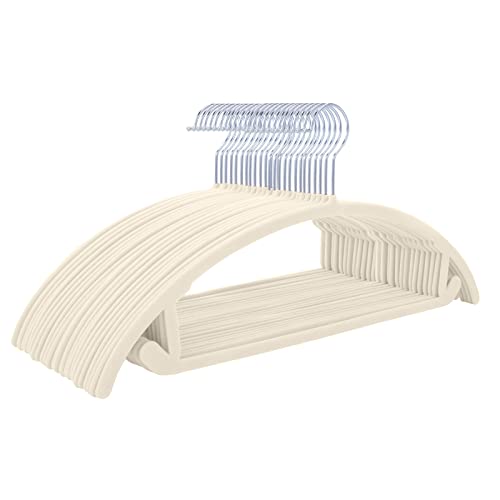
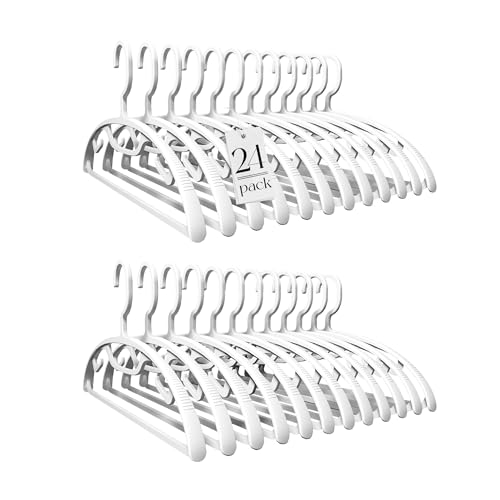
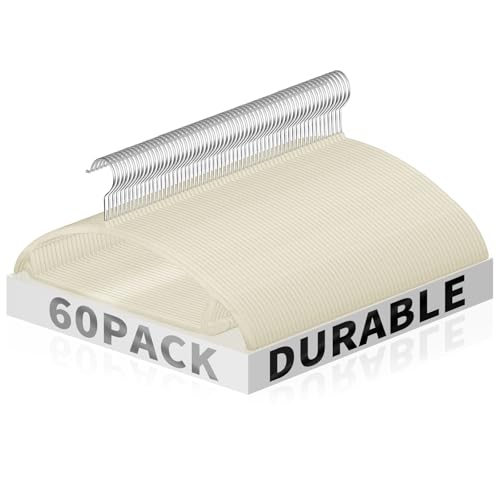
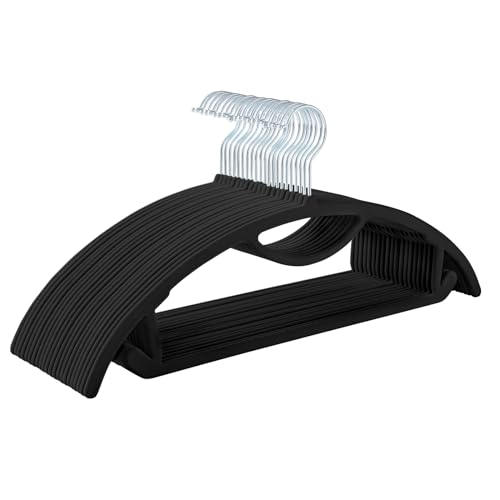
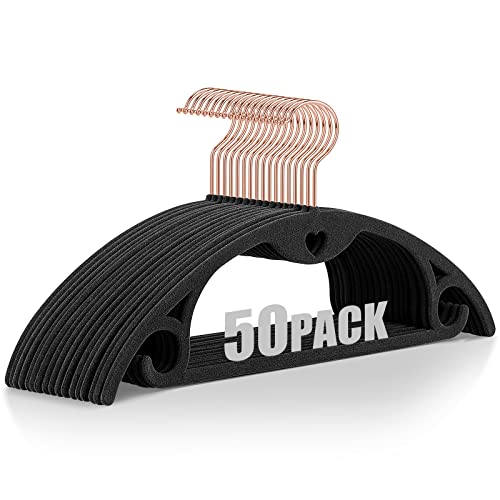
Velvet and flocked hangers have a thin, non-slip surface molded into a slightly curved shoulder shape. The flocking grips the fibers of a sweater so it will not slide off, and the slim profile means you can fit noticeably more hangers on a single rod. They work best for lighter to mid-weight knits, though a heavily loaded cardigan can still stretch on the thinner versions if the curve is too shallow.
Broad Wooden Hangers
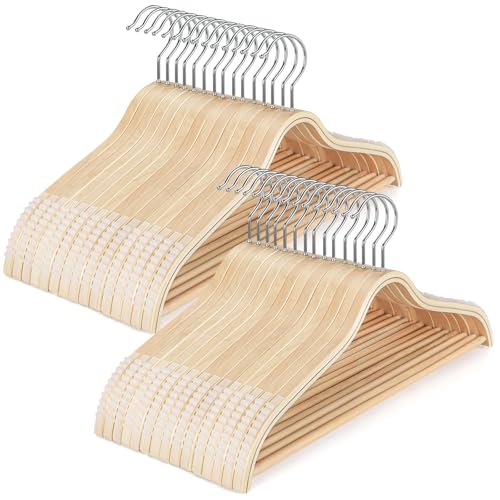
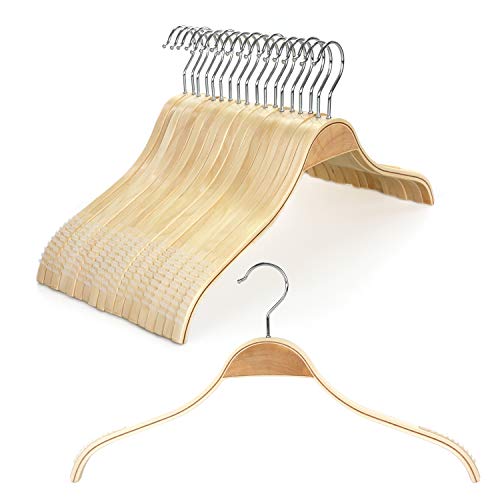
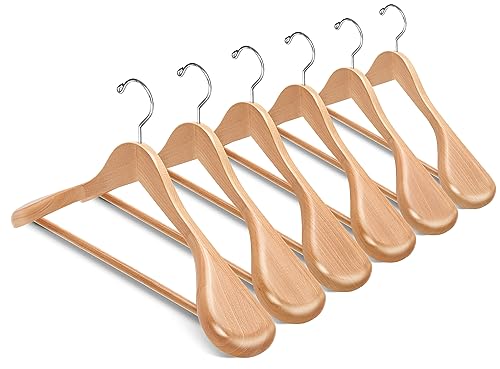
Wooden hangers with a wide, rounded arm distribute a sweater's weight across a larger surface area, which reduces the sharp pressure points that cause shoulder bumps. They are bulkier and take up more rod space than velvet options, so they suit closets with room to spare more than tightly packed ones. If you are building out a whole closet with this style, our guide to choosing wooden hangers covers grain, finish, and width in more depth.
Padded and Cedar Options
Padded hangers wrap a foam or fabric core around the arm, which cushions delicate or heavily textured knits like mohair or chunky cable stitch. Cedar hangers add a different benefit: the wood naturally repels moths and absorbs excess moisture, which matters for wool sweaters stored through a humid season. Neither style is strictly necessary for every sweater, but both solve specific problems that plain plastic hangers do not.
Matching Hanger Width and Curve to Your Sweater
Once you know the general categories, the actual fit of the hanger to the garment matters more than the material it is made from.
Shoulder Width and Contour
A hanger that is even an inch narrower than the sweater's shoulder seams will pull the fabric inward and create a visible point. Lay a sweater flat and measure shoulder seam to shoulder seam, then look for a hanger within that range with arms curved enough to mirror a natural shoulder line rather than sitting flat and straight.
Weight Capacity for Heavier Knits
Cable knits, wool cardigans, and anything oversized carry real weight, and a hanger built for a light blouse will bow or snap under that load over time. Sturdier wood or reinforced plastic with a rated weight capacity holds up better for these pieces than the thin wire-core hangers that come free with dry cleaning. When you shop for the best hangers for sweaters in this weight range, checking the listed capacity matters more than the brand or finish.
The Fold-Over Technique That Protects Any Sweater
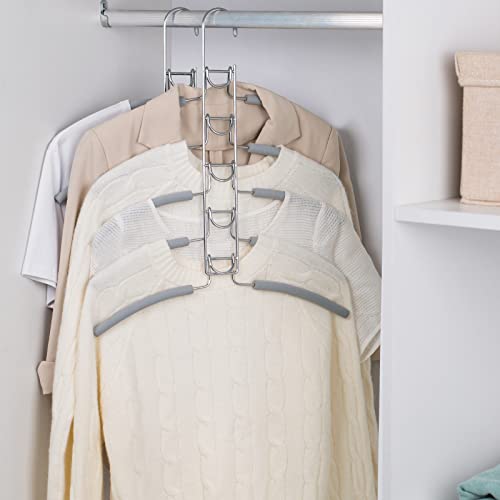
Even a well-chosen hanger will not fully protect a sweater if it hangs by the shoulders alone, which is why many closet organizers rely on a fold-over method instead of a standard hang. It works with almost any hanger that has a horizontal crossbar.
- Lay the sweater flat and fold it in half lengthwise, sleeves aligned, so it forms a long V shape
- Rest the hanger's hook in the center fold, with the crossbar sitting where the sleeves meet the body
- Drape one side of the sweater over one arm of the hanger and the other side over the opposite arm
- Tuck the folded edge under the crossbar if the hanger has one, which locks the sweater in place
This spreads the weight across the fold instead of the shoulder seams, which is why it prevents stretching even on hangers that are not specifically contoured for knitwear. It is worth learning even if you already own the best hangers for sweaters, since the technique adds protection no hanger shape alone can match.
Knowing When to Hang and When to Fold Instead
Not every sweater belongs on a hanger at all, no matter how good the hanger is. Heavier knits and anything made from delicate fibers like cashmere tend to hold their shape better folded flat on a shelf or in a drawer, since gravity pulls constantly on hanging fabric even when the weight is distributed well. If cashmere care is a regular concern in your closet, our guide to cashmere fiber care covers handling tips that apply to sweaters as well as blankets.
Even the best hangers for sweaters cannot protect a sweater that is already damp or freshly washed, wet fibers lose much of their strength and will stretch permanently under their own weight. Let it dry flat first, then decide whether to hang or fold it once it is completely dry. For sweaters you are folding long term, lining the shelf or drawer helps prevent snagging on rough wood or shelf edges, and a simple shelf liner makes that easier to keep clean.
Frequently Asked Questions
Do sweater hangers actually prevent shoulder bumps?
The best hangers for sweaters reduce shoulder bumps significantly compared to a thin wire or narrow plastic hanger, since a wider, contoured shape spreads weight over a bigger curve. They will not eliminate bumps entirely on heavy knits unless you also use the fold-over technique.
Is wood or velvet better for sweater hangers?
Wood offers more structure and support for heavier sweaters, while velvet and flocked hangers save closet space and grip fabric so it will not slip. Neither is universally better, it depends on how much rod space you have and how heavy your sweaters are.
Should sweaters be folded instead of hung?
Many closet organizers recommend folding heavier or more delicate sweaters rather than hanging them, since hanging always puts some gravitational pull on the shoulders. Lighter knits that hold their shape well can be hung safely, especially with the fold-over method.
How do you fix shoulder bumps on a sweater that's already stretched?
Hand wash or steam the sweater, then reshape the shoulders gently with your fingers while it is damp. Lay it flat on a towel to dry, smoothing the fabric back into its original shape as it sets.
Can you use regular wire hangers for sweaters?
Wire hangers are the worst choice for sweaters because the thin metal concentrates all the weight into two narrow points at the shoulders. If it is the only option available, use the fold-over technique to at least distribute the weight away from those points.
Is it safe to hang a damp or wet sweater?
No, wet fibers stretch far more easily than dry ones and will not fully recover their shape. Always lay a wet or freshly washed sweater flat to dry before deciding whether to hang or fold it.
Keeping Your Knitwear in Shape
Choosing the best hangers for sweaters comes down to matching hanger width and curve to each garment, picking a material that suits your closet space, and knowing when a sweater is better off folded than hung at all. Combine the right hanger with the fold-over technique for anything heavier, and your knitwear will hold its shape season after season.