
Best Expandable Garden Hose With Holders: A Complete Buying Guide
Disclosure: We may earn a commission when you buy through links on this page, at no extra cost to you. As an Amazon Associate I earn from qualifying purchases. Learn more

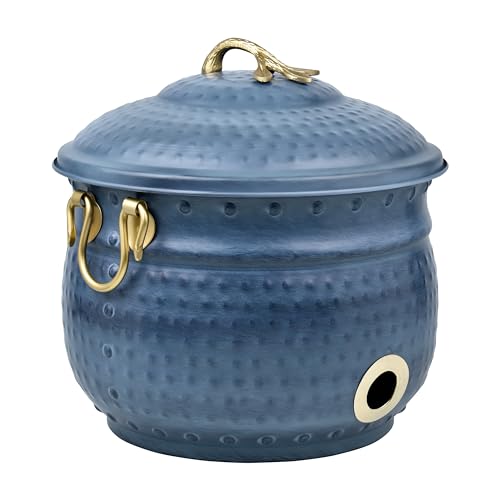
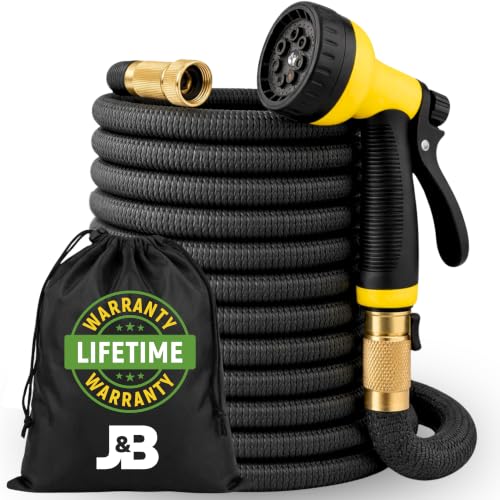
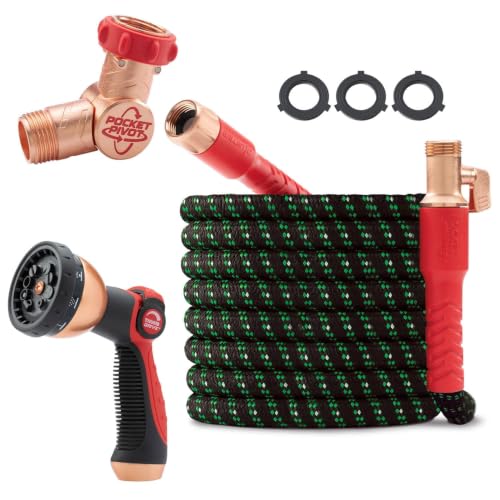
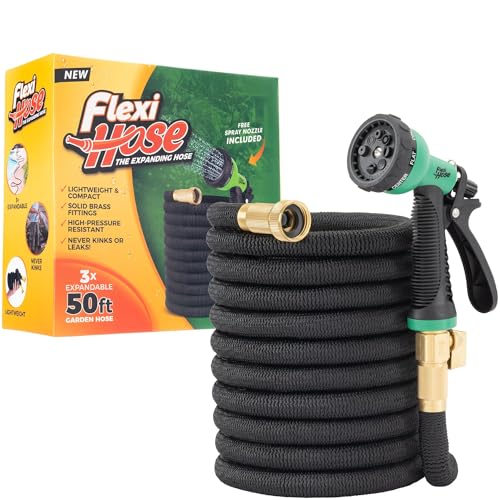
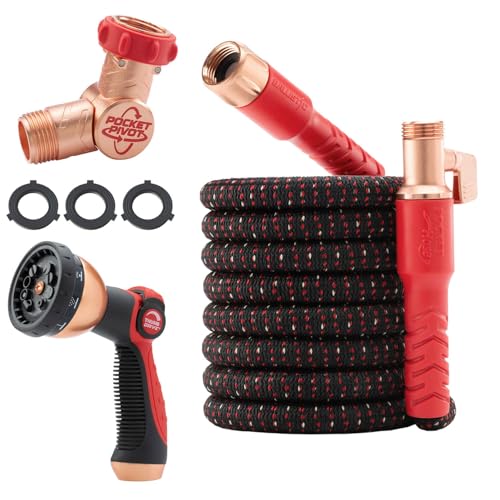
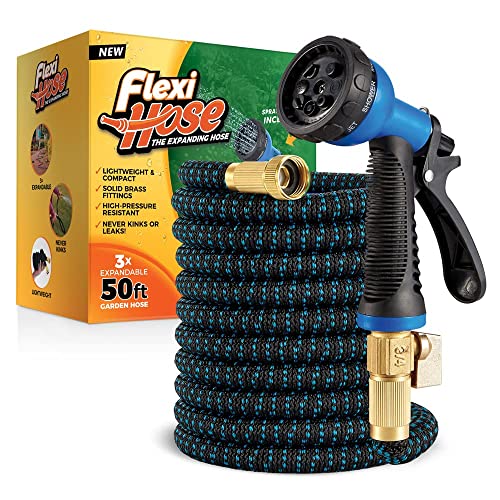
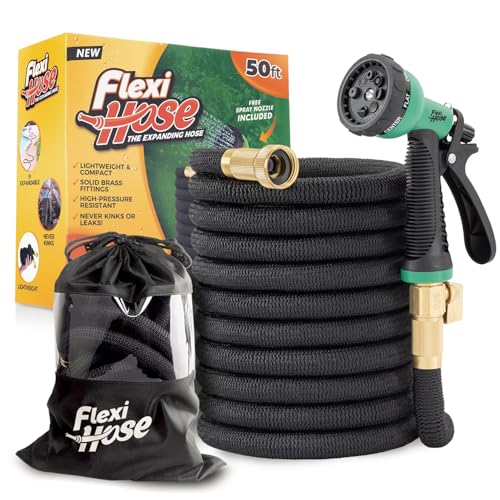
Finding the best expandable garden hose with holders means shopping for two things at once: a hose that shrinks down for easy handling and a reel, hook, or cart that keeps it off the lawn between waterings. Most shoppers focus only on the hose and treat storage as an afterthought, then end up with a tangled coil baking in the sun next to the porch. A holder built for an expandable hose does more than tidy up your yard. It protects the inner rubber tubing from kinks, keeps the outer fabric sleeve from fraying against pavement, and makes hooking up the hose a one-hand job instead of a wrestling match. This guide walks through how to pick a holder that actually fits your hose, your wall, and the size of your yard.

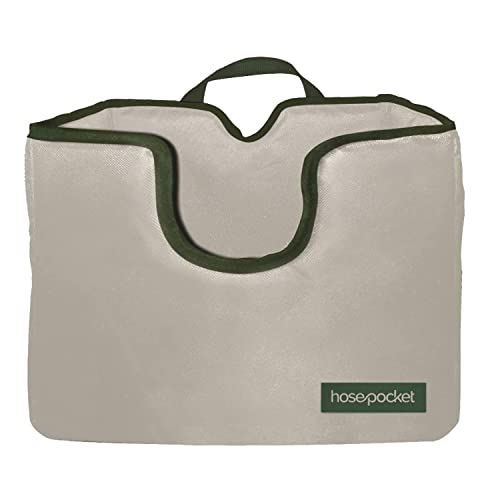
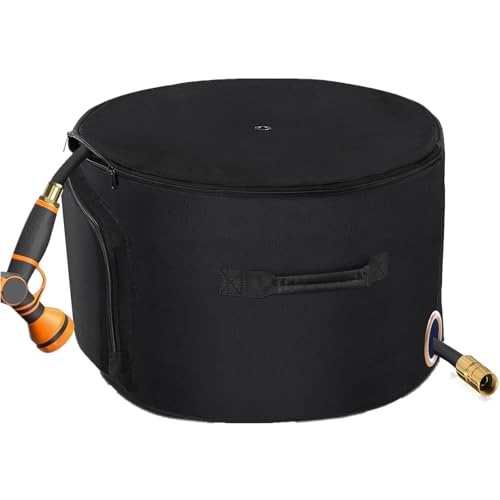
Matching Holder Capacity to Your Hose
Every hose holder is rated for a maximum length, and that rating usually refers to the hose's expanded length, not its compact size. A holder built for 50 feet of expanded hose will overflow if you try to force a 100-foot hose into it, leaving loops hanging loose and dragging on the ground. Check the manufacturer's capacity spec before buying, and round up slightly if you plan to upgrade to a longer hose later.
Diameter matters too. Expandable hoses vary in their contracted and expanded diameter depending on brand and pressure rating, so a hose guide or reel drum sized for a garden hose with holder capacity in mind will feed the hose smoothly without pinching the fabric jacket. A guide arm or roller at the intake point is worth prioritizing, since it keeps the hose centered as it winds and prevents the sharp folding that causes leaks over time.
Mounting Style and Base Stability
Wall brackets need to sit on a solid surface, whether that's masonry, siding with proper anchors, or a wood post. Freestanding carts need a wide enough base or wheel stance that they won't tip when the hose is pulled at an angle. Either way, test the stability before committing to a spot near your spigot.
Why Loose Coils Wear Out Expandable Hoses Faster
Expandable hoses rely on an inner elastic tube surrounded by a woven fabric sleeve, and that combination is more sensitive to sun and abrasion than a rigid rubber or vinyl hose. Left coiled on concrete or gravel, the fabric sleeve rubs against grit every time someone steps on it or drags it across the yard, which slowly wears through the weave and exposes the inner tube to punctures.
UV exposure is the other major factor. Constant sunlight breaks down the elastic polymer inside the hose over a season or two, making it stiffer and more prone to splitting at the fittings. A holder that keeps the hose off the ground and, ideally, shaded or coiled compactly slows that breakdown considerably. Tangle-free winding also matters for a different reason: a kinked expandable hose under pressure is far more likely to blow out at a weak spot than a straight one, since the inner tube is already stretching to its rated limit when water flows.
Storing the hose properly after each use, rather than leaving it stretched out in the sun, is one of the simplest ways to extend its working life without spending extra money on a thicker-walled hose.
Wall Reels, Simple Hooks, and Rolling Carts
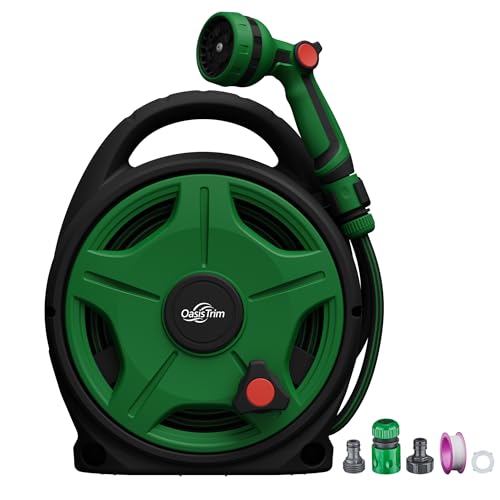
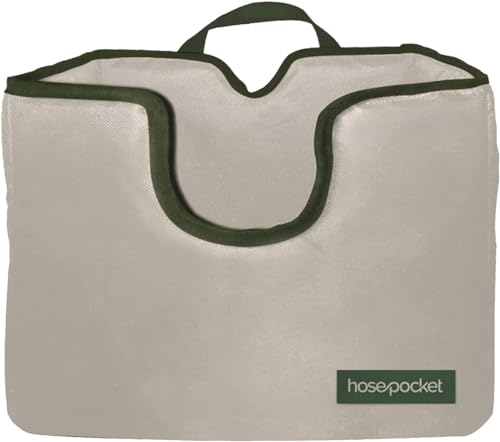
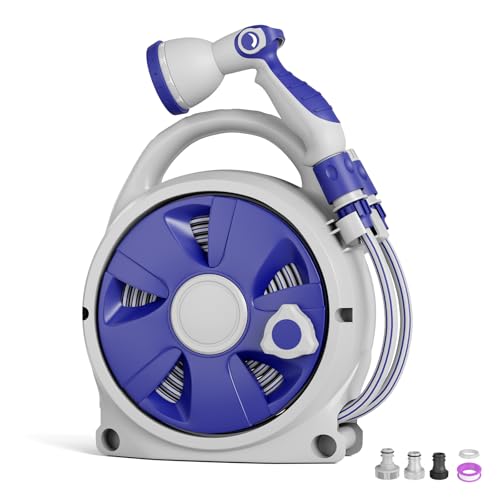
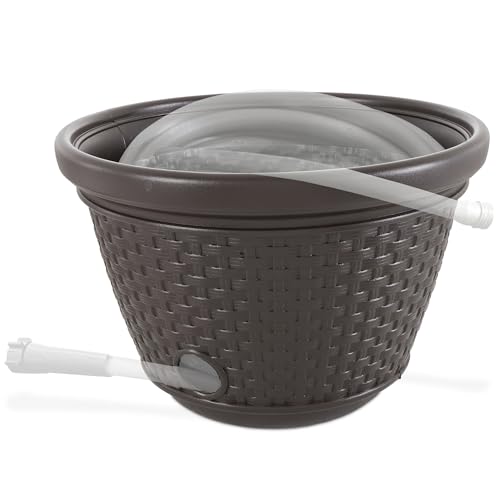
Three storage styles dominate the market for anyone assembling the best expandable garden hose with holders setup, and each suits a different watering routine. Wall-mounted reels wind the hose onto a drum with a crank or auto-retract spring, which keeps loops uniform and off the ground entirely. They work best when your spigot is on an exterior wall you're comfortable drilling into.
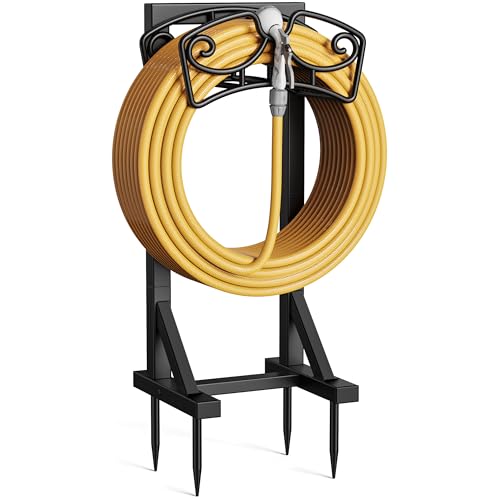
Simple wall hooks or hangers are the lightest option. They don't wind the hose for you, so you coil it by hand and hang the loops over an arm or bracket. This suits shorter hoses and anyone who wants a low-cost, no-moving-parts solution, though loose coiling is less tidy than a reel.
Rolling carts hold a spool on wheels that you can push around the yard, and some double as a stand near a detached spigot or hydrant. They're heavier and take up floor space, but they're the better pick for larger properties where the hose needs to reach multiple garden beds and dragging it back to a single wall mount every time is impractical.
Installing a Wall-Mounted Reel Without Damaging the Wall
Pick a spot within easy reach of the spigot, ideally at a height where you can wind the reel without bending over. Mark the bolt pattern, then check what you're drilling into. Masonry, brick, and concrete need plastic or metal anchors rated for the bracket's weight plus the full hose when wet, since a soaked 100-foot hose is considerably heavier than it looks.
Wood siding or a fence post generally takes lag screws directly, but confirm you're hitting a stud or solid framing rather than just the siding panel. Use a level when marking the second and third holes so the bracket sits flush; a reel mounted even slightly off level tends to pull the hose to one side as it winds, which stresses the fabric sleeve unevenly. Once mounted, give the bracket a firm tug test before connecting the hose, and tighten any retraction spring tension gradually rather than cranking it to maximum on day one.
Sizing Your Storage System to Your Yard
A small patio, balcony, or townhouse yard usually does fine with a compact wall hook or a short-capacity reel tucked near the back door, since the hose only needs to cover a modest area and doesn't need heavy-duty wheels. If you're comparing options for a smaller footprint, the general buying considerations for expandable hoses are worth reviewing alongside the holder itself, since a shorter, lighter hose pairs naturally with a simpler mount.
Larger yards with multiple watering zones benefit more from a rolling cart or a reel with a longer capacity rating, since matching the best expandable garden hose with holders combination to your actual square footage means you're less likely to be stuck stretching a hose beyond its comfortable reach. Anyone leaning toward a longer hose for a bigger property should size the holder to match that length rather than reusing a reel built for a shorter one, since an undersized drum will leave excess hose coiled loosely on the ground anyway.
Frequently Asked Questions
Do I need a special holder for an expandable hose, or will any garden hose reel work?
Most reels work with expandable hoses, but a smooth guide arm and a drum sized for the hose's expanded length help the most. Rough or narrow guides can pinch the fabric sleeve over time.
Can I use a wall-mounted reel with an auto-retract expandable hose?
Yes, though check whether the hose already has a self-winding reel built in. Pairing a self-retracting hose with a separate crank reel is usually unnecessary and can cause the hose to bind.
How much weight does a wall bracket need to support?
Enough to hold the hose fully saturated with water, which can weigh noticeably more than the dry hose alone. Check the bracket's rated capacity and add a margin for a longer hose.
Is a rolling cart better than a wall mount for a large yard?
Generally yes, since a cart lets you move the water source closer to where you're working instead of dragging a long hose from a single fixed point across the whole property.
Will leaving an expandable hose on the ground without a holder ruin it?
Not immediately, but repeated sun exposure and dragging across rough surfaces shortens its lifespan considerably faster than storing it coiled on a reel or hook after each use.
Do freestanding hose holders need to be anchored to the ground?
Lightweight carts usually don't, but they should have a wide, stable base so they don't tip over when the hose is pulled at an angle or the spool is full.
Can I mount a hose holder on vinyl siding?
It's better to anchor into the framing or a solid backer board behind the siding rather than the panel itself, since vinyl alone typically won't support the combined weight securely.
Getting Your Storage Setup Right the First Time
A holder that matches your hose's length, your wall or ground surface, and the size of your yard pays off in fewer kinks, less UV wear, and a tidier space near the spigot. Take the extra few minutes to check capacity ratings and mounting requirements before buying, since swapping a mismatched holder later costs more time than getting it right at the start.