
The Best Essential Oil Diffusers: Buying Guide and Top Picks
Disclosure: We may earn a commission when you buy through links on this page, at no extra cost to you. As an Amazon Associate I earn from qualifying purchases. Learn more

The best essential oil diffusers: tank size, timers, noise and safety explained, plus three ultrasonic picks.
An essential oil diffuser fills a room with a gentle scent and soft mist, turning a bedroom, office or living room into a calmer space. The best ones run quietly, last through the night and are easy to clean, while cheap ones sputter, leak or leave oily residue. This guide to the best essential oil diffusers explains what to look for and shares three picks for different needs and budgets.
We start with our top picks, then cover how to choose a diffuser, the main types, tips for better results and answers to common questions. Every diffuser in the table above is sold new on Amazon US. A safety note: some essential oils can irritate people with asthma or allergies and can be harmful to pets, especially cats and birds, so ventilate the room, keep diffusers away from pets and ask your doctor or veterinarian if you have concerns.





Our Top 3 Picks at a Glance
Our picks are the Pure Daily Care Ultimate diffuser and oil set for most people, the ASAKUKI 500ml diffuser for value and the InnoGear 400ml diffuser gift set for first time buyers. All three are ultrasonic diffusers with timers and LED lights.
We compared tank size, run time, timer settings, noise, safety shut off, ease of cleaning and included extras, along with the overall pattern in owner feedback. We did not use these diffusers ourselves; the notes reflect maker specifications.
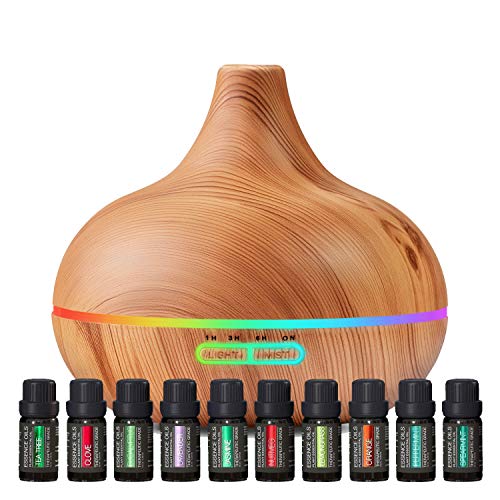
Best Overall: Pure Daily Care Ultimate Aromatherapy Diffuser and Essential Oil Set
The Pure Daily Care set suits people who want a complete starter kit with a reliable diffuser, at around $27. It includes an ultrasonic diffuser that atomizes oils with vibration rather than heat, so it runs quietly without altering the oils, plus ten 10ml essential oils: lavender, eucalyptus, tea tree, orange, peppermint, lemongrass, jasmine, nutmeg, clove and spearmint.
Two strengths stand out: timer settings of 1, 3 or 6 hours with auto shut off, and a built in LED light ring that cycles colors or stays on one and works independently as a night light. Everything needed to start comes in one box. The limitation is tank capacity compared with 500ml models, so it may need refilling for all night use. Skip it if you want the longest possible run time.
Best Value: ASAKUKI 500ml Essential Oil Diffuser
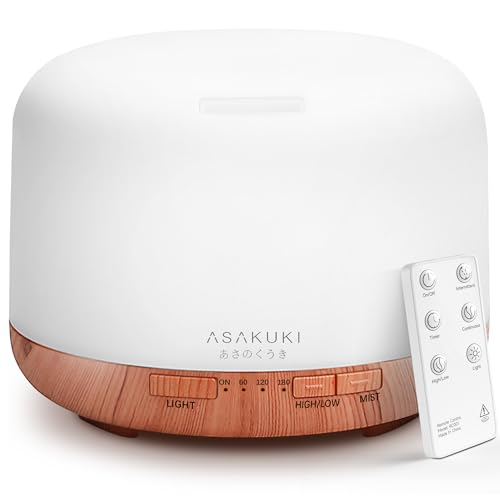
The ASAKUKI diffuser is for anyone who wants a large tank and quiet operation for very little money, at around $20. It has a 500ml water tank, seven LED light colors, multiple mist modes and a remote control that works from up to 16.5 feet, according to ASAKUKI.
Its strengths are quiet running, with ASAKUKI listing noise below 23 dB, and mist and light functions that work separately, so you can turn the light off at night. It is made of BPA free PP material and comes in a gift box. The trade off is that no oils are included. Skip it if you want a ready to use kit with oils.

Best for Beginners: InnoGear 400ml Aromatherapy Diffuser Gift Set
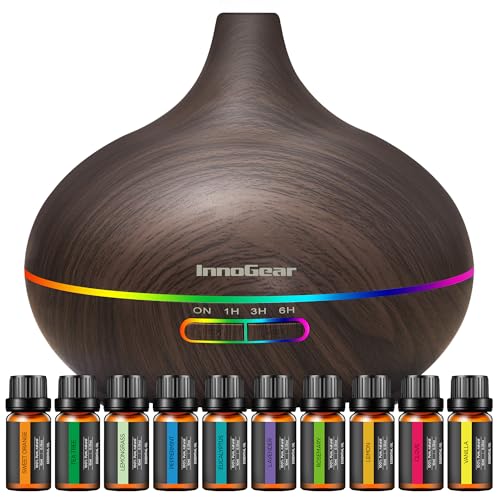
The InnoGear gift set suits first time buyers who want a simple diffuser and oils, at around $30. It offers four timer settings (continuous, 1, 3 and 6 hours), two mist levels and automatic shut off when time is up or the water runs out, and it includes ten 10ml essential oils.
The appeal is easy, safe operation: the mist is cool to the touch, the large base makes cleaning easier and a soft LED ring will not dazzle at night. InnoGear advises refilling with a measuring cup rather than under the tap. The limitation is a slightly smaller tank than 500ml models. Skip it if you already own oils and want the lowest price.

How to Choose the Best Essential Oil Diffusers: Buying Guide
The best essential oil diffusers match your room size, run long enough for your routine, stay quiet and clean easily. Here is what to compare.
Room Size and Coverage
Small diffusers with 100 to 200ml tanks suit bedrooms, offices and bathrooms. Larger 400 to 500ml diffusers cover living rooms and run longer. Waterless nebulizing diffusers, like the 3,000 square foot waterless model in the table, spread scent over larger areas without adding humidity.
Place diffusers centrally and at waist height or higher for best scent distribution.
Doors and airflow affect how far scent travels. A diffuser in a closed bedroom fills the room faster than one in an open plan living area, so match diffuser size to the actual space the scent needs to reach.
Avoid placing diffusers directly under air vents, which can blow mist away before scent spreads, or right beside beds, where concentrated mist may feel too strong.
Water Tank Size and Run Time
Tank size determines run time. A 500ml tank, like ASAKUKI's, can run through the night on lower settings, while smaller tanks need refilling more often. Timer settings, such as 1, 3 and 6 hours, let you control how long scent is released.
Auto shut off when the water runs out is an important safety feature found on most models.
Intermittent mist modes, which alternate on and off, stretch run time and keep scent subtle. Many people prefer intermittent mode at night for a lighter fragrance.
Empty leftover water after each use rather than topping up old water, which keeps the tank fresh.
Energy Use and Operating Cost
Ultrasonic diffusers use little electricity, typically a few watts to around 12 watts, so running costs are low. The main ongoing cost is essential oils. Starter kits with oils, like Pure Daily Care and InnoGear, offer value for beginners.
Buy quality oils in small bottles and try several scents before investing in larger sizes.
Store oils in dark glass bottles away from heat and sunlight, since light and heat degrade them over time. Most oils keep their scent for a year or more when stored well.
Diffuser Type (Ultrasonic, Nebulizing, Evaporative)
Ultrasonic diffusers use water and vibration to create a fine mist and are the most common. Nebulizing or waterless diffusers atomize pure oil for stronger scent but use more oil. Evaporative diffusers use fans and pads and are simple but less consistent.
Choose ultrasonic for everyday use, nebulizing for strong scent in large spaces and evaporative for simple, low cost options.
Ultrasonic diffusers also add a small amount of humidity, which can be pleasant in dry winter air. In humid rooms, a waterless diffuser avoids adding moisture.
Nebulizers also need occasional cleaning of the glass atomizer to prevent thick oils from clogging it.
Smart Controls and Remotes
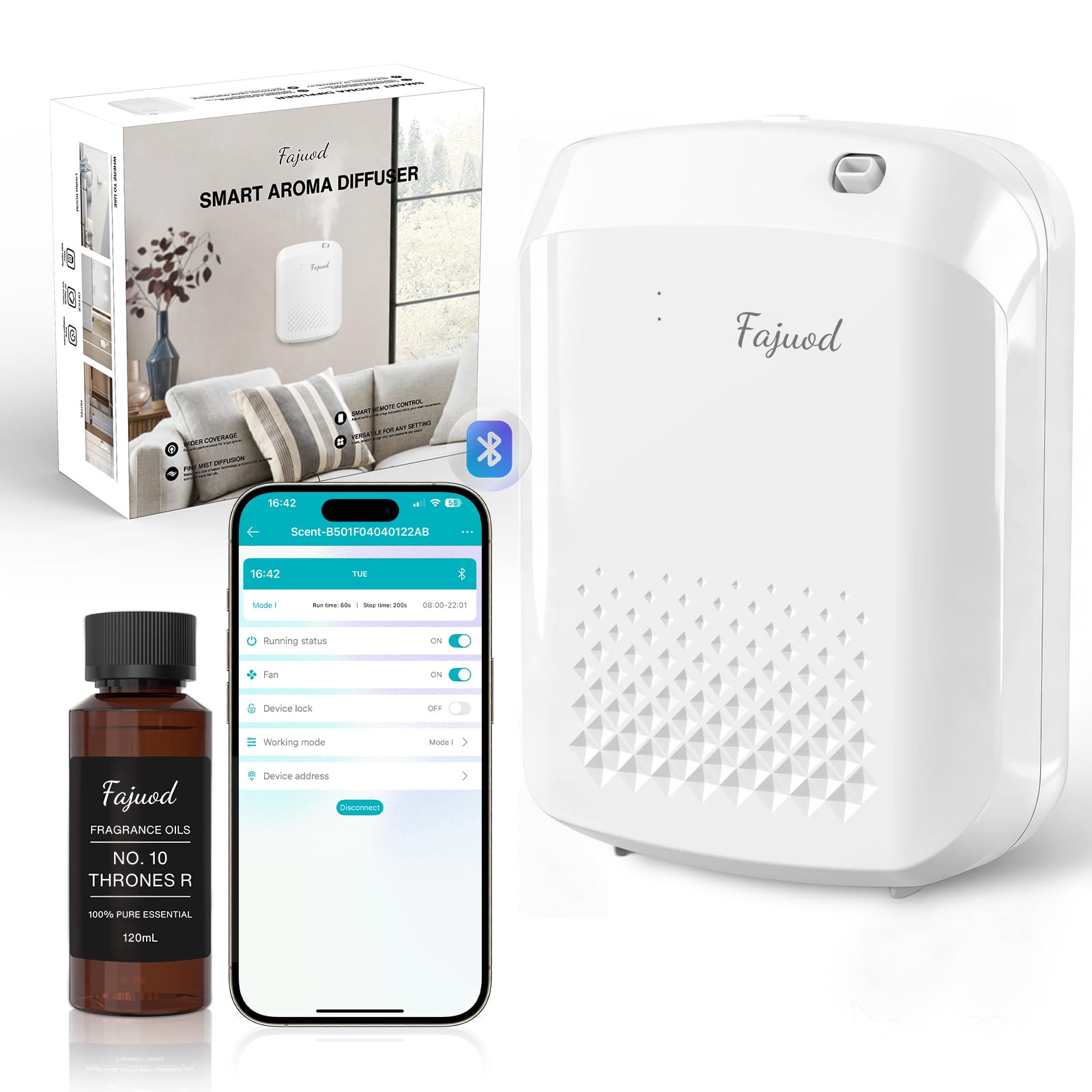
Remotes, like ASAKUKI's, and app controls on some models let you adjust mist and lights without getting up. Smart plugs can add scheduling to any diffuser. Simple button controls are fine for most bedrooms.
Choose remote or smart controls if you place diffusers high on shelves or want routines.
A remote also helps for diffusers placed on high shelves, out of reach of children and pets.
Noise Level (dB) and Sleep Mode
Quiet operation matters for bedrooms. ASAKUKI lists noise below 23 dB. Look for intermittent mist modes, light off options and soft bubbling sounds rather than loud beeps.
Turn off LED lights at night if they disturb sleep, or use them as a soft night light.
Some diffusers beep when turning on or off; if you are sensitive to sound, check owner comments for beeping and look for silent modes.
Place bedroom diffusers a few feet from the bed so the gentle sound and mist are pleasant rather than distracting.
Types of Essential Oil Diffusers
Diffusers fall into four main groups by size and features. Here is who each suits.
Most homes do well with one large ultrasonic diffuser for living spaces and a small decorative one for the bedroom or office.
Small Room Units
Compact ceramic and glass diffusers with 80 to 200ml tanks, like the InnoGear ceramic and Lecdura glass models, suit bedrooms, desks and bathrooms. They look decorative and run quietly but need refilling more often.
Large Room/Whole Home Units
Large ultrasonic diffusers with 400 to 500ml tanks and waterless nebulizing diffusers cover living rooms and open spaces. Waterless units can scent large areas but use oil faster.
Portable Units
Small USB and battery diffusers suit cars, travel and offices. They are convenient but have short run times and small tanks.
Decorative and Smart Models
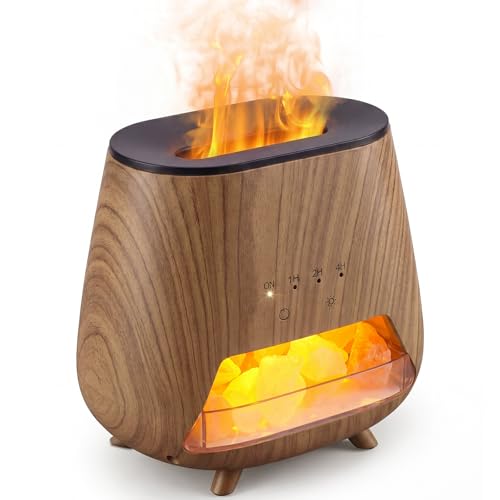
Glass dome diffusers with wood bases, like the glass reservoir models in the table, and salt lamp diffusers, like the OUWEDW 4 in 1, double as decor. Some add app control or smart home compatibility.
Glass reservoirs resist oil stains and odors better than plastic, and they are easier to clean, though they need careful handling.
Tips to Get the Most From Your Essential Oil Diffuser
Use room temperature water and fill only to the max line. Start with 3 to 5 drops of oil and adjust. Clean the diffuser weekly by wiping the tank and ultrasonic plate with a cotton swab dipped in rubbing alcohol or a vinegar solution, following the manual, since oil residue reduces mist. Run diffusers in ventilated rooms for limited periods, and keep them away from children and pets.
Rotate scents by time of day: bright citrus or peppermint in the morning, and softer lavender in the evening, if you enjoy them. Avoid diffusing for hours at a time; 30 to 60 minute sessions are usually enough to scent a room.
Use distilled or filtered water if your tap water is hard, since minerals can build up on the ultrasonic plate and create white dust.
FAQs
Do essential oil diffusers really work?
Essential oil diffusers effectively spread scent and some moisture into the air. Many people enjoy them for relaxation and ambiance. Claims about health benefits vary and are not established medical treatments; consult a doctor for health concerns.
Scent preferences are personal, so try small bottles of several oils before buying larger sizes.
How often should I clean my diffuser?
Clean diffusers weekly or after every few uses, and empty leftover water daily. Oil residue and mineral buildup reduce mist output and can grow bacteria. Follow the maker's cleaning instructions for your model.
Switching between oils without cleaning can mix scents, so rinse the tank when changing fragrances.
Where is the best place to put it?
Place the diffuser on a level, water resistant surface at least a couple of feet off the floor, away from electronics, wood furniture that could be damaged by mist and out of reach of children and pets. Central locations distribute scent best.
Keep diffusers out of bedrooms where pets sleep, and make sure pets can leave the room if the scent bothers them.
What size do I need for my room?
Choose 100 to 200ml diffusers for small rooms, 300 to 500ml for living rooms and bedrooms where you want overnight run time and waterless nebulizers for large open spaces. Bigger tanks mean longer run times.
For open plan homes, two smaller diffusers in different areas often work better than one large unit.
Is it expensive to run 24/7?
Ultrasonic diffusers use little electricity, so energy costs are low. Running constantly uses more oil and is not recommended for indoor air quality; use timers and intermittent modes instead.
Using the timer to run a diffuser for an hour before bed is a common, low cost routine.
Wrapping Up
The best essential oil diffusers match your room size and routine. The Pure Daily Care set is our best overall pick with oils included, the ASAKUKI 500ml diffuser offers great value with a large, quiet tank and the InnoGear gift set is an easy start for beginners. Use diffusers in moderation, ventilate and keep them away from pets.
For more home guides, see the best essential oil sets for diffuser, the best diffuser oils, the best dehumidifiers for home and the best home air purifiers. Then compare current prices in the product table above.


