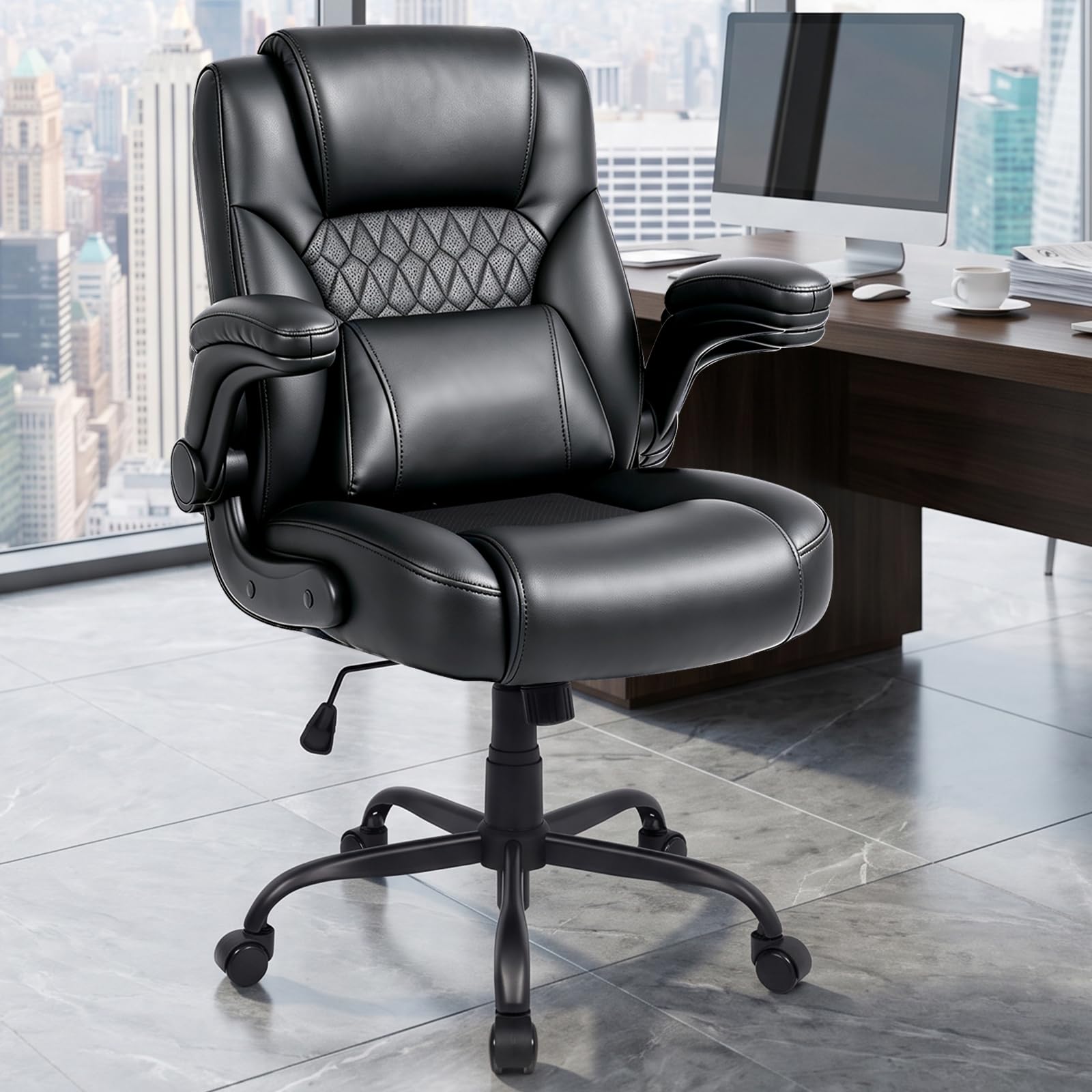
Best Ergonomic Office Chair: What Actually Matters Before You Buy
Disclosure: We may earn a commission when you buy through links on this page, at no extra cost to you. As an Amazon Associate I earn from qualifying purchases. Learn more

Our checklist for the best ergonomic office chair: lumbar, seat depth, build and warranty, plus three chairs that pass.
If you sit for six or eight hours a day, your chair shapes how your back, neck and hips feel by evening. A good ergonomic chair supports the natural curve of your spine, lets your feet rest flat and keeps your arms relaxed at the keyboard. A poor one looks supportive in photos but leaves you shifting and stretching by mid afternoon. To find the best ergonomic office chair for your body and workspace, we built a checklist around the details that matter after months of daily use, not just the first week.
This guide explains each criterion with clear good and poor thresholds, names three chairs that pass, gives you a quick checklist and the red flags to avoid, and covers specific needs such as small frames, mesh backs and budget picks. Use it to judge our picks or any other chair in the product table above.

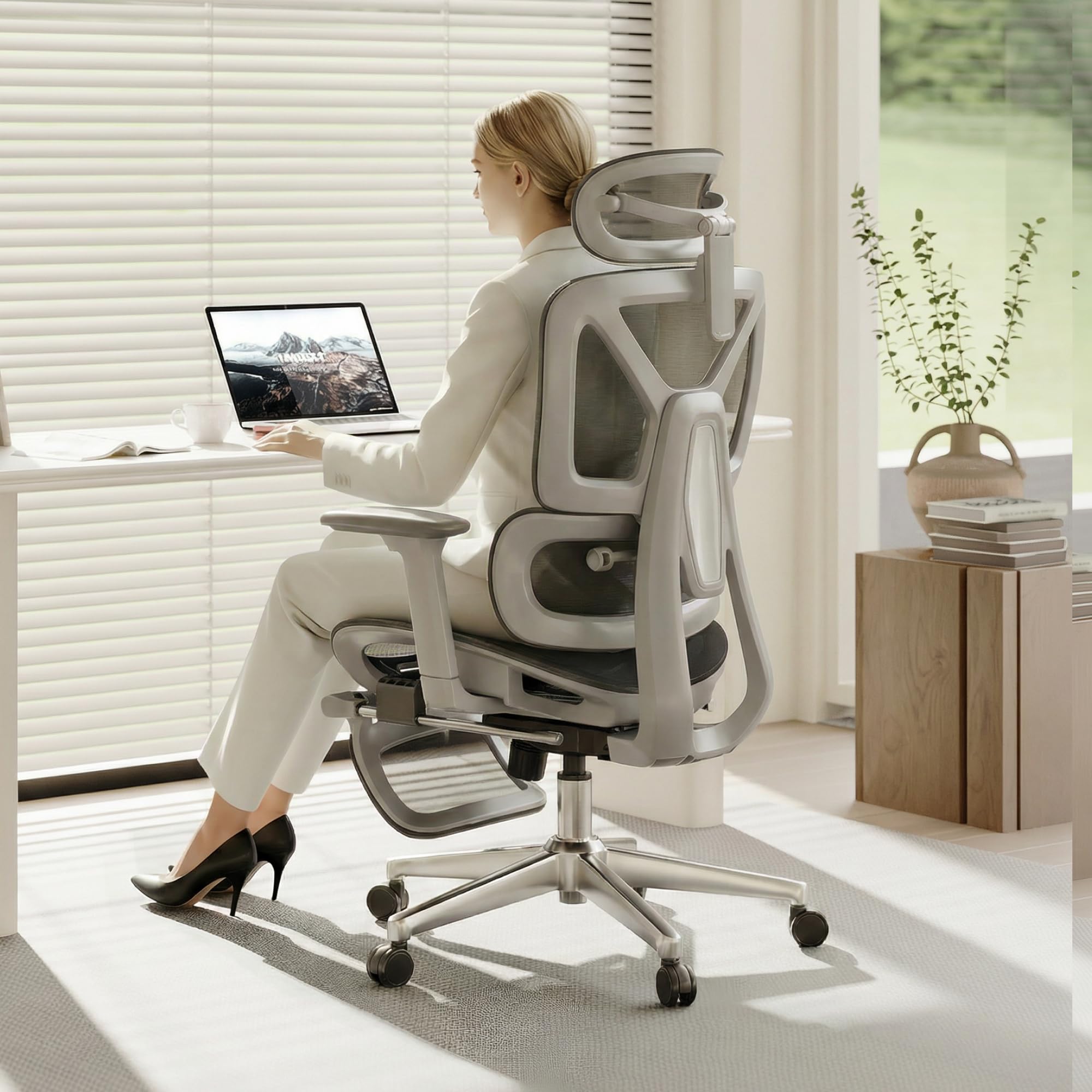
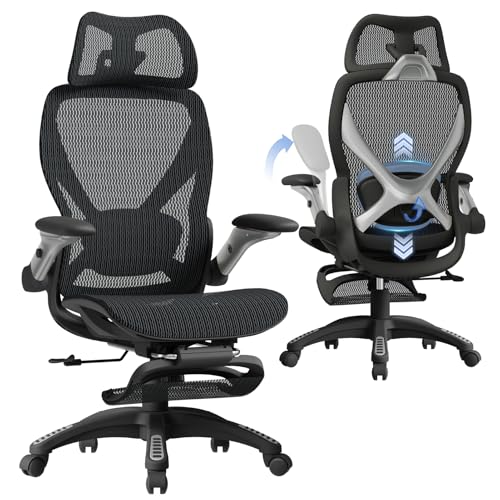
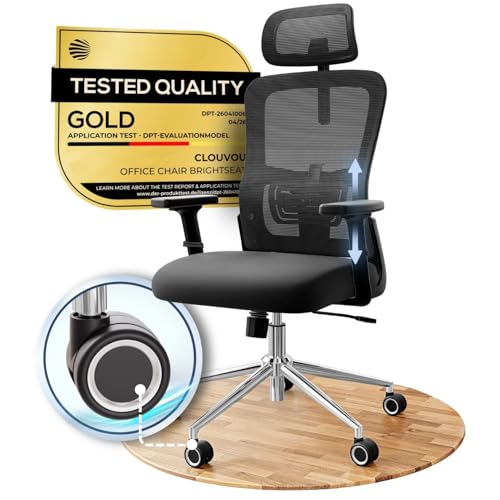
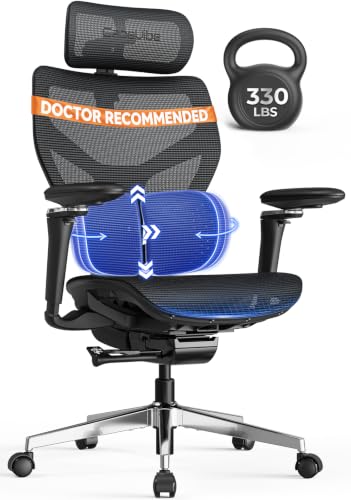
How We Evaluate Ergonomic Office Chairs
Every chair in the table was compared on seven criteria using maker specifications, product listings, warranty terms and patterns in owner feedback. We did not run our own sitting trials. Instead we focused on measurable details such as adjustment ranges, weight capacity, seat dimensions, materials and return policies, which predict how well a chair fits a range of bodies.
A chair that passes all seven adjusts to your height and desk, supports your lower back, stays comfortable through long sessions and holds up for years. Missing one criterion can be acceptable for a specific user, but chairs that miss on adjustability or build quality rarely stay comfortable long.
Keep in mind that no chair replaces good habits. Even the most adjustable chair works best with a desk at the right height, a monitor at eye level and regular breaks to stand and move. If you have ongoing back or neck pain, talk to a doctor or physical therapist about your setup.
Ergonomics and Adjustability
Adjustability is the heart of an ergonomic chair. At minimum, you should be able to change seat height so your feet rest flat and your knees sit near hip level, and adjust lumbar support so it meets the curve of your lower back. Better chairs add seat depth adjustment, armrests that move up, down, in and out, a headrest and a tilt mechanism with tension control and locking positions.
Seat depth matters more than many buyers realize. You want two to four fingers of space between the front edge of the seat and the back of your knees. Too deep and you slouch away from the backrest; too shallow and your thighs lack support. Good: adjustable lumbar, seat depth, 3D or 4D armrests and tilt lock. Poor: fixed lumbar, fixed arms and only height adjustment.
Recline and tilt features help you change posture during the day, which reduces strain. Some chairs allow the backrest to recline independently of the seat, while synchro tilt mechanisms move seat and back together in a natural ratio. Either can work, as long as you can lock the position you like.
Style and Room Fit
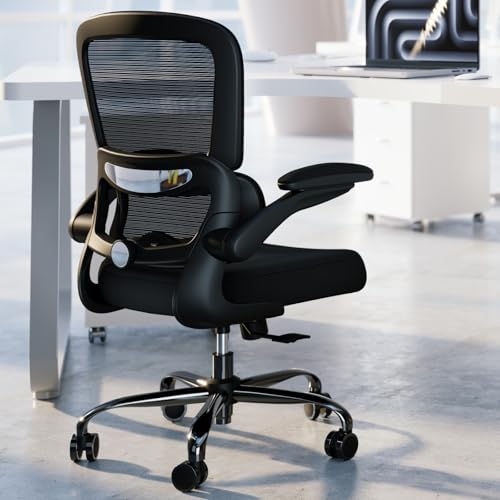
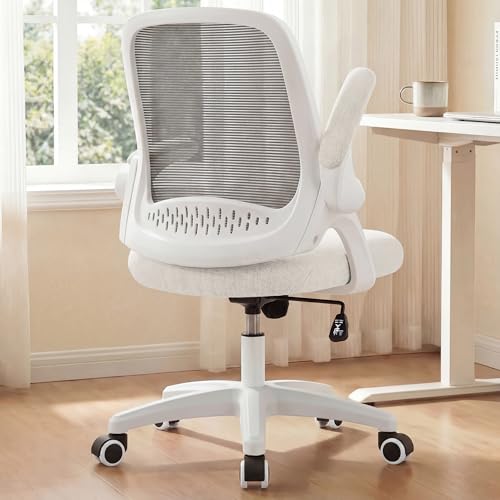
An office chair has to fit your room as well as your body. Measure the space under your desk and the floor area where the chair rolls, especially in small home offices. High back chairs with headrests can look bulky in compact rooms, while mid back mesh designs feel lighter.
Color and finish matter if the chair sits in a living area. Mesh comes in gray, white and black, and some brands offer upholstered seats in fabric or faux leather. Casters also matter: hard casters suit carpet, while softer rollerblade style wheels protect hard floors and roll quietly. Good: dimensions listed clearly and casters suited to your floor. Poor: vague sizing and hard plastic wheels on wood floors.
Shared spaces deserve extra thought. If your desk sits in a bedroom or living room, a chair with a slimmer profile and neutral color blends in better, while a dedicated office can handle a larger executive style chair. Leave enough clearance behind the desk to roll back and stand without hitting a wall or bed.
Warranty and Return Policy
Warranty length reveals how confident a maker is in its mechanism, gas cylinder and frame. Budget chairs often carry one year of coverage, while better chairs offer five years or more, and some premium brands cover key parts for a decade.
Returns matter just as much for chairs, because fit is personal. Look for a return window of at least 30 days and check whether you must pay return shipping on a large box. Good: multi year warranty on the frame and cylinder plus a 30 day return policy. Poor: short coverage and unclear return terms.
Build Quality and Frame
The base, gas cylinder and tilt mechanism carry your weight every day. Look for a metal or reinforced nylon base, a certified gas lift and a sturdy seat plate. BIFMA standards for office furniture are a useful sign that a chair was designed to commercial durability benchmarks, when the maker states it.
Weight capacity is another clue. Many quality chairs list 275 to 330 pounds, and big and tall models go higher. Choose a capacity comfortably above your weight. Good: listed BIFMA compliance or a high weight rating and metal components. Poor: no weight rating and flimsy plastic joints.
Materials and Upholstery
Mesh backs breathe well and keep you cool, which helps in warm rooms and long sessions. Mesh seats are cooler still but can feel firm. Foam seats with fabric covers feel softer and warmer, and high density or molded foam holds its shape longer than cheap foam.
Faux leather looks polished but can feel hot and may peel on budget chairs. If you sit long hours, many people prefer a mesh back with a cushioned seat. Good: tensioned mesh and dense foam. Poor: thin padding that flattens within months.
Cleaning differs by material too. Mesh can be vacuumed and wiped, fabric may need upholstery cleaner for spills, and faux leather wipes clean easily but shows wear at seams. Households with pets or kids often prefer darker mesh or fabric that hides marks.
Size, Dimensions, and Weight Capacity
Ergonomic chairs are not one size fits all. Check the seat height range against your height; shorter users need a low minimum height so feet reach the floor, while taller users need a high maximum and a tall backrest. Seat width and depth should match your hips and thighs.
Maker height recommendations help. Some chairs state a user height range, such as up to about 6 feet 5 inches. Good: published seat height range, seat dimensions and recommended user heights. Poor: no dimensions beyond the box size.
Assembly and Delivery
Most chairs arrive flat packed and take 15 to 45 minutes to assemble. Clear instructions, labeled parts and included tools make a big difference. Some chairs ship mostly assembled, which helps if you are short on time or tools.
Boxes are heavy, so check delivery options if you live upstairs. Good: simple instructions, few steps and included tools. Poor: missing parts reports and confusing diagrams.
Inspect every part as you unpack, especially the gas cylinder and base, and report damage right away so a replacement ships before the return window closes. Keep the box until you are sure the chair fits you.
3 Picks That Pass Our Checklist
These three chairs clear all seven criteria for the users we describe. Each is sold new on Amazon US with clear specifications and warranty terms.
We chose them to cover the most common needs: a fully adjustable chair with long warranty coverage, a value chair with a headrest and certified construction, and a premium chair with extensive adjustment points.
Best Overall: Duramont Ergonomic Office Chair
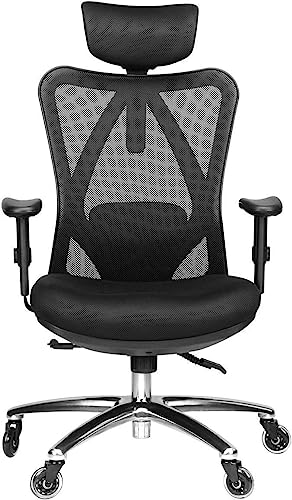
The Duramont ergonomic office chair suits home office workers who want broad adjustability and long warranty coverage for around $300. It features a breathable mesh back, a thick seat cushion, adjustable lumbar support that moves in, out, up and down, and a second lever that adjusts backrest angle separately from recline.
Two strengths stand out: a 330 pound weight capacity and a five year warranty, which is generous at this price. The rollerblade style wheels also roll quietly on hard floors. The limitation is the high back design, which may feel large in a compact room. Skip it if you want a slim, minimalist chair or need a very low seat height for a petite frame.
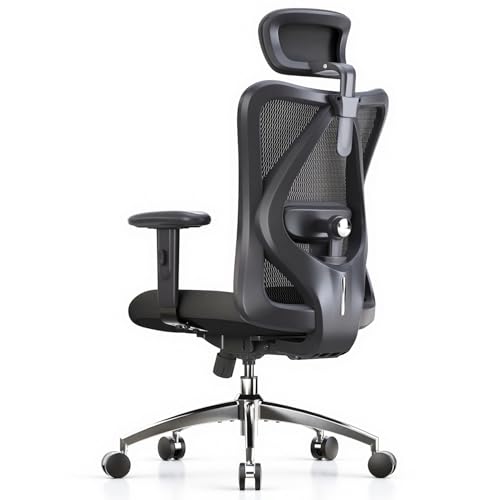
Best Value: SIHOO M18
The SIHOO M18 is for students and remote workers who want a headrest and lumbar support without a big price, at around $170. It offers four support points for head, back, hips and arms, a breathable mesh backrest and adjustable seat height and headrest.
Its strengths are proven popularity and construction that SIHOO says passed BIFMA standards and a 1,136 kg static pressure check, with a weight capacity of 150 kg, about 330 pounds. The trade off is fewer fine adjustments than premium chairs, such as limited seat depth adjustment. Skip it if you need extensive 4D armrests or very precise lumbar tuning.

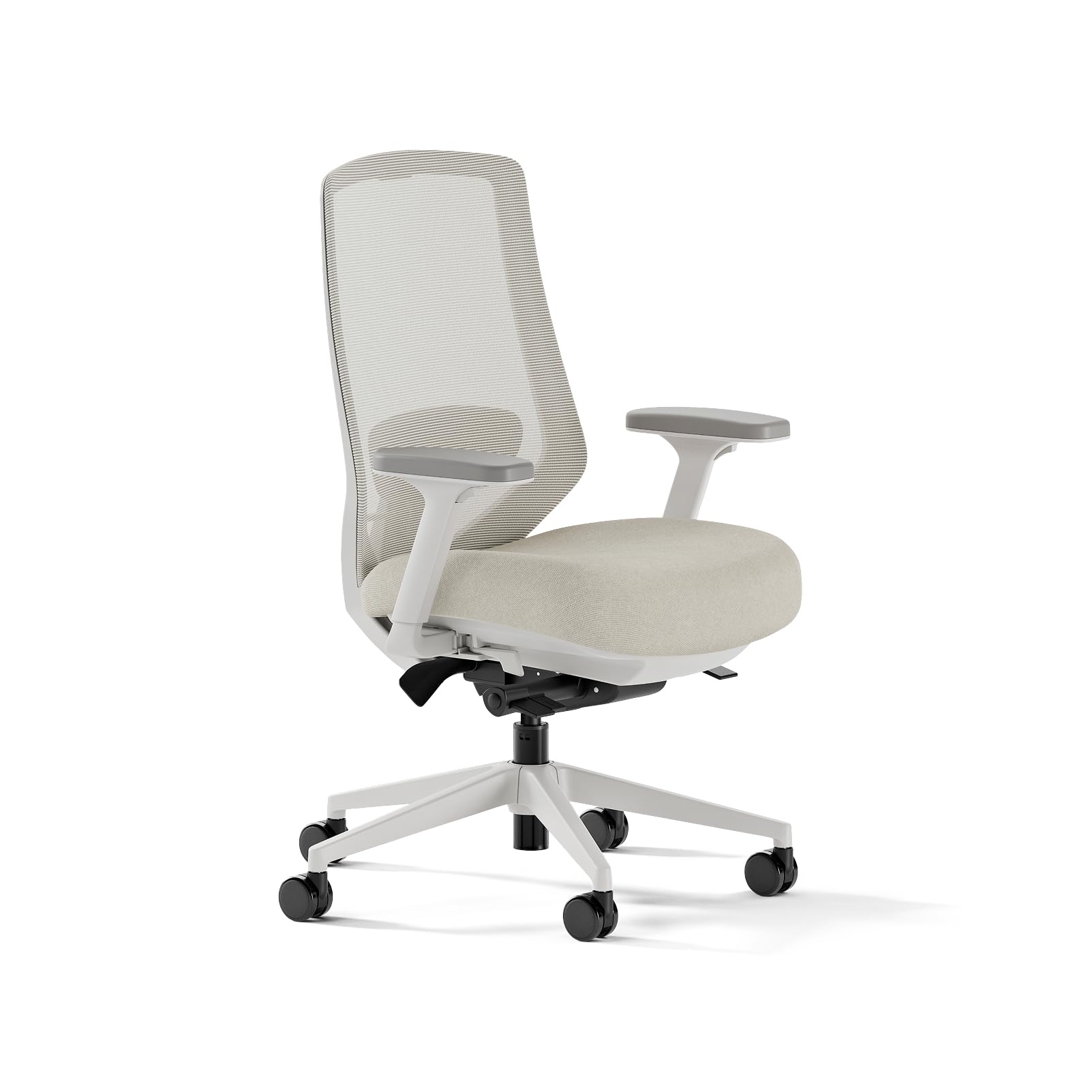
Best Premium Pick: Branch Ergonomic Chair Pro
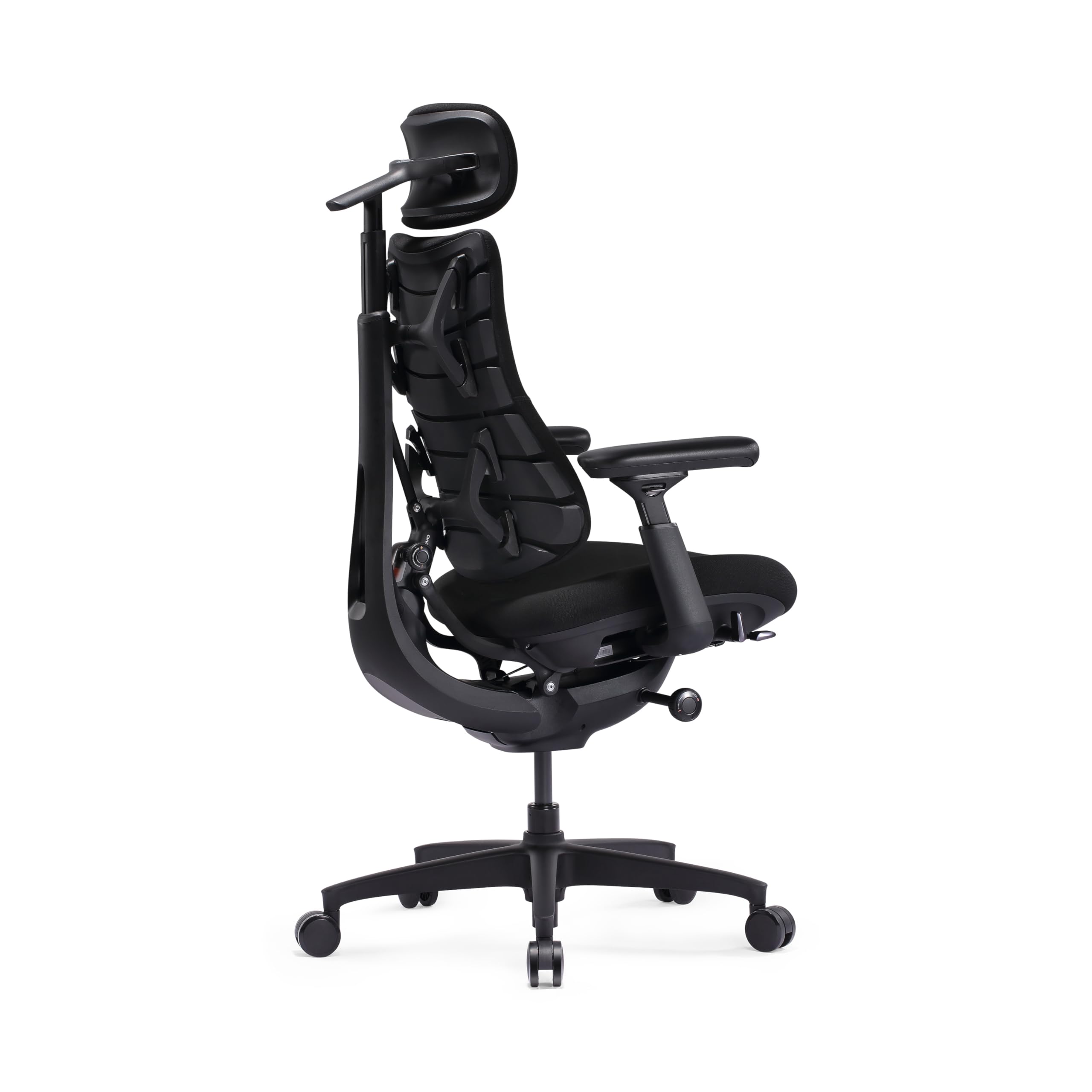
The Branch Ergonomic Chair Pro suits people who sit long hours and want detailed adjustment, at around $499. Branch lists 14 points of adjustment on a mesh office chair, giving you more ways to fine tune seat, back and arms to your body and desk.
The appeal is customization: more adjustment points make it easier to match different heights and work styles, which helps households where several people share a chair. The limitation is price, which is high compared with capable midrange chairs. Skip it if you only sit a couple of hours a day or prefer a simple chair with a few easy controls.

Quick Buyer Checklist
- Does the seat height range let your feet rest flat with knees near hip level?
- Can you adjust lumbar support to meet your lower back curve?
- Does the seat depth leave two to four fingers behind your knees?
- Do the armrests adjust so your shoulders stay relaxed at the desk?
- Is the weight capacity comfortably above your weight?
- Are the casters right for your floor type?
- Does the warranty cover the frame, mechanism and gas cylinder for several years?
- Is there a return window long enough to judge comfort?
Red Flags to Watch For
Many chairs promise ergonomic comfort but fall short in daily use. Watch for these warning signs before you buy.
- Vague specifications. No seat dimensions, height range or weight capacity usually means the chair is not designed for a wide range of users.
- Fixed lumbar pillow only. A loose pillow that slides around is not the same as adjustable lumbar support.
- Unusual review patterns. Many short, similar reviews posted together, or reviews mentioning a different product, deserve caution.
- Short warranty. One year of coverage on the gas cylinder and mechanism suggests lower durability.
- Thin foam seats. Complaints about seats flattening within months point to low density foam.
Best Ergonomic Office Chairs for Specific Needs
Different users need different features. Here is what to check for some of the most common situations.
Best Ergonomic Office Chair vs Gaming Chairs: What to Check
Gaming chairs often use racing style bucket seats, pillows and faux leather, which look bold but may limit lumbar adjustment and breathability. Ergonomic office chairs focus on adjustable lumbar support, seat depth and breathable mesh. If you work and game at the same desk, check whether a gaming chair offers real lumbar adjustment and seat depth before choosing it over an office chair.
Best Inexpensive Ergonomic Office Chairs: What to Check
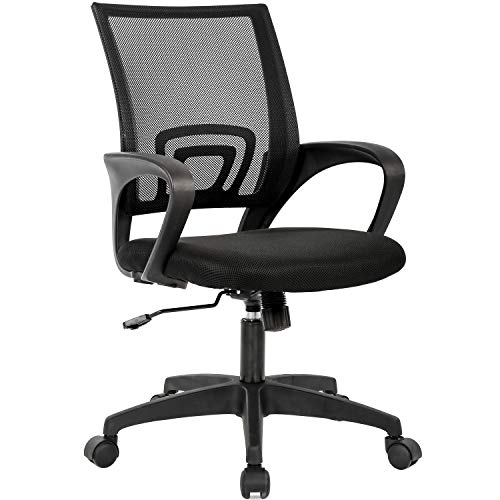
Under around $100, chairs from brands like NEO CHAIR, BestOffice and TRALT offer mesh backs and basic lumbar support. Check the weight capacity, seat height range and warranty, since these vary widely. Budget chairs suit part time use or students; for full time work, stepping up to a chair with adjustable lumbar and a longer warranty usually pays off.
Best German Ergonomic Office Chairs: What to Check
German engineered chairs have a reputation for precise mechanisms and durable materials, but relatively few are sold directly on Amazon US. If you shop for a European brand, check that the seller is authorized, that US warranty service is available and that dimensions are listed in inches. Certifications and published adjustment ranges matter more than country of origin.
Best Mesh Ergonomic Office Chairs: What to Check
Mesh chairs keep you cool and look light, which suits warm rooms and long sessions. Check that the mesh is tensioned evenly, that the frame around the mesh feels solid and that the seat has enough cushioning if it is not mesh. Mesh seats can feel firm at first, so look for a return window to judge comfort.
Best Petite Ergonomic Office Chairs: What to Check
Shorter users need a low minimum seat height, a shallower seat or seat depth adjustment and lumbar support that sits low enough. Many standard chairs are sized for average or tall users, so check minimum seat height carefully. A footrest helps if your feet still do not reach the floor at the lowest setting.
Tips to Get the Most From Your Ergonomic Office Chair
Adjust the chair in order: seat height first, so feet are flat; then seat depth; then lumbar height and depth; then armrests so shoulders stay relaxed and elbows rest near 90 degrees; finally recline tension. Place your monitor at arm's length with the top near eye level.
Change position during the day, use the recline for short breaks and stand up every 30 to 60 minutes. Tighten screws a few weeks after assembly, since they can loosen as the chair settles, and vacuum or wipe mesh regularly. Lubricate casters if they start to squeak.
Frequently Asked Questions
How do I choose the right size?
Choose a chair whose seat height range lets your feet rest flat with knees near hip level, whose seat depth leaves a small gap behind your knees and whose backrest supports your lower and mid back. Check the maker's recommended user height and weight capacity. Petite users need a low minimum height, while tall users need a tall backrest and high maximum height.
How long should a good ergonomic office chair last?
A good ergonomic chair often lasts seven to ten years with daily use, and premium chairs can last longer. Budget chairs may last two to five years before foam flattens or mechanisms wear. Warranty length is a helpful guide: longer coverage on the frame, mechanism and gas cylinder usually signals a longer expected life.
You can extend a chair's life by tightening bolts every few months, cleaning casters, avoiding leaning back on two wheels and keeping the chair away from heaters, which dry out foam and plastics. Many makers sell replacement casters, armrest pads and gas cylinders, so a worn part rarely means replacing the whole chair.
Is an expensive ergonomic office chair worth it?
An expensive chair is worth it if you sit many hours a day and need detailed adjustment, durable materials and a long warranty. Midrange chairs around $150 to $300 now offer strong adjustability and suit most home office workers. Spend more when fit is difficult, such as for very tall or petite users.
What features matter most for long hours?
For long hours, prioritize adjustable lumbar support, seat depth adjustment, adjustable armrests and a breathable backrest. A tilt mechanism with lock and tension control lets you change posture during the day. A headrest helps if you lean back often. Comfortable, dense seat padding prevents pressure points over time.
Should I use a footrest or seat cushion?
A footrest helps when your feet do not rest flat at the height that matches your desk, which is common for shorter users. Seat cushions can add comfort to a firm chair, but they also raise you higher and change how lumbar support fits. Adjust the chair first, then add accessories only if a gap remains.
Final Thoughts
The best ergonomic office chair fits your body, adjusts to your desk and holds up for years. Focus on three things: adjustable lumbar and seat depth, a seat height range that suits your height and solid construction backed by a long warranty. The Duramont is our best overall pick, the SIHOO M18 offers great value with a headrest, and the Branch Ergonomic Chair Pro delivers premium adjustability.
For more seating options, see our guides to the best office task chairs, the best affordable ergonomic office chairs, the best ergonomic executive office chairs, the best office desk chairs ergonomic and the best reclining office chairs. Then compare current prices in the product table above.