
Best Corner Shelves: A Complete Buying Guide
Disclosure: We may earn a commission when you buy through links on this page, at no extra cost to you. As an Amazon Associate we earn from qualifying purchases. Learn more

Every home has that one corner that never quite works. It is too narrow for a bookcase, too oddly angled for a dresser, and too visible to just leave empty. That is exactly the gap corner shelves are built to fill. The best corner shelves turn wasted triangular space into real storage or display room, whether you are stacking books in a reading nook, keeping toiletries organized in a cramped bathroom, or freeing up floor space in a small apartment. Picking the right one takes more than good taste. You need to think about the actual angle of your corner, how much weight the shelf has to hold, and how it gets mounted. This guide walks through what matters most before you buy, plus answers to the questions people ask most often.

Getting the Corner Angle Right Before You Buy
It is easy to assume every corner in your home is a perfect 90 degrees, but a surprising number are not. Older homes, remodeled spaces, and walls near windows or door frames often sit closer to 88 or 95 degrees instead. A shelf built for a true right angle will leave a visible gap on one side if your corner is slightly off, so it is worth checking before you order anything.
Hold a framing square or a smartphone angle app flush against one wall and slide it into the corner. If light shows through on either side, your corner is not exactly square, and you will want a shelf with an adjustable back edge or one designed to sit slightly forward instead of tucked in tight.
Proportion matters just as much as angle. In a small room, an oversized unit looks bulky no matter how nice the finish is. As a rough guide, shelves with sides between 6 and 10 inches tend to read as proportional in tighter spaces, while larger rooms and taller corners can comfortably support bigger multi-tier pieces. In practice, the best corner shelves are the ones sized and angled to match the space they are going into, not the ones that simply look good in a product photo.
Material and Weight Capacity: What Actually Holds Up
Solid Wood, Engineered Wood, or Metal
Not every material performs the same way once weight and humidity come into play, and this is where the best corner shelves start to separate from the rest. Solid wood holds up better than engineered wood or MDF over time. It resists scratches, handles daily wear, and can usually be sanded and refinished if it starts to look tired years down the line. Engineered wood costs less and is lighter to hang, but it is more sensitive to moisture and tends to sag sooner under sustained weight. Metal and wire-frame shelves are a solid middle ground for heavier loads and a more utilitarian look, though they can show scratches or, in humid rooms, rust over time if the finish is not sealed well.
How Much Weight You Actually Need It to Hold
Think about what is actually going on the shelf before you shop. A few decorative items and a plant need far less structural strength than a stack of hardcover books. Corner shelves generally handle light to moderate loads well, but capacity drops fast if the mounting hardware is not matched to the material. A well-built wood shelf on solid brackets can carry books and small electronics without flexing, while a thin decorative shelf meant for candles or photo frames should stay in that lane. If you plan to store items directly on a wood surface, a shelf liner can help protect the finish from scuffs and moisture over time.
Floating vs. Freestanding: Picking the Right Mounting Style
Among the best corner shelves on the market, the mounting style ends up mattering almost as much as the material itself, since it decides how much weight the shelf can safely carry and how easily you can move it later.
Floating Corner Shelves
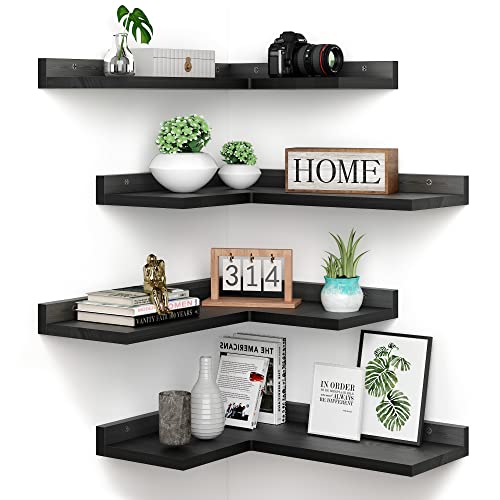
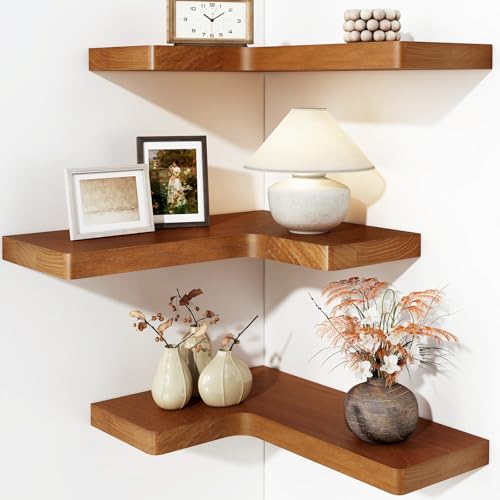
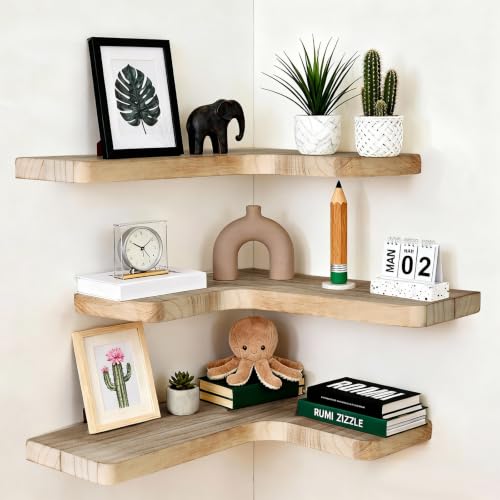
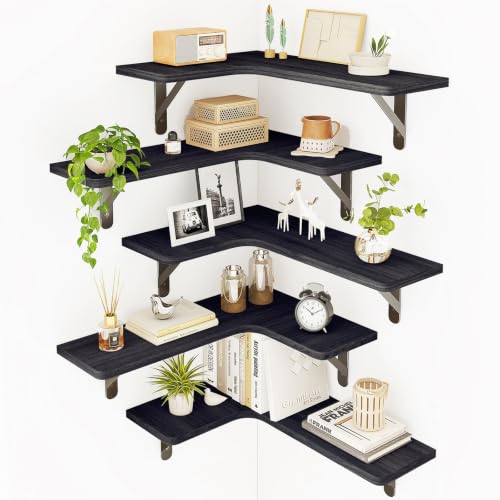
Floating shelves use a hidden bracket system, so the shelf appears to hover on the wall with no visible hardware. They give a clean, modern look and work well for display pieces, small plants, or a stack of books that will not put constant strain on the wall. The trade off is that they are permanently attached, so moving them later means patching holes.
Freestanding Corner Units
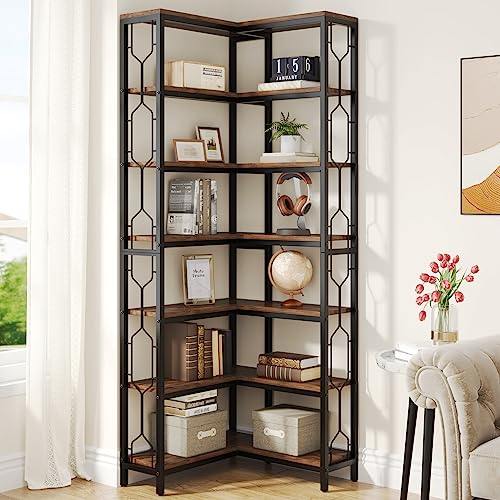
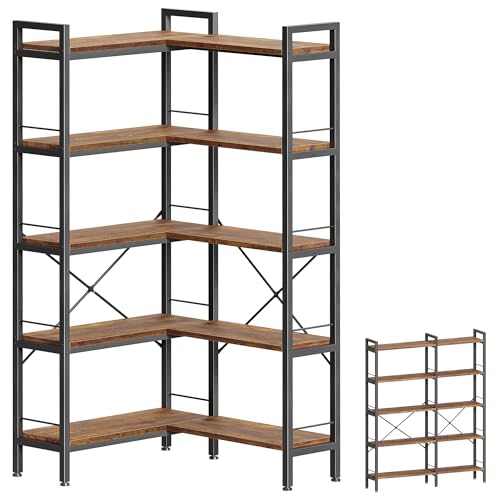
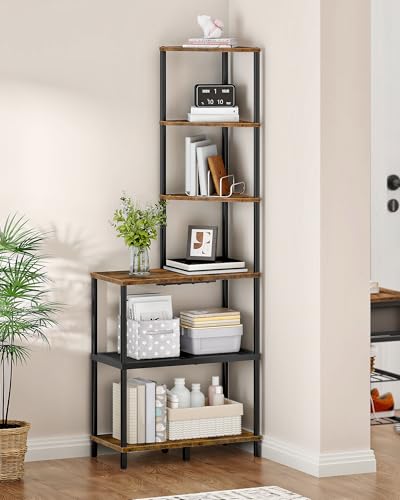
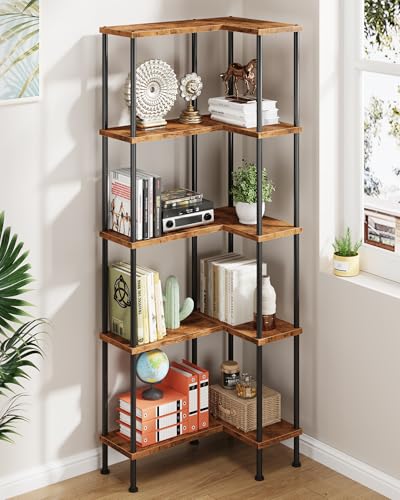
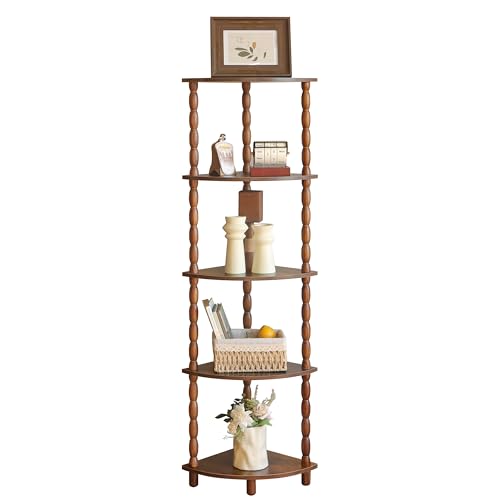
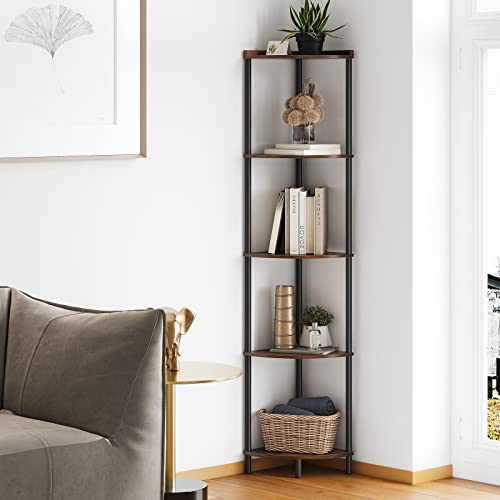
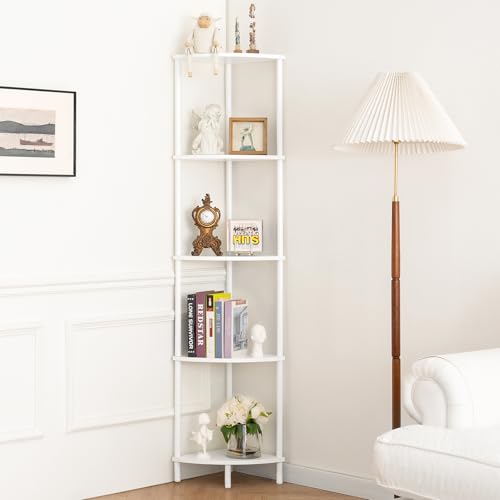
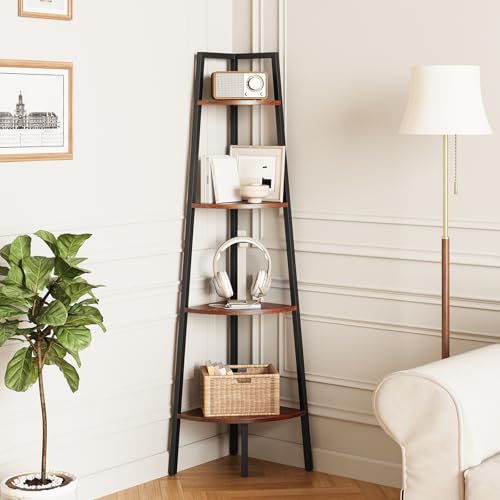
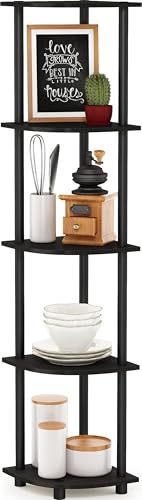
Freestanding corner shelves, sometimes built as a ladder-style or tiered étagère, sit directly on the floor and lean into the corner without touching the wall at all. They are easy to move between rooms or take with you when you relocate, which makes them a practical choice for renters or anyone who rearranges furniture often. They also tend to handle heavier loads more predictably since the weight rests on the floor rather than a wall bracket.
Matching the Shelf to the Room
The best corner shelves for a living room are rarely the right pick for a bathroom, since each room asks for a different balance of style and durability.
A living room or bedroom corner shelf is mostly about display, so material and finish carry more weight than moisture resistance. Pairing a shelf with soft, ambient wall lighting nearby can make displayed books or decor stand out far more than overhead lighting alone.
A bathroom corner shelf has a different job entirely. Look for rustproof or fully sealed materials, and ideally a design with small drainage gaps so wet bottles do not leave standing water on the surface. Wood that is not properly sealed will warp quickly in a steamy bathroom, so metal, treated wood, or waterproof composite tends to perform better there.
Near an entryway, a corner shelf is a convenient spot to drop keys and mail, especially if you already have a wall-mounted coat rack handling jackets and bags in the same corner. In a home office, a small corner shelf above the desk keeps notebooks and supplies within reach without eating into your actual desk surface.
Installation Options for Renters and Homeowners
Even the best corner shelves will fail if they are mounted the wrong way for their environment, so it is worth matching the installation method to how you actually live in the space.
If you own your home and plan to store anything with real weight, mounting into a wall stud is worth the extra effort. It roughly doubles the safe load compared with drywall anchors alone, and it prevents the slow sag that anchor-only installs sometimes develop over time. A stud finder makes locating the right spot quick, and the process is similar to hanging a corner TV wall mount: find the studs first, then decide whether anchors are even necessary.
Renters or anyone who cannot drill into walls still have solid options. Heavy-duty adhesive strips work well for lighter loads and leave no permanent marks, though they typically hold up for one to five years depending on humidity and how much weight is on the shelf. Tension-mounted shelves, which brace between the floor and ceiling, are another no-drill option common in shower corners and closets. Whichever method you choose, check the manufacturer's weight rating for that specific installation type rather than assuming it matches the stud-mounted number.
Frequently Asked Questions
How do I hang a shelf in a corner?
The simplest method is screwing a cleat to each wall so they meet at the corner, then resting the shelf on top and securing it with a few screws. Pre-made corner shelves usually come with their own bracket or cleat system and instructions specific to that design.
What size corner shelf should I buy for a small room?
Aim for sides between 6 and 10 inches in a small room. That size holds a reasonable amount of decor or books without visually overwhelming the space, and it is generally what separates the best corner shelves for tight rooms from ones that end up looking crammed in.
Can corner shelves hold heavy items like books?
Yes, but only if the material and mounting method are built for it. Solid wood or metal shelves mounted into a wall stud, or freestanding units resting on the floor, handle books far better than lightweight decorative shelves attached with adhesive strips.
Do corner shelves damage walls?
Wall-mounted styles leave small holes from screws or anchors, which are easy to patch if you ever remove the shelf. Freestanding units and adhesive-mounted shelves avoid wall damage entirely, which makes them a better fit for rental properties.
How do I install a corner shelf if my corner is not a perfect 90 degrees?
Check the angle first with a framing square or an angle app on your phone. If there is a noticeable gap, look for a shelf with an adjustable or slightly forward-set back edge, or plan to caulk the small gap for a cleaner finish.
Are floating or freestanding corner shelves better?
Neither is universally better, and honestly, some of the best corner shelves for one household would be a poor fit for another. Floating shelves look sleeker and free up floor space, while freestanding units are easier to move and tend to handle heavier loads more predictably. The right choice depends on how much weight you need to store and whether you are willing to drill into the wall.
Can I use a corner shelf in a bathroom or shower?
Yes, as long as you choose a rustproof or waterproof material with some form of drainage. Untreated wood is a poor fit for a shower corner since steady moisture will cause it to warp or grow mold over time.
Making the Right Call for Your Space
Choosing among the best corner shelves comes down to four things: the actual angle of your corner, the material and weight you need it to support, whether floating or freestanding fits your living situation, and how well it matches the room it is going in. Measure first, match the material to the room, and pick the mounting style that fits how long you plan to stay put. Get those details right and even the most awkward corner in your home ends up looking intentional.