
Best Cooling Floor Fans: A Complete Buying Guide
Disclosure: We may earn a commission when you buy through links on this page, at no extra cost to you. As an Amazon Associate we earn from qualifying purchases. Learn more

When the temperature climbs and the air conditioner is already working overtime, a good floor fan can be the difference between a comfortable room and a sticky, restless one. But not every fan sold as a cooling floor fan actually moves enough air to matter, and plenty of buyers end up with a unit that's either too weak for the room or so loud it keeps them up at night.
Picking the right cooling floor fans comes down to a handful of factors that have nothing to do with the brand printed on the box: how much air the motor actually pushes, what type of fan fits your space, and how much noise you're willing to live with. This guide walks through what actually matters so you can shop with confidence, whether you're cooling a bedroom, a home office, or a whole living room.





How Much Airflow You Actually Need Before You Buy
Every one of the cooling floor fans on the market lists an airflow rating in cubic feet per minute, or CFM, and it's the single most useful number on the spec sheet. It tells you how much air the fan can circulate, which matters far more than the diameter of the blades or the number of speed settings.
Matching CFM to Room Size
A small bedroom or home office generally feels comfortable with a fan in the 1,000 to 2,000 CFM range. Larger living rooms or open spaces benefit from something closer to 3,000 CFM or more, especially if the fan has to compete with sunlight through a window or a kitchen nearby that runs warm. High-velocity floor fans built for garages and workshops can push 4,000 to 6,000 CFM, but that kind of output is usually overkill, and uncomfortable, in a normal living space.
Why Bigger Isn't Always Better
A fan rated well above what a room needs doesn't cool it faster. It just creates a wind-tunnel effect that scatters papers, dries out your eyes, and makes conversation harder. It's worth sizing the fan to the room rather than assuming the highest CFM number on the shelf is the smartest purchase.
Pedestal, Box, and High-Velocity Floor Fans: What Sets Them Apart
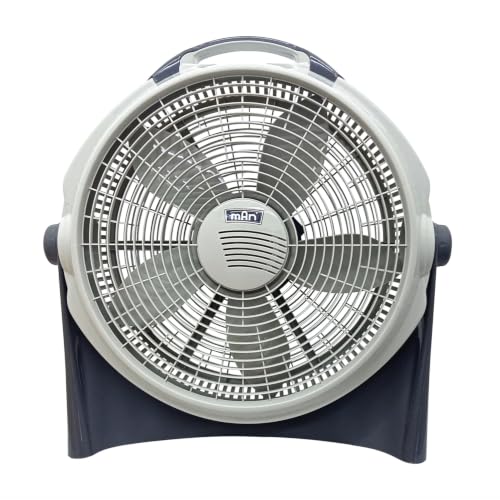
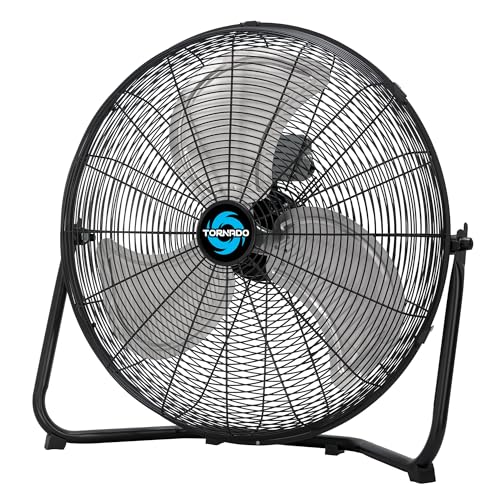
Floor fans aren't one category. Pedestal, box, and high-velocity models make up most of the cooling floor fans sold today, and the shape and design of each one change how they move air and where they work best.
Pedestal Fans
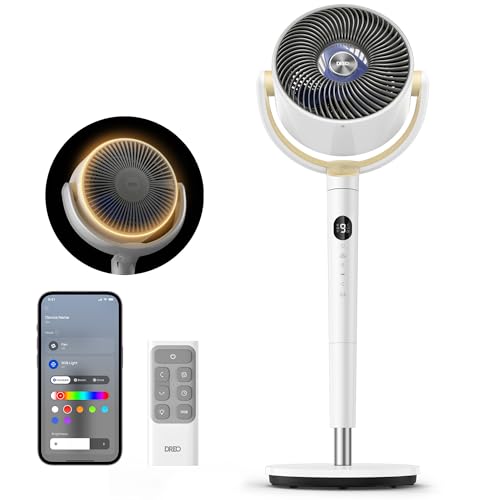
Pedestal fans sit on an adjustable stand, which lets you raise or lower the head and angle it toward a specific spot in the room. That adjustability makes them a good pick for bedrooms, since you can aim the airflow at a bed without pointing the whole fan at floor level. Most pedestal models also come with a wider, more stable base, which helps prevent tipping if the fan gets bumped.
Box Fans
Box fans are flat, square, and built to move a large volume of air through a doorway or window rather than across a room. They're inexpensive and effective for whole-room air exchange, especially when paired with an open window at night to pull in cooler outside air, but they don't offer the directional control a pedestal fan does.
High-Velocity and Shop-Style Fans
These are the heavy-duty option, built with metal housings and stronger motors that push far more air than a typical household fan. They're worth considering for larger rooms, finished basements, or spaces with poor natural airflow, but they run louder and take up more floor space than a standard pedestal fan.
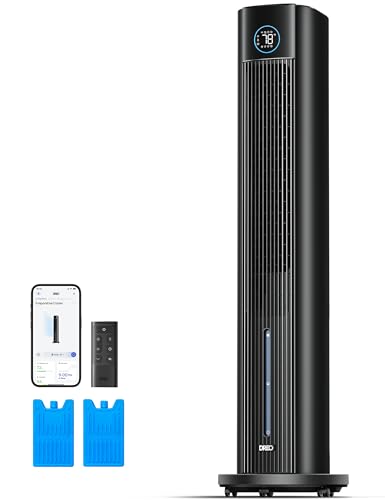
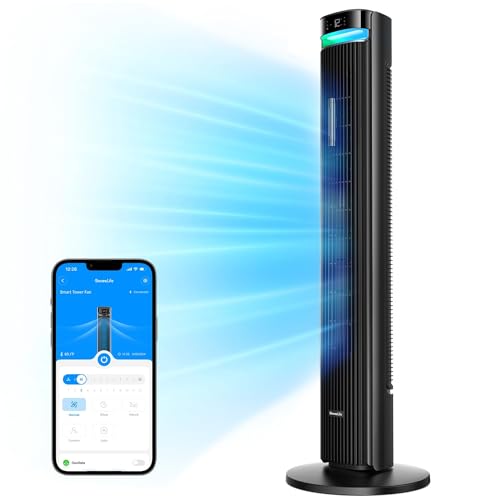
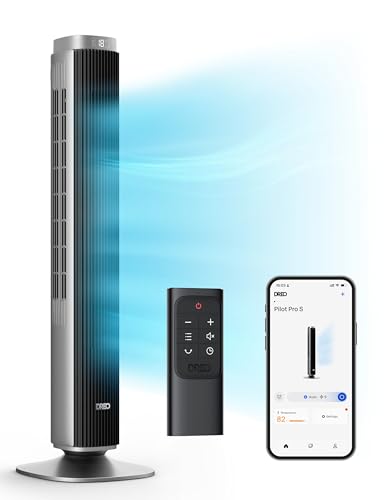
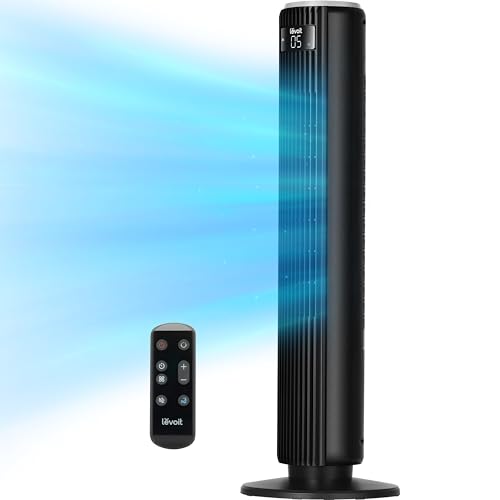
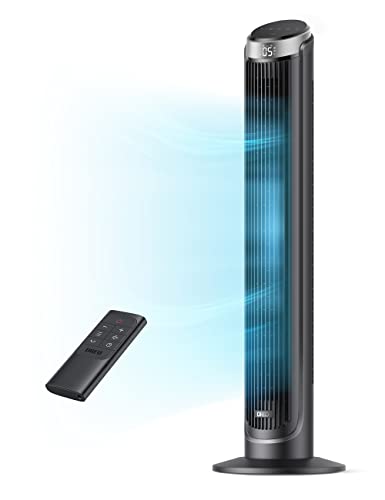
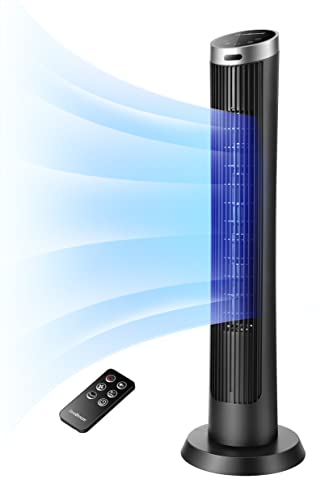
If floor space is tight, a slim tower fan is worth comparing against a traditional pedestal model, since it delivers similar coverage in a narrower footprint.
Oscillation, Speed Settings, and Remote Controls Worth Paying For
Once you've settled on airflow and fan type, the features that make daily use easier come down to how the fan distributes air and how much you have to get up to adjust it.
Oscillation Range
A fan that oscillates through a wide arc, ideally 90 degrees or more, spreads air across a larger area instead of blasting one spot. Some models offer adjustable oscillation width, which is handy if you want to narrow the sweep toward a desk or widen it for a whole room. A fixed head still works fine if you mainly want direct airflow on one area, like a chair or a bed.
Speed Settings and Timers
Three or more speed settings give you more control over noise and airflow than a basic high/low switch. A built-in timer is genuinely useful for overnight use, since it lets the fan run while you fall asleep and shut off on its own rather than blowing all night.
Remote Controls
A remote isn't essential, but it's a real convenience once the fan is set up across the room from where you're sitting or sleeping. Look for one with dedicated buttons for speed and oscillation rather than a single cycle button that forces you to click through every setting to get back to the one you want.
Where You Put the Fan Matters as Much as the Fan Itself
Noise complaints about floor fans are usually less about the fan's actual decibel rating and more about placement and airflow path.
Decibel Ratings in Context
Most quiet household fans run somewhere between 40 and 55 decibels on lower speeds, which is roughly the volume of a quiet conversation. Higher speeds on any fan will always be louder, so the real question isn't just "how loud is this fan" but "how loud is it at the speed I'll actually use overnight."
Placement Tips for Quieter Sleep
Placing a fan on a hard floor or directly against a wall can amplify vibration and motor hum. A few feet of clearance from walls and furniture, plus a stable, level surface, cuts down on rattling noise more than switching to a different fan model would. Angling the airflow so it doesn't blow directly across your ears also helps, since the whooshing sound of air movement is often more noticeable than the motor itself. For a deeper look at models built specifically around low noise output, our guide to quiet fans for bedrooms covers that comparison in more detail.
What a Floor Fan Actually Saves You Compared to Running the AC
One of the biggest reasons people search for cooling floor fans in the first place is cost. Running a central air conditioner for hours at a time adds up fast on a summer electric bill, and a fan is a fraction of that expense.
Typical Energy Use
A standard floor fan draws somewhere between 30 and 100 watts, depending on size and speed. An air conditioner, by comparison, typically draws well over 1,000 watts. That gap means running a fan for an entire day can cost less than running an air conditioner for a single hour, which is why so many households run fans first and only turn on the AC when the heat becomes genuinely unbearable.
Why a Fan Isn't a Full Replacement
It's worth being honest about what a fan does and doesn't do. A fan moves air across your skin to speed up evaporation and make you feel cooler, but it doesn't actually lower the room's temperature. An air conditioner or a portable evaporative cooler does that by removing heat and humidity from the air. On genuinely hot days, pairing a fan with a portable air conditioner for just a few hours, rather than running the AC continuously, is often the most cost-effective way to stay comfortable without a huge spike in your energy bill. If humidity rather than heat is the bigger issue in your space, a portable air cooler is worth comparing as well, since it works on a different principle than a standard fan.
Frequently Asked Questions
How many CFM do I need for a bedroom-sized room?
For a typical bedroom, a fan in the 1,000 to 2,000 CFM range is usually enough to keep air moving comfortably without creating an overpowering breeze.
Do floor fans actually cool the air or just move it?
Floor fans don't lower the room's temperature. They move air across your skin, which speeds up sweat evaporation and makes you feel cooler even though the air itself stays the same temperature.
Is it cheaper to run a fan or an air conditioner?
A fan is significantly cheaper to run. Most household fans draw a fraction of the wattage an air conditioner uses, so running a fan for hours typically costs less than running an AC unit for a fraction of that time.
What's the difference between a pedestal fan and a tower fan?
A pedestal fan has an adjustable stand with an open blade design and generally moves more air, while a tower fan is slimmer, takes up less floor space, and tends to run quieter at the cost of some raw airflow.
Can a floor fan help you sleep better in summer?
Yes, for most people. Air movement helps regulate body temperature overnight, and a fan set on a low, steady speed with a timer can make a room feel several degrees cooler without the noise or cost of running an AC all night.
How loud is too loud for a floor fan in a bedroom?
Anything consistently above 55 decibels on a sleeping speed tends to become noticeable and disruptive for light sleepers. Checking the decibel rating at the speed you'll actually use, not just the lowest setting, gives a more realistic picture.
Do oscillating fans use more electricity than stationary fans?
The difference is minimal. Oscillation adds a small amount of motor load, but it's a negligible increase compared to the wattage difference between fan speeds or between a fan and an air conditioner.
Making Your Decision
The right cooling floor fan comes down to matching CFM to your room size, choosing a form factor that fits your space, and being realistic about the noise level you can live with overnight. Get those three things right, and a floor fan can handle most of your summer cooling needs while keeping your energy bill in check, saving the air conditioner for the days when you genuinely need it.