Best Commercial Food Warmer Display: A Complete Buying Guide
Disclosure: We may earn a commission when you buy through links on this page, at no extra cost to you. As an Amazon Associate we earn from qualifying purchases. Learn more
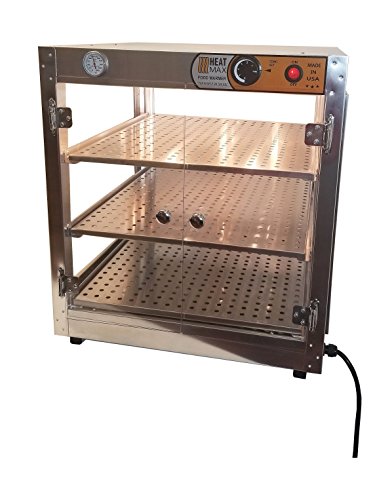
Shopping for the best commercial food warmer display case means balancing two things that often pull in opposite directions: keeping food visibly appetizing to customers and holding it at a safe temperature for hours at a stretch. Unlike a closed cabinet in the back of house, a display case has to sell the food as well as preserve it, and that changes almost every decision you make, from the glass to the heat source. This guide breaks down what actually separates a solid unit from a disappointing one, covering heat and humidity control, case styles, sizing for your counter and traffic, and the health code details your inspector will check. By the end, you will know exactly what to compare before you buy.
Dry Heat or Humidity: Picking the Right Display Environment
The single biggest decision in a commercial food warmer display purchase is whether you need dry heat, humidified heat, or a case that lets you adjust between the two. Dry heat circulates warm air without added moisture, which is ideal for fried items, pastries, and anything you want to stay crisp instead of soft. Leave bread, fried chicken, or empanadas in a humidified case too long and the crust turns soggy fast.
Humidified cases add a water pan or misting system to keep moisture in the air, which matters for rotisserie meats, tamales, sauced items, and anything prone to drying out and cracking under a heat lamp. Some units split the difference with independently controlled zones, so fried food sits on one side and moist proteins sit on the other.
Temperature Uniformity Matters More Than the Number on the Dial
A case that reads 145°F on its thermostat but runs 15 degrees cooler at the ends is a food safety problem waiting to happen. Look for units with multiple heating elements and fans rather than a single element at the back, since even heat distribution keeps every shelf and corner above the danger zone, not just the center.
Countertop Cases, Freestanding Merchandisers, and Rotating Warmers
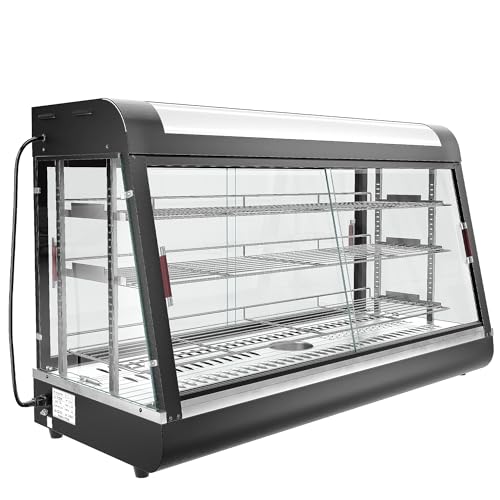
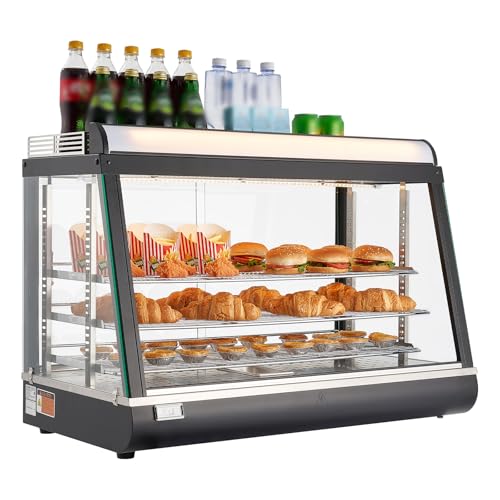
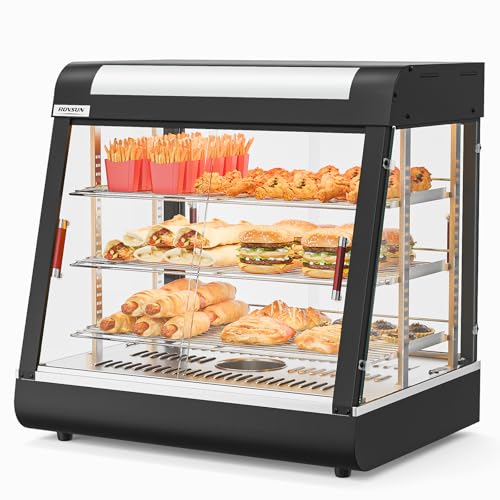
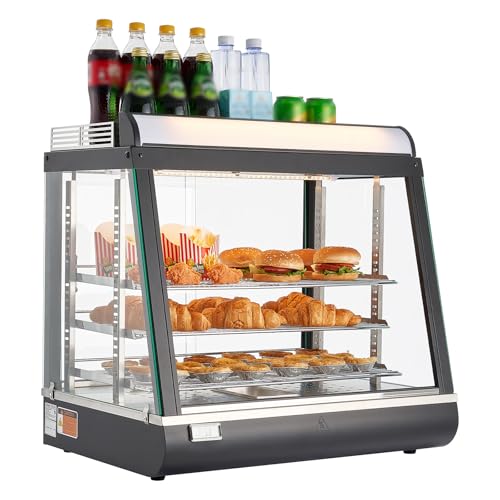
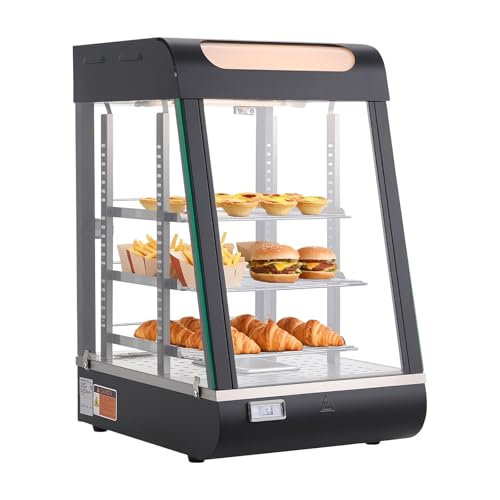
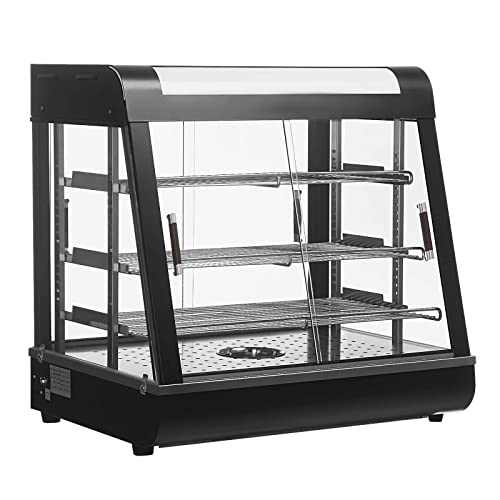
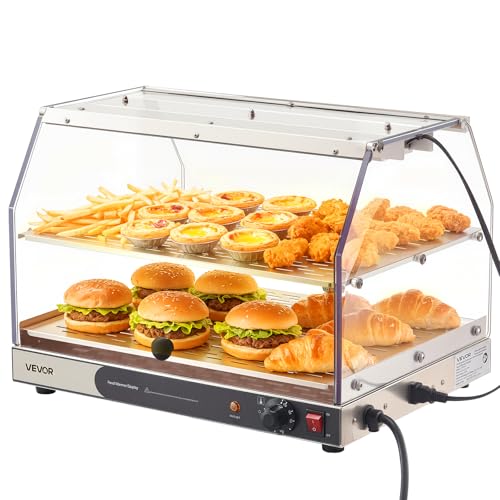
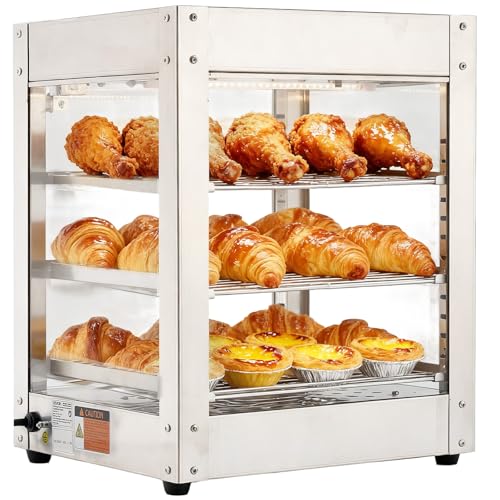
Case styles vary enough that picking the wrong one can undercut an otherwise good unit. Countertop cases are compact, sit on an existing counter near the register, and suit cafes, coffee shops, and gas station delis that need to display a modest number of items without giving up floor space.
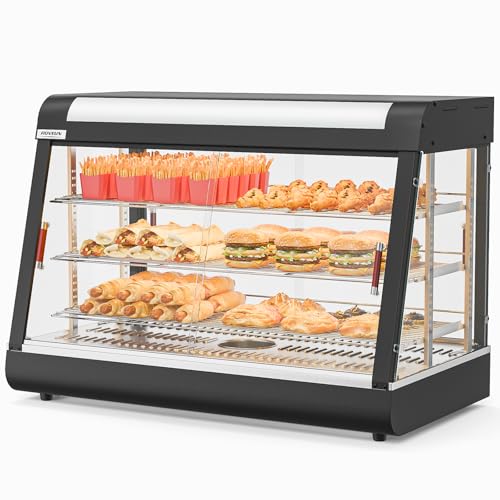
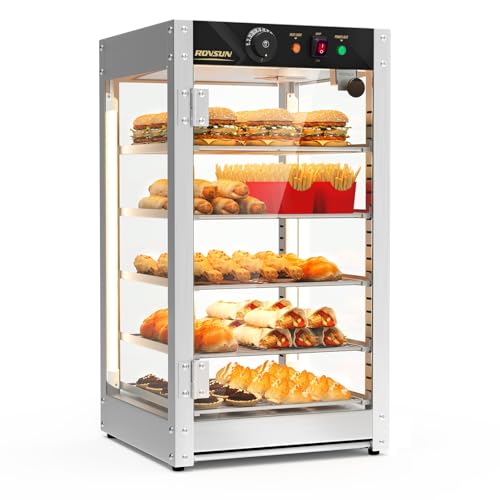
Freestanding merchandisers stand on their own legs or casters and offer far more shelf capacity, which makes them a better fit for grocery delis, cafeterias, and higher-volume convenience stores that need to keep several trays rotating through service. Rotating hot cases, often round or cylindrical with a turntable inside, are built specifically for items like rotisserie chicken or fried chicken buckets where 360-degree visibility drives impulse purchases.
Curved-glass and slanted-front designs also affect how the case reads to customers, since a lower front angle makes it easier for shoppers to see and reach items on the bottom shelf. If you're weighing a display case against general holding equipment for back-of-house prep, it helps to compare it side by side with commercial food warmers built for kitchen holding rather than customer-facing merchandising, since the two solve different problems even though they share a name.
Sizing a Case to Your Menu, Counter, and Foot Traffic
A display case that is too small forces staff to restock constantly during a rush, while one that is too large wastes counter space and energy heating shelves that sit half empty. Start by counting how many distinct items you typically display at once and how deep your busiest hour runs, then match that to shelf count rather than overall case width.
Grab-and-go convenience formats usually do fine with two or three shelves and a narrower footprint, since turnover is fast and inventory stays shallow. Bakeries and pizza counters with a wider variety of items on display at once, and slower per-item turnover, tend to need more shelf area and sometimes a deeper case so nothing looks crowded or picked over. When you're narrowing down the best commercial food warmer display for a specific counter, measure the actual footprint first, including clearance for the rear service door staff will use to restock.
Health Codes and NSF Certification: What Inspectors Check
Most jurisdictions follow FDA Food Code guidance requiring hot TCS foods to be held at 135°F or above, with some local codes setting the bar at 140°F. Anything that drifts below that threshold for more than a short window is treated as being in the temperature danger zone and typically has to be discarded, so a case's ability to hold temperature consistently is a compliance issue, not just a quality one.
NSF certification (often paired with UL/ETL sanitation listing) confirms a case meets standards for cleanable surfaces, food-contact materials, and construction that resists harboring bacteria. Health inspectors generally expect to see this certification on any unit used for public-facing food display, so confirm it's listed on the case's spec sheet or nameplate before you buy rather than assuming it. Stainless steel interiors and sealed seams make routine cleaning faster and reduce the chances of a citation during a walkthrough.
Frequently Asked Questions
What temperature should a hot food display case hold food at?
Most food codes require hot TCS food to stay at 135°F or above, though some local health departments set the minimum at 140°F. Check your local code, since requirements vary slightly by jurisdiction.
What's the real difference between dry and humidified display cases?
Dry heat keeps fried and baked items crisp by circulating warm air without added moisture. Humidified cases add moisture to protect proteins, sauces, and anything that dries out and cracks under steady heat.
Do commercial food warmer displays need NSF certification?
In most jurisdictions, yes. Health inspectors expect public-facing display equipment to carry NSF or an equivalent sanitation listing confirming cleanable surfaces and safe food-contact materials.
How long can food safely sit in a heated display case?
Guidance commonly allows up to four hours in the hot holding range before food should be pulled and discarded, though this depends on the item and your local health code. Rotating stock frequently is safer than relying on the maximum window.
Can a heated display case be used to reheat cold food?
No. These cases are built to hold already-hot food at a safe temperature, not to bring cold or raw food up to temperature safely. Food should reach the correct internal temperature in a separate oven or steamer first.
How much space does a small display case need on a counter?
Compact countertop models can fit in roughly two to three feet of counter depth, but always add clearance for the rear service door and ventilation. Cramming a case against a wall can trap heat and shorten its lifespan.
Do these cases require plumbing or a water line?
Humidified models typically use a manually filled water pan rather than a plumbed line, so most countertop and freestanding units only need a standard electrical outlet. Always check the specific model's utility requirements before installation.
Making the Right Call for Your Setup
Finding the best commercial food warmer display case for your business comes down to matching heat style, case format, and size to what you actually sell and how fast it moves. Get those three details right and the rest, from certification to cleaning routine, tends to fall into place. Take a hard look at your busiest hour before you commit to a size, since that's the moment your equipment either keeps up or falls behind.