Best Colorful Knife Sets 2026: Styles Compared for Real Homes
Disclosure: We may earn a commission when you buy through links on this page, at no extra cost to you. As an Amazon Associate I earn from qualifying purchases. Learn more

Compare colorful knife set styles by steel, block size, handle grip, and care, with a checklist for choosing by counter space and budget.
A colorful knife block can be the one cheerful thing on a plain rental counter, or it can clash with everything you own and end up hidden in a drawer. The difference is rarely the shade itself. It is whether the set fits your counter space, the number of people cooking in your home, and how you actually prep meals each week. This guide helps you choose the best colorful knife set for your layout, your household size, and your budget, and the product table below sums up the main styles.
Color should be the last thing you settle, not the first. A set that looks great in a photo can still annoy you daily if the block eats scarce counter room, the handles feel slippery with wet hands, or half the pieces never leave their slots.




Quick Answer: The Three Styles
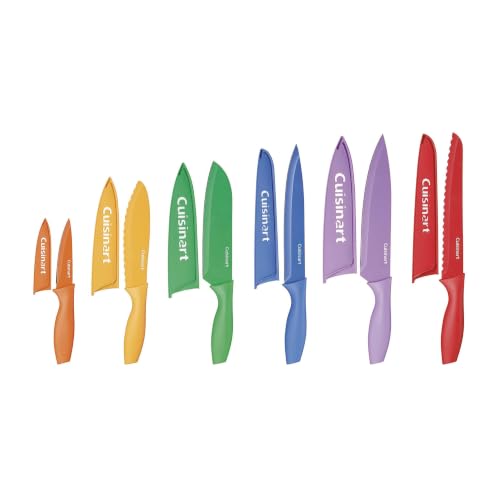
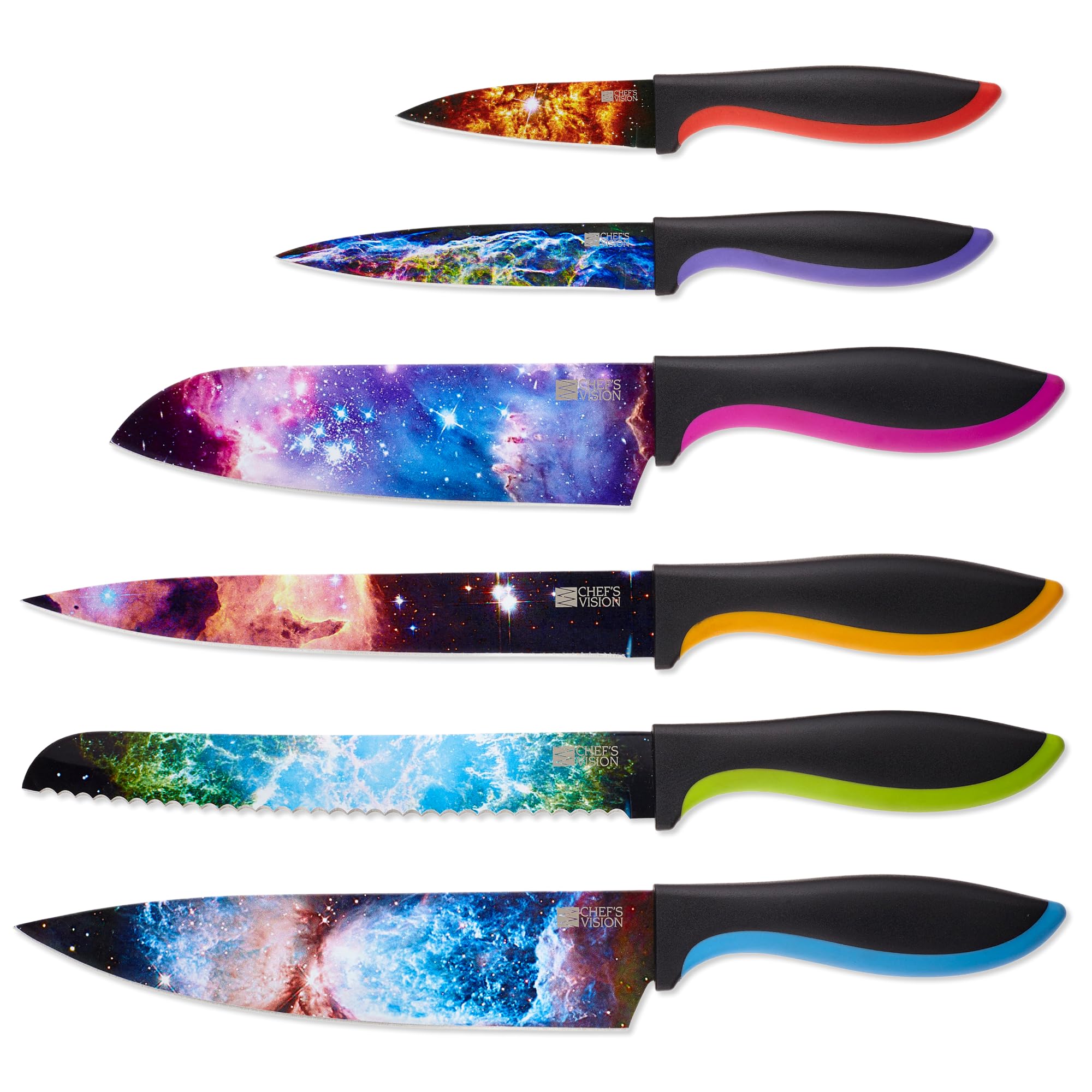
Colorful sets fall into three broad styles. Coated blade sets put the color on the blade itself, usually over stainless steel, and suit cooks who want the color visible while they work. Colored handle sets keep plain steel blades and put the color on the grips, which ages more gracefully because handles take less abrasive wear. Block sets with mixed colors assign a different shade to each knife, which helps everyone in the house grab the right tool fast.
Before You Buy: A Quick Checklist for Choosing a Knife Set
Size: Match It to Your Space
Count the slots your household will truly use before you count the pieces on the box. A starter set of 3 to 5 pieces covers a small apartment or a single cook and stores in a drawer or on a magnetic strip. Sets of 7 to 10 pieces add steak knives and task blades for couples and small families. Large 14 to 20 piece sets only make sense with a wide counter and several regular cooks, because the block footprint grows with every slot. Measure under your upper cabinets too, since tall blocks can collide with cabinet doors.
Which Type Fits Your Routine
German style blades are thicker and heavier, with a curved edge that suits rocking through herbs and root vegetables, and they forgive rough handling on hard boards. Japanese style blades are thinner and lighter, with a straighter edge that rewards a push cut and careful work on fish and produce. Ceramic blades stay sharp for a long time but chip if they twist in dense food or drop into a sink. Forged blades feel dense and solid, while stamped blades feel lighter in the hand.
Features Worth It (and Ones to Skip)
A block that fits your counter, a honing steel you will use weekly, and sheaths for any knife stored loose in a drawer are all worth paying for. Steak knives matter only if your household serves steak or chops often. A sharpener built into the block can help new cooks, though a separate whetstone usually gives more control. Skip duplicate utility knives, oversized scissors bundles, and novelty pieces shaped for one food you cook twice a year. If a set leans on piece count, check how many pieces are knives at all.
Steel Type and Hardness
Most colorful sets use stainless steel because it resists rust in busy kitchens where blades sit damp in a sink longer than they should. High carbon stainless blends add hardness, so the edge holds longer between sharpening sessions, while plain stainless feels softer and needs honing more often. Hardness is rated on the Rockwell scale, and kitchen blades commonly fall around 54 to 60 HRC. Higher numbers hold an edge longer but chip more easily and take more effort to sharpen. For most homes, the middle of that range balances edge life against upkeep.
Blade Geometry: German vs Japanese
Geometry shapes how a knife moves through food more than color or handle style ever will. German profiles carry a pronounced belly, so the blade rocks smoothly and the tip stays on the board during fast chopping. Japanese profiles run flatter, with a finer edge angle, so slices fall away cleanly and thin cuts take less force. A wider angle tolerates bones and frozen squash, while a narrow angle glides through ripe tomatoes but dulls faster on hard tasks. Match the profile to the cutting motion you already use.
Handle, Bolster and Balance
Think about your last long prep session and how your hand felt at the end of it. A handle that fills your palm without forcing your fingers wide will tire your hand less than a slim decorative one. The bolster, the thick collar where blade meets handle, adds weight and a finger stop on forged knives, while a partial or absent bolster gives you more edge to sharpen over the years. Balance should sit near that collar, so the knife feels neutral rather than blade heavy. In a shared kitchen, slightly larger handles suit more hands.
Realistic Budget Ranges
Under about $50, expect stamped stainless blades, simple colored coatings, and a compact block, which is fair for a first apartment. Around $50 to $100 usually buys better edge retention and sturdier handles. Between about $100 and $200 you start to see forged blades, better balance, and finishes that survive daily washing. Above about $200 to $300, gains shrink for most home cooks and go toward steel quality rather than more pieces.
Three Colorful Set Styles Compared
Best for Most Homes: Coated Blade Sets
Coated blade sets are the picture most shoppers have in mind, with each blade finished in a solid shade or a soft gradient. They work well where the block lives on display. Judge them on the steel under the coating, because the finish cannot rescue a soft blade that dulls in weeks. Expect the coating near the edge to wear first.
Best Value: Colored Handle Sets
Colored handle sets put the personality where wear is gentlest. The blades stay plain steel, so scratches and honing marks never fight with a finish, and the set keeps looking tidy for longer at the same price. This style suits budget shoppers who want a coordinated look and gift buyers unsure about bold blade colors. Check that the handle grips well when wet, since smooth molded grips can turn slick.
Best Long Term Investment: Mixed Color Block Sets
Mixed color block sets give each knife its own shade, which sounds playful but solves a real problem in shared kitchens. Color becomes a memory aid, so a partner or teenager can return each knife to the right slot and reach for the paring knife instead of the chef knife for a small job. For a broader view of block formats, see our guide to the best block knife set. Choose heavier blocks and forged blades if you plan to keep the set for years.
How Colorful Knife Sets Are Judged
Colorful sets deserve the same grounds as any set, plus two checks for the color itself. The core criteria are steel quality and edge retention, balance and comfort, sharpness as delivered, ease of upkeep, and value for the price. The added checks ask whether the finish is even and free of chips at the edge, and whether the shades match the listing photos. Maker specifications and patterns in buyer feedback are the best evidence available.
Colorful vs Plain Sets: Pros and Cons
Color earns its place in a busy home. It speeds up recognition, makes a plain kitchen feel personal, and helps guests find the right knife in an unfamiliar kitchen. If you are weighing a colorful set against a plain one for general use, our guide to the best knife set lays out the shared basics. Shoppers drawn to thin edges and plain finishes may instead prefer our guide to the best japanese knife set.
The trade offs are real but manageable. Coatings wear, bold shades date faster than neutral ones, and a rainbow block can fight with a calm kitchen design. None of this matters if the steel and handles are sound, which is why this guide treats color as a final filter.
Common Buying Mistakes to Avoid
- Buying by piece count alone: a padded box of scissors and duplicate small knives leaves you short of blades you reach for daily.
- Ignoring block height: a tall block under low cabinets forces you to tilt knives out at an angle, which chips edges against the slots.
- Choosing color before steel: a pretty coating over soft steel means frequent sharpening and a set that feels cheap within months.
- Forgetting replacement costs: if one coated knife is ruined and no matching piece is sold alone, the coordinated look breaks.
- Skipping the wet grip check: smooth handles that slip with wet hands turn a cheerful set into a safety worry.
Cost of Ownership and Care
The purchase price is only part of what a colorful set costs you. Budget for a honing steel if the set lacks one, a whetstone or guided sharpener, and a board that treats edges gently, such as wood or soft plastic. Hand washing protects coatings and colored handles far better than a dishwasher cycle. Dry each blade before it goes back in the block, because trapped moisture in a slot can stain steel and swell a wooden block.
Storage shapes lifespan as much as washing does. A block keeps edges apart, a magnetic strip saves counter room, and in drawer trays stop blades knocking together. For a fuller walkthrough, read our guide on how to store kitchen knives. When an edge needs real work rather than honing, our guide on how to sharpen kitchen knives covers the basic method. Retire any knife whose coating flakes near the edge, since loose flakes do not belong near food.
FAQ
Are colorful knife sets worth it?
Yes, if the color solves a problem in your kitchen, such as slow recognition in a shared home, or if it simply makes daily cooking more pleasant. The premium over a plain set with the same steel is usually small. They are not worth it when the color is the only upgrade and the blades and handles are weaker than a plain set at the same price.
Does a color coating change how a knife cuts?
The coating is thin and sits on the flat of the blade, so it does not change the edge angle or sharpness. It can slightly reduce drag on sticky foods like cheese or potatoes, because food releases from a coated surface a little more easily. That small benefit fades as the coating wears near the edge.
How many knives should a kitchen have?
Most home cooks do nearly everything with three knives: a chef knife, a paring knife, and a serrated knife for bread and tomatoes. A utility knife and steak knives help households that cook meat often or host dinners. Beyond about eight well chosen pieces, extra knives mostly duplicate jobs.
Can colorful knives go in the dishwasher?
They can, but they should not. High heat and detergent fade coatings and printed shades, and blades rattling against racks nick the edge. Wooden handles can crack from the drying cycle. Hand washing in warm soapy water, followed by immediate drying, keeps both color and edge in shape for years. If dishwasher use is non negotiable in your home, pick colored handles over coated blades, since handles fade more slowly.
When should a colorful knife be replaced?
Replace a knife when its edge will no longer hold sharpness for more than a few uses, when the blade bends or the tip snaps, or when the handle loosens and cannot be tightened. With coated blades, widespread flaking along the cutting edge is also a clear signal, because sharpening can no longer restore a clean surface. A single worn patch on the flat is cosmetic, not a reason to discard a knife that still cuts well.
Final Thoughts
Start with your counter space, your household size, and the cutting style you already use, then let color narrow the final few options. The product table above pulls the main styles together so you can compare them at a glance. Whichever direction you take, the best colorful knife set for your home is the one whose steel, balance, and storage fit your routine so well that the color becomes a daily bonus rather than the whole reason you bought it.