
Best Coastal Rugs: A Buying Guide for 2026
Disclosure: We may earn a commission when you buy through links on this page, at no extra cost to you. As an Amazon Associate I earn from qualifying purchases. Learn more

Use this buying guide to compare best coastal rugs by material, size, pile and care, with price tier guidance for living rooms, entries and patios.
A coastal room lives on light colors, natural texture and an easy, breezy feel, and the rug carries most of that mood. Choose well and the space feels calm and pulled together. Choose poorly and sand, spills and sunlight expose every flaw within a season. This guide to the best coastal rugs shows you which materials, sizes and weaves hold up in real homes near the water and far from it.
You will learn how price tiers differ, which fibers forgive bare feet and beach traffic, and how to size a rug so furniture sits naturally. Scan the comparison table below for sizes and materials, then use the sections that follow to narrow your choice.




What Each Price Tier Usually Delivers
Budget Tier: Light and Easy to Replace
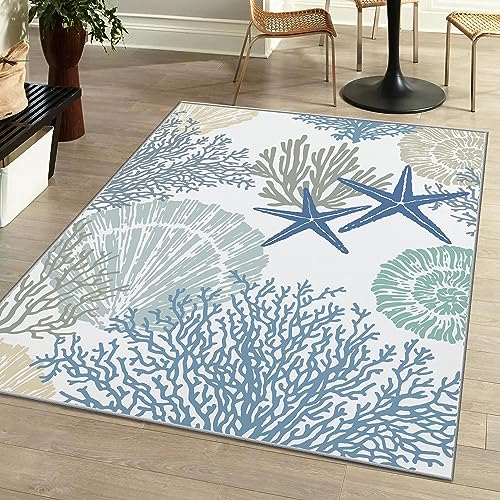
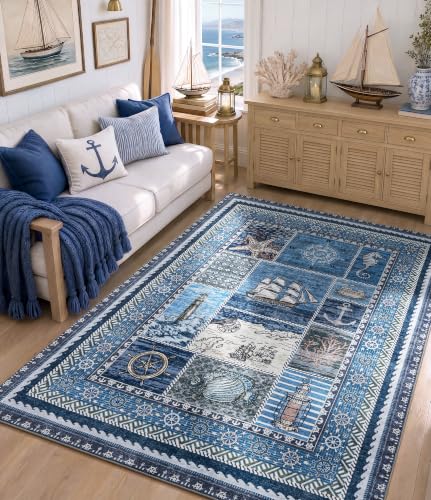
Budget rugs, often under $100 for a medium size, are usually thin synthetic flatweaves or printed designs on a low pile base. They deliver the coastal look, pale blues, sandy neutrals and stripe or coral motifs, at a price that suits renters and seasonal decorating. Cleanup is simple, and replacing one after a few years does not sting.
The compromise is feel and longevity. Thin rugs slide without a pad, show wear paths in busy rooms, and printed patterns can fade in strong sun. In a guest room or a covered porch used a few months a year, those limits barely matter. In a family room, they show quickly.
Midrange Tier: Real Texture and Better Fibers
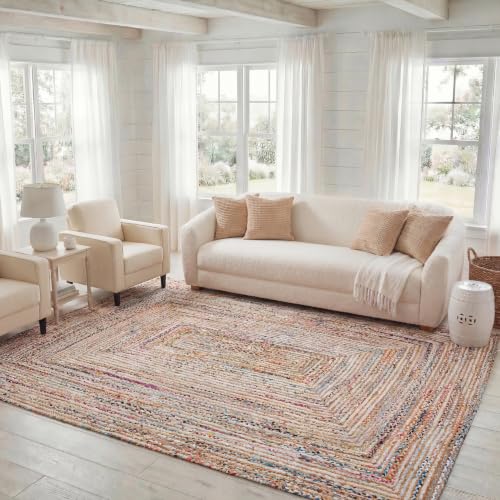
Midrange rugs, roughly about $100 to $300 for a medium size, bring woven texture instead of printed imitation. Expect jute blends, cotton weaves and denser synthetic piles that feel softer underfoot and stay in place better. Colors are dyed into the fiber or yarn, so patterns survive sunlight and vacuuming far better.
For most living rooms, this is the value sweet spot. You get a rug thick enough to cushion steps and quiet a room, with edges finished well enough to resist curling. Add a good pad and a midrange rug can look and feel close to premium for years.
Premium Tier: Natural Fibers and Hand Finished Quality
Premium rugs, often about $300 and up for larger sizes, use wool, high quality jute, sisal or hand loomed cotton with careful finishing. Wool brings natural resilience and a soft, dense feel that synthetic fibers imitate but rarely match. Hand woven pieces also show subtle variation that suits relaxed coastal style.
Pay this level for a rug that anchors your main room for a decade. The extra cost makes sense where feet land daily and furniture weight tests the weave. It makes less sense under a dining table that catches crumbs and spills weekly, where an easy cleaning midrange rug is the smarter buy.
How to Choose the Best Coastal Rugs: Buying Guide
Material and Fiber
Fiber decides how a coastal rug feels, cleans and ages. Jute and sisal give the classic beach house texture and handle dry grit well, but they absorb spills and dislike soaking, so keep them out of kitchens and bathrooms. Wool feels soft and resists stains naturally, yet costs more and needs gentler cleaning.
Synthetic fibers such as polypropylene shine in busy or damp spaces. They resist mildew, shrug off drink spills and often can be hosed down outdoors, which is why so many indoor outdoor coastal rugs use them. Cotton flatweaves feel cool and casual and suit bedrooms, though they wrinkle and shift without a pad. Match fiber to the room first, then shop color and pattern within that fiber family.
Durability and Care
Durability in a beach inspired home means surviving sand, salt air and frequent vacuuming. Tightly woven rugs outlast loose, chunky weaves in traffic lanes, because grit works down into open weaves and grinds fibers from inside. If your home sits near the beach, shake the rug outside weekly so sand leaves instead of settling.
Care demands differ sharply by fiber. Synthetic rugs forgive scrubbing and strong sunlight. Natural fibers prefer mild cleaners and quick blotting, and a wool rug may need professional cleaning every year or two. Read the care label before buying, and be honest about your habits. A beautiful rug that needs pampering you will not give becomes a regret.
Size and Fit
Size mistakes are the most common rug regret. In a living room, the front legs of sofas and chairs should rest on the rug, which usually means at least an 8 by 10 foot rug in an average room. A rug that floats entirely under the coffee table makes the seating area look disconnected and small.
Measure before you shop and mark the outline on the floor with painter tape. Live with the outline for a day and walk the traffic paths. In dining rooms, the rug should extend about 24 inches beyond the table on all sides so chair legs stay on the rug when pulled out. In bedrooms, you want a soft landing extending at least 18 to 24 inches on each side of the bed.
Color, Pattern and Sun Exposure
Coastal palettes lean on white, sand, driftwood gray, soft blue and sea glass green. Light colors brighten a room but reveal dirt, so in busy homes choose patterns that hide life between cleanings. Stripes, subtle geometrics and distressed vintage style prints disguise crumbs, pet hair and faded spots gracefully.
Sunlight deserves respect. South and west facing rooms fade natural fibers and pale dyes fastest, so rotate the rug a quarter turn every few months to even out exposure. Solution dyed synthetic fibers hold color best in bright rooms. If a window wall floods your floor with sun, that single feature may matter more than fiber softness.
Pile Height and Feel Underfoot
Pile height shapes both comfort and practicality. Low pile and flatweave rugs, under about a quarter inch, let doors swing freely, slide chairs easily and release sand with a quick shake. They are the practical default for entries, dining rooms and homes with wheeled mobility aids.
Medium pile adds cushion in living rooms and bedrooms without trapping as much grit. High pile and shag styles look plush in photos but fight vacuum cleaners, hide sharp shells and Lego pieces, and mat down in traffic lanes. Save deep pile for quiet bedrooms where bare feet, not sandy shoes, are the norm.
Backing, Pads and Slipping
A rug pad is not an optional extra. It stops sliding, adds cushion, protects the floor beneath and extends rug life by reducing friction against hard surfaces. Choose a pad slightly smaller than the rug so its edges stay hidden, and pick felt plus rubber styles for hard floors where grip and padding both matter.
Some rugs include attached backings. Latex style backings grip well at first but can crumble with age and heat, and they may react with certain floor finishes. When in doubt, an unbacked rug over a separate quality pad is the safer, longer lasting arrangement, and it lets you replace the cheaper pad instead of the whole rug.
Types of Coastal Rugs
Natural Fiber Weaves
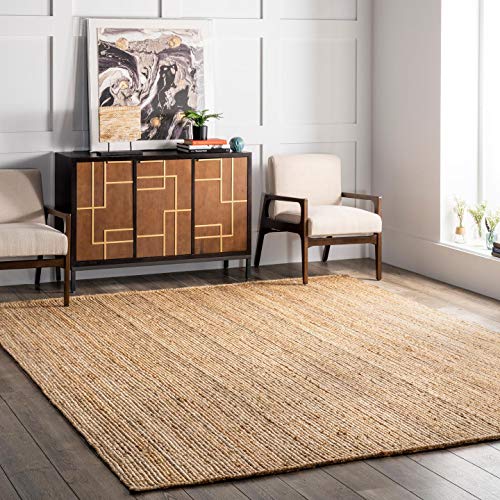
Jute, sisal and seagrass rugs deliver the texture most people picture in a beach house. They pair beautifully with linen upholstery, pale wood and woven baskets. Their firm feel suits living rooms and hallways, and their sandy tones hide dry dirt well. Keep them in dry rooms, blot spills fast, and accept a rougher feel under bare feet.
Wool and Wool Blend Rugs
Wool rugs bring softness and natural stain resistance thanks to lanolin in the fiber. They suit living rooms and bedrooms where comfort leads, and their dense pile quiets echo in rooms with hard floors and high ceilings. Wool sheds lightly at first, which is normal. The higher price buys resilience that keeps the rug springy after years of use.
Indoor Outdoor Synthetic Rugs
Synthetic indoor outdoor rugs are the workhorses of coastal style. They handle porches, patios, kitchens, mudrooms and homes with dogs and kids, and most can be rinsed with a hose and air dried. Modern weaves mimic natural texture convincingly, though they feel firmer and less luxurious than wool. For dining and entry duty, that trade off is usually worth it. If you are furnishing several rooms at once, compare weave quality across our guide to the best quality rugs to see which constructions last longest.
Choosing Rugs for Your Situation
Best Area Coastal Rugs
When you shop for best area coastal rugs, the defining needs are coverage and furniture layout. Go as large as the room and budget allow, since undersized area rugs are the top styling complaint. In open plan spaces, use the rug to define the seating zone, keeping at least the front legs of every seat on it. Low pile weaves in patterned, mid tone colors hide the wear that large family areas collect.
Shoppers comparing looks across rooms often start with our guide to the best coastal area rugs for sizing examples by room. Stair runners are a separate problem with their own safety rules, covered in our guide to the best rugs for stairs. For finished lower levels with cooler floors and occasional dampness, our guide to the best rugs for basement explains why synthetic fibers win there.
Care and Maintenance Tips
- Vacuum weekly with suction only or a beater bar set high, because aggressive bars can pull loops loose on woven rugs. Our guide to the best vacuums for rugs explains the settings that protect pile.
- Shake smaller rugs outside to remove sand before it grinds into the fibers.
- Blot spills at once with a clean cloth, working from the edge inward so the stain does not spread.
- Rotate the rug every few months so sun and traffic wear the surface evenly.
- Use a pad underneath to prevent slipping, add cushion and reduce wear.
- Air the rug outdoors on a dry day a few times a year to freshen natural fibers.
One know how habit matters most in sandy homes. Place a coarse outdoor mat and a washable indoor mat at every entry, and grit will mostly stop there instead of reaching your good rug. It is the cheapest protection any floor covering can get.
Frequently Asked Questions
What size coastal rug is best for a living room?
For most living rooms, choose a rug large enough for the front legs of all seating to rest on it, which usually means 8 by 10 feet or larger. Tape the outline on the floor before ordering to confirm your traffic paths still feel open. A bigger rug in a modest material almost always looks better than a small rug in a premium one.
How do I wash coastal rugs safely?
Start with the care label, because fibers differ. Most synthetic rugs can be vacuumed, spot cleaned with mild soap and water, and even hosed down outdoors, then dried flat in shade. Jute and sisal should never be soaked. Blot spills, use minimal moisture and dry them quickly with airflow. Wool rugs do best with prompt blotting and periodic professional cleaning.
Are light colored coastal rugs practical with kids and pets?
Yes, if you pick pattern and fiber wisely. A pale rug with a subtle pattern in polypropylene or another washable synthetic hides everyday marks and cleans without drama. Avoid flat white natural fiber rugs in play and dining zones. Keep those for bedrooms, and put the forgiving patterned rug where snacks, paws and sandy feet actually travel.
What rug material handles sand and beach traffic best?
Tight woven synthetic rugs handle sand best because grit sits on the surface and vacuums or shakes out instead of sinking in. Seagrass also copes well in dry entries and has a naturally firm, sandy friendly texture. Loose high pile rugs perform worst, since sand disappears into the pile and abrades fibers with every step, shortening the rug life noticeably.
How often should I replace my coastal rug?
Replace a coastal rug when wear paths stay visible after cleaning, edges curl despite a pad, or backing crumbles and sheds dust. A quality wool or dense synthetic rug in a living room often lasts eight to ten years, while thin budget rugs in busy rooms may tire in two to three. Fading alone is cosmetic, and rotating can stretch useful life.
Our Verdict
Choose fiber for the room first, size generously second, and pattern third, and your rug will look right and last. Most households get the happiest result from a midrange woven rug over a good pad, saving premium wool for quiet, low spill rooms. Check your measurements against the product table above, pick the weave that matches your traffic, and enjoy how the right best coastal rugs choice calms the whole room.


