
Best Christmas Tree Toppers: What to Know Before You Buy
Disclosure: We may earn a commission when you buy through links on this page, at no extra cost to you. As an Amazon Associate we earn from qualifying purchases. Learn more
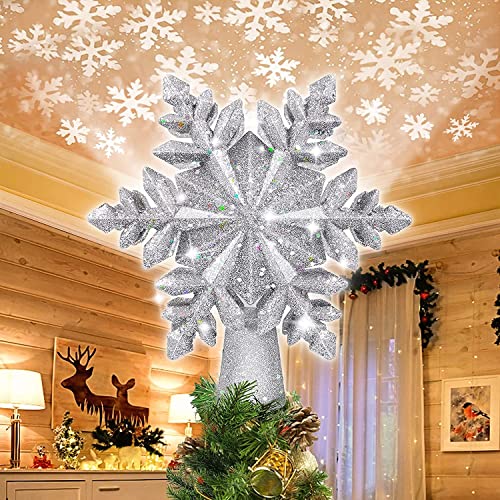
You finally get the lights strung and the ornaments hung, and then the tree just looks unfinished. That last piece, the one sitting at the very top, does more work than people expect. The best christmas tree toppers pull the whole tree together, but only if the size, style, and base actually match what you're working with. A topper that's too small looks lost, one that's too heavy tips sideways within a day, and one with the wrong base won't even fit the trunk. This guide walks through how to size a topper correctly, which styles fit which look, what materials and lighting to consider, and how to keep it from leaning or falling off once it's up.



Getting the Size and Shape Right for Your Tree
Size is where most topper shopping goes wrong. A topper picked without measuring first almost always ends up either dwarfed by the tree or towering over it in a way that looks off balance.
Match the Topper to Your Tree's Height
A simple rule of thumb works for most trees: allow roughly 1.5 to 2 inches of topper height for every foot of tree height. A 6 foot tree generally looks right with a topper in the 9 to 12 inch range, while a 9 foot tree can carry something closer to 13 to 18 inches. Going smaller than that range usually reads as an afterthought, and going much larger can make the top branches look overwhelmed.
Leave Room for the Ceiling
Before you buy, measure the distance from the top of your tree to the ceiling, not just the tree's total height. A good target is at least 6 inches of clearance above the topper once it's mounted. Skipping this step is one of the most common reasons people end up returning a topper that looked fine in photos but crowds the room in person.
Account for How Full or Narrow Your Tree Is
A full, wide-shouldered tree can handle a broader, more dramatic topper without looking cluttered. A narrower or sparser tree tends to look better with something slimmer, since a wide topper on a thin tree can visually overpower the branches beneath it. Take a step back and look at the overall silhouette before deciding how bold to go.
Star, Angel, and Beyond: Choosing a Topper Style
Once size is settled, style is the next decision, and it's mostly about matching what's already on the tree. Most of the best christmas tree toppers fall into a handful of familiar categories, so it helps to know what each one tends to suit.
Stars
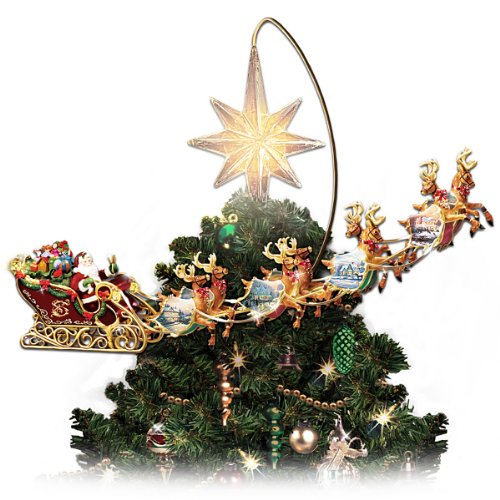
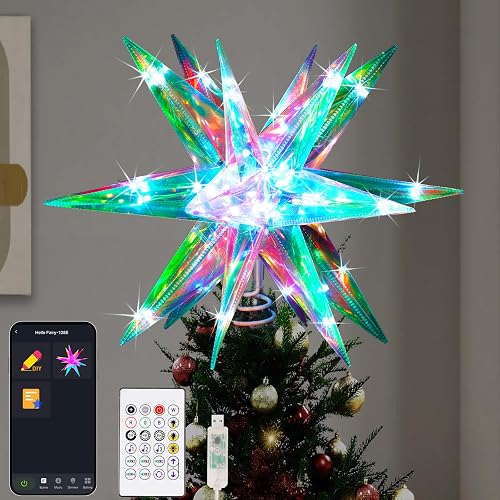
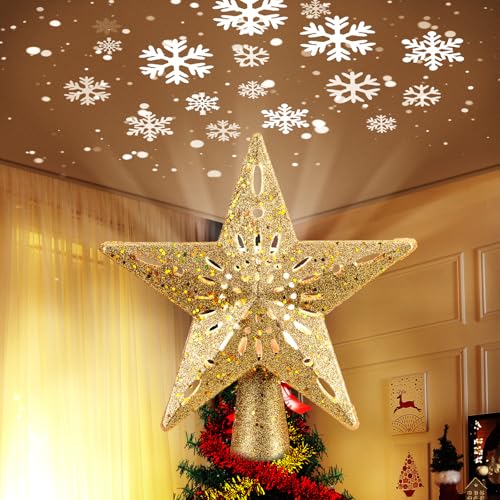
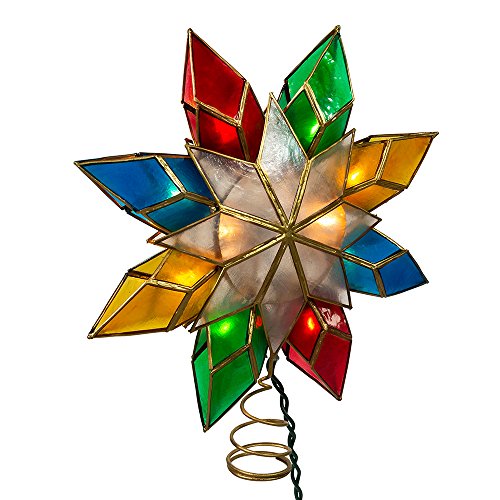
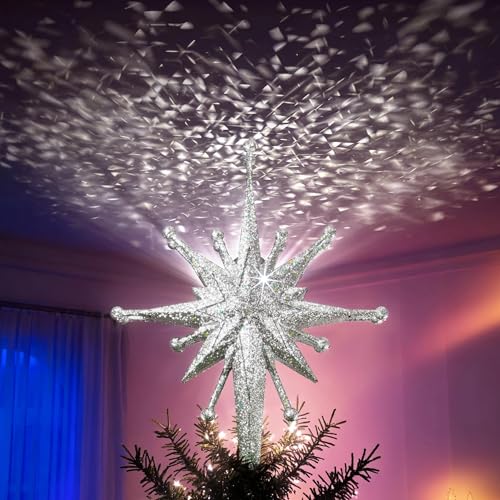
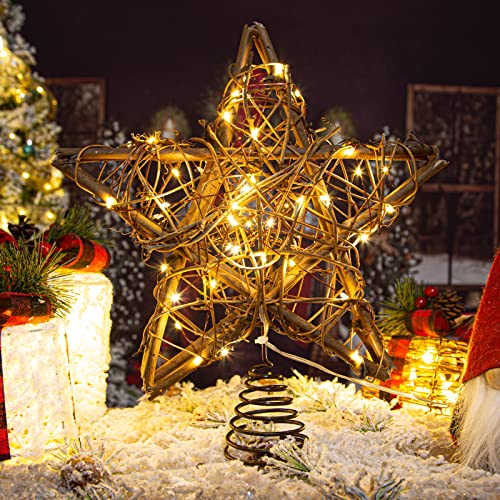
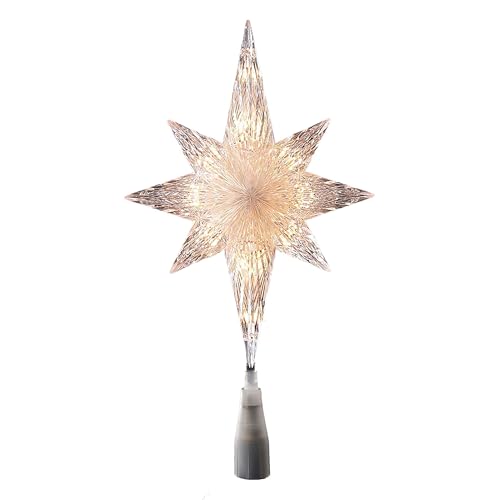
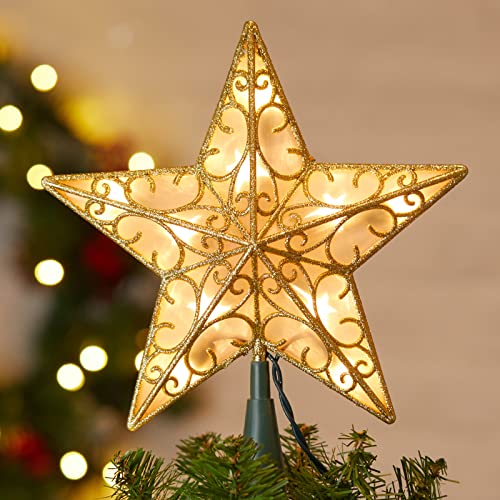
A star tree topper is the most traditional choice and works with almost any theme, from a simple five-point design to a more elaborate three-dimensional style with glitter, beads, or sequins. Stars tend to pair especially well with trees that already lean traditional, with warm-toned lights and classic ornament colors.
Angels
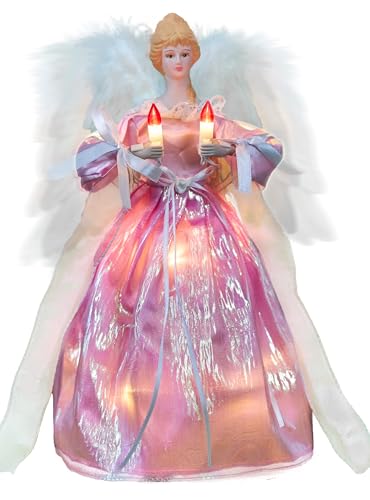
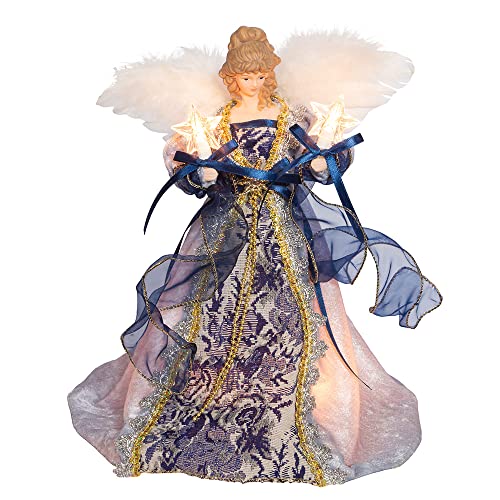
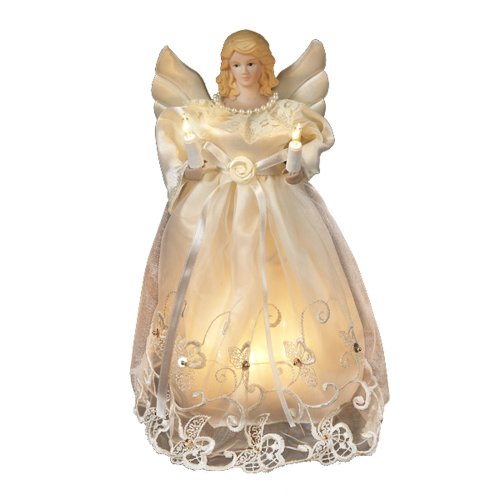
An angel tree topper is the other long-standing favorite, typically featuring a detailed gown and wings. Angels read a little softer and more sentimental than stars, which is part of why they've stayed popular for generations of family trees.
Finials, Bows, and Sprays
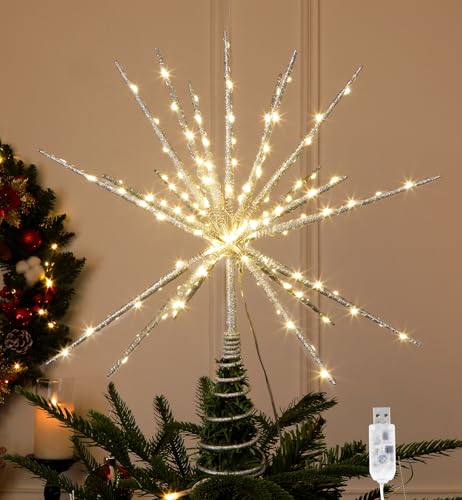
If neither a star nor an angel fits your decor, finials, oversized bows, ribbon toppers, and floral or berry sprays have all become common alternatives. These tend to suit more modern or design-led trees, since they skip the figurative shape in favor of texture, color, or movement. None of these are more "correct" than a star or angel; it comes down to whatever matches the rest of the tree.
Materials, Lighting, and Color That Hold Up
How a topper is built affects both how it looks and how long it lasts, especially if it comes out of storage every year.
What It's Made Of
Glass toppers have a vintage, higher-end look but chip and crack easily, which matters if you have kids or pets near the tree. Plastic and resin are lighter and far more forgiving of bumps, making them a practical pick for busy households. Fabric and felt toppers bring a softer, more rustic feel and tend to be the most forgiving to store between seasons.
Lit vs. Unlit
A lighted tree topper adds a focal glow at the top of the tree, which can be a nice finishing touch if the rest of the tree is also lit. An unlit topper is simpler to work with, since there's no cord to route or battery pack to hide, and it avoids adding one more thing that could fail partway through the season.
Matching the Light Color to Your Tree
If you do go with a lit topper, check the light color against the rest of your tree's lights before buying. Warm white lights on the tree paired with a cool white topper (or the reverse) tends to look mismatched once it's plugged in, even if each piece looks fine on its own.
Making Sure It Fits and Stays in Place
This is the part most buying guides skip, and it's usually the actual source of frustration once the topper is home. A sturdy stand keeps a tree from tipping, but the top of the tree needs its own kind of support.
Real Trees vs. Artificial Trees
A real tree has a tapering trunk that can be trimmed down to a sturdier point if the very top is too thin to hold weight. An artificial tree usually has a thin center pole or a cluster of top branches instead, which isn't always built to support a heavy topper on its own. Check the base opening of any topper against your tree's actual top diameter before assuming it will fit.
Keeping a Heavy Topper From Leaning or Falling
A topper that leans within a day or two is almost always a weight or base problem, not a decorating mistake. If the built-in clip or spike base isn't holding, floral wire, zip ties, or a small dowel secured to the trunk can anchor it firmly without damaging the tree. For an especially heavy topper, some people even run a thread up to a small ceiling hook so the branches aren't bearing the full weight. Whatever method you use, a topper that's genuinely too heavy for a thin artificial tree top is worth sizing down rather than fighting with anchors all season.
Frequently Asked Questions
What size tree topper do I need for my tree?
As a general guide, plan on 1.5 to 2 inches of topper height for every foot of tree height, then double check ceiling clearance before you buy.
Should I choose a star or an angel tree topper?
Both are traditional choices, so it mostly comes down to personal taste and what matches your other ornaments. Stars tend to suit classic, symmetrical trees, while angels lean a bit more sentimental.
How do I keep a tree topper from falling off or leaning?
Make sure the base actually fits the trunk or center pole, then reinforce it with floral wire, zip ties, or a small dowel if the built-in clip isn't enough on its own.
Do tree toppers fit every tree, or do I need to measure first?
Toppers are not universal. Base openings vary quite a bit, so measure your tree's top diameter and compare it to the topper's base before buying.
What's the difference between a topper for a real tree versus an artificial tree?
A real tree's tapering trunk can often be trimmed to a sturdier point, while an artificial tree's thin center pole or top branches may need extra support to hold a heavier topper securely.
Should I get a lit or unlit tree topper?
A lit topper adds a nice glow if the rest of the tree is already lit, but an unlit one is simpler, with no cord or battery pack to manage.
How much space should I leave between the topper and the ceiling?
Leave at least 6 inches between the top of the topper and the ceiling so it doesn't look cramped in the room.
Can a heavy topper damage the top branches of my tree?
Yes. An oversized or heavy topper can bend or snap thin top branches, especially on artificial trees, so weigh the topper against how sturdy that section actually is.
Making Your Decision
Choosing among the best christmas tree toppers really comes down to three checks: does it match your tree's height and fullness, does the style fit the rest of your decor, and does the base actually fit the trunk or pole you're working with. Get those three right and the rest, whether it's a star, an angel, or something entirely different, is just personal preference.