
Best Christmas Tree Tinsel: A Complete Buying Guide
Disclosure: We may earn a commission when you buy through links on this page, at no extra cost to you. As an Amazon Associate we earn from qualifying purchases. Learn more

Draping a tree in glittering strands sounds simple until you are standing in front of a shelf full of options, wondering which kind will actually hang right, catch the light, and not shed all over your living room floor by New Year's. Tinsel looks like an easy add on, but it gets messy fast if you grab the wrong material, buy too little, or forget that pets see shiny strands as a toy. Finding the best christmas tree tinsel for your home really comes down to a few practical choices: what it is made of, what color fits your tree, how much to buy, and how you put it up. This guide walks through each of those decisions, plus the pet safety question that comes up more than any other.

Material and Shine: What Actually Makes Good Tinsel
Not all tinsel behaves the same way once it is out of the package. Some strands catch light beautifully and hold their shape for weeks. Others go limp, dull, or static clingy within a few days. The material is the biggest factor in how your tree looks by the time you take it down.
PET Plastic vs PVC
Most tinsel sold today is made from either PET plastic or PVC. PET tends to be the better pick: it is thinner, catches light at more angles, resists tangling a little better, and does not carry the same environmental and off-gassing concerns as PVC. PVC tinsel is usually cheaper and can still look fine, but it tends to feel stiffer and yellow slightly over multiple seasons. If the packaging does not specify, run a strand between your fingers. PET feels lighter and more slippery, while PVC feels a bit rubbery.
Foil, Mylar, and Vintage-Style Tinsel
Metallic foil or mylar tinsel gives the most intense sparkle and is what most people picture when they think of classic tinsel. Vintage-style tinsel, sometimes labeled lametta, uses a heavier, flatter strand that drapes rather than fluffs. It photographs beautifully on a traditional tree but sheds more than modern PET strands, so it is a better fit for a tree that is more decorative than kid or pet accessible.
Color and Finish Options to Match Your Tree
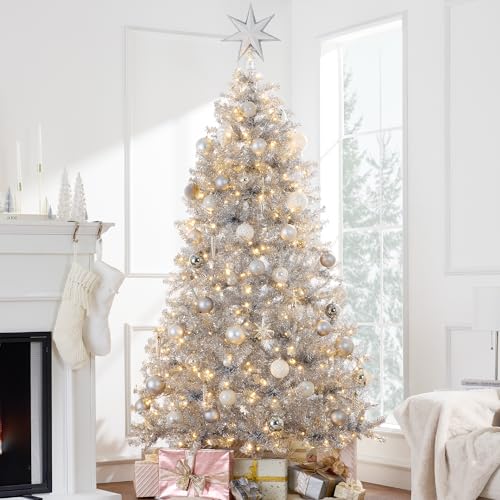
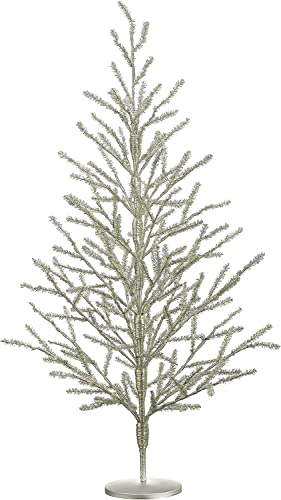
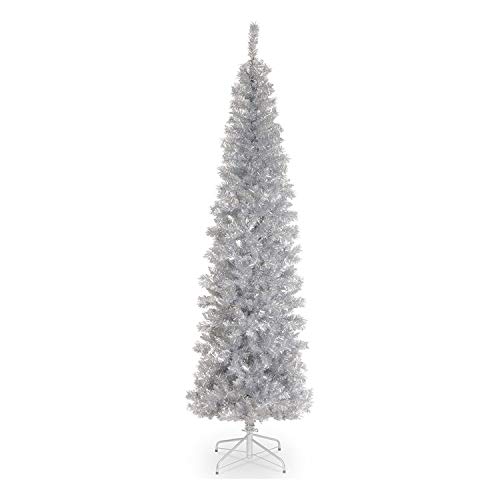
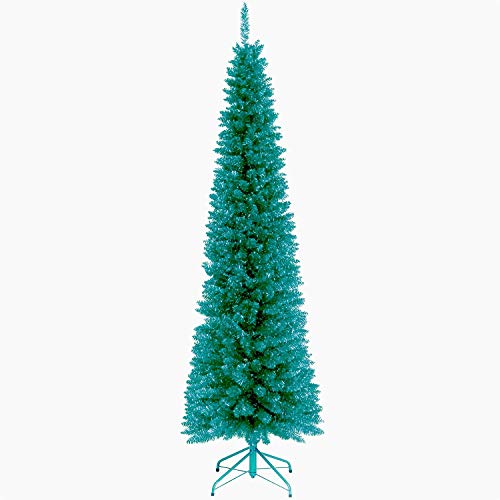
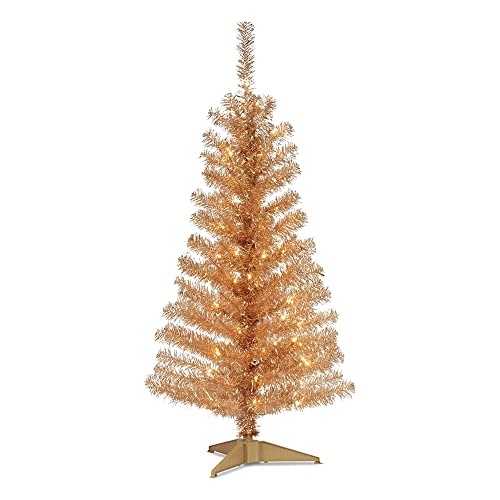
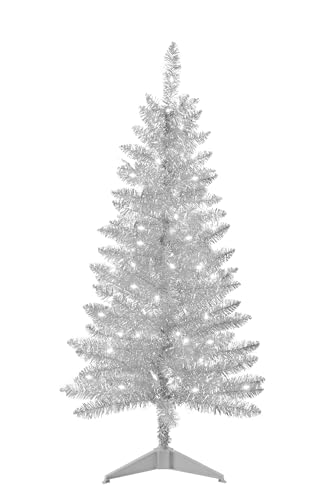
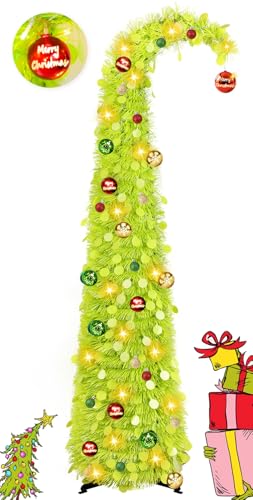
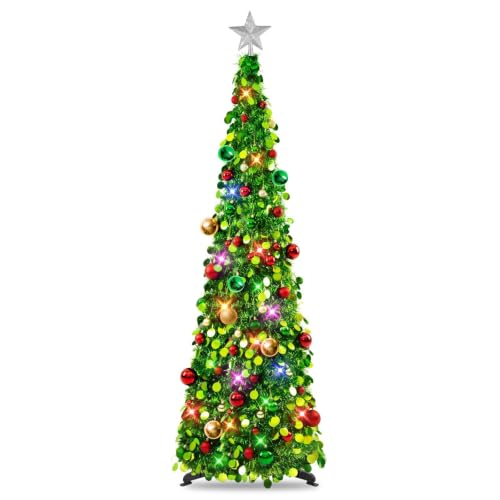
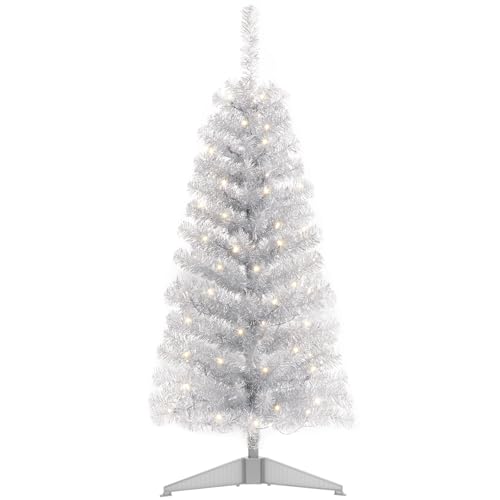
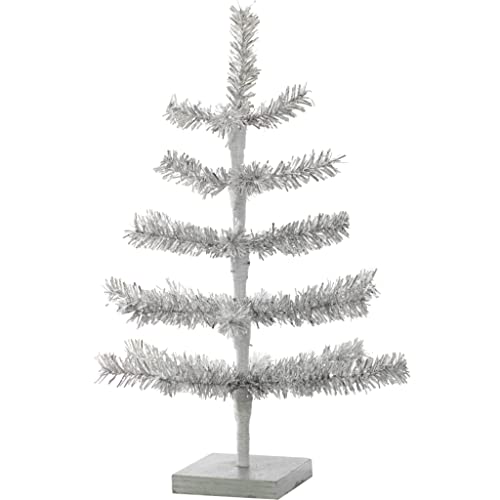
Color is where picking the best christmas tree tinsel gets personal, since it is the one choice that changes the whole mood of the tree. Silver and gold remain the most common choices because they pair with almost any ornament color scheme and reflect light without competing with string lights. Beyond the classics, you will find silver tinsel alternatives in red, white, pewter, green, and copper for a more themed look, plus trend colors like purple and lime green that show up on statement trees. Champagne and rose gold finishes have become popular for a softer, warmer glow that photographs well in low light.
Matte finishes create a softer, more diffused sparkle, while high shine strands throw off sharper glints. If your tree already has a lot of colored ornaments, a neutral silver or gold keeps the overall look from feeling busy. If your tree is mostly white lights and simple ornaments, a colored tinsel can be the accent that pulls the whole thing together. Tinsel is also worth comparing to garland: garland adds texture and volume with materials like beads or ribbon, while tinsel is about pure light reflection, and many trees end up using a bit of both.
How Much Tinsel Your Tree Actually Needs
Running out of tinsel halfway up the tree, or ending up with a tangled leftover pile, usually comes down to misjudging quantity. A rough rule that works for most trees is about one three foot strand for every foot of tree height, then adjusting up if you want a fuller, denser look. A six foot tree typically needs noticeably more tinsel than most people expect on the first pass.
Buy tinsel that is pre strung on spools if you can find it. It unwinds without knotting and makes it much easier to gauge how much you have used as you work around the tree. If you are decorating a real tree or a large artificial one, a stable base matters just as much as the decorations going on top of it. Loaded branches put real weight on the trunk, so it is worth checking that your tree stand can handle the added weight before you start layering on tinsel and ornaments.
Getting a Full, Even Look Without the Tangled Mess
How you apply tinsel matters almost as much as what you buy. Dumping handfuls onto branches tends to create clumps and bare patches, while a more deliberate approach spreads the shine evenly across the whole tree.
Application Techniques That Actually Work
Work from the bottom of the tree upward so you can see how much coverage you have left as you go. Drape strands loosely over branches rather than wrapping them tightly, which lets them catch light from multiple angles and move slightly, adding a bit of shimmer. Some people prefer a spiral pattern circling the tree top to bottom, while others drape shorter pieces branch by branch for more control near ornaments. Step back every few minutes to check for gaps or overloaded spots, and fill or thin out sections as needed. It is much easier to add tinsel to your string lights once they are already tested and in place than to thread lights through finished tinsel afterward.
Storing Tinsel So It's Ready Next Year
Tinsel tangles more than almost any other tree decoration, and loose tinsel thrown into a box is nearly impossible to untangle the following year. Wind leftover strands loosely around a piece of cardboard or keep unused spools intact rather than pulling them apart. Store tinsel flat, away from anything that could crush or crease it, and separate it from ornaments with sharp edges that can snag the strands.
Keeping Tinsel Safe Around Pets and Kids
This is the question that comes up more than any other when people research tinsel, and it is worth taking seriously. Cats in particular are drawn to tinsel because the movement and shine mimic prey, but swallowing even a short strand can cause a serious intestinal blockage that sometimes requires surgery. Dogs and small children can run into similar problems, since shiny, string like material is easy to chew or swallow without anyone noticing right away.
Older tinsel made before the early 1970s sometimes contained lead, but that has not been the case in decades. Today's tinsel is made from plastic, so lead exposure is not a realistic concern with anything currently sold. The physical choking and blockage risk is the real one to plan around. If you have cats, dogs, or toddlers in the house, consider skipping tinsel on the lower branches entirely, choosing heavier strands that are harder to pull loose, or placing tinsel only on a tree that is fully out of reach.
Frequently Asked Questions
What is Christmas tree tinsel made of?
Most modern tinsel is made from PET or PVC plastic film cut into thin strips. Older vintage tinsel was sometimes made from metal foil, and tinsel made before the early 1970s occasionally contained lead, which is no longer used in tinsel sold today.
Is tinsel safe for pets like cats and dogs?
Modern tinsel is not toxic, but it is still a physical hazard. Cats especially are drawn to the shine and movement, and swallowing tinsel can cause a serious intestinal blockage. If pets have access to your tree, it is safer to skip tinsel or keep it well above where they can reach.
How much tinsel do you need for a Christmas tree?
A common starting point is about one three foot strand of tinsel for each foot of tree height, then adding more for a fuller look. Buying pre strung spools makes it easier to judge coverage as you go rather than guessing with loose bundles.
What's the difference between tinsel and garland?
Tinsel is thin, reflective strands designed to catch and scatter light. Garland is typically thicker and made from beads, ribbon, or textured materials that add volume and texture rather than pure sparkle. Many trees use both together.
Why did tinsel become less popular over the years?
Tinsel fell out of favor partly due to safety concerns tied to older lead based versions, partly because of the mess it can create with pets and vacuum cleaners, and partly as decorating trends shifted toward more textured, natural looking garland and ornaments.
Is tinsel bad for the environment?
PVC tinsel is harder to recycle and more likely to end up as long lasting plastic waste. PET tinsel is a somewhat better choice environmentally, and reusing the same tinsel for several seasons instead of buying new each year reduces the impact either way.
Does modern tinsel still contain lead?
No. Lead based tinsel was phased out in the United States by the early 1970s. Anything sold today is made from plastic film, so lead exposure is not a realistic concern with current products.
Should tinsel go on before or after ornaments and lights?
Lights should go on first, followed by ornaments, with tinsel added last. Applying tinsel last makes it much easier to see gaps in coverage and avoids tangling it around lights or knocking ornaments loose while you work.
Can tinsel be reused year after year?
Yes, as long as it is stored properly. Tinsel that gets crushed, tangled, or creased in storage rarely looks as good the following season, so winding it loosely around cardboard or keeping spools intact makes a noticeable difference.
Making Your Tinsel Decision
The best christmas tree tinsel for your tree depends less on any single perfect product and more on matching material, color, and quantity to how your household actually uses the tree. PET tinsel in a classic silver or gold works for most homes, while pet owners and families with young kids may want to rethink tinsel altogether or keep it out of reach. Buy a little more than you think you need, apply it loosely from the bottom up, and store it carefully so it is ready to shine again next season.