Best Chicago Cutlery Knife Set: Which Size Should You Buy in 2026?
Disclosure: We may earn a commission when you buy through links on this page, at no extra cost to you. As an Amazon Associate I earn from qualifying purchases. Learn more

Best chicago cutlery knife set explained by set size, steel, handles, storage and care, so you buy only the pieces you use.
Picture a weeknight dinner in a busy household. One person is trimming chicken, another is slicing bread, and someone else needs a small knife for an apple. If your kitchen has one dull blade shared by everyone, prep slows down fast. Choosing the best chicago cutlery knife set for your home comes down to three things: how much counter or drawer space you have, how many people cook each day, and what you can comfortably spend.
This guide walks through the lineup by set size, storage style, steel, and budget, so you can match a set to your routine instead of paying for pieces that sit unused. Use the comparison table below to see the main options side by side.



Quick Answer: The Lineup in 30 Seconds
Chicago Cutlery sets fall into three broad groups. Compact starter sets with about 3 to 7 pieces suit single cooks and tight counters. Mid size block sets with about 10 to 15 pieces cover most family kitchens and add steak knives plus a sharpener or shears. Large sets with 16 to 20 pieces add specialty blades for big households that cook often. Pick the smallest group that covers your daily tasks, and choose storage that fits your space.
Before You Buy: A Quick Checklist for Choosing a Knife Set
Size: Match It to Your Space
Count the knives you reach for during a normal week before you count pieces in a box. Most home cooks rely on a chef knife, a paring knife, a serrated utility or bread knife, and kitchen shears. A 3 to 7 piece starter set covers those basics and fits a drawer or a slim block, which suits apartments and small galley kitchens. Sets of 10 to 15 pieces usually add a full run of steak knives and a honing steel, a good fit for families who eat together most nights. Sets of 16 to 20 pieces add boning, santoku, or extra utility blades, and they earn their footprint only if your household cooks varied meals often.
Which Type Fits Your Routine
Most Chicago Cutlery sets use stainless steel blades, either stamped from a sheet or forged from a single piece of steel. Stamped blades are light and cost less, and they handle everyday slicing well when you hone them often. Forged blades feel heavier and more solid, with thicker spines that suit cooks who break down whole chickens or cut dense squash. If you are comparing blade styles across brands, our guide to the best japanese knife set explains thinner Japanese geometry in more depth.
Features Worth It (and Ones to Skip)
A storage block is worth it if you have the counter room, since it keeps edges from knocking against drawer clutter. A built in sharpener inside the block is a genuine convenience for busy homes because it lowers the effort of routine upkeep. Steak knives matter only if you serve sliced meats often; otherwise they inflate the piece count without adding daily value. Sheaths are a smart low cost option for drawer storage in small kitchens. Skip oversized blocks with slots you will never fill, and skip extra specialty blades unless your cooking truly calls for them. If built in sharpening appeals to you, our article on whether a self sharpening knife block worth it walks through the trade offs.
Steel Type and Hardness
Stainless steel resists rust and staining, which is why nearly every set in this lineup uses it. High carbon stainless blends add carbon for better edge holding while keeping most of that rust resistance. Hardness is rated on the Rockwell C scale, shown as HRC. Many value priced stainless blades sit around 52 to 56 HRC. Softer steel dulls sooner but sharpens quickly and rarely chips, while harder steel holds an edge longer yet needs more care on the stone. For a family set that many hands will use, that forgiving middle range is sensible.
Blade Geometry: German vs Japanese
Geometry decides how a knife moves through food more than the logo on the blade does. German style blades carry a deep curve from tip to heel, so the edge stays in contact with the board during a rocking chop. Japanese style blades run flatter with a finer edge angle, so they glide through onions and fish with less wedging. Chicago Cutlery leans toward the German tradition, with broad blades and curved bellies that forgive rough technique.
Handle, Bolster, and Balance
Handles in this lineup range from molded polymer to wood and stainless steel. Polymer handles shrug off moisture and grip well with wet hands. Wood handles feel warm and classic but need hand washing and occasional oiling. A bolster is the thick collar where blade meets handle. A full bolster adds weight and protects your fingers, while a half bolster lets you sharpen the full edge length. Balance should sit near that collar, so the knife feels neutral rather than blade heavy in a pinch grip.
Realiztic Budget Ranges
Under about $50, expect stamped stainless blades, polymer handles, and compact blocks or sheath sets that work well for first apartments. From about $50 to $100, sets grow to 12 to 16 pieces with fuller blocks, steak knives, and better finished edges. From about $100 to $200, you will find heavier forged style construction and more comfortable handles. Above about $200, gains shrink for most homes, and most families get the best value in the middle band.
Chicago Cutlery Set Types Compared
Compact Starter Sets for Small Kitchens
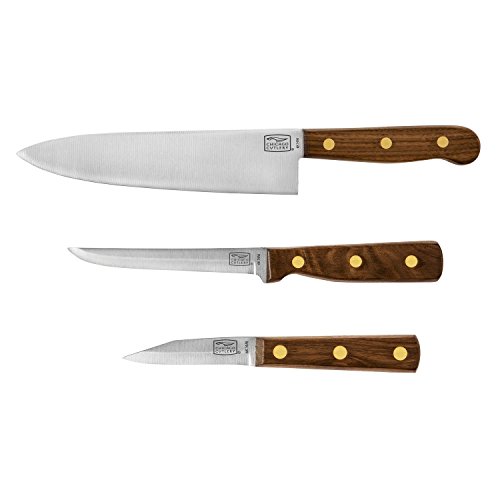
Starter sets of about 3 to 7 pieces focus on the blades you use daily and skip the extras. They suit dorm rooms, first apartments, and RV kitchens where drawer space beats counter space. Many come with sheaths instead of a block, so each blade stores safely in a drawer. The trade off is simple: no steak knives and no specialty blades, so hosts who carve roasts at the table will want more. For a single cook or a couple, though, a compact set keeps costs low and upkeep easy.
Mid Size Block Sets for Most Families
The classic block set of about 10 to 15 pieces is the heart of this lineup and the right answer for most households. You typically get the core prep knives, four to six steak knives, shears, a honing steel, and a block that keeps everything visible. If you are comparing storage formats across brands, our guide to the best block knife set covers block angles, footprints, and slot layouts. Measure your counter height under the cabinets before ordering, since a tall loaded block may not slide beneath low uppers.
Large Sets for Big Households and Frequent Hosts
Large sets of 16 to 20 pieces add a second tier of tools: a boning knife, a santoku, extra utility knives, and steak knives for eight or more settings. They make sense when several people cook at once or when you host dinners where every guest needs a steak knife. The cost is footprint, price, and more edges to maintain. If half the slots would hold blades you touch twice a year, step down a size instead.
The Chicago Cutlery Knife Set Lineup Explained
Chicago Cutlery has sold kitchen knives in the United States for decades, and its current lineup targets value minded home cooks rather than professional chefs. Within the brand, sets divide mainly by construction and storage. Entry lines use stamped stainless blades with polymer handles and compact blocks. Mid lines add fuller blocks, more steak knives, and in some cases sharpeners built into the block. Premium leaning lines use heavier forged style blades and wood or stainless handles.
Common Buying Mistakes to Avoid
- Buying by piece count alone: a 20 piece set padded with steak knives can serve you worse than a focused 10 piece set with better core blades.
- Ignoring under cabinet clearance: a tall block that cannot slide back on the counter ends up crowding your main prep zone.
- Skipping a maintenance plan: every set dulls with use, so a home with no honing steel or sharpener ends up cooking with blunt edges within a year.
- Putting fine edges in the dishwasher: heat, detergent, and rattling against other items dull edges and can loosen handles over time.
- Paying for duplicate specialty blades: two bread knives or an extra boning knife add cost and clutter if your meals never call for them.
Cost of Ownership and Care
The purchase price is only part of what a set costs you. Budget for a honing steel if your set lacks one, plus an occasional professional sharpening or a home sharpener, which together run about $20 to $60 over the first years. Hand wash and dry each blade right after use, since standing water invites rust spots even on stainless steel.
Your Questions, Answered
Are knife sets worth it for a home kitchen?
Yes, for most homes. A set costs less per blade than buying the same knives one at a time, and the matched block keeps storage simple. Sets make less sense if you already own two or three good knives you love, since a set would duplicate them. In that case, add single pieces only where you have a real gap, like a bread knife or shears.
How many knives should a kitchen have?
Most kitchens run well on four core blades: a chef knife, a paring knife, a serrated bread or utility knife, and a second mid size knife for backup during group cooking. Steak knives add four to eight more pieces if you serve sliced meat often. Beyond that core, each added blade should map to a task you do weekly.
What knives do I really need as a new cook?
Start with the chef knife, since it handles most chopping, slicing, and mincing you will do. Add a paring knife for peeling and trimming, a serrated knife for bread and tomatoes, and kitchen shears for packaging and herbs. That small group covers nearly every beginner recipe. Grow the collection only after a few months of cooking shows you which task still feels awkward.
How do I keep a Chicago Cutlery knife set sharp?
Hone little and often: a few light passes on a honing steel each week realign the edge before it feels dull. When honing stops helping, the edge needs true sharpening on a stone or with a pull through sharpener. Our step by step guide on how to sharpen kitchen knives covers angles and grit choices in detail. Avoid glass and stone cutting boards, which roll edges far faster than wood or plastic boards do.
Is Chicago Cutlery a good knife set brand?
It is a reasonable choice for shoppers who want a complete, low cost set for everyday cooking. The brand focuses on stainless steel, forgiving edge geometry, and wide availability rather than premium steels or hand finished edges. Cooks who sharpen rarely and cook simple meals tend to be satisfied. Enthusiasts who want harder steel and thinner edges usually move up a tier.
Which Chicago Cutlery knife set should I buy first?
Buy the mid size block set if you cook for a family, since it balances piece count, storage, and price for most homes. Choose a compact starter set if you live alone or your kitchen has almost no counter room. Pick a large set only when you host often enough to use the extra steak knives.
Final Thoughts
The right choice depends on your rooms and routines, not on the longest piece list. Small kitchens thrive with a compact starter set, most families land happily on a mid size block set, and frequent hosts can justify the largest sets. Whichever group fits, the best chicago cutlery knife set for you is the one whose core blades you will use daily and keep sharp. Look back at the product table above to compare sizes and storage styles before you decide.