
Best Chairs for Tattoo Artists in 2026: Everything to Know Before Your First Purchase
Disclosure: We may earn a commission when you buy through links on this page, at no extra cost to you. As an Amazon Associate I earn from qualifying purchases. Learn more

A first time buyer guide to tattoo artist chairs, covering height range, wipeable upholstery, casters, client access, and what each price tier buys.
Setting up your first station means choosing a seat you may spend six or more hours a day on, often leaning over a client with your weight shifted to one side. The best chairs for tattoo artists are not ordinary desk chairs: they roll quietly, wipe clean in seconds, and adjust low enough for leg work and high enough for shoulders. This guide starts with the basics, explains each spec in plain English, and flags the rookie mistakes that waste money.
You will compare saddle seats, drafting style stools, and padded chairs with backrests, and learn which suits your working position. The comparison table below gives a quick overview of the main styles, and the sections after it walk through fit, hygiene, and setup in the order a first time buyer should check them.
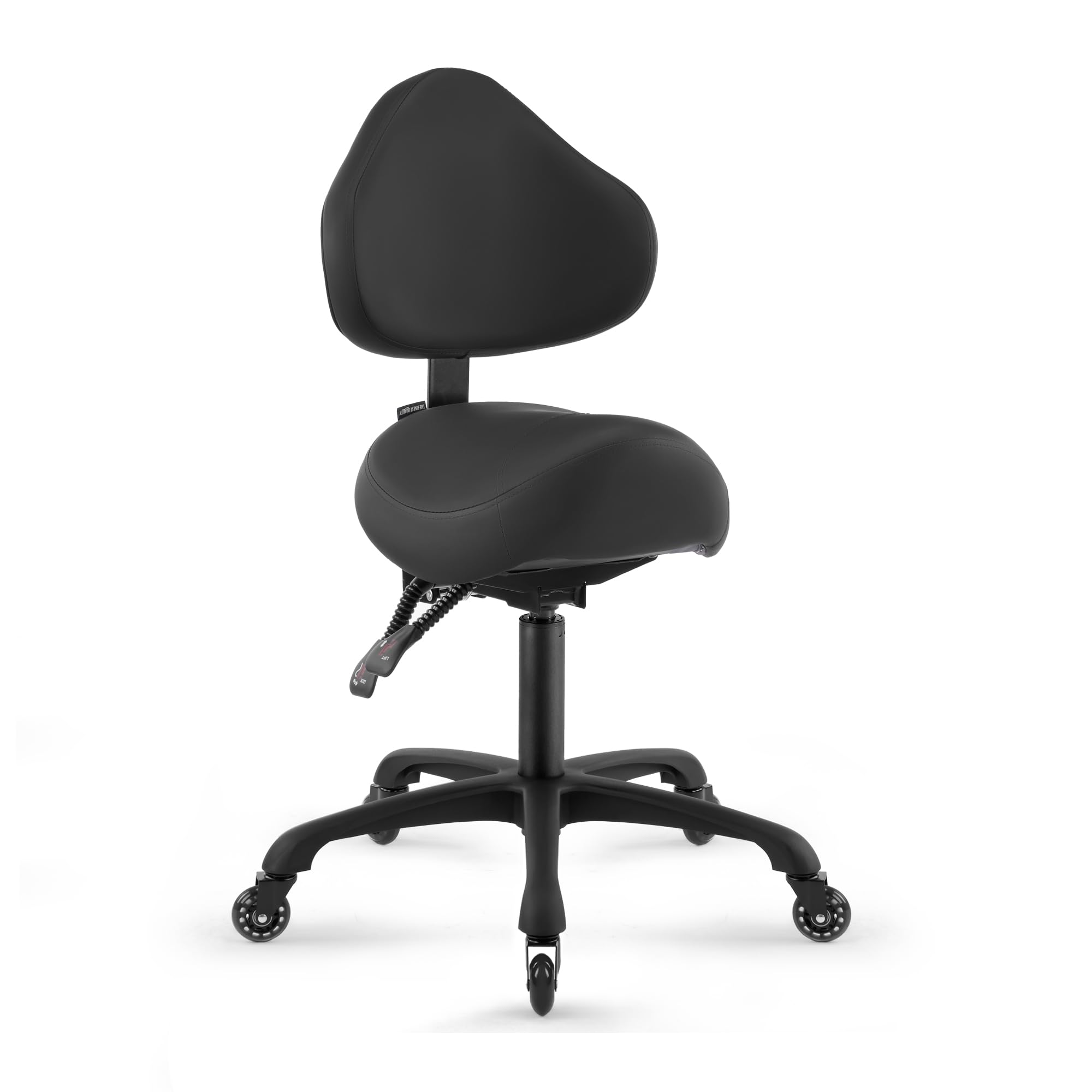


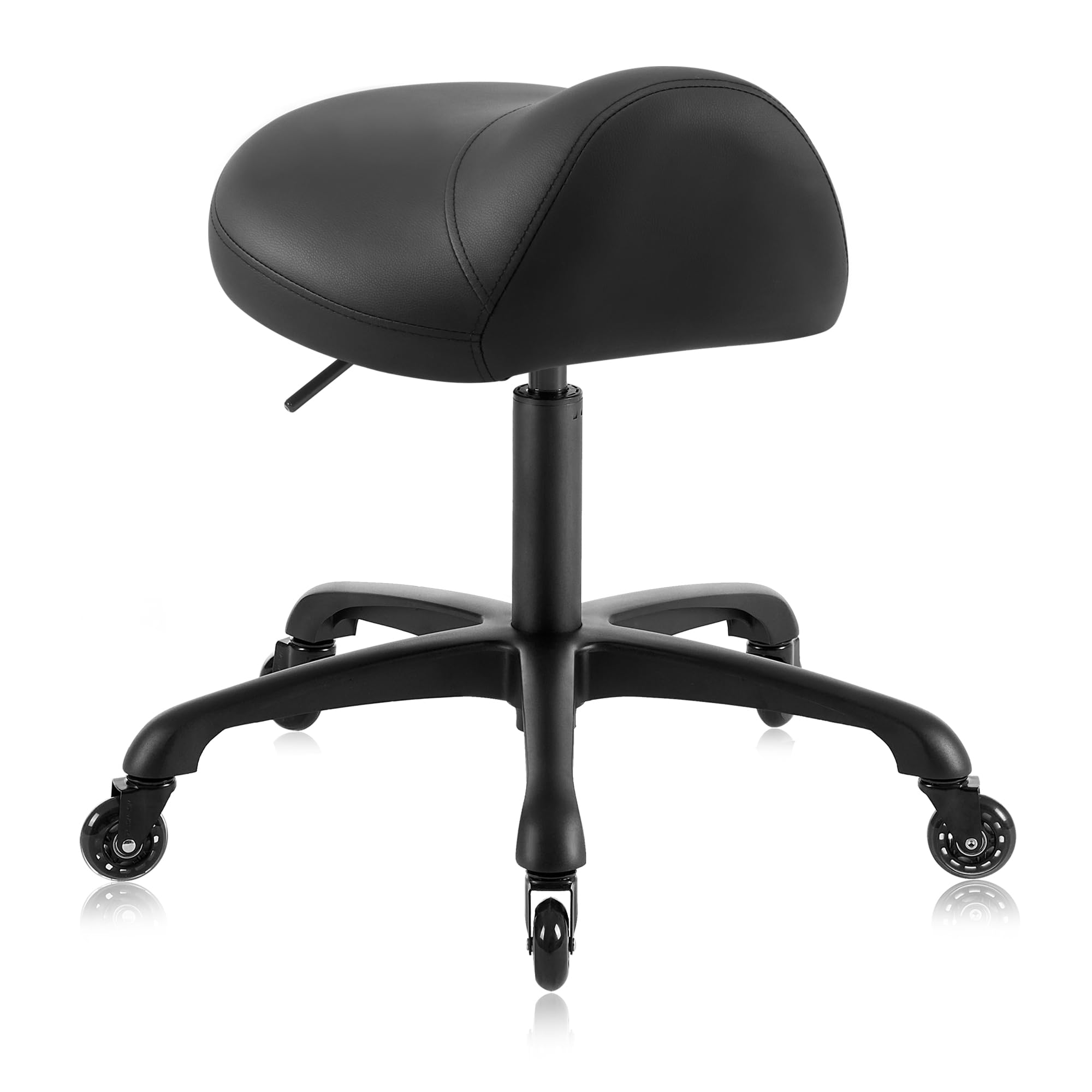

Chairs 101: The Basics
An artist chair has three jobs: hold you at the right height, let you move around the client without standing, and survive daily cleaning. Most designs use a gas lift cylinder for height changes, a five star base with casters for rolling, and a seat shaped either as a flat pad, a saddle, or a cushioned chair with a backrest. Saddle seats tilt the pelvis forward and suit artists who perch at the edge; backrest chairs suit longer sessions where leaning back between lines helps.
Related guides to best tattoo chairs cover the client side furniture, such as beds and client chairs, while this article stays on the seat you sit on. Keeping the two purchases separate helps, because the features that matter for the artist, like caster quality and lift range, differ from what a client needs.
Key Specs Explained in Plain English
Features That Matter for Tattoo Artists
Tattoo work creates needs a normal studio chair never faces. Ink, stencil fluid, and cleaning sprays land on the seat daily, so upholstery must be smooth, sealed, and free of stitched seams that trap residue; a single piece vinyl or polyurethane cover you can wipe in one pass is the practical standard. Follow your local studio rules on approved cleaning products, and remember that a wipeable surface supports your cleaning routine but never guarantees a sterile field on its own. You also need silent casters that roll over cords and mat edges without jolting your arm mid line.
Reach matters too. A seat that spins freely and has a compact base lets you circle a client chair without catching your feet, and a lift range of roughly 18 to 26 inches covers most working heights from ankle pieces to upper back work.
Ergonomics and Adjustability
Height adjustment is the core control, worked by a lever you can reach without breaking your working position. Some seats add seat tilt, which angles the pad a few degrees forward and can ease lower back strain during long leaning sessions, and backrest models may offer tilt lock that holds the back at a set angle while you rest between passes. Armrests divide opinion: many artists remove them because they block close access to the client, while artists doing long color sessions like a low rest for the non working arm. If you want armrests, choose ones that swing away or unbolt cleanly.
Artists comparing general studio seating in guides to best chairs for artists will notice the overlap, but drawing chairs rarely face the cleaning demands described above, so weigh upholstery and casters more heavily here.
Warranty and Return Policy
Read the warranty in parts, because coverage differs by component. Frames and bases often carry five years or more, while the gas lift cylinder, the part most likely to fail first, may carry only one or two years. Upholstery coverage is usually shortest and may exclude cracking from cleaning chemicals, which is worth checking if your studio uses strong sprays. A thirty day return window matters for a first chair, since seat shape is personal and hard to judge from photos, so keep the box until you have sat through one full session.
Comfort and Cushioning
High density foam is the spec to look for: it feels firm at first and keeps its shape across a long day, while soft low density foam compresses within the hour and leaves you sitting on the base plate. A cushion about two to three inches thick balances support with the low working height tattooing needs. Saddle seats spread weight across the thighs and take a week of short sessions to get used to, so build up sitting time gradually. If your legs go numb, the seat edge is pressing, and a flatter pad or a height change usually fixes it.
Materials and Upholstery
Vinyl and polyurethane covers lead for studio use because they resist ink stains and wipe clean without absorbing fluids. Fabric and mesh breathe better but soak up spills, which makes them a poor fit anywhere ink is open. Real leather is durable and cleans well but costs more and can crack if strong disinfectants are used against the maker guidance. Under the cover, a metal or reinforced nylon base outlasts thin plastic, and rubber coated casters protect floors and roll more quietly than hard plastic wheels.
Rookie Mistakes to Avoid
- Buying a fabric desk chair because it looks comfortable, then finding ink and cleaning spray ruin the cover within months.
- Ignoring the lift range, so the chair will not drop low enough for leg pieces or rise for shoulder work.
- Choosing a wide executive base that cannot get close to the client chair, forcing you to lean and strain your back.
- Skipping the weight capacity check, which leads to a sinking gas lift and a wobbling seat during sessions.
- Keeping fixed armrests that block your access to the client and crowd your working arm.
Getting Started: Setup and First Use
Assemble the chair on a clean floor, push each caster fully into the base, and tighten every bolt before the first sit. Set the height so your feet rest flat and your elbows sit near the height of the client surface, then roll around your station to check the base clears the client bed and your supply cart. Many artists lay out their full station, including the gear covered in guides to best tablets for tattoo artists for stencil work, and test reach to every item before the first client sits down.
During the first week, note where you feel pressure after each session and adjust one setting at a time. Tighten the bolts again after the first month, because new chairs settle and small movements loosen fixings.
FAQs
What features matter most in a chair for tattoo artists?
A smooth wipeable cover, a wide height range, and quiet casters matter most. Together they let you clean the seat between clients in seconds, reach low and high work without standing, and move without jolting your line. After those three, look at foam density and weight capacity, because a chair that sinks or wobbles mid session cannot be fixed by any other feature.
What features matter most for long tattoo sessions?
For long sessions, firm high density foam and a seat shape that does not press the backs of your thighs matter most. A backrest you can lean into during pauses helps during multi hour pieces, and a tilt lock can hold that resting angle. Plan your own breaks as well: standing and stretching between stages protects your back more than any cushion, and a chair that rises smoothly makes those breaks easier to take.
How do I choose the right chair size as a tattoo artist?
Match the chair to your body and your client furniture. Sit with feet flat and check that the seat edge does not press behind your knees; a gap of about an inch is right. Then confirm the lift range covers your lowest and highest working positions, and that the seat width supports you without squeezing your hips. Artists over six feet usually need a taller lift and a deeper seat, while smaller artists should check the minimum height first.
How long should a good tattoo artist chair last?
A good studio chair should last about four to seven years of daily use. The gas lift and casters wear first, often around year three or four, and both are usually replaceable parts. Upholstery life depends on cleaning habits: wiping ink away promptly and using maker approved products slows cracking. Replace the chair when the lift sinks under your weight or the base cracks, because both failures can happen suddenly during a session.
Is an expensive chair worth it for a tattoo artist?
It is worth it when the extra money buys a stronger lift, better casters, and sealed upholstery that survives daily cleaning. Those parts decide how a chair feels in year three, not just week one. If you tattoo occasionally at home, a mid priced stool covers the need and leaves budget for lighting and supplies. Full time artists who sit all day usually recover the cost through comfort and fewer replacements.
Final Thoughts
For your first best chairs for tattoo artists purchase, rank wipeable upholstery, lift range, and caster quality above looks, and confirm the weight capacity and return window before ordering. Saddle seats suit artists who perch and move constantly, while backrest chairs suit long sessions with planned pauses. Compare your finalists with the product table above, sit in your chosen chair for one full session before the return window closes, and adjust from there.


