
Best Candelabra LED Bulbs: A Complete Buying Guide
Disclosure: We may earn a commission when you buy through links on this page, at no extra cost to you. As an Amazon Associate we earn from qualifying purchases. Learn more

Chandeliers, wall sconces, and other candle-style fixtures almost always take a smaller screw base than the bulbs in the rest of your house, which is why so many people bring home the wrong size and can't figure out why it won't fit. Candelabra LED bulbs solve the two biggest headaches that come with older candle-style fixtures: they stay cool to the touch after hours of use, and they last for years instead of months. Not every candelabra LED bulb behaves the same way once it's installed, though. Dimmer compatibility, light color, and bulb shape all affect how a fixture actually looks and performs in a dining room, hallway, or entryway. This guide walks through what matters before you buy, so the bulb you choose fits both the socket and the mood you're going for.




Getting the Base Size Right: E12 vs. Other Sockets
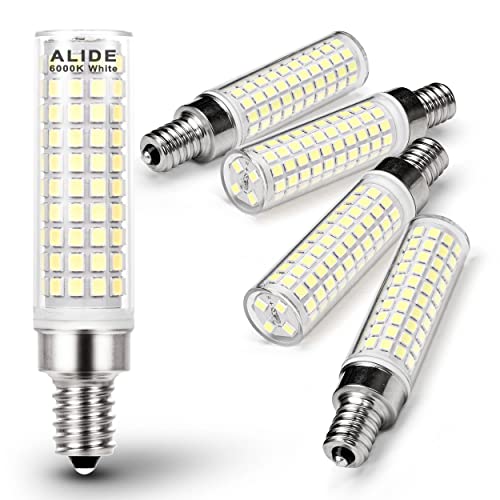
Almost every candelabra fixture uses an E12 base, sometimes called a candelabra screw base, which measures about 12 millimeters across. That's roughly half the size of the E26 medium base found in standard lamps and overhead fixtures. The two are not interchangeable: an E12 bulb will sit loose and fail to make contact in an E26 socket, and a standard bulb simply won't thread into a candelabra fixture at all.
Measuring Your Current Socket
If you're unsure which base your fixture takes, remove the old bulb and look at the packaging or the metal threading itself. A candelabra base looks noticeably thinner and more delicate than a standard household base. Some larger chandeliers and pendant fixtures actually mix base sizes, so check every socket rather than assuming they all match.
Why the Wrong Base Causes Bigger Problems
Forcing a mismatched bulb, or using an adapter that wasn't rated for the fixture's wattage, can lead to loose connections, flickering, or in rare cases overheating at the socket. It's worth double-checking the base type before ordering a full set, especially for fixtures with many bulbs like a dining room chandelier or a multi-arm wall sconce, where replacing a mismatched order gets expensive fast.
Why Dimming Compatibility Matters More Than You'd Think
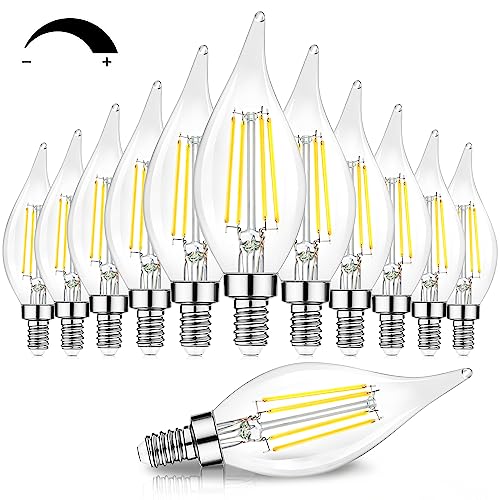
Dimmable candelabra LED bulbs are common, but "dimmable" on the box doesn't guarantee smooth performance with every dimmer switch. LED bulbs draw power differently than the incandescent bulbs older dimmers were designed for, and that mismatch is the most common reason people end up with flickering, buzzing, or a light that won't dim below a certain level.
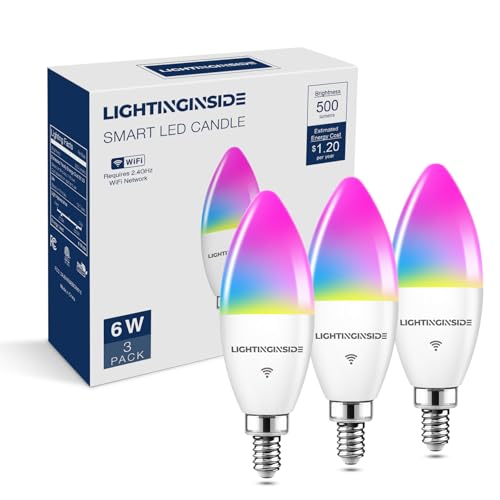
If a fixture strobes or flickers when dimmed, the dimmer switch itself is often the culprit rather than the bulb. Older rotary or basic toggle dimmers were built for incandescent loads and frequently struggle with the low wattage draw of LEDs. Look for a dimmer rated specifically for LED loads, and check the minimum wattage it supports. Some smart and app-controlled dimming systems, similar to the ones used with smart light bulbs in other rooms, handle low-wattage LED loads more gracefully than older mechanical dimmers.
If you're buying for a fixture that isn't on a dimmer at all, you can skip this concern entirely and choose a standard non-dimmable bulb, which is usually a few dollars cheaper per bulb.
Choosing a Light Color That Suits a Chandelier or Sconce
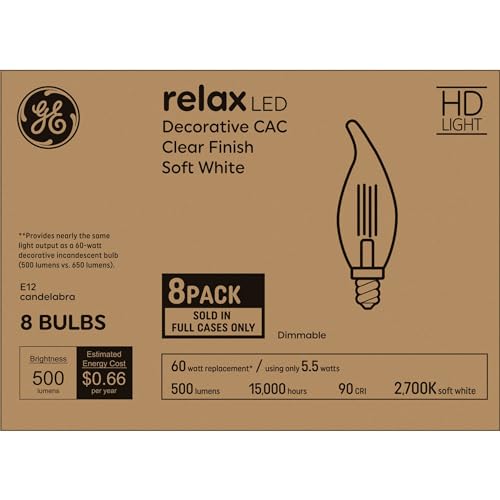
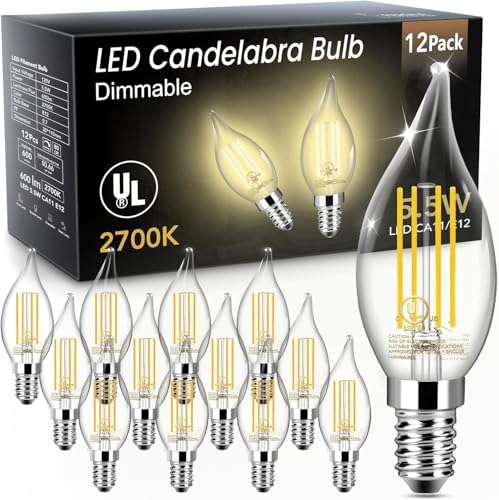
Color temperature is measured in Kelvin, and it has an outsized effect on how a decorative fixture reads in a room. Warm white, generally between 2700K and 3000K, mimics the glow of an incandescent or candle flame and tends to look most natural in chandeliers, sconces, and other fixtures meant to feel cozy rather than clinical. Cooler, whiter light in the 4000K-5000K range can look sharp in a kitchen or garage, but it often feels out of place hanging over a dining table.
A newer option worth knowing about is the "warm glow" or "dim-to-warm" bulb, which shifts from a brighter 2700K down toward a candle-like 2200K as it's dimmed, closely mimicking how a real flame or an old-fashioned filament bulb behaves. These cost more than a standard candelabra bulb but can make a real difference in fixtures that are visible, like an open chandelier with no shade.
Also worth checking is the color rendering index, or CRI. A bulb with a CRI of 90 or higher will render skin tones and finishes more accurately than a cheaper bulb in the 80 range, which matters in rooms where the fixture is doing double duty as ambient lighting rather than just decoration.
Matching Bulb Shape and Finish to Your Fixture
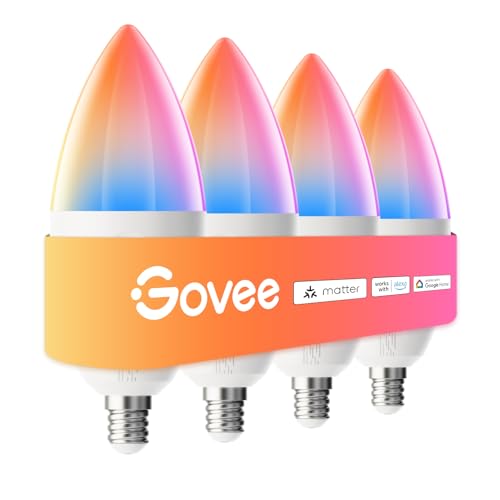
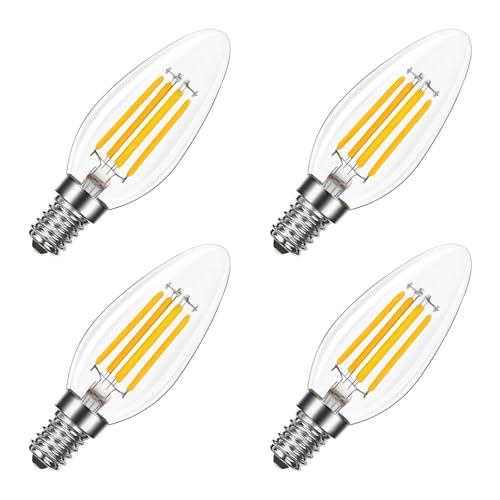
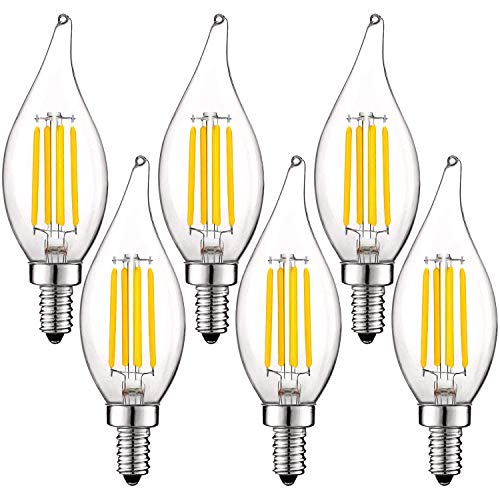
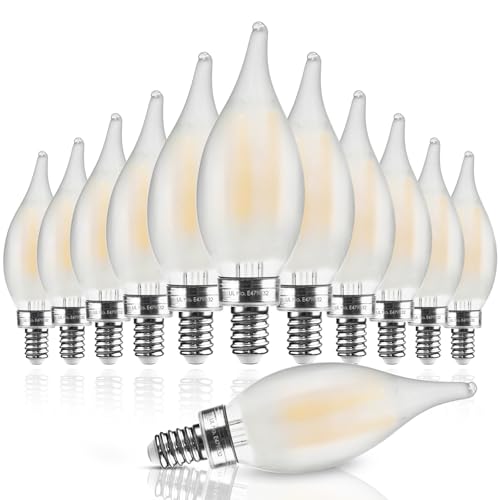
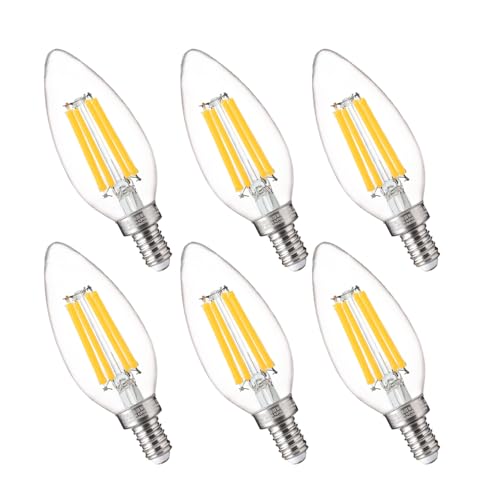
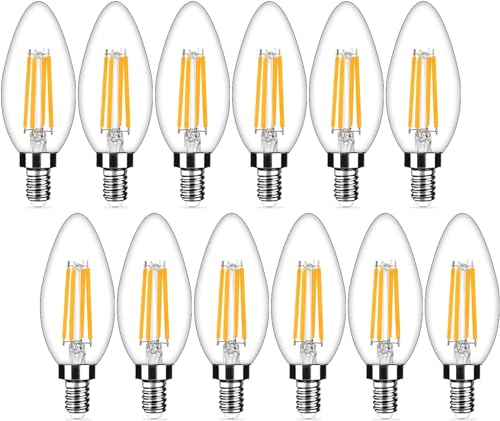
Candelabra bulbs come in a handful of standard shapes, and picking the wrong one can make an otherwise nice fixture look off. B10 and B11 bulbs have a rounded, blunt tip and are the most common shape for enclosed or shaded fixtures. C-shaped or CA-shaped bulbs have a pointed, angled "flame tip" designed to mimic a real candle, which suits open chandeliers and pendant fixtures where the bulb itself is visible.
Finish matters just as much as shape. Clear glass shows the filament or LED elements directly and casts a defined, slightly sparkly shadow pattern, which many people like in an exposed chandelier. Frosted glass diffuses the light more evenly and softens both the glare and the shadows, which tends to look better in fixtures positioned at eye level, like sconces in a hallway or bathroom.
If the fixture will be fully enclosed by glass or fabric, shape and finish matter less since they won't be visible, and it's more important to confirm the bulb is rated for enclosed use so heat doesn't build up inside the fixture.
Frequently Asked Questions
What's the difference between an E12 and E26 base?
E12, or candelabra base, is about 12mm across and used in chandeliers, sconces, and other decorative fixtures. E26, or medium base, is roughly 26mm across and used in standard lamps and overhead fixtures. They aren't interchangeable without an adapter rated for the fixture.
Are candelabra LED bulbs dimmable?
Many are, but always check the packaging since non-dimmable versions are also sold. A dimmable bulb still needs a compatible LED-rated dimmer switch to perform smoothly without flickering.
Why do my candelabra LED bulbs flicker on a dimmer?
This usually points to an incompatible dimmer switch rather than a faulty bulb. Older dimmers built for incandescent loads often can't handle the lower wattage draw of LEDs, causing flickering, buzzing, or an inability to dim smoothly.
What color temperature should I choose for a chandelier?
Warm white, around 2700K to 3000K, is the most common choice because it mimics the glow of a traditional candle or incandescent bulb and suits most dining rooms and entryways.
Can I use a candelabra bulb in an enclosed fixture?
Only if it's rated for enclosed use. Check the packaging, since some LED bulbs aren't designed to handle the heat buildup that happens inside a fully enclosed fixture.
What shape bulb do most chandeliers use?
B10 and B11 bulbs with a rounded, blunt tip are the most common, while flame-tip C or CA shapes are popular for open fixtures where the bulb is visible and meant to look candle-like.
Making the Right Call for Your Fixture
Picking the right candelabra LED bulb comes down to four things: confirming the base fits, matching the color temperature to the mood of the room, choosing a shape and finish that suits how visible the bulb will be, and making sure dimming compatibility is sorted out before installation. Get those right, and a simple bulb swap can make a chandelier or sconce look considerably better without touching the fixture itself.