
Best Brake Set for Mountain Bike by Budget: A Smart Guide for 2026
Disclosure: We may earn a commission when you buy through links on this page, at no extra cost to you. As an Amazon Associate I earn from qualifying purchases. Learn more

Learn how to choose the best brake set for mountain bike by budget, with clear guidance on pistons, rotor size, pad compounds, and what each tier gives.
Brake sets for trail bikes span a huge price range, from basic kits that cost less than a tire to premium sets that cost as much as a wheelset. Knowing where the money actually improves control is the whole game when you shop for the best brake set for mountain bike riding. This guide walks through what each budget tier delivers, which features earn their cost, and which ones you can skip. The comparison table below shows the main options side by side, and the best brake sets for most riders sit in the middle of it.


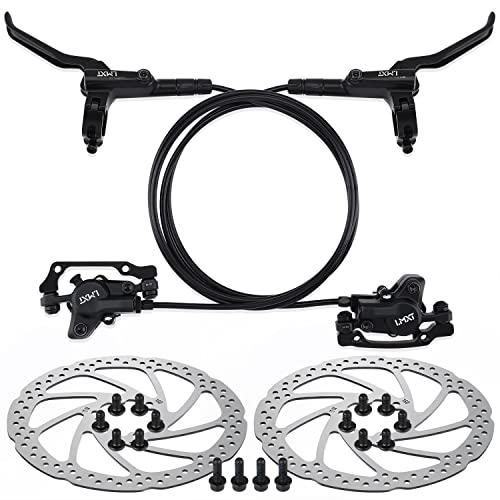


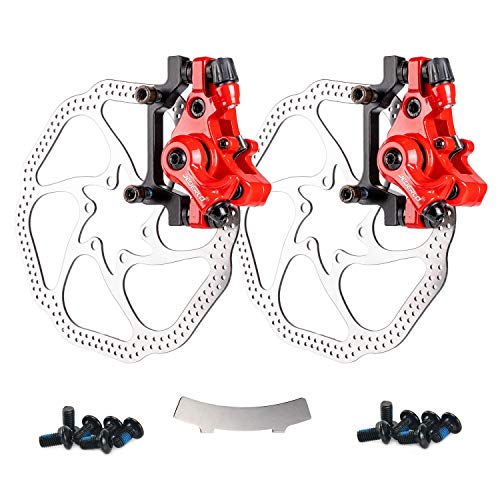

What Each Budget Tier Looks Like
Budget Tier: Capable Basics for Lighter Riding
Budget sets, usually around $80 to $150 for a front and rear pair, are mostly two piston hydraulic brakes with simple levers and basic pads. On cross country and mellow trail rides they stop reliably and feel far better than cable brakes. The limits show up on long descents, where heat builds, lever feel goes soft, and smaller rotors fade sooner. You also give up tool free lever adjustment on many sets. For a hardtail ridden on gentle terrain, or a first upgrade from mechanical brakes, this tier is honest value and leaves money for tires and pads.
Midrange Tier: The Sweet Spot for Most Riders
Midrange sets, roughly around $150 to $300, are where most trail riders should shop. You get stronger four piston calipers on many models, better lever bearings for a smoother pull, and pads with more heat tolerance. Modulation improves in a way you feel immediately, because small finger movements give small changes in power, which keeps you off the skid on loose climbs and wet roots. Riders comparing complete systems in our guide to the best mountain bike brakes will notice this tier covers the widest range of bikes and terrain without wasted features.
Premium Tier: Maximum Power and Heat Control
Premium sets, often around $300 to $500 or more, add larger and stiffer calipers, highly adjustable levers, and the best heat management in the category. This tier earns its price on enduro and downhill bikes, on heavy e bikes, and for heavier riders who cook lesser brakes on long descents. You gain reach and bite point adjustment without tools, consistent lever feel from top to bottom of a run, and pads and rotors designed as one system. The power jump over midrange is real but smaller than the jump from budget to midrange, so buy premium for heat and adjustment, not raw stopping force alone.
What Your Money Gets You at Each Price Tier
Budget Tier: What to Expect
Expect a complete front and rear set with hoses, basic organic or simple sintered pads, and rotors sometimes sold separately, so check the listing twice before you assume a full kit. Lever reach adjustment may need a small hex key. Bleeding uses the brand fluid system, and spare pads are cheap and easy to find. This tier suits riders under moderate weight on moderate grades. If your local trails drop for minutes at a time, budget brakes will ask you to stop and cool them, and that limit, not outright power, is the real trade off.
Midrange Tier: The Sweet Spot in Detail
Here your money buys four piston calipers on many sets, larger pad surfaces, and levers that pivot on bearings instead of loose bushings. Heat capacity rises because there is more metal and pad material to absorb it. Pad choice widens too, and swapping compounds is the cheapest tuning step in all of braking, as the options in our guide to the best brake pads for mountain bike riding show. Warranty support and spare parts availability also improve at this level, which matters for a part you will service for years.
Premium Tier: When Spending More Pays Off
Spending more pays off when heat, weight, or adjustment are your actual problems. Premium levers let you set reach and bite point on the trail without tools, which helps when gloves change or pads wear mid ride. Calipers resist flex, so pressure goes into the pads instead of bending the body. If you race, ride bike parks, or descend with a heavy bike and pack, this consistency protects your hands and forearms late in the day. If none of that sounds like your riding, the premium tier mostly buys pride of ownership.
Features Worth Paying For, and Ones to Skip
Hydraulic vs Mechanical Disc Brakes
Hydraulic brakes are worth paying for on any mountain bike ridden on real trails. Fluid pressure gives more power with less finger effort, self adjusts as pads wear, and stays consistent in wet weather. Mechanical disc brakes cost less and are simple to fix with basic tools, but they pull only one pad inward on most designs and need frequent adjustment. Riders researching the best hydraulic brakes for mountain bike use will find that even budget hydraulics beat good mechanical brakes for control, which is why this upgrade comes before almost any other.
Piston Count and What It Changes
Two piston calipers are lighter and simpler, and they suit cross country riding where descents are short. Four piston calipers spread pressure across a larger pad, giving more power, better modulation, and slower heat build up. The cost is a little weight and pricier pads. Match piston count to your longest descent, not your average ride. If one trail in your rotation has a five minute downhill, that trail should decide, because fading brakes there are a safety problem, not an inconvenience.
Rotor Size and Heat Management
Rotor size is the cheapest power upgrade you own. Common sizes run from 160 mm to 220 mm, and a larger rotor adds leverage and sheds heat faster. Many riders run one size larger in front, where most braking force lives. Check that your fork and frame are rated for the rotor size and that you buy the correct adapter for your mounts. Thick rotors, around 2 mm, resist warping better under heat. Oversizing the rear rotor rarely helps and can make the wheel lock too easily on loose ground.
Pad Compound: Organic, Sintered, and Hybrid
Organic pads feel quiet and grab early, but they wear fast and fade sooner in heat and mud. Sintered metal pads last much longer, handle heat and wet grit well, and can feel slightly less smooth at low speed. Hybrid compounds try to split the difference. Choose sintered for bike parks, wet climates, and heavy bikes, and organic for dry, gentle trails where quiet matters. Whatever you choose, bed new pads in with a series of firm stops from moderate speed before any real descent, or they will glaze and squeal.
Lever Feel and Adjustment
Reach adjustment lets you place the lever where your index finger bends naturally, and it should be standard on any set you consider. Bite point adjustment changes how far the lever moves before the pads bite, and it is a premium feature worth having if you ride with different glove thicknesses. A lever that pivots on bearings feels smoother after a season of use than one on a loose bushing. Skip decorative levers and exotic finishes. They add cost and do nothing for control, heat, or service life.
Long Term Costs to Factor In
The purchase price is only the start. Budget for pads every few months to once a season depending on terrain, rotors every year or two, and a bleed kit or shop bleed about once a year. Hydraulic fluid is cheap, but the correct type matters, since some brands use mineral oil and others use DOT fluid, and mixing them ruins seals. Factor in adapter brackets when changing rotor sizes. A midrange set with cheap, widely available pads often costs less over three years than a bargain set with rare, pricey consumables, so check pad prices before you buy the brakes.
Frequently Asked Questions
What features matter most in brake sets for mountain bike riding?
Heat capacity, modulation, and correct rotor size matter most. A set that feels strong in the parking lot but fades on your longest descent has failed at the one job that counts. Four pistons, suitable rotors, and the right pad compound cover most riders. Among the best brake sets, the differences you feel daily come from lever shape and adjustment, so try to squeeze a lever in a shop before you commit.
What rotor size do I need?
Most trail riders do well with a 180 mm rotor in front and 160 mm or 180 mm at the rear. Cross country riders can run 160 mm at both ends, while enduro and downhill riders often use 200 mm or 220 mm in front. Heavier riders and e bike riders should size up one step. Always confirm your fork and frame maximum ratings and buy the matching mount adapter.
Are four piston brakes better for beginners?
They can be, because their power builds in a smooth, predictable way that is easier to control than a weak brake you must grab hard. The risk is grabbing too much in a panic, which any brake allows. Beginners on mellow terrain are fine on two pistons, while beginners who ride steep trails benefit from four pistons sooner. Either way, practice braking with one finger and weight back before the trail gets steep.
How much should I spend on my first proper brake set?
Around $150 to $300 buys the midrange tier where value peaks for most riders. Below that range you give up heat tolerance and adjustment, and above it you pay for refinement rather than basic safety. If your budget is tight, spend on the front brake first, since it does most of the work. Do not forget pads, rotors, and adapters in the budget, because a set alone may not complete the job.
How long do brake pads and rotors last?
Pads last from a few months of wet, gritty riding to a full season or more in dry conditions, and sintered pads outlast organic ones by a wide margin. Rotors usually last one to two years and should be replaced when they wear thin, warp badly, or develop deep grooves. A simple habit helps: glance at pad thickness whenever you wash the bike, and you will never be surprised on the trail.
Do I need special brakes for an e bike?
Usually you need stronger brakes, not a separate category. E bikes are heavier and hold speed on descents, so four piston calipers, larger rotors, and sintered pads are the sensible baseline, the same advice given for the best enduro mountain bike brakes. Check that any set you buy lists an e bike rating if your bike is heavy, and size rotors for the total weight of bike, rider, and gear.
Wrapping Up
Decide by descent length, total weight, and pad costs, in that order. Most riders should buy a midrange four piston set, size the front rotor generously, and keep fresh pads in it. Riders at bike parks or on heavy bikes should step up for heat control, as the guidance on the best downhill mountain bike brakes explains. Check the product table above, match a tier to your trails, and the best brake set for mountain bike riding for you will be the one that still feels strong at the bottom of your longest hill.


