
Best Bluetooth FM Transmitter for Car: A Complete Buying Guide
Disclosure: We may earn a commission when you buy through links on this page, at no extra cost to you. As an Amazon Associate we earn from qualifying purchases. Learn more

Your car radio still doesn't know what Bluetooth is, and that means every road trip starts with the same problem: how do you get music or turn-by-turn directions out of your phone and into your speakers? A cassette adapter isn't an option anymore, and swapping the whole head unit is a bigger job than most people want to take on. The best bluetooth fm transmitter for car setups solve this by pairing with your phone and rebroadcasting the audio over an open FM frequency, so your existing speakers pick it up like any other station. This guide walks through the specs that actually matter, the two common transmitter styles, when an FM transmitter is even the right tool for the job, and how to stop fighting static once you've got one installed.
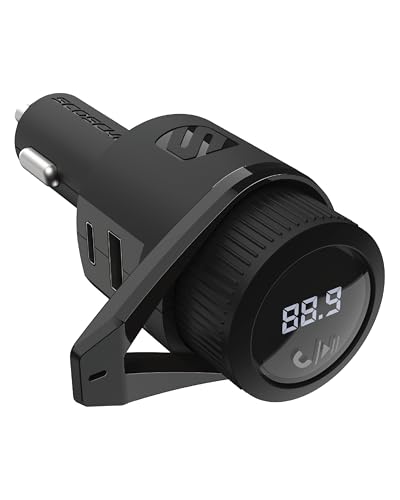
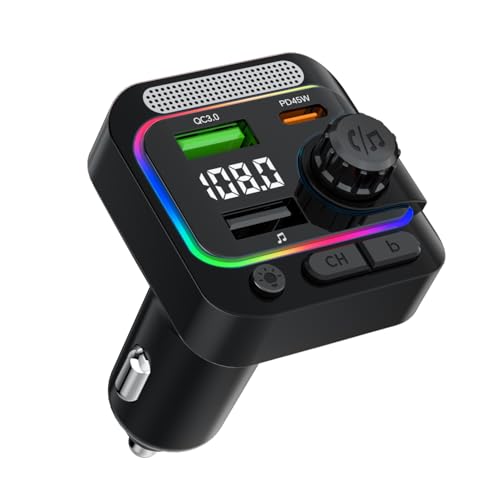

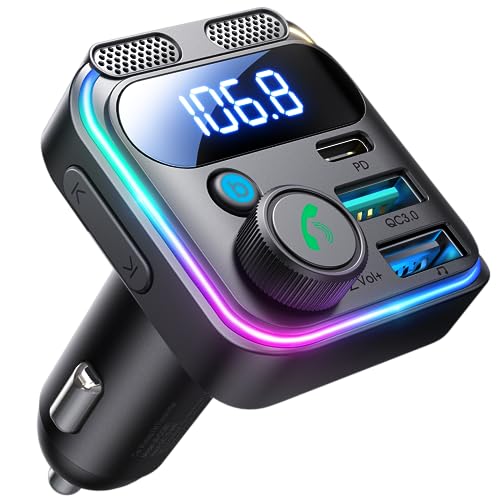

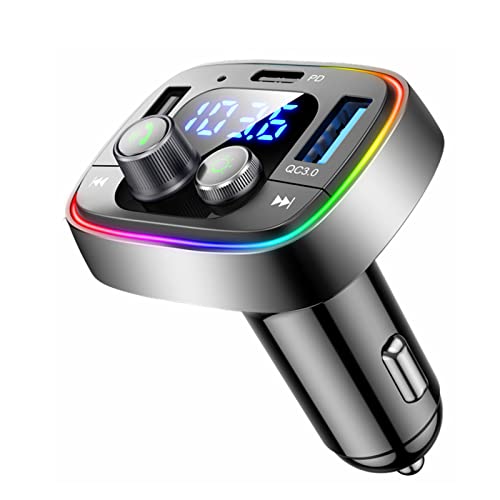
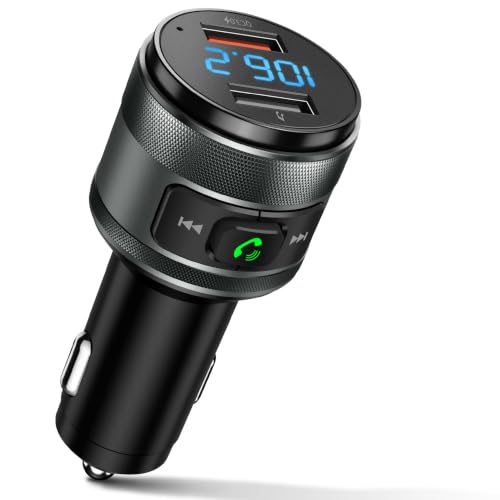
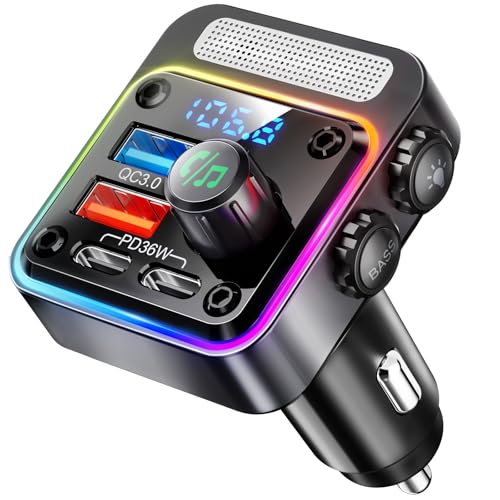
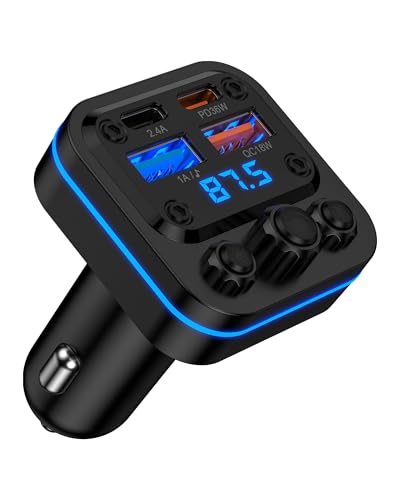
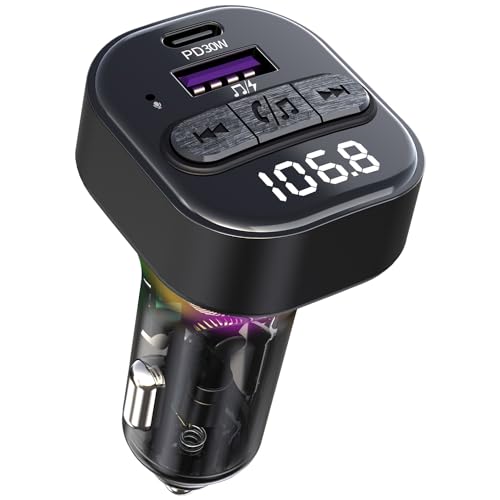
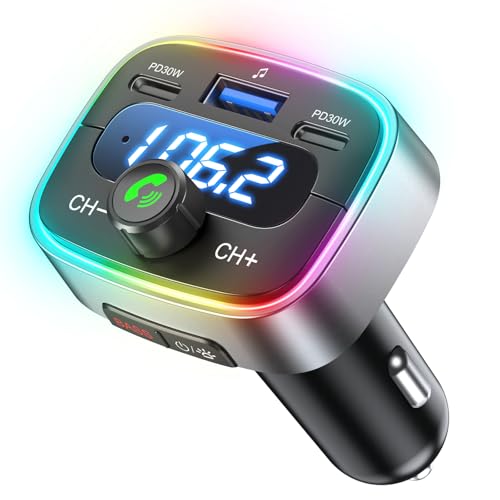
What Actually Affects Sound and Call Quality
Most transmitters look nearly identical in photos, but the internals vary enough that two models at the same price can sound completely different once you're actually driving. A handful of specs explain almost all of that gap.
Bluetooth Version and Audio Codec
Bluetooth 5.0 or newer pairs faster, holds a steadier connection across the cabin, and sips less power than the older chipsets still found in budget units. If the spec sheet also mentions a codec like aptX, that's worth a second look, since it compresses audio with less quality loss than the basic default codec most cheap transmitters rely on. Anyone who already owns Bluetooth earbuds or headphones has probably noticed how much the chipset generation affects dropouts, and the same logic applies here.
Dual Microphones and Call Clarity
Since most of these devices double as a hands-free calling kit, microphone quality matters more than people expect. A single mic tends to pick up wind noise and road hum along with your voice, while dual mics paired with digital signal processing filter that background noise out before it reaches the caller. If your commute involves a cracked window or a loud highway on-ramp, this spec alone can be the difference between clear calls and constant "can you repeat that?"
Charging Power and Display
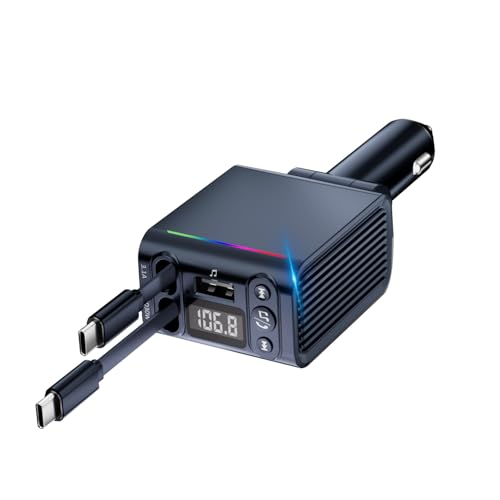
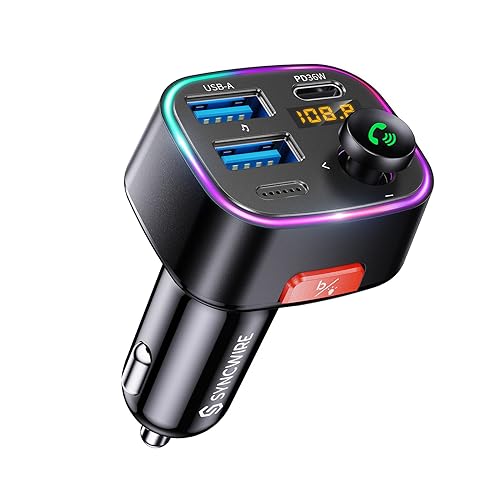
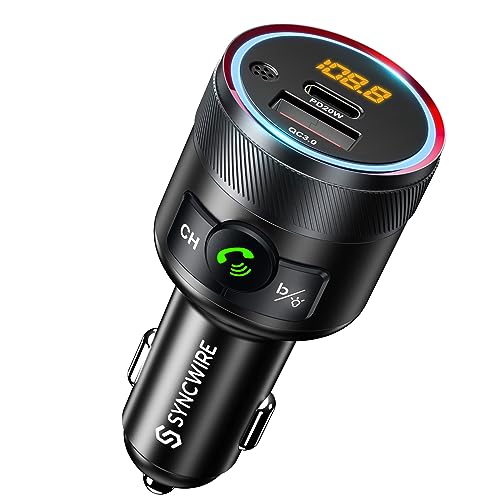
Because the transmitter sits in your power outlet, it usually pulls double duty as a charger. Look at total wattage and whether it supports USB-C power delivery, since a single low-power port will charge your phone noticeably slower while it's also streaming audio. A small display showing the current frequency, battery level, or incoming caller saves you from squinting at tiny buttons, and some higher-end models use RDS to show the song title right on your car radio's own screen.
Plug-In vs. Dash-Mounted Transmitters: Which Fits Your Car
Nearly every transmitter on the market falls into one of two physical designs, and the better fit depends on your car's layout more than any spec sheet.
Cigarette Lighter Plug-In Models
These plug straight into the 12V outlet and sit low near the console, right where your hand naturally lands when reaching for the shifter. They're compact, cheap to make, and need no extra cable, but the tradeoff is a display and buttons that sit low enough to require glancing down and away from the road.
Dash-Mounted Models with a Cable
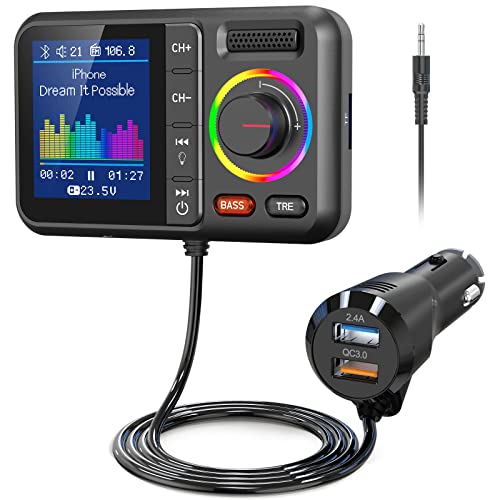
These route a longer power cable up to a clip or vent mount, putting the screen at eye level instead of down by your knee. They're generally the safer choice for anyone who wants to check the frequency or caller ID without taking their eyes far off the road, though you'll need somewhere to tuck the extra length of cable so it doesn't dangle across your dash.
FM Transmitter, AUX Adapter, or Built-In Bluetooth: Which One Do You Need
Before buying anything, it's worth checking whether an FM transmitter is even the best tool for your situation. If your car has a 3.5mm AUX jack or a stereo with Bluetooth already built in, a direct Bluetooth-to-AUX adapter or the factory Bluetooth itself will almost always sound cleaner, since the audio never has to travel over an FM frequency that can pick up static or compete with a nearby station. The best bluetooth fm transmitter for car use is specifically an older vehicle that has neither option, where broadcasting to an open channel is the only way to get phone audio into the factory speakers at all. If you're comparing your car's overall speaker setup against a newer vehicle's setup, that gap in sound quality between FM transmission and a direct wired connection becomes even more obvious.
Finding a Clean Frequency in the City and On Road Trips
Once you own the right device, most complaints trace back to frequency selection rather than the hardware itself.
Why Static Happens
Static almost always means the frequency you picked overlaps with a station that's broadcasting nearby, even faintly. City driving tends to have fewer open slots than rural areas, so it's worth manually scanning the dial from one end to the other and listening for pure silence rather than assuming any unused-sounding number will work.
Scanning for an Open Channel on Longer Drives
A frequency that's dead silent in your driveway can pick up a weak station once you're twenty miles down the highway, especially on a road trip that crosses into a new radio market. An auto-scan feature that finds an open channel automatically saves you from fumbling with buttons mid-drive, but even without one, it helps to keep two or three backup frequencies in mind so you can switch quickly instead of hunting blind. Running other power-hungry accessories, like a dash cam, off the same outlet at the same time can also introduce a faint hum, so isolating the transmitter on its own port when possible tends to clean things up.
Frequently Asked Questions
Do Bluetooth FM transmitters work in every car?
Yes, as long as the car has a working FM radio and a 12V outlet or USB port, regardless of its age or make. You don't need a transmitter marketed for a specific vehicle.
Is a Bluetooth AUX adapter better than a Bluetooth FM transmitter?
For sound quality, generally yes, since a direct AUX connection skips the FM broadcast step entirely and avoids static. The catch is that AUX adapters only work if your car has that 3.5mm input, which is exactly what most FM transmitter buyers don't have.
Why does my FM transmitter keep losing connection or cutting out on long drives?
This is usually a frequency problem, not a Bluetooth problem. As you drive into a new area, the channel that was clear near home can start picking up a distant station, so rescanning for an open frequency typically fixes it.
What Bluetooth version should I look for in a car FM transmitter?
Bluetooth 5.0 or newer gives you a faster, more stable pairing than older chipsets, and a codec like aptX can noticeably improve music quality over the basic default codec.
Can I see the song title or caller ID on the transmitter or radio display?
Some models support RDS, which pushes the song title through to your car radio's own display, while most transmitters at least show basic info like frequency or caller ID on their own built-in screen.
Will a Bluetooth FM transmitter drain my car battery?
On its own, no, since it draws very little power. The real risk is a power outlet that stays active even after the engine shuts off, so it's worth unplugging the transmitter once you've parked.
Can I charge my phone through a Bluetooth FM transmitter at the same time?
Most models include at least one USB port for charging while streaming, though a low-wattage port will charge noticeably slower than a dedicated fast charger. If you regularly juggle multiple devices, it's worth comparing specs the way you would for any portable charger, since wattage and port count vary just as much here.
The Bottom Line
The best bluetooth fm transmitter for car use comes down to a stable Bluetooth chipset, clear call quality, and enough charging power for how you actually use your car, not whichever model has the flashiest display. Confirm your car doesn't already have AUX or built-in Bluetooth first, since that route usually sounds better if it's available. Once you've picked the right style and found a clean frequency, it's a setup you install once and mostly forget about.