
Best Bleacher Chairs: A Buying Guide for Hard Benches
Disclosure: We may earn a commission when you buy through links on this page, at no extra cost to you. As an Amazon Associate I earn from qualifying purchases. Learn more
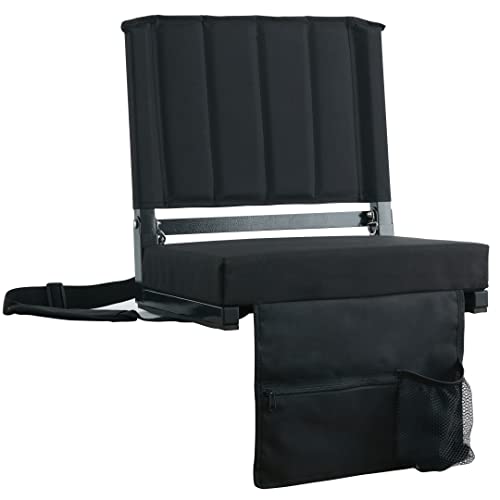
Compare bleacher chairs by bench fit, back support, carry weight and seat width, with price bands and care tips for picking a seat that suits your venue.
A bleacher is a hard plank with a view, and by the second quarter your back files the complaint. The best bleacher chairs answer that single problem: they are portable seats you carry into a venue, set on the bench, and take home again at the whistle. This guide starts where the purchase is won or lost, with the fit between the seat and your bench, and the product table sets out the picks for each seat class.
A bleacher chair is a comfort purchase and nothing more, so expect padding and support for a long sit, not a cure for anything. If sitting brings you persistent pain that follows you home, ask your doctor rather than a seat catalog. What follows covers bench fit first, then backs, carry weight, and crowd width, with price bands for each class.




Rule One: The Seat Must Fit Your Bench
Every other feature is wasted if the seat does not sit squarely on your bench, so treat this as the first fit rule and measure before you shop. Benches vary more than seats do, and the venue you visit most is the only measurement that counts.
Measure the Bench Depth Before You Shop
Many school and stadium benches offer a seat plank about 10 to 12 inches deep, and older wooden bleachers vary from row to row. A seat pan deeper than the plank overhangs the front edge, and an overhung seat tips forward every time you lean. Take the depth, and the height of the row behind, on your next visit, and shop with those two numbers in hand. A photo of the bench on your phone settles most questions once you are back home.
Clamps, Hooks, and Straps: How a Seat Stays Put
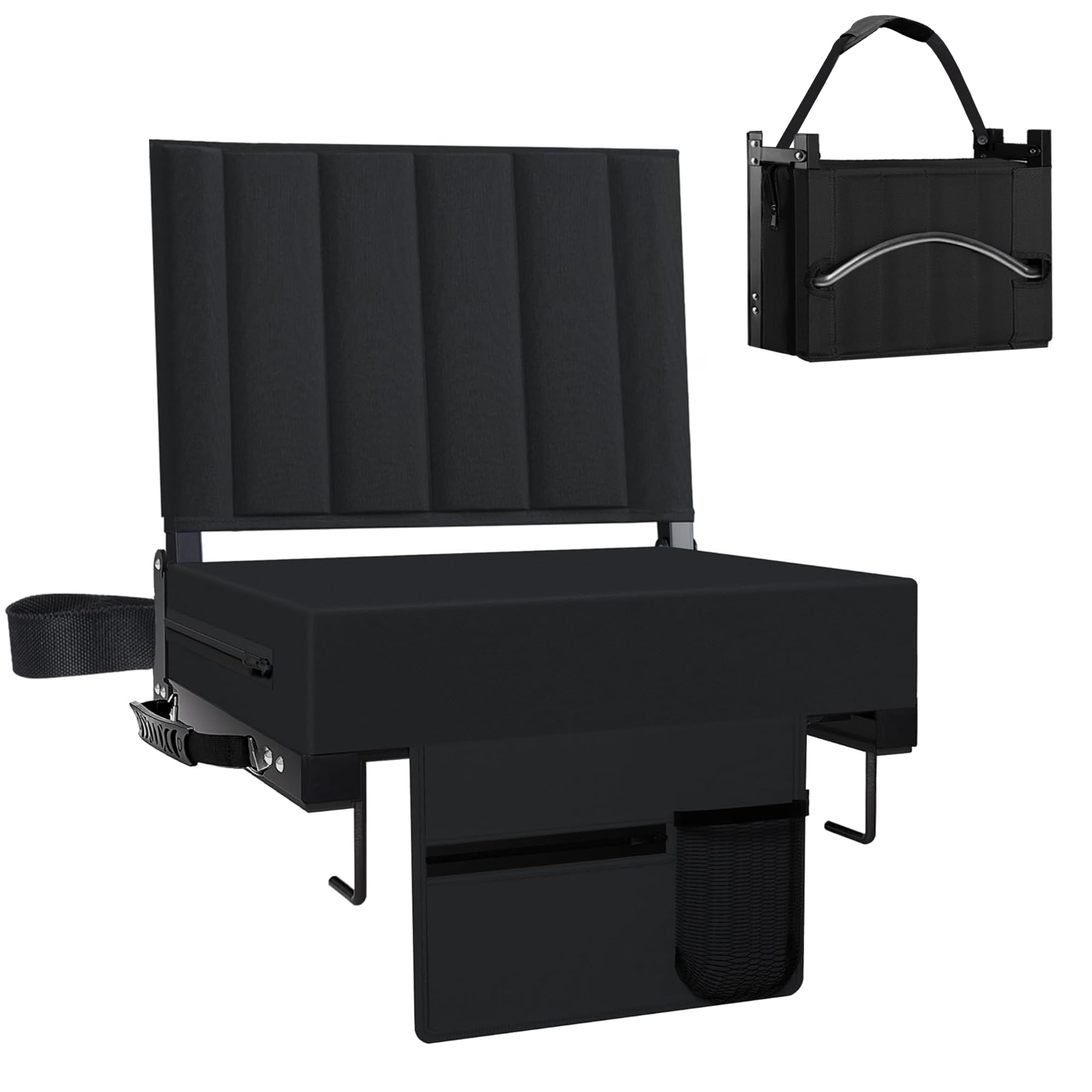
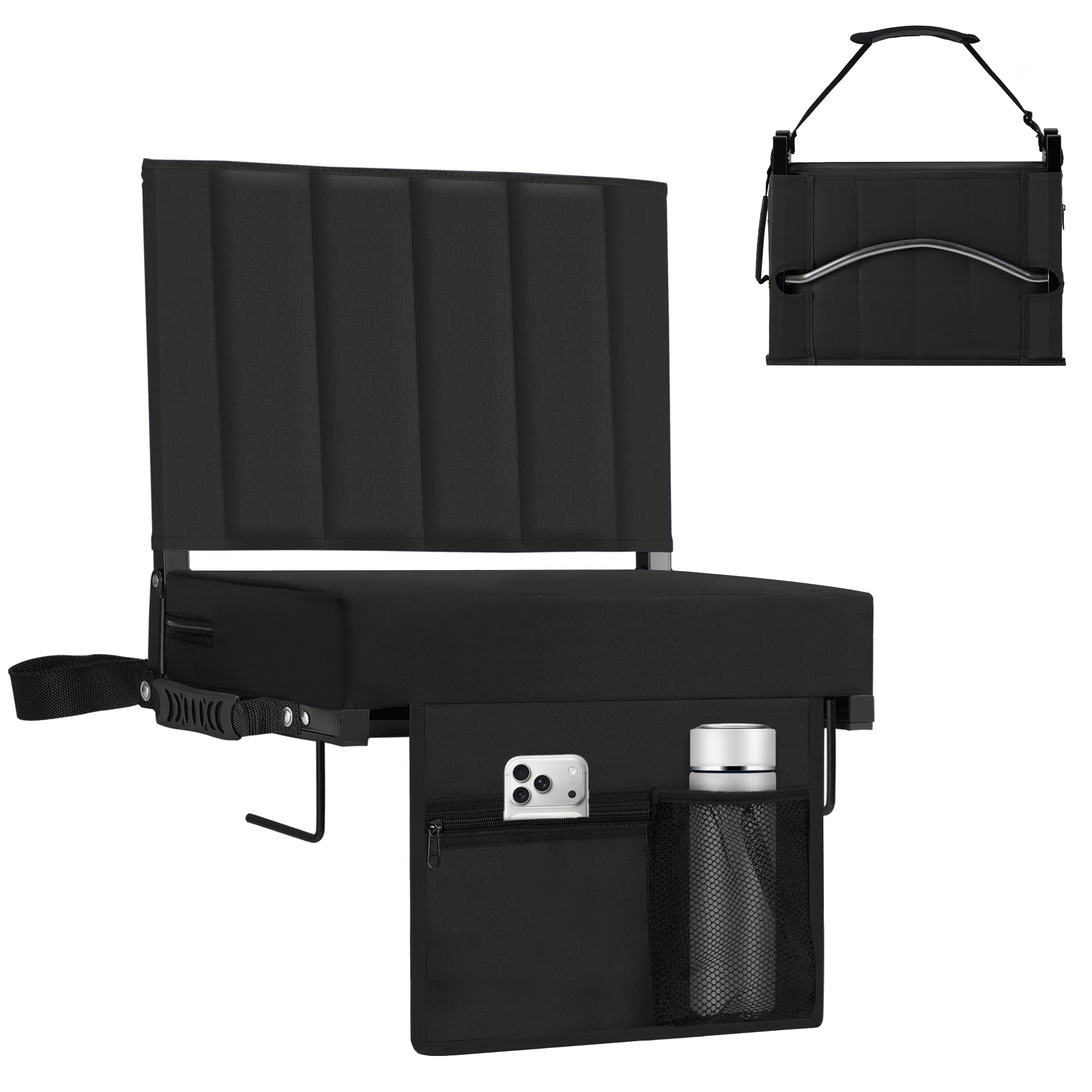
Framed seats hold on in one of three ways: a hook that curls under the plank, a clamp that grips the bench edge, or straps that pass under the bench and pull tight. Hooks are fastest where the plank has a clear underside, while straps suit thick or boxed benches that give a hook nothing to bite. A seat that slides an inch every time you shift is worse than a plain cushion, because you spend the game managing it instead of watching.
The Back Question: Cushion or Real Backrest?
The second decision is whether you need a back at all, and the honest answer depends on how long your games run. Short youth matches forgive a cushion, while a tournament day does not.
Best Bleacher Chairs with Backs
A backrest changes the product from a pad into a seat, giving your back somewhere to rest between plays instead of holding itself upright for hours. Look for a back tall enough to reach your shoulder blades, padding that does not bottom out, and a slight recline rather than a bolt upright board. Folding framed seats carry the back for you, which is why this class dominates the middle price band and most season long seating plans.
When a Plain Cushion Is the Smarter Buy
A cushion wins on the short days: it weighs almost nothing, slides into any row, and asks nothing of the bench. Thickness is the spec that matters, and about 2 to 3 inches of firm foam is the working range before a cushion turns into a wobble. If your games run under an hour and you walk far to reach them, the cushion is the honest choice.
The Carry Question
Weight and carry are part of the purchase, because the walk from the car is part of the product. Nobody hauls a desk chair to a game, and the seats in guides to best officer chairs and best office task chairs are built to live in one room on wheels, which is exactly the thinking to leave behind here.
Weight Classes and Handles
Light framed seats run about 4 to 6 pounds, a weight most adults carry in one hand across a parking lot without thinking about it. Wide and deluxe seats climb to about 8 to 11 pounds, and that difference is felt on stairs and on long walks from distant parking. A padded shoulder strap or a proper handle is worth more than a lighter frame with nothing to grip.
Folding, Storage, and the Trip Home
Most framed seats fold flat enough to lean against a hallway wall or slide under a bed, while bulky deluxe frames earn a corner of the garage. Check the folded size against your car trunk if you drive a small car, because a seat that only fits at an angle travels badly. Store the seat dry and indoors, since a damp fold put away for winter comes back smelling of mildew.
The Crowd Question: Width and the People Beside You
Bleachers are shared, and your seat spends the game in a row of neighbors who bought no ticket for your comfort. A seat that fits the bench can still fail the row.
Seat Width Against the Row
Many venues allow about 18 inches of row per spectator, which is why standard seats sit at about 17 to 18 inches wide. Wide seats of about 21 to 23 inches feel generous in an empty stand and antisocial in a full one, claiming a neighbor's share of the row. If your venue sells out, hold to the standard width and put the money into the back instead.
Armrests, Cup Holders, and Shared Space
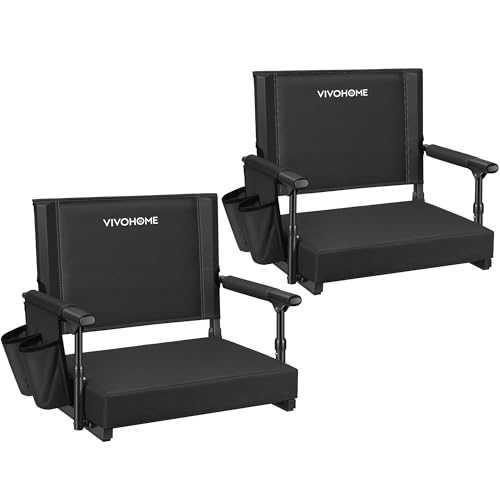
Armrests add width faster than any other feature, so count them in the width you bring to the row. Cup holders help until a tall bottle meets the knees of the row in front, and under seat pouches are the safer place for a phone and keys. In a packed row, the polite seat is the narrow one that still supports your back.
Frame, Fabric, and Cushion Classes
Shoppers who start from best quality chairs usually weigh frame and fabric first, and the same order works on a bench.
Frames: Steel Tube and Aluminum
Powder coated steel tube is the steady, heavier choice, and it shrugs off the knocks of trunks and concrete steps. Aluminum frames cut the carry weight and resist rust at rainy venues, and they usually cost more for the same strength. Either way, look for joints that feel tight out of the box, because a frame that rattles when new will only loosen.
Fabrics, Mesh, and Cushion Fill
Woven polyester and canvas classes take sun, spills, and grit better than the soft fabrics of indoor chairs, and they hose down or brush clean after a muddy game. Mesh back panels earn their place at hot summer venues, where a solid back turns into a warm patch by halftime. Cushion fill should feel firm rather than plush, because thin foam over a hard plank bottoms out fast.
Types of Bleacher Chairs
Most of what shops sell as best stadium chairs for bleachers is this same family of portable bench seats under a second name, and it sorts into three classes.
| Class | Back | Typical carry weight | Best for |
| Cushion seat | None | Under 2 pounds | Short games, long walks |
| Framed seat | Padded back | About 4 to 6 pounds | Most spectators |
| Wide deluxe seat | Tall padded back | About 8 to 11 pounds | Long tournament days |
Padded Cushion Seats
The simple class: foam in a fabric skin, sometimes with a handle and a pocket. It adds comfort and insulation from a cold plank and nothing else, which is exactly right for short sits. Buy it firm, and expect to replace it sooner than a framed seat.
Folding Seats With a Frame and a Back
The middle class folds open into a real seat, clamps or straps to the bench, and carries the back that long games demand. This is the class most spectators should price first. It is also the class with the widest spread of build quality, so the frame checks above matter here.
Wide and Deluxe Seats
The wide class trades row space and carry weight for room: broader pans, taller backs, armrests, and thicker padding. It suits grounds with generous rows and short walks from the car, and it punishes both where they are tight.
What Your Money Buys: Three Price Bands
Prices sort cleanly by class, and the best bleacher chairs at any band share one trait: they fit the bench they were bought for.
About $15 to $30: Cushions and Simple Seats
This band buys cushions and the simplest folding seats, with thinner foam and basic fabrics. For a handful of games a season, that is honestly enough, and the money saved buys a season of hot drinks instead. Expect handles and pockets to be rare at this price.
About $35 to $70: Framed Seats With Backs
The middle band is where the backrest, the clamp or strap hardware, and frames that feel tight all arrive together. Most regular spectators belong here, and the step up from the budget band is the one that changes a long game.
About $70 to $120: Wide and Deluxe Seats
The top band buys width, thicker padding, armrests, and better fabrics, plus small comforts like reclining backs on some classes. It pays off across long tournament days and full seasons, and it is wasted on a seat that comes out twice a year.
How to Make Your Bleacher Chair Last Longer
- Dry the seat fully before storing it after a wet game, because a damp fold grows mildew in a closed closet.
- Check clamp hooks and strap stitching at the start of each season, since the hardware tires before the frame does.
- Brush grit off the fabric before folding, because trapped grit grinds the weave every time the seat moves.
- Look over frame bolts and rivets once a season and tighten or replace anything with play in it.
- Store the seat indoors and out of direct sun, because sunlight fades and weakens outdoor fabrics over time.
Bleacher Chairs: Your Questions Answered
How long should a good bleacher chair last?
A well kept framed seat should serve for several seasons of regular use, and a simple cushion for a shorter span before its foam stays flat. Judge age by games rather than by the calendar, because a seat carried to thirty games a year lives a faster life than one used at a few home fixtures. The cover and cushion usually tire before the frame gives up.
How do I choose the right size bleacher chair?
Start with the bench numbers from the fit section, then check the seat against your own body. Sit in the seat at home on a hard step or bench while wearing the coat you take to winter games, because padded clothing steals an inch of width on each side. If your hips feel pinched at home, the fourth quarter will feel worse.
Is an expensive bleacher chair worth it?
It is worth it in proportion to your hours in the stand. A supporter at twenty long games a season spreads the price across enough sitting hours that the thicker padding and better frame pay their way. A twice a year visitor gets the same view from the budget band, and the honest saving there is real money rather than a compromise.
What features matter most in a bleacher chair for long games?
For long games, seat depth matters as much as the back, because a pan that ends mid thigh leaves your legs working all match. After depth and back height, look for a small gap or open space under the back where crumbs and rain can fall through instead of pooling under you. A firm cushion beats a plush one at the three hour mark, every time.
The Bottom Line
Fit the bench first, choose the back second, and weigh the carry third, and the rest of the decision is price. The product table covers the shelf from budget framed seats to wide deluxe models, and each one has a venue where it is the right answer. Match the seat to your bench and your walk in, and the best bleacher chairs for you is the one still coming to games seasons from now.


