
Best Binary Watches: Every Type Explained Side by Side for 2026
Disclosure: We may earn a commission when you buy through links on this page, at no extra cost to you. As an Amazon Associate I earn from qualifying purchases. Learn more

Compare the best binary watches by display, case size, water resistance and materials to find the right fit for your wrist and daily routine.
Binary watches puzzle many buyers because the same idea, telling time in binary numbers, comes in LED, LCD, and dial layouts that feel nothing alike on the wrist. Choosing the best binary watches starts with the display style you can actually read and enjoy. The comparison table below lines up the main types with prices, and this guide explains each one in plain terms.
There is also a learning curve to accept. Reading binary time takes practice for a few days, then it becomes a small daily pleasure and a reliable conversation starter.


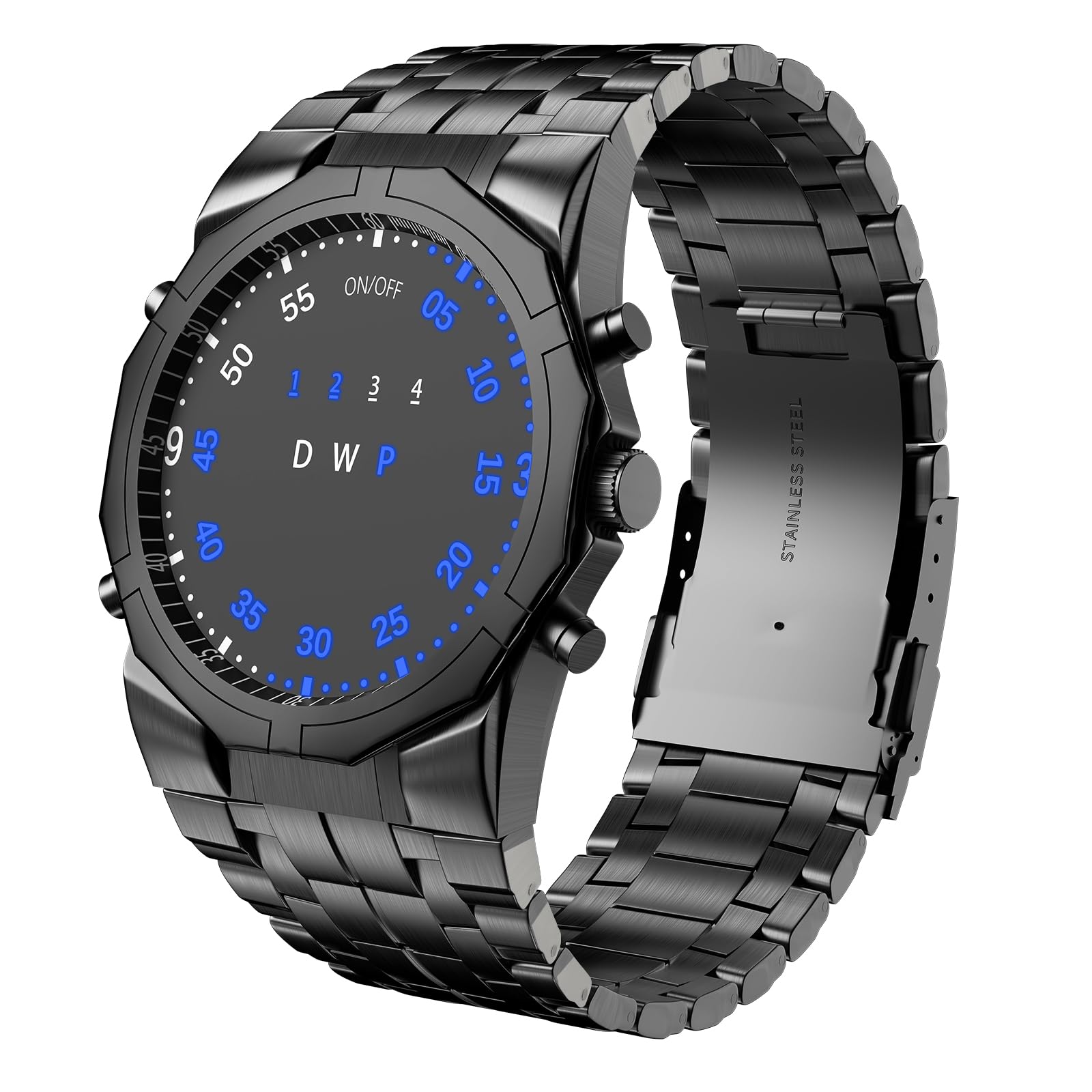
Types of Binary Watches Compared
Binary time shows hours and minutes as columns or rows of lights or markers, where each lit marker stands for a value of 1, 2, 4, or 8, and you add the lit values to get the number. The three groups below describe how that idea is packaged, and how each package differs in power source, upkeep, and style.
Smartwatches
A smartwatch with a binary watch face is the most flexible route, since one device can switch between binary and normal faces in seconds. You gain notifications, GPS, fitness tracking, and bright screens, but you pay with daily or near daily charging and a look that reads as tech rather than jewelry. Accuracy is excellent because the watch syncs with your phone. Choose this type if you already live in apps and want binary time as one feature among many, not as the whole point of the watch.
Solar Watches
Solar binary watches use light to charge a cell that powers an LED or LCD display, so you avoid routine battery changes for years. They suit buyers who want a dedicated binary watch without the fuss of winding or frequent charging. Keep in mind that LED displays draw more power than LCD ones, so a solar LED model needs regular light exposure to stay ready. Store it where it gets ambient light rather than in a dark drawer, and it will reward you with very low upkeep. Styling tends to be sporty and modern.
Automatic Watches
True automatic binary watches are rare, because a mechanical movement cannot light LEDs, so this group covers mechanical watches that show binary style discs or markers driven by gears. They appeal to collectors who love movement craft and want no battery at all. The trade offs are price, thickness, and timekeeping that can drift by several seconds a day, plus service costs every few years. Choose one for the craft and the object itself, and accept that reading the time may be slower than with a bright display. For general guidance on mechanical quality, see best quality watches.
Smartwatches vs Solar Watches: Which Should You Choose?
These two types answer different needs. A smartwatch wins on features, with health tracking, messages, and faces you can change at will, but it needs a charger on every trip and its screen can distract. A solar watch wins on independence, running for months on light with nothing to sync or update, but it does only one job. On cost, a capable smartwatch usually runs about $200 to $400, while a solar binary watch often sits around $100 to $250. On the wrist, smartwatches feel like small computers and solar models feel like normal watches. If binary time is a fun extra, go smart. If it is the reason you are buying, go solar or a battery powered display model, and compare sport options in best workout watches if training features matter to you.
How to Choose the Right Binary Watch
Once you know your type, five checks separate a watch you will wear daily from one that ends up in a drawer.
Case Size and Wrist Fit
Most binary watches sit between 38 and 44 mm across, and that range suits most wrists. Measure your wrist and favor 38 to 41 mm if it is slim, since a wide case with a busy display can look oversized fast. Case thickness matters too, because LED models with larger batteries can reach 13 to 15 mm and catch on shirt cuffs. Lug to lug length decides overhang, so look for a measurement under about 50 mm if your wrist is narrow. A quick release strap makes it easy to fine tune fit and style at home.
Movement Type (Quartz, Automatic, Solar, Smart)
The movement decides accuracy and upkeep. Quartz binary watches are the most common, accurate to within seconds a month, with a battery that lasts about one to three years depending on how often the display lights up. Solar versions trade battery swaps for light exposure. Automatic versions offer craft at the cost of daily wear or a winder to keep them running. Smart versions are the most accurate and the most demanding, needing charge and updates. Match the movement to your patience, not just your taste.
Legibility and Style
Legibility is the whole game with binary time. Check whether the display lights on demand with a button press or stays always visible, because press to read models save power but slow you down. Bright LEDs read well indoors yet can wash out in strong sun, while LCD layouts stay readable outdoors. Lume on hands does not apply to most binary displays, so judge by display contrast in photos and reviews. Style splits between office friendly metal cases and sporty resin ones, so picture your weekday clothes before you choose. For bolder everyday styling ideas, see best watches for guys.
Water Resistance Rating
Water ratings use atmosphere numbers that mislead many buyers. A 30 m rating means splash resistance only, fine for hand washing but not swimming. A 100 m rating handles swimming and showers, and 200 m suits diving. Binary watches with button activated displays often sit at 30 to 50 m, because each button is a possible water entry point. If you swim or train in your watch, set 100 m as your floor and keep buttons unpressed while in the water. Rinse the watch in fresh water after any saltwater exposure.
Crystal and Case Materials
The crystal protects a display you must keep clear to read. Sapphire crystal resists scratches best and suits a watch you plan to keep for years, while mineral glass costs less and handles knocks a little better but scratches sooner. Acrylic is cheap and light but marks easily. Case materials run from resin, which is light and tough, to stainless steel in the common 316L grade, which feels solid and polishes well, to titanium, which cuts weight for large cases. A steel case with a sapphire crystal is the durable sweet spot for most buyers, a point that also holds across best manly watches.
Tips to Get the Most From Your Binary Watch
- Practice reading the hour column first for a few days, then add minutes, so the habit builds in steps.
- Service automatic watches every 5 to 7 years, and budget for that cost when you buy.
- Rinse after saltwater exposure and dry the case and strap before you store the watch.
- Store away from magnets, which can affect mechanical movements and some sensors.
- Keep solar models in ambient light and avoid long stretches in a dark drawer.
- Press display buttons less often on LED models when you want the battery to last longer.
Frequently Asked Questions
How long does a watch battery last?
Most quartz binary watches run about one to three years on a battery, and LED models sit at the short end if you light the display often. Solar models avoid swaps for many years by charging from light, though their rechargeable cells do age slowly. A watchmaker can swap a standard battery for a small fee, and the job takes minutes. If your display dims or resets, treat that as the early warning to plan a change.
What case size fits my wrist?
Measure around your wrist with a soft tape, then match size to that number. Wrists under about 6.5 inches suit 38 to 41 mm cases, mid size wrists suit 40 to 43 mm, and larger wrists can carry 44 mm without strain. Thickness and lug to lug length matter as much as width, since a thick, long case feels bigger than its diameter suggests. Trying a printed size guide at home helps more than guessing from photos.
Quartz or automatic: which is better?
Quartz is better for most binary buyers, because it is accurate, affordable, and powers light based displays that mechanical movements cannot. Automatic is better only if you value mechanical craft and accept higher cost, thicker cases, and service every few years. For a binary watch, the display is the point, so quartz usually serves the idea best. Collectors are the exception, and they buy with full knowledge of the trade offs. Broader style comparisons sit in best male watches.
Is a smartwatch worth it over a classic watch?
A smartwatch is worth it if you will use its health, GPS, and notification features daily, not just its binary face. If binary time is your only goal, a dedicated watch costs less, needs far less charging, and looks better with formal clothes. Battery life sums up the split, days or hours for a smartwatch against months or years for a classic model. Choose by your daily habits rather than by feature lists.
How water resistant should a watch be?
For desk and daily wear with hand washing and rain, 30 to 50 m is enough. For swimming, choose at least 100 m, and for diving look for 200 m with a screw down crown. Remember that ratings assume still water and new seals, so have seals checked when a battery is changed on a watch you swim with. When in doubt, buy one rating above your real use.
Final Thoughts
Pick your display type first, then confirm case fit, movement upkeep, and water resistance for your real routine. Those four checks matter more than brand or price tier in this niche. The best binary watches are the ones you can read at a glance and will still enjoy a year from now, so compare the options in the product table above and choose the layout your eyes like best.


